Introduction
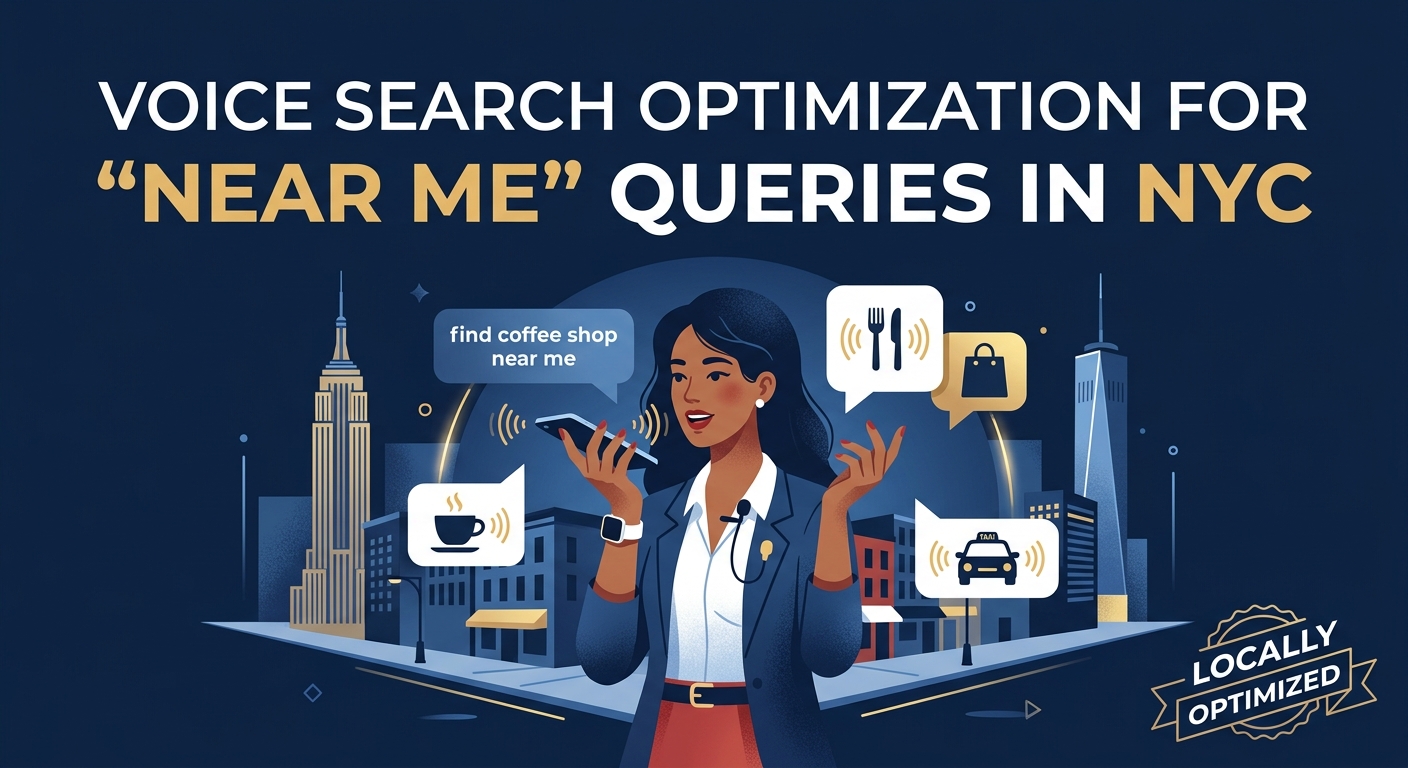
Picture a commuter stepping out of a Midtown subway station with both hands full of bags, asking a phone for the best coffee shop nearby. Within seconds the assistant reads out a single answer, and that one business wins the customer. This is everyday reality in New York City, where speed and convenience shape almost every local decision.
“Near me” queries have become one of the most valuable forms of search for local businesses. People who speak these questions usually want to act right away, whether that means ordering dinner, finding a pharmacy, or booking an emergency repair. For NYC brands, being the spoken answer can matter far more than ranking third on a results page.
Voice search optimization is the practice of shaping your online presence so that assistants can find, understand, and confidently recommend your business. It blends local SEO, conversational content, structured data, and strong reputation signals into one coordinated effort. In a city with millions of residents, commuters, and tourists, that combination can separate busy storefronts from invisible ones.
This guide explains why near me voice searches are growing across New York, how assistants interpret them, and how real New Yorkers phrase their questions. It also breaks down local intent across the five boroughs so you can plan with precision. The later parts cover practical tactics, measurement, and the mistakes that hold businesses back.
Why Near Me Voice Searches Are Booming in New York City
New York is a city that lives on the move, and that lifestyle fits voice search perfectly. People walk, ride trains, push strollers, and carry coffee while looking for something nearby, so typing on a screen is often impractical. Speaking a question is faster, safer, and far more natural in those moments.
Several features of city life push voice usage higher than in many other places:
- Dense neighborhoods place dozens of competing businesses within a few blocks, so people ask for the closest or best option.
- Long commutes on trains and buses create plenty of hands free moments for quick questions.
- Millions of tourists arrive without local knowledge and rely on assistants for directions, food, and attractions.
- Late night and early morning schedules lead people to ask which places are open right now.
- Smart speakers and wearable devices are common in apartments and offices, which makes asking aloud feel normal.
Another driver is how much trust people place in the first spoken answer. When an assistant reads a result aloud, there is usually only one recommendation rather than a list of ten links. That makes the competition winner takes most, and businesses that are not selected may never be considered at all.
Mobile behavior also plays a major role. Most near me searches happen on phones, and many end with a call, a map request, or a visit within hours. For NYC businesses such as restaurants, clinics, salons, and locksmiths, this means voice visibility can translate directly into foot traffic and phone calls.
How Voice Assistants Interpret Near Me Queries
When someone says “near me,” the assistant has to solve two problems at once. It must work out where the person is, and it must decide which businesses best match what they asked for. Understanding this process helps you shape your listings so that you are chosen.
The typical flow looks like this:
- The device detects location using GPS, Wi-Fi, and mobile signals, which in NYC can be precise down to the block.
- The assistant converts the spoken words into text and identifies the intent, such as finding a place, getting directions, or checking hours.
- It searches local data sources for businesses that match the category and sit within a sensible distance.
- It ranks candidates using relevance, proximity, and prominence signals such as reviews, listing completeness, and website quality.
- It delivers one or a few spoken results, often with the business name, rating, distance, and opening status.
Proximity matters, but it is not the only factor. A business slightly farther away can still win if its profile is complete, its reviews are strong, and its information is consistent across the web. This is good news for NYC businesses that are not on the busiest corner but have earned trust.
Assistants also lean heavily on structured, verifiable information. Clear business categories, accurate hours, a correct address, and a working phone number make a profile easier to recommend with confidence. Gaps or conflicting details lower that confidence, and the assistant may simply choose a competitor.
How NYC Voice Searchers Speak and What They Ask
Voice queries sound very different from typed ones. People speak in full sentences, use natural phrasing, and often add context such as time, price, or urgency. A typed search might read “pizza Brooklyn,” while a spoken one is “where can I get a good slice of pizza near me that’s open late.”
New Yorkers also bring local flavor to their questions. They mention neighborhoods, subway lines, and landmarks, and they tend to be direct about what they need. Common patterns include the following:
- Immediate need questions such as “Where is the nearest urgent care open right now?”
- Comparison questions such as “Which dentist near me takes my insurance?”
- Navigation questions such as “How do I get to the closest pharmacy from the Union Square station?”
- Quality questions such as “What is the best rated Thai restaurant near me in Queens?”
- Convenience questions such as “Is there a 24 hour laundromat near me with free parking?”
Notice how many of these questions include a qualifier such as open now, accepts insurance, best rated, or free parking. Those details are opportunities, because pages and profiles that answer them directly are far more likely to be matched. Businesses that publish clear information about hours, pricing, accessibility, and payment options give assistants the exact facts they need.
Question words matter as well. Who, what, where, when, why, and how dominate voice searches, so content that begins with a clear question and follows with a short, direct answer fits spoken results well. This style also happens to be helpful for human readers who are scanning on a phone.
Understanding Local Intent Across the Five Boroughs
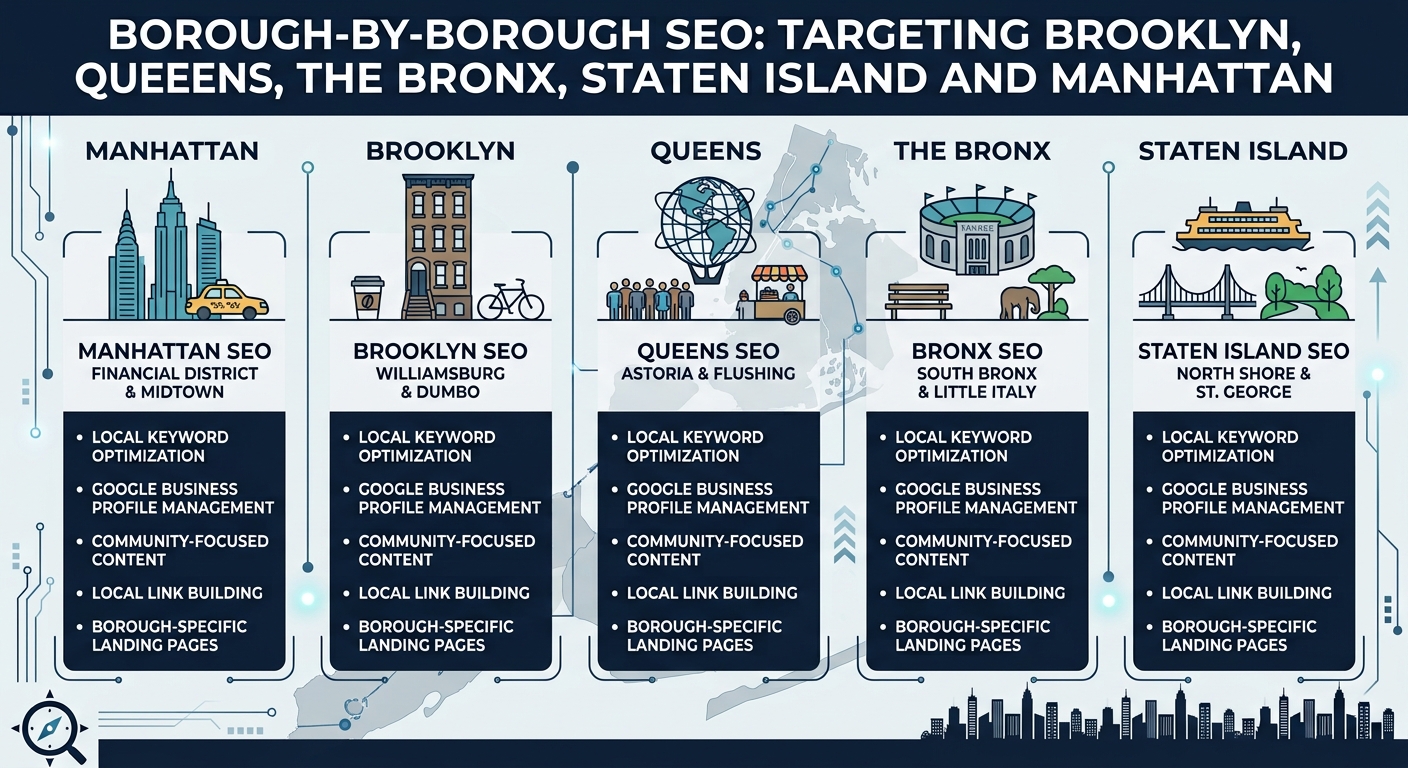
New York is not one market but many, and each borough has its own rhythm, audience, and search habits. A strategy that works for a Manhattan office district may miss the mark in a residential pocket of Queens or Staten Island. Matching your content to the local character of each area improves relevance and conversions.
Manhattan tends to produce high volume, fast moving searches from workers, tourists, and commuters who want quick answers. Brooklyn and Queens generate more neighborhood focused queries, where people look for trusted local favorites and family friendly services. The Bronx and Staten Island often show strong demand for practical, everyday services, with searchers valuing proximity, parking, and reliability.
| Borough | Typical Searcher | Common Near Me Queries | Optimization Focus |
|---|---|---|---|
| Manhattan | Commuters, office workers, tourists | Open now restaurants, coffee, pharmacies, quick services | Hours accuracy, subway proximity, fast mobile pages |
| Brooklyn | Residents, young professionals, families | Local cafes, salons, fitness studios, boutique shops | Neighborhood pages, reviews, community signals |
| Queens | Diverse families and commuters | Cuisine specific restaurants, clinics, auto services | Multilingual content, service detail, parking information |
| The Bronx | Local residents and families | Urgent care, groceries, repair services, dining | Clear directions, phone friendly pages, trust signals |
| Staten Island | Car dependent households | Home services, medical offices, retail stores | Service area details, parking, reliable contact options |
Beyond boroughs, neighborhoods carry even more weight. People say “near me” but they also say “in Astoria,” “around Park Slope,” or “by Times Square,” so naming these areas in your content helps assistants connect your business to the right places. The next part explains how to turn these insights into profile updates, conversational content, and technical improvements that earn the spoken recommendation.

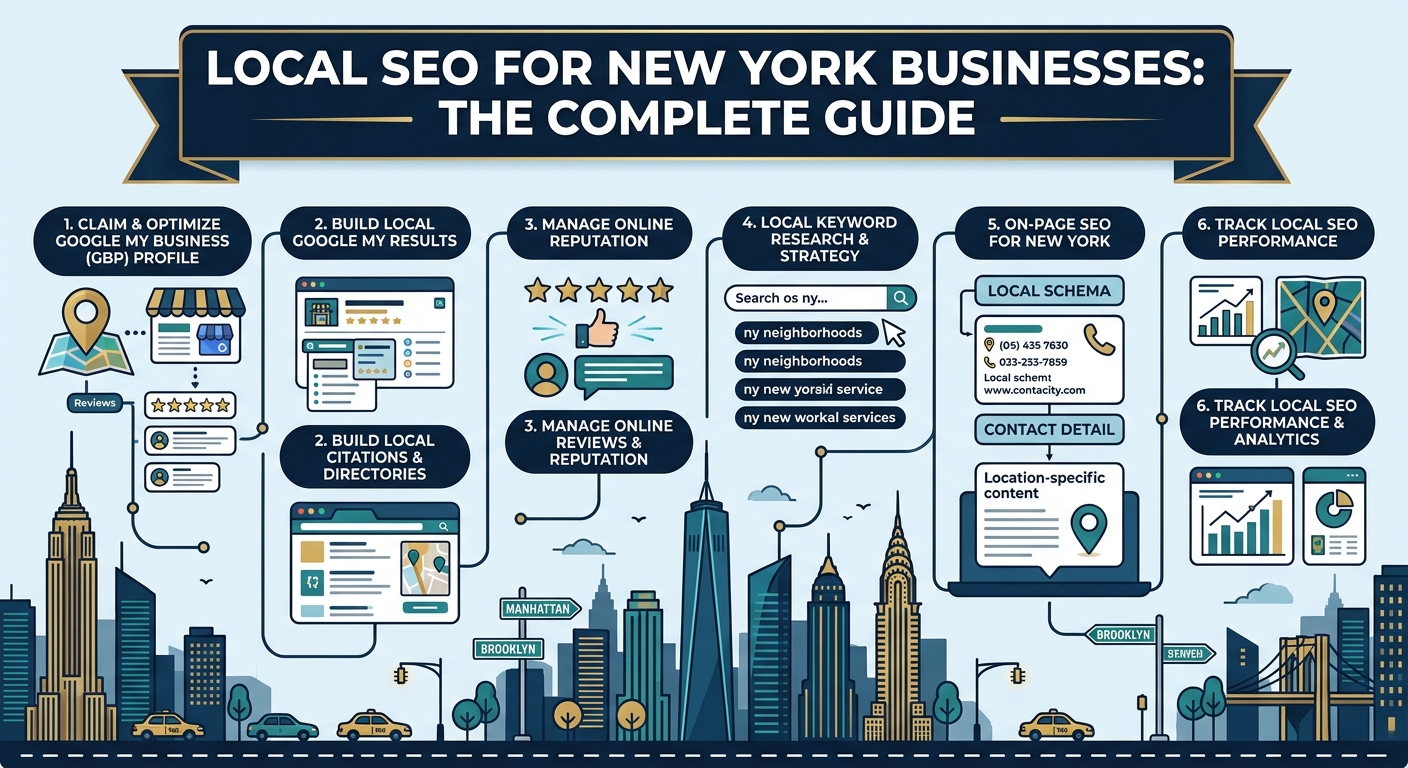
Google Business Profile Optimization for Voice Results
Your Google Business Profile is the single most important asset for near me voice searches, because assistants pull much of their local information from it. A complete and accurate profile gives the assistant everything it needs to recommend you with confidence. An incomplete one often loses to a competitor with fewer reviews but better data.
Start with the basics and make sure they are perfect. Your business name, address, phone number, website, and hours must match what customers see in real life, including holiday hours and temporary changes. Choose a precise primary category, then add secondary categories that describe your other services without stretching the truth.
Once the foundation is solid, enrich the profile with details that match the way people speak. Useful additions include:
- A clear business description written in natural language that mentions your neighborhood and main services.
- Attributes such as wheelchair accessible, outdoor seating, free Wi-Fi, accepts walk-ins, or women owned.
- A full list of services or menu items with short descriptions and prices where possible.
- High quality photos of your storefront, interior, team, and products, updated regularly.
- The questions and answers section, filled with real customer questions and direct replies.
Posts and updates also send freshness signals. Share offers, events, and seasonal news every week or two so the profile looks active and trustworthy. Businesses that keep their profiles alive tend to appear more often when assistants look for a reliable option.
Conversational Keywords and Natural Language Content
Voice search rewards content that sounds like a helpful person answering a question. Instead of stuffing short keywords into a page, write the way a knowledgeable neighbor would explain something. This approach helps both assistants and human visitors understand your pages quickly.
Begin by collecting the real questions your customers ask. Your phone calls, emails, chat logs, and review comments are a rich source, and they reveal the exact words people use. Group these questions by topic, then build pages or sections that answer each one clearly.
A simple structure works well for voice friendly content:
- Place the question in a heading using natural wording, such as “Where can I find an emergency plumber in Brooklyn at night?”
- Follow it with a direct answer of two or three sentences that a voice assistant could read aloud.
- Add supporting detail below, such as pricing ranges, service areas, hours, and how to book.
- Close with a clear next step, such as calling, requesting a quote, or getting directions.
Long tail phrases deserve special attention, since spoken searches are usually longer than typed ones. Phrases such as “best family dentist near me that accepts weekend appointments” signal a very specific need and a high intent to act. Pages that match those details are far more likely to be chosen than generic service pages.
Keep the language simple and conversational, and avoid jargon unless your audience expects it. Short sentences and clear explanations are easier for assistants to extract and easier for readers to trust. Reading your content aloud is a quick test, because if it sounds awkward spoken, it probably needs a rewrite.
Neighborhood Targeting Strategies for NYC
In New York, the neighborhood is often the real unit of local competition. A customer in Williamsburg thinks very differently from one in Forest Hills, even though both may be searching for the same service. Building content around specific neighborhoods helps you match the places people actually name.
Create dedicated pages for each area you serve, and make every page genuinely useful instead of a copy with a swapped place name. Include practical details that only a local would know, such as nearby subway lines, cross streets, landmarks, parking tips, and typical travel times. These details add real value and help assistants connect your business to the right location.
Effective neighborhood tactics include the following:
- Mention nearby landmarks, stations, and well known streets in your page copy and your business description.
- Feature customer stories and reviews from the specific neighborhood you are targeting.
- Show a map and clear directions on each location page, with notes about walking routes from major transit stops.
- Sponsor or join local events, community groups, and business associations to earn relevant mentions.
- Add neighborhood based questions to your frequently asked questions, such as delivery zones or service coverage.
If you operate more than one location, give each its own Google Business Profile and its own landing page. Keep the information unique for each site so that assistants can tell them apart. This prevents confusion and lets every branch compete for voice results in its own backyard.
Schema Markup and Structured Data for Local Voice Search
Structured data is a behind the scenes layer that tells search systems exactly what your content means. It labels your business name, address, hours, services, reviews, and questions in a format machines can read without guessing. For voice search, that clarity helps assistants trust and reuse your information.
The most useful schema types for NYC local businesses are shown below.
| Schema Type | What It Describes | Voice Search Benefit |
|---|---|---|
| LocalBusiness | Name, address, phone, hours, service area | Confirms core facts used in spoken answers |
| FAQPage | Questions and short answers on a page | Supplies ready made, speakable responses |
| Review and AggregateRating | Customer feedback and average score | Strengthens trust signals for recommendations |
| Service or Product | Details of what you offer, with pricing | Matches specific needs such as emergency or same day |
| OpeningHoursSpecification | Regular and special hours | Supports open now and late night queries |
| Speakable | Sections suited for text to speech | Highlights content designed to be read aloud |
Implement markup carefully and keep it consistent with what visitors can see on the page. Mismatched information, such as different hours in the markup and on the site, can reduce trust and may cause problems. After adding the code, test it with a structured data testing tool and fix any errors or warnings.
Structured data does not replace good content, but it makes good content easier to understand. Think of it as a clear label on a box, helping assistants find the right answer quickly. Businesses that keep their markup accurate and up to date give themselves a steady advantage.
Mobile Speed and Technical Foundations
Most near me voice searches happen on phones, often on a busy sidewalk with an unreliable connection. If your page loads slowly, the visitor will leave before reading a word, and assistants take note of poor experiences. Speed and usability are therefore core parts of voice optimization rather than extras.
Focus on the technical basics that make the biggest difference:
- Compress images and use modern formats so pages load quickly on cellular networks.
- Use a responsive design that adapts cleanly to small screens without pinching or zooming.
- Place the phone number, address, and booking button high on the page with tap friendly buttons.
- Keep your site secure with HTTPS and avoid intrusive pop ups that block content on mobile.
- Reduce heavy scripts and unnecessary plugins that slow down the first view of the page.
Click to call and click for directions are especially valuable for NYC audiences. A visitor who hears your name from an assistant often wants to call or navigate immediately, so make those actions effortless. A page that delivers the answer in the first few seconds and offers a simple next step tends to convert far better.
Finally, make sure search engines can crawl and understand your site. Keep a clean structure, fix broken links, and submit an up to date sitemap so new pages are discovered quickly. A technically healthy site gives every other voice search effort a stronger base to work from.
Reviews, Ratings and Local Reputation Signals
Assistants like to recommend businesses that other people already trust. Reviews and ratings are among the clearest signals of that trust, so they strongly influence which business is spoken aloud. In a competitive city like New York, a steady flow of positive and recent reviews can set you apart.
Build a simple routine for earning reviews from happy customers. Ask at the right moment, such as right after a successful service or a pleasant visit, and make the process easy with a short link or a QR code at your counter. Never offer rewards in exchange for positive feedback, because that can break platform rules and damage credibility.
Responding to reviews matters just as much as collecting them. Thank customers for kind words, and answer criticism calmly with a clear offer to make things right. These replies show future customers that you care, and they often include natural keywords such as your services and neighborhood.
Reputation also extends beyond review sites. Mentions in local news, community blogs, neighborhood groups, and industry directories all reinforce that your business is real and respected.

Building Local Citations and Consistent Business Listings
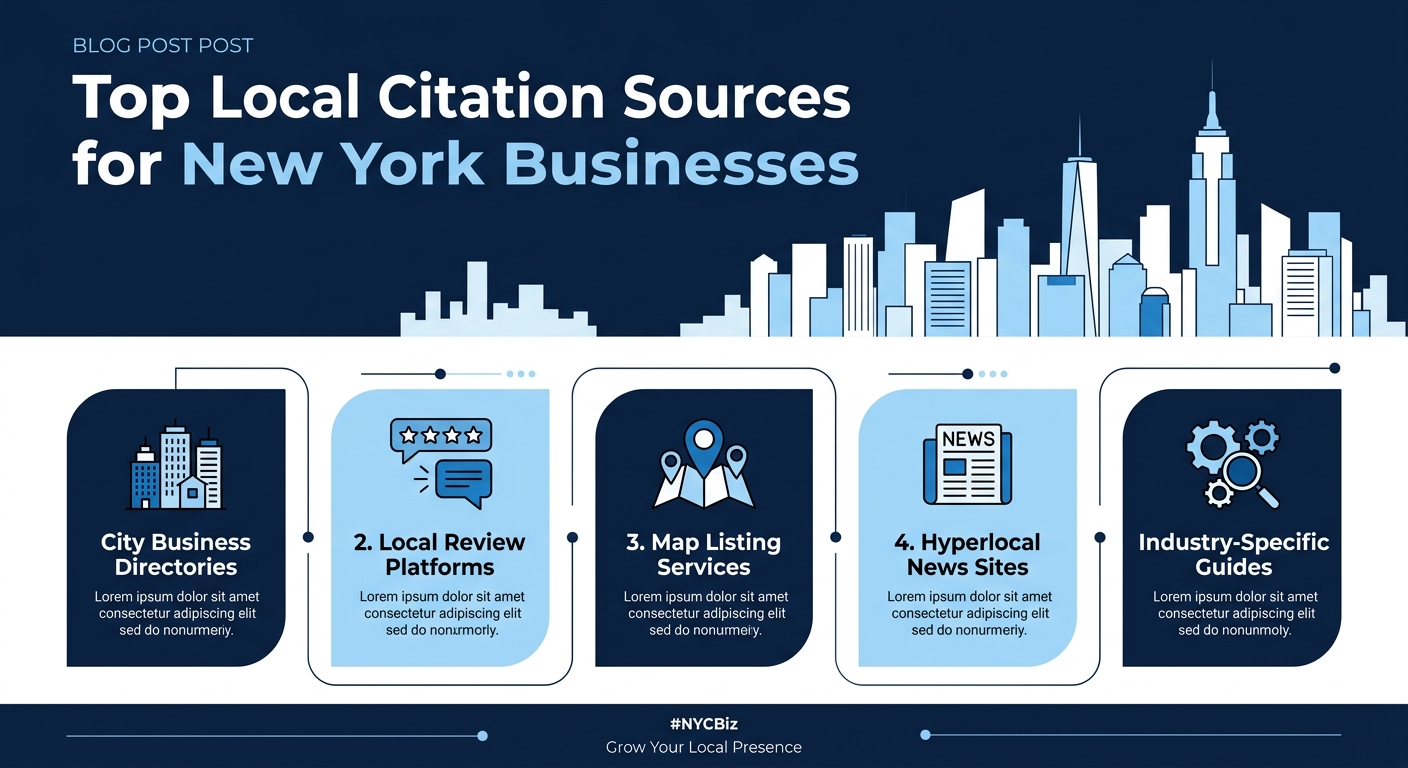
A citation is any online mention of your business name, address, and phone number, whether on a directory, a map app, or a local website. Assistants compare these mentions across the web, and consistent details raise their confidence that your business is real and reliable. Conflicting information, such as an old suite number, can quietly push you below a competitor.
Start by auditing your existing listings and correcting every mismatch in spelling, abbreviations, phone numbers, and hours. Then focus on high quality sources that matter in New York:
- Major map and navigation platforms used by assistants on phones and smart speakers.
- Respected review and directory sites relevant to your industry.
- Local chambers of commerce, business improvement districts, and neighborhood associations.
- Industry bodies and licensing boards that publish verified member listings.
Measuring Voice Search and Near Me Performance
Voice search is hard to isolate in analytics, so the best approach is to track the signals that move alongside it. Look for growth in profile actions, branded searches, and question based queries rather than waiting for a neat voice label. Reviewing these numbers monthly helps you separate real trends from short term noise.
| Metric | What It Shows | Why It Matters |
|---|---|---|
| Profile calls and direction requests | Actions taken from your business listing | Reflects immediate intent from near me searches |
| Question based search queries | Longer, conversational phrases in search reports | Reveals how spoken searches find your pages |
| Local pack visibility | How often you appear in map results | Indicates strength in proximity based ranking |
| Review volume and average rating | Quantity and quality of customer feedback | Influences which business is recommended aloud |
| Mobile conversion rate | Share of phone visitors who call or book | Shows whether your pages turn visits into customers |
| Branded search growth | Searches that include your company name | Signals rising awareness from assistant exposure |
You can also test manually by asking real near me questions on different devices and noting which businesses are spoken back. Repeating this test from several neighborhoods shows how your visibility changes across the city.
Common Voice Search Mistakes NYC Businesses Make
Many businesses lose voice visibility through simple oversights rather than complex technical problems. Spotting these errors early can protect your rankings and your reputation. The most frequent mistakes are listed below:
- Leaving hours outdated, which causes assistants to report a closed business to people ready to visit.
- Using different names, addresses, or phone numbers across directories and social profiles.
- Writing stiff, keyword heavy pages that do not answer real spoken questions.
- Ignoring neighborhood level content and relying on one generic city page.
- Neglecting reviews, including failing to reply to feedback from customers.
- Running a slow, cluttered mobile site that frustrates visitors on a cellular connection.
Another common error is treating voice search as a separate project instead of part of overall local SEO. The same fundamentals of accuracy, clarity, and trust drive results in both areas. Businesses that build those strengths together see the most lasting gains.
The Future of Voice and Local Search in New York
Assistants are becoming more conversational, able to handle follow up questions and remember context within a single session. A customer might ask for a nearby restaurant, then ask about vegetarian options and whether a table is free tonight. Businesses with detailed, current information will be the ones that keep appearing as the conversation continues.
Personalization will also deepen, with assistants considering past behavior, preferred languages, and real time conditions such as weather or transit delays. In a multilingual city like New York, offering helpful content in several languages could become a real competitive edge. Brands that start building flexible, accurate data today will be ready for whatever interface comes next.
Why Choose Dealmate
Dealmate helps local businesses become the answer people hear when they ask for something nearby. Our team combines local SEO knowledge with practical experience in conversational content, structured data, and reputation building. Every plan is shaped around your neighborhood, your customers, and your goals.
We keep the process simple and transparent so you always know what is being done and why. Here is what you can expect when working with Dealmate:
- A full audit of your profiles, listings, and website to uncover voice search gaps.
- Neighborhood focused content written to match how New Yorkers actually speak.
- Technical improvements that make your site fast, crawlable, and mobile friendly.
- Clear monthly reports covering calls, directions, reviews, and local visibility.
- Ongoing support as assistants and local search features continue to evolve.
Frequently Asked Questions
What does near me voice search mean for a local business?
Near me voice search happens when someone speaks a question that asks for a nearby product or service. The assistant uses the person’s location to choose the most relevant local business. These searchers usually want to act quickly, often by calling or visiting. Being the spoken answer can therefore bring high value customers.
How is voice search different from typed search?
Voice searches are longer, more conversational, and often phrased as full questions. Typed searches tend to use short fragments of keywords. Voice results are also usually delivered as one spoken answer instead of a list of links. This makes clear, direct content and complete profiles more important.
Why is Google Business Profile so important for voice results?
Assistants rely heavily on it for facts such as hours, address, phone number, and services. A complete profile gives them the confidence to recommend you. Fresh photos, posts, and answered questions add further trust signals. Neglected profiles often lose to competitors with better data.
Do reviews really affect which business an assistant recommends?
Yes, reviews are a strong signal of trust and quality. Higher ratings and recent feedback make a business easier to recommend. Thoughtful replies to customers also show that you are active and caring. Always earn reviews honestly and never offer rewards for positive ratings.
How can I optimize for neighborhood searches in New York?
Create a useful page for each area you serve and include real local details. Mention nearby landmarks, subway lines, cross streets, and parking tips. Use reviews and stories from customers in that neighborhood. If you have several locations, give each its own profile and page.
What type of content works best for voice search?
Content that answers a clear question in two or three plain sentences works best. Place the question in a heading and the direct answer right below it. Add supporting detail such as pricing, hours, and booking steps. Reading the page aloud is a quick way to test whether it sounds natural.
Is schema markup necessary for voice search?
Schema markup is not strictly required, but it makes your information easier for machines to understand. It labels facts such as your hours, services, reviews, and frequently asked questions. This clarity can improve how accurately your business is represented. Keep the markup consistent with what visitors see on the page.
How fast should my website load for mobile visitors?
Aim for pages that show useful content within a few seconds on a typical cellular connection. Compress images, reduce heavy scripts, and use a responsive layout. Slow pages cause visitors to leave and can weaken your search performance. Regular speed tests help you catch problems early.
How do I measure the results of voice search optimization?
Track profile calls, direction requests, local pack visibility, and question based search queries. Review ratings and branded search growth also show rising awareness. Because voice traffic is hard to label directly, look at these signals together. Checking them monthly gives a clearer picture than daily changes.
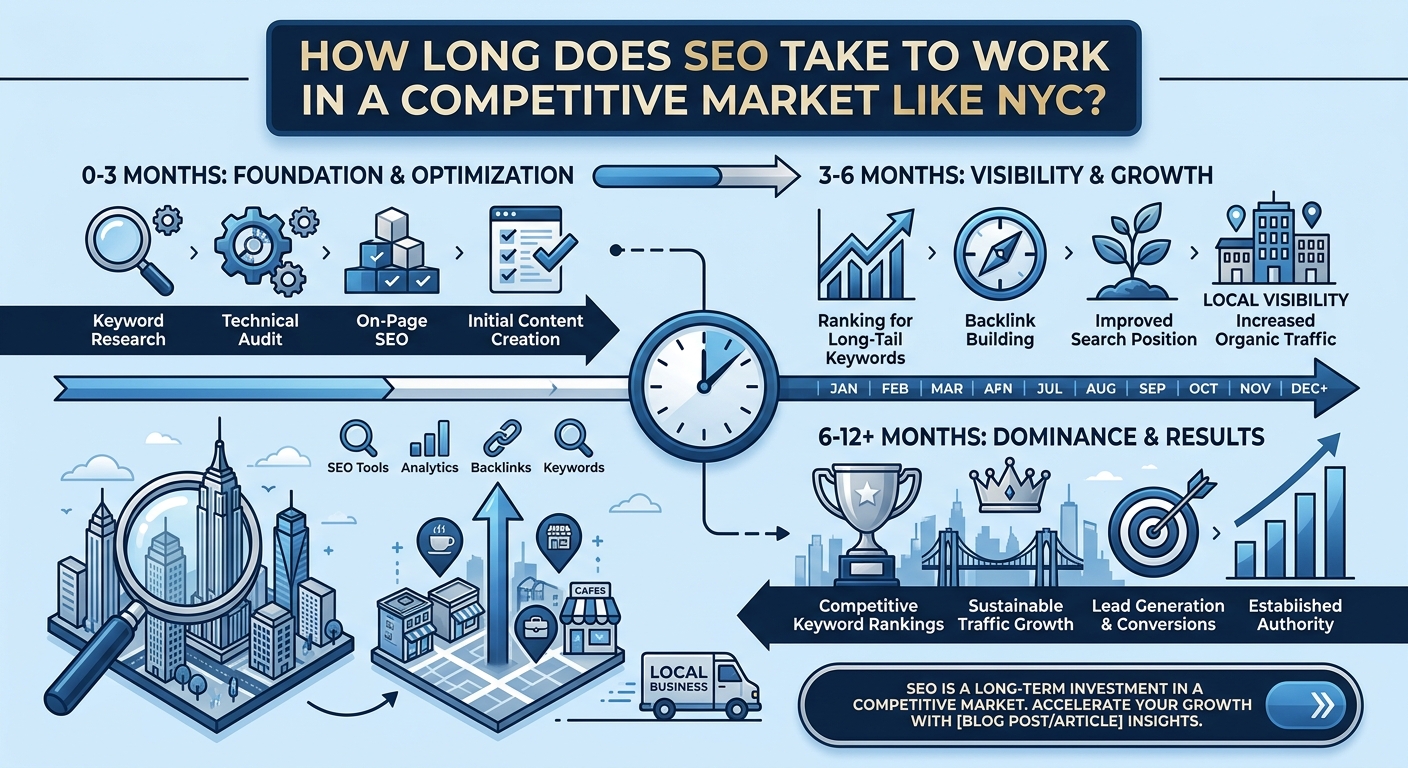
How long does it take to see results from local voice optimization?
Simple fixes such as correcting hours and listings can show effects within weeks. Building reviews, neighborhood content, and authority usually takes a few months. Results depend on competition and how complete your starting point is. Steady, consistent work tends to outperform quick one time efforts.
Conclusion
Voice search has changed how New Yorkers find nearby businesses, rewarding those with accurate information, helpful content, and strong reputations. Since assistants often speak only one answer, being chosen can matter more than ranking on a long list of results. The businesses that prepare now will capture customers who are ready to act.
The path forward is to combine complete profiles, conversational pages, neighborhood focus, clean technical foundations, and steady review building. Measure your progress, correct mistakes quickly, and keep your information current as assistants evolve.