
Introduction: Understanding SEO Costs in New York
Ask ten New York business owners what they pay for SEO and you will likely hear ten different answers. One restaurant owner in Queens may spend a modest amount each month, while a Manhattan law firm may invest ten times more for the same type of service. This wide range makes it very hard to know what a fair price looks like before you start talking to providers.
Cost is usually the first question people ask, and it deserves a careful answer. A price that looks cheap can hide thin work, copied content, or risky link tactics that harm your website. A price that looks high can be excellent value if it brings in a steady flow of calls, bookings, and sales month after month.
This guide explains what SEO experts in New York actually charge, why the numbers vary so much, and how to judge whether a quote is reasonable. You will see typical ranges for freelancers, consultants, agencies, and in-house hires, along with the factors that push a price up or down. By the end, you will be able to compare proposals with confidence and set a budget that fits your goals.
Here is what you will learn from this guide:
- The main pricing models used by SEO professionals in New York
- Typical monthly, hourly, and project costs for each type of provider
- The factors that raise or lower your final quote
- The warning signs of pricing that is too good to be true
Why SEO Costs Vary So Much in New York
New York is one of the most expensive and competitive places in the world to run a business, and that reality shapes SEO pricing. Office rents, salaries, and living costs are higher than in most regions, so professionals who serve this market charge more to cover their own expenses. Heavy demand also means skilled providers are rarely short of work.
Competition is the second major force. Thousands of businesses across Manhattan, Brooklyn, Queens, the Bronx, and Staten Island fight for the same page one positions, and many already spend heavily on marketing. Ranking in a crowded field takes more effort, more content, and more authority than ranking in a quiet small town, and that extra effort shows up in the price.
Experience and quality create a third layer of difference. SEO has no official license or universal certification, so anyone can offer the service regardless of training. A seasoned professional with proven case studies naturally charges more than a beginner who is still learning the craft, and the gap in results is often just as large as the gap in price.
Scope also matters more than most buyers realize. One provider may include content writing, link outreach, and local listing work in a single monthly fee, while another may charge for each of those separately. Comparing two quotes without checking what is included can lead you to choose the wrong one.
Keep these points in mind when you see a very low or very high quote:
- A very low price often means mass-produced links, copied content, or minimal effort
- A very high price does not always mean better quality or better results
- The same fee can buy very different amounts of real work
- Clear deliverables matter more than the number at the bottom of the proposal
Common Pricing Models Explained
Most SEO professionals in New York use one of three pricing structures, and a smaller number offer performance-based deals. Understanding how each model works helps you pick the one that matches the way you prefer to work and budget. The right choice depends on how predictable your needs are and how long you plan to invest.
A monthly retainer is the most common model for ongoing SEO. You pay a fixed fee each month in exchange for a defined set of tasks such as audits, content, optimization, and reporting. This suits businesses that want steady growth, because search results build gradually and consistent effort matters more than one-time fixes.
Hourly pricing works best for short pieces of advice or specific problems. You might hire someone for a few hours to review your site, fix a technical error, or train your team. The risk is that costs can climb quickly without a firm limit, so it helps to agree on a maximum number of hours in advance.
Project-based pricing sets a single fee for a clearly defined piece of work, such as a full website audit, a site migration, or a launch strategy. You know the total cost up front, which makes budgeting simple. Always confirm what support is included after delivery so you are not left stranded with questions.
Performance-based deals tie payment to results such as rankings or leads. They sound attractive, but they can push providers toward risky shortcuts that deliver quick spikes and later penalties. If you consider this model, insist on clear definitions of success and ethical methods in writing.
The table below summarizes the main pricing models and typical ranges. These figures are general estimates and will change with experience, industry, and scope.
| Pricing Model | Typical Range in New York | Best For | What to Watch |
|---|---|---|---|
| Monthly retainer | $1,000 to $10,000 per month | Ongoing growth and local campaigns | Make sure deliverables are listed |
| Hourly rate | $75 to $250 per hour | Short advice and specific fixes | Costs can rise without a set limit |
| Project-based fee | $1,500 to $15,000 per project | Audits, migrations, and launches | Confirm support after delivery |
| Performance-based | Varies widely by agreement | Businesses with clear lead goals | Risk of shortcuts and unclear terms |
Average Cost by Type of SEO Professional
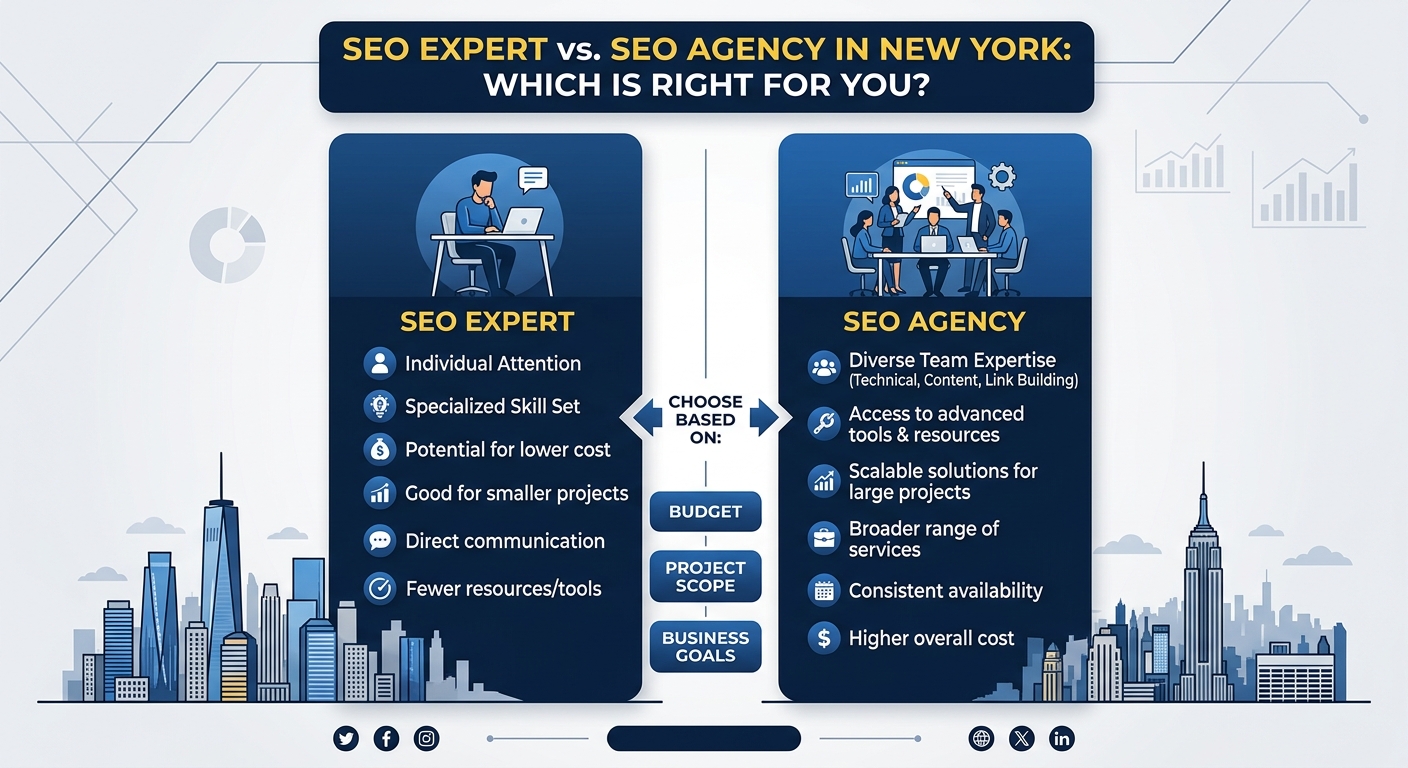
The kind of provider you choose has a major effect on what you pay. New York offers more options than almost any other city, from independent freelancers to large agencies and full-time employees. Each type brings different strengths, so the cheapest option is not always the best fit.
Freelancers and independent consultants usually offer the most affordable rates. They work directly with clients, keep overhead low, and often provide a personal level of attention that larger firms struggle to match. Their main limit is capacity, since one person can only handle so much technical work, writing, and outreach at the same time.
Boutique consultants are small teams that focus on a niche such as law, healthcare, or restaurants. They charge more than most freelancers because their industry knowledge is deeper and their processes are more refined. This option works well when your field is specialized and generic advice will not be enough.
Full-service agencies offer the widest range of skills under one roof, including strategists, writers, developers, and link builders. Their fees are higher because they carry the cost of a full team and formal reporting systems. They suit growing companies and multi-location brands that need many tasks handled at the same time.
In-house specialists work exclusively for your company and know your brand inside out. The cost goes beyond salary, because you also pay for benefits, software tools, training, and management time. This route makes the most sense for large organizations with constant, long-term search needs.
The table below compares typical costs across the four provider types. Treat the figures as general estimates rather than fixed prices.
| Provider Type | Typical Monthly Cost | Typical Hourly Rate | Best For | Main Drawback |
|---|---|---|---|---|
| Freelancer or independent consultant | $1,000 to $4,000 | $75 to $200 | Small businesses on a tight budget | Limited capacity for large projects |
| Boutique consultant | $2,500 to $6,000 | $125 to $250 | Niche industries needing specialist insight | Fewer services outside the specialty |
| Full-service agency | $3,000 to $10,000 or more | $150 to $300 | Growing companies needing many services | Less direct access to senior staff |
| In-house specialist | $6,000 to $11,000 in salary plus tools | Not applicable | Large brands with ongoing needs | Salary, benefits, and tool costs |
Price alone should never decide your choice. A freelancer who delivers measurable growth at a modest fee can be a better investment than an expensive agency that sends generic reports. In the same way, a higher fee makes sense only when the extra resources translate into real results for your business.

Cost by Type of SEO Service
SEO is not a single task. It is a bundle of services that each take different skills and different amounts of time, and the price of your package depends on which ones you need. Knowing what each service costs on its own makes it much easier to read a proposal and spot anything that looks out of line.
Technical SEO covers the foundation of your website, including page speed, crawling, indexing, mobile usability, and structured data. It is often priced as a one-time audit followed by fixes, because most of the heavy work happens early. A site with serious errors or a recent migration will cost more than a clean site that only needs light adjustments.
On-page SEO focuses on titles, headings, content, and internal links so that each page matches what customers search for. This work is usually included in a monthly retainer and scales with the number of pages you want improved. Larger websites with hundreds of pages naturally need more time and a bigger budget.
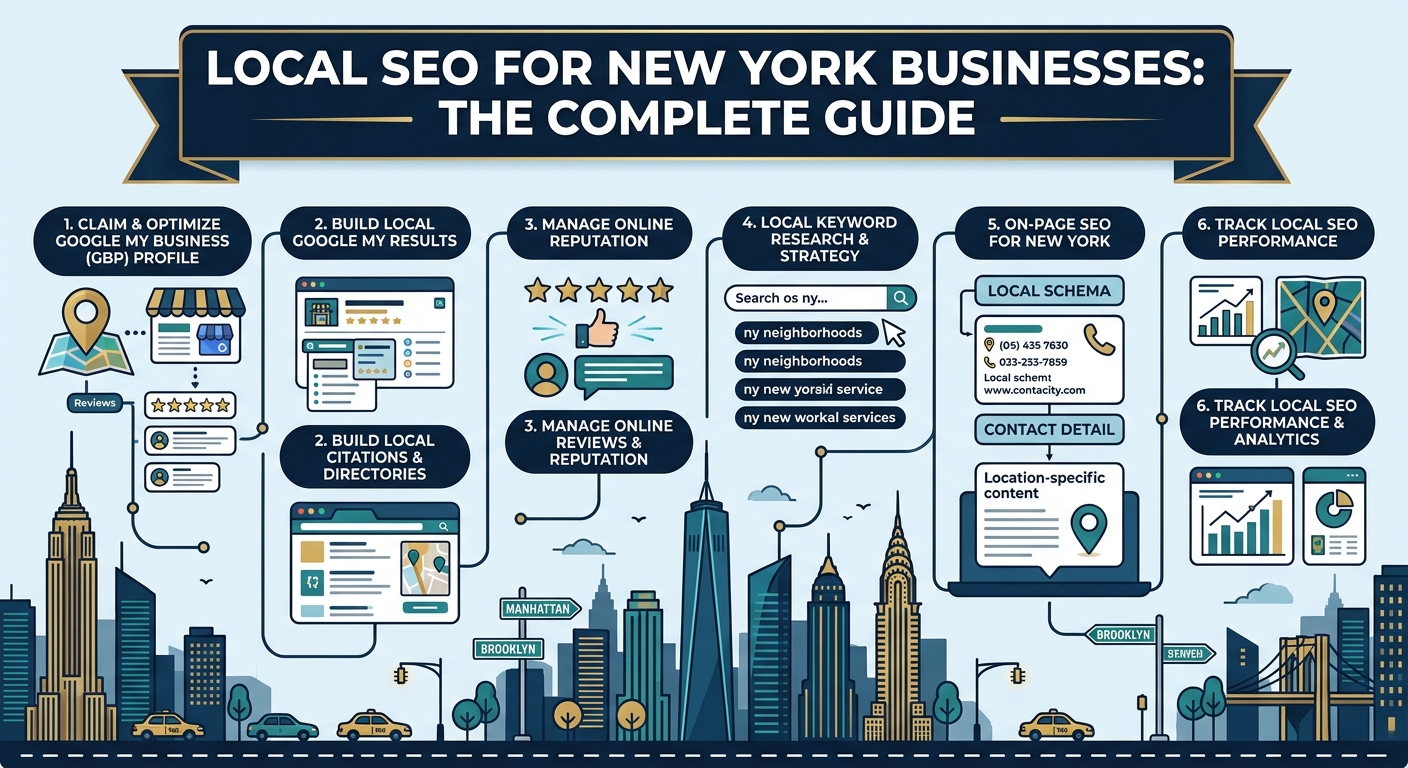
Local SEO is especially important in New York, where customers search by neighborhood and borough. It includes Google Business Profile management, consistent listings, review strategy, and location-focused content. Businesses with several locations pay more because each location needs its own attention.
Content creation is often the largest cost over time. Blog posts, service pages, and guides require research, writing, editing, and fact checking, and quality writers charge accordingly. Cheap content that is copied or mass-produced can do more harm than good, so this is not the place to cut corners.
Link building earns mentions from respected websites through outreach, partnerships, and digital public relations. Ethical outreach takes patient relationship building, which makes it one of the more expensive services. Extremely cheap link packages usually rely on risky tactics that can trigger penalties.
Analytics and reporting tie everything together by showing how search activity turns into leads and revenue. Most providers include basic reporting in their monthly fee, while custom dashboards and detailed conversion tracking may cost extra.
The table below shows typical ranges for each service. These figures are general estimates and will vary with experience, scope, and industry.
| SEO Service | What It Involves | Typical Cost in New York | How It Is Usually Billed |
|---|---|---|---|
| Technical SEO audit | Speed, crawling, indexing, mobile review | $500 to $5,000 | One-time project fee |
| On-page optimization | Titles, headings, internal links, content edits | $500 to $3,000 per month | Part of a monthly retainer |
| Local SEO | Google Business Profile, listings, reviews | $500 to $2,500 per month | Monthly retainer |
| Content creation | Articles, guides, service pages | $150 to $600 per piece | Per piece or monthly package |
| Link building | Outreach, partnerships, digital public relations | $500 to $5,000 per month | Monthly retainer |
| Reporting and analytics | Tracking, dashboards, conversion data | $200 to $1,000 per month | Included or billed separately |
Factors That Raise or Lower Your Quote
Two businesses in the same city can receive very different quotes for what sounds like the same service. The difference usually comes down to a handful of factors that change how much work the provider must do. Understanding these factors lets you see why a quote looks the way it does and where you may have room to adjust.
Website size and condition come first. A small site with a dozen pages and no technical problems needs far less effort than a large online store with thousands of products. Old websites with broken links, slow pages, or outdated code often require extra cleanup before real growth can begin.
Industry competition is the second major driver. In crowded fields such as law, healthcare, and real estate, ranking takes more content, stronger links, and constant monitoring. In quieter niches, the same level of visibility may need much less work and therefore a smaller budget.
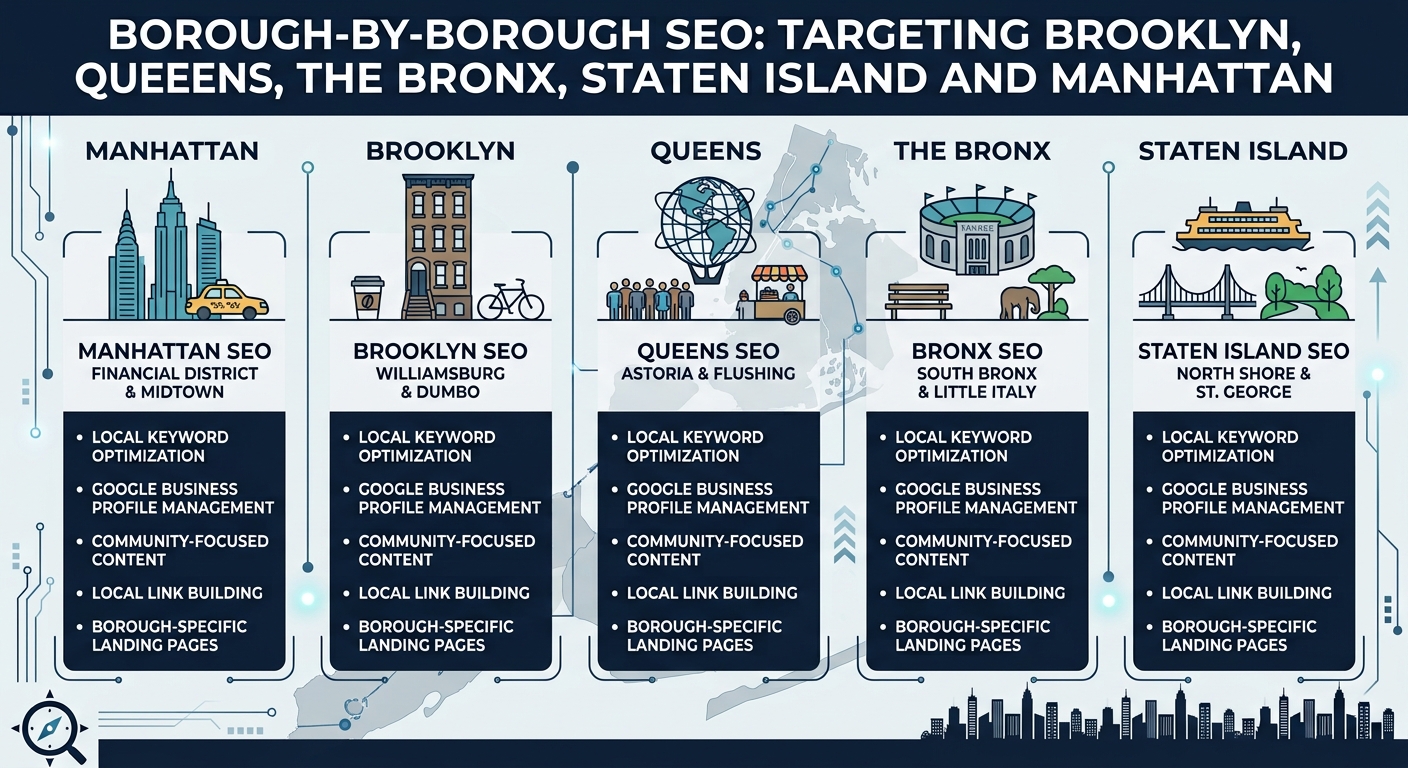
The number of locations you serve also changes the price. A single shop in Brooklyn needs one well-optimized profile and a focused set of local pages. A company serving all five boroughs needs separate attention for each area, which multiplies the workload.
Your goals and timeline matter as well. Wanting to dominate a large keyword list in six months costs far more than aiming for steady local growth over a year. Faster targets require more people, more content, and more outreach, and providers price that urgency into their quotes.
Finally, the experience of the provider and the level of service shape the number. Senior strategists charge more than juniors, and hands-on communication with regular meetings costs more than a simple monthly report. These differences are fair, as long as you know what you are paying for.
The most common price drivers are listed below:
- Size and technical health of your website
- Competitiveness of your industry and keywords
- Number of locations and neighborhoods you serve
- Speed of growth you expect
- Experience level of the provider or team
- Amount of content and outreach included
Pricing by Industry in New York
Industry has a stronger influence on SEO pricing than most owners expect. The value of a single customer, the level of competition, and the complexity of the rules in your field all affect how much work is needed. A law firm that earns thousands from each new client can justify a larger budget than a coffee shop that earns a few dollars per visit.
Law firms and financial services sit at the top of the price range. Competition for terms like injury lawyer or tax advisor is intense, and strict standards around accuracy and trust require careful content. Providers charge more because ranking in these fields takes sustained effort and expert writing.
Healthcare and dental practices also pay higher fees. Health topics are held to high standards of accuracy and credibility, which means content needs expert review and careful sourcing. Local visibility is also vital, since patients usually search for providers near their home or work.
Real estate sits in a similar bracket because of heavy competition and the need for many location pages, listing content, and neighborhood guides. Success depends on strong local signals and a steady stream of fresh material.
Restaurants, salons, and retail shops usually fall in the middle or lower range. Their strongest results often come from excellent local SEO, reviews, and simple, fast websites. Budgets can stay modest because the work is focused on a smaller set of goals.
Home service businesses such as plumbers, electricians, and movers depend heavily on local searches and map results. Moderate budgets can deliver strong returns, especially when the business serves a few clearly defined neighborhoods.
The table below gives a general guide to monthly spending by industry. These ranges are estimates and will change with scope and competition.
| Industry | Typical Monthly Budget | Main Cost Driver | Key Priority |
|---|---|---|---|
| Law and financial services | $3,000 to $10,000 | Intense competition and strict accuracy needs | Authority content and link building |
| Healthcare and dental | $2,500 to $8,000 | Expert review and trust requirements | Local visibility and credible content |
| Real estate | $2,500 to $7,500 | Many location pages and fresh content | Neighborhood pages and listings |
| Restaurants and retail | $1,000 to $3,500 | Local competition and review volume | Google Business Profile and reviews |
| Home services | $1,200 to $4,000 | Service area coverage | Map visibility and service pages |
| Ecommerce stores | $2,000 to $8,000 | Large catalogs and technical complexity | Product pages and site structure |
Hidden Costs and Add Ons to Watch For
The number on the front page of a proposal is rarely the full story. Many providers advertise a low base fee and then charge extra for things that most clients assume are included. Learning to spot these items before you sign can save you from unpleasant surprises and help you compare quotes fairly.
Software tools are a common extra cost. Rank trackers, audit platforms, and link research tools can cost hundreds of dollars per month, and some providers pass that expense to clients. Ask directly whether tools are included in the retainer or billed separately.
Content is another frequent add-on. A package may promise optimized pages but exclude new articles, which are often where the biggest growth comes from. Clarify how many pieces are included each month, who writes them, and who pays for editing and images.
Setup and onboarding fees also appear in many proposals. A one-time charge for the initial audit and strategy is reasonable, but it should be clearly stated and explained. Be careful of vague fees labeled as administration or management that do not describe real work.
Link outreach can carry separate costs for paid placements, sponsored mentions, or partnerships. Ethical outreach is worth paying for, but you should know exactly how much of your budget goes toward it and what kind of sites will be targeted.
Website changes outside the provider’s scope can add up as well. Fixing code, redesigning pages, or changing your content management system may require a developer, and that work is often billed on its own. Ask who handles these tasks and how much they usually cost.
Use this short checklist when reading any proposal:
- Does the fee include tools, or are they billed separately?
- How many content pieces are included each month?
- Are there setup, onboarding, or administration fees?
- Who pays for link outreach and any paid placements?
- What happens if your website needs developer work?
- Is there a charge for extra meetings or custom reports?
A clear written scope of work is the best protection against hidden costs. It should list every deliverable by month, explain what is excluded, and describe how changes are approved. Any provider who is unwilling to put these details in writing is giving you a reason to keep looking.
With the main cost drivers and hidden charges now clear, you are ready to turn this knowledge into a practical budget.

How to Set a Smart SEO Budget
A good SEO budget starts with your business goals rather than with a number you saw online. Decide what success looks like in plain terms, such as more phone calls, more bookings, or more store visits. Once the goal is clear, you can work backward to see what level of investment makes sense.
Think about the value of a single customer. If one new client is worth several thousand dollars, even a handful of extra clients each month can justify a substantial budget. If a typical sale is small, you will need higher volume and a more modest spend to keep the return healthy.
Your stage of growth matters too. A new business with a fresh website often needs foundational work first, while an established company may be ready for aggressive content and outreach. Choose a monthly range you can sustain for at least six months, because search results build gradually and stopping early wastes the effort already invested.
Treat SEO as an investment and measure it that way. Track organic traffic, calls, form submissions, and sales that come from search, then compare them with what you spend. A modest fee that brings in steady leads is far better value than a cheap package that delivers nothing.
The table below offers a general guide to matching budget with business stage. These figures are estimates and will change with your industry and goals.
| Business Stage | Suggested Monthly Range | Main Focus | Expected Early Signs |
|---|---|---|---|
| New local business | $1,000 to $2,500 | Local listings, core pages, reviews | Better map visibility and impressions |
| Established small business | $2,000 to $4,500 | Content, local growth, link building | Rising organic traffic and calls |
| Growing multi-location company | $4,000 to $8,000 | Location pages, content, outreach | More leads across several boroughs |
| Large or competitive brand | $8,000 and above | Authority building, technical depth | Stronger rankings for high-value terms |
Use this checklist while planning your budget:
- Write down your goal in terms of calls, bookings, or sales
- Estimate the value of one new customer
- Choose a monthly range you can maintain for six months
- Decide how much of the budget goes to content and outreach
- Set a review date to judge results with your provider
Pricing Red Flags to Avoid
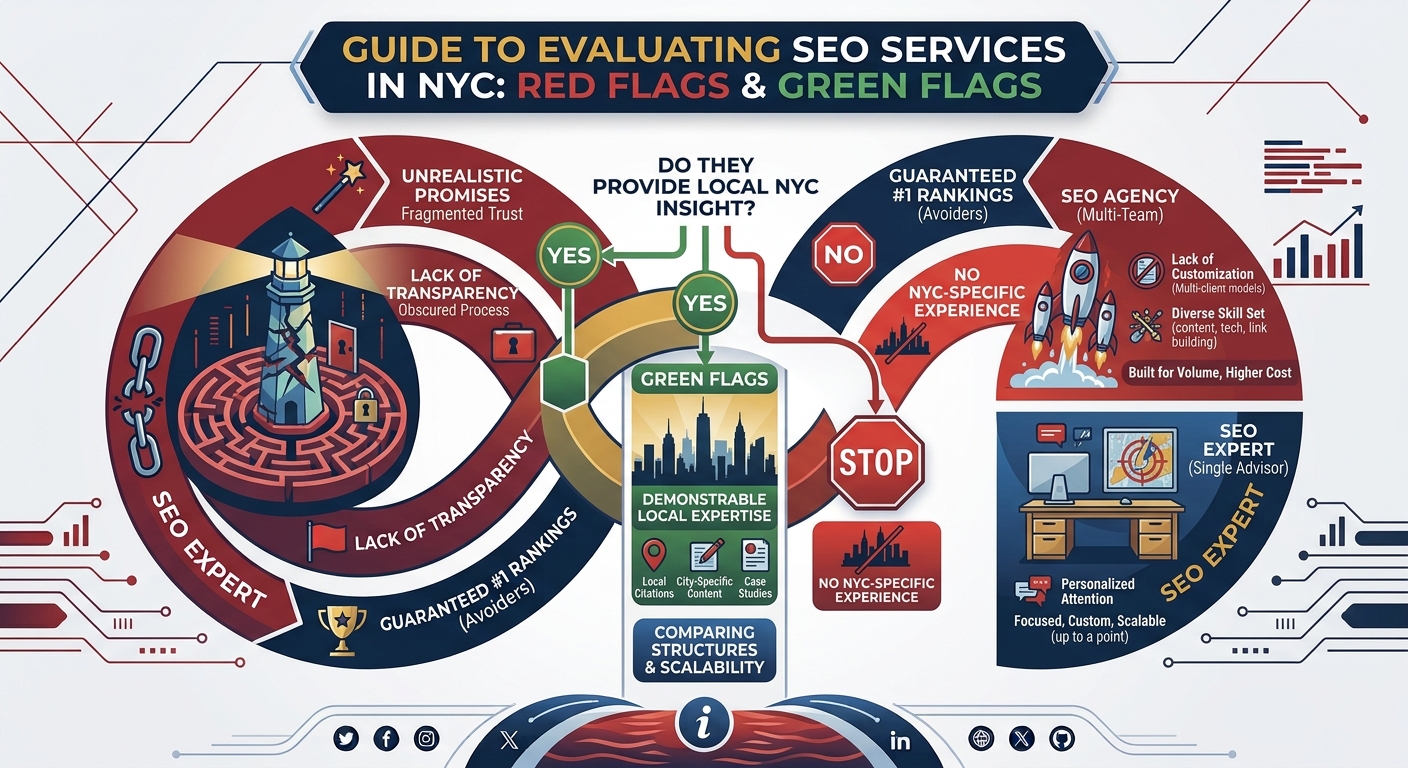
The SEO industry attracts some providers who overpromise and underdeliver, and pricing is often where the warning signs first appear. Learning to recognize these patterns protects your budget and your website. Some bad tactics can even trigger penalties that take months to reverse.
Watch closely for these pricing warning signs:
- Guaranteed first page or number one rankings, since no one controls the search engine
- Extremely cheap packages that rely on mass-produced links or copied content
- Vague deliverables such as optimization work with no list of tasks
- Long contracts with heavy cancellation fees and no performance review
- Pressure to sign quickly in exchange for a limited-time discount
- Refusal to share sample reports, references, or case studies
A single warning sign does not always mean dishonesty, but several together should end the conversation. Trust your instincts and ask for written clarification whenever something sounds too good to be true. Reputable providers focus on explaining the work instead of dazzling you with promises.
Be careful with the opposite problem as well. A very high price does not guarantee quality, and some providers charge premium fees for generic reports copied across clients. Always judge a proposal by the specific work, the clarity of the plan, and the evidence of past results.
Questions to Ask About Price Before Hiring
Interviews are your best chance to understand exactly what your money will buy. Prepare the same questions for every candidate so you can compare answers fairly, and listen for specific details instead of vague reassurance. A professional who knows the craft will welcome tough questions about cost.
Start with questions about scope and deliverables:
- What exactly is included in the monthly fee?
- How many content pieces and outreach efforts are included?
- Which tools are included and which are billed separately?
Then ask about contracts and ownership:
- What is the contract length and what are the cancellation terms?
- Will I own my accounts, content, and data if we stop working together?
- Are there setup fees or charges for extra meetings and reports?
Finish with questions about proof and communication:
- Can you share case studies from businesses similar to mine?
- What will your reports include and how often will I receive them?
- Who will work on my account day to day?
Clear, confident, and honest answers are a strong sign of quality. Hesitation about ownership, pricing, or past failures is a good reason to keep looking, and it is far better to learn this before you sign than after.
Why Choose Dealmate
Dealmate treats search optimization as a partnership built on honesty, clear communication, and measurable outcomes. Every engagement begins with a thorough review of your website, your competitors, and your local market, so your plan and your price reflect your real needs instead of a generic package.
You always know what you are paying for and how it connects to growth. The team uses ethical, long-term methods that protect your site and build lasting authority, avoiding shortcuts that risk penalties. Here is what you can expect when you work with Dealmate:
- A written scope of work that lists every deliverable
- Transparent pricing with no hidden fees
- Plain-language monthly reports that connect search activity to leads
- Full ownership of your accounts, content, and data
- Named contacts with clear response times
Dealmate combines the personal attention of an independent expert with the structure and depth of a full team. If you want to test the questions in this guide, the team welcomes every one of them.
Frequently Asked Questions
How much does an SEO expert in New York cost per month?
Most small and mid-sized businesses spend between one thousand and several thousand dollars per month. Freelancers usually sit at the lower end, while agencies and specialists in competitive fields charge more. Your industry, website size, and number of locations all influence the final figure. Ask each provider to explain what your chosen budget will deliver.
What is a typical hourly rate for an SEO consultant?
Hourly rates in New York commonly range from about seventy-five to two hundred fifty dollars. Rates depend on experience, specialty, and the type of provider you hire. Hourly pricing works best for short advice or specific fixes rather than ongoing campaigns. Agree on a maximum number of hours so costs do not climb unexpectedly.
Is a cheap SEO package ever a good idea?
Very low prices often mean copied content, mass-produced links, or minimal effort. These shortcuts can harm your rankings and take months to repair. A fair price usually reflects real time, skill, and ongoing reporting. Focus on value and clarity instead of choosing the lowest quote.
How long before I see a return on my investment?
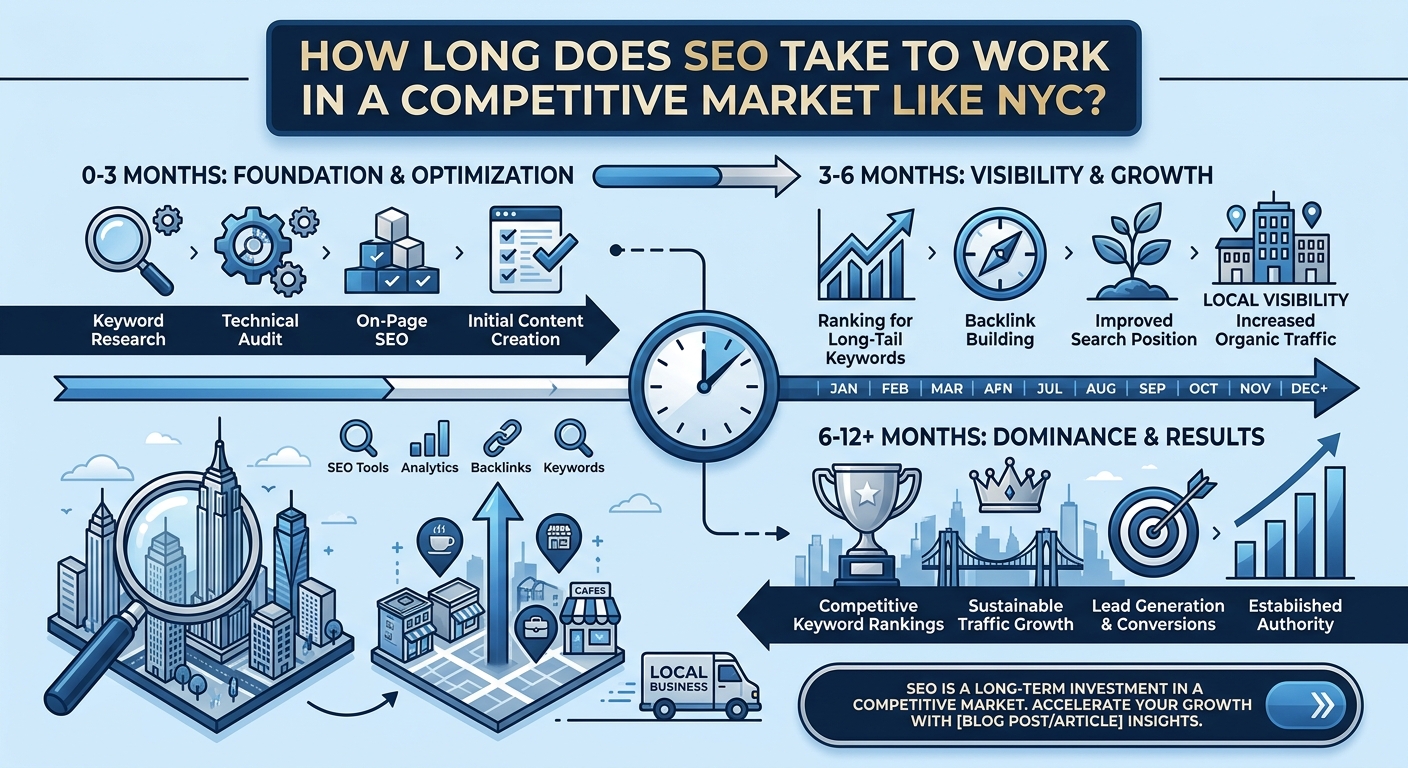
Early improvements often appear within three to four months. Competitive New York industries may need six to twelve months for strong ranking gains. Results build gradually because search engines need time to evaluate your changes. Anyone promising first-page results in a few weeks deserves caution.
Should I choose a monthly retainer or a one-time project?
A retainer suits businesses that want steady, ongoing growth because search results depend on consistent effort. A project fee works well for audits, migrations, and website launches with a clear endpoint. Many companies start with a project and move to a retainer afterward. Choose the model that matches your goals and how long you plan to invest.
How much does local SEO cost in New York?
Local SEO often runs from about five hundred to two thousand five hundred dollars per month for a single location. The price rises with the number of locations and boroughs you serve. The work covers your Google Business Profile, listings, reviews, and location-focused content. Strong local optimization can bring steady traffic from nearby customers who are ready to buy.
Is content writing included in the monthly fee?
It depends entirely on the provider and the package. Some fees include a set number of articles each month, while others charge separately for every piece. Always ask how many pieces are included and who handles editing and images. A written scope of work removes any confusion before you commit.
Do I need to own my accounts and website content?
Yes, you should always keep full ownership of your website, analytics, listings, and content. This protects you if you change providers or end the contract. Confirm ownership terms in writing before work begins. A trustworthy provider will agree without hesitation.
How do I know if my SEO investment is paying off?
Look at organic traffic, keyword movement, local map visibility, and the leads or sales that come from search. A good report links these numbers to real business outcomes in plain language. Review results with your provider every month and compare them with your original goals. If you cannot understand a report, ask for a clearer format.
Can anyone guarantee a number one ranking for a set price?
No honest professional can guarantee a specific ranking at any price. Search results are shaped by hundreds of factors that change constantly and are controlled only by the search engine. Anyone offering a guarantee is either misleading you or using risky tactics. Look instead for clear strategies and measurable progress.
Conclusion: Paying the Right Price for SEO
The cost of an SEO expert in New York depends on the provider, the services you need, your industry, and your goals. Freelancers offer lower rates, agencies offer broader resources, and specialists charge more for deep experience in competitive fields. The best choice is the one that delivers measurable value for the money you spend.
Set a budget you can sustain, insist on a clear written scope, and watch for pricing red flags before you sign anything. Ask the questions from this guide, compare proposals on substance rather than price alone, and choose the provider who explains the work openly. If you are ready to turn search into a dependable source of customers, Dealmate is ready to help you take the next step.
Lorem ipsum dolor sit amet, consectetur adipiscing elit. Ut elit tellus, luctus nec ullamcorper mattis, pulvinar dapibus leo.