Introduction to Startup SEO in New York City
New York has grown into one of the most dynamic startup ecosystems in the world. From fintech founders in the Financial District to software teams in Brooklyn and media technology companies in Midtown, the city is filled with ambitious teams building new products every day. With so many young companies competing for attention, customers, and talent, getting discovered has become just as important as building a great product.
Most buyers begin their research online. A finance manager searching for expense software, a retailer comparing inventory tools, or a consumer looking for a new health app will usually start with a search engine before speaking to anyone. The startups that appear in those results, with clear messaging and credible content, are often the ones that earn the first visit, the first demo, and the first customer.
Search engine optimization, commonly called SEO, is the practice of making your company easier to find and easier to trust online. It covers your website, your product pages, your content, your reviews, and every place your brand appears on the internet. For a startup with a limited budget, SEO can become one of the most efficient growth channels because well built pages continue to attract visitors long after they are published.
This guide explains how startups in the New York tech scene can use SEO to attract more users, generate qualified leads, and build a lasting brand. The first part covers why SEO matters for early stage companies, how buyers and users search for tech products, and how to build a strong foundation. Here is what you will learn throughout the full guide:
- Why organic search can support growth when budgets and teams are small
- How buyers and users search for solutions and what they expect to see
- How to set up a website structure that search engines and customers can understand
- How to optimize product pages and publish content that drives real results
- How to build authority, track progress, and keep improving over time
Why SEO Matters for NYC Startups
Startups often face a familiar challenge, which is the need to grow quickly with limited resources. Paid advertising can bring fast traffic, but costs in competitive software and technology categories can rise sharply, and the results stop when the budget ends. SEO offers a more durable path, because strong pages can keep delivering visitors month after month without a fee for every click.
The New York market adds extra pressure. Thousands of startups share the same city, the same investors, and often the same customers, so standing out requires a clear voice and a strong online presence. Appearing for the right searches can place your product in front of people who are actively looking for a solution, which is far more efficient than trying to interrupt people who are not.
SEO also supports trust. Investors, partners, journalists, and potential hires often search for a company before taking a meeting, and what they find shapes their first impression. A professional website, helpful content, and positive mentions across the web signal that your startup is real, credible, and moving forward.
The table below compares common growth channels for startups and shows where SEO fits.
| Growth Channel | Speed of Results | Cost Pattern | Long Term Value |
|---|---|---|---|
| Paid advertising | Fast | Ongoing cost for every click | Stops when spending stops |
| Social media | Moderate | Time and creative effort | Builds awareness but can be unpredictable |
| Email marketing | Moderate | Low cost per message | Strong for nurturing existing contacts |
| Partnerships and events | Moderate to slow | Time and travel costs | Valuable for relationships and credibility |
| SEO | Gradual | Upfront effort with lower ongoing cost | Compounds over time and keeps attracting visitors |
This comparison does not mean you should rely on only one channel. The strongest startups combine several approaches, but SEO often becomes the foundation that supports the rest. Content created for search can also be used in sales conversations, email campaigns, and social posts, which makes each piece more valuable.
Another advantage is the quality of the traffic. People who find you through a specific search usually have a clear need, which can lead to higher conversion rates than broad awareness campaigns. Over time, a healthy organic channel can lower your cost to acquire each customer and give your startup a more predictable path to growth.
How Buyers and Users Search for Tech Products
Understanding how people search is the starting point for any effective startup SEO plan. Buyers and users move through different stages, and each stage produces different kinds of searches. When you understand these patterns, you can create pages that meet people at the right moment.
Early in the journey, people search for problems rather than products. They may type phrases such as how to reduce customer churn, ways to automate invoicing, or why is my team missing deadlines. These searches show that the person is still learning, and helpful guides can introduce your startup as a trusted source before they ever consider a purchase.
As buyers move closer to a decision, their searches become more specific. They look for solutions, comparisons, and alternatives, such as best project management tools for small teams or software for managing subscription billing. At this stage, clear product pages, comparison content, and honest explanations can make the difference between being shortlisted and being ignored.
Here are common search types that matter for startups:
- Problem searches, where the person describes a challenge they want to solve
- Solution searches, where the person looks for a type of product or service
- Comparison searches, such as one tool versus another or best tools for a certain need
- Alternative searches, where users look for options to a well known competitor
- Pricing and review searches, where buyers check costs and feedback
- Brand searches, where the person already knows your startup and wants details
Business buyers and consumers search differently. Business buyers often involve several people, take more time, and look for detailed information such as security, integrations, and case studies. Consumers usually decide faster and respond strongly to simple messaging, clear benefits, and social proof.
Local searches also matter for many New York startups. Companies hiring in the city, hosting events, or serving local customers can benefit from searches that include a neighborhood or borough. Showing your presence in the local tech community can also help attract talent and partners who want to work with companies nearby.
Mobile use should not be ignored, even for business products. Many decision makers research tools on their phones during commutes or between meetings, and a site that is slow or hard to read on a small screen can lose them quickly. Fast pages and clear layouts help you keep the attention of busy visitors.
Building a Strong SEO Foundation
Before creating a large amount of content, make sure your website is built on a solid and healthy foundation. A strong foundation helps search engines crawl, understand, and rank your pages, and it gives visitors a smooth experience from the first click. Problems at this level can quietly hold back every other effort.
Site structure is the first priority. Organize your website into clear sections such as product, solutions, pricing, resources, and company, so that both visitors and search engines can understand what you offer. A logical structure helps people find information quickly and shows search engines how your pages relate to one another.
Technical health is equally important. Make sure your site loads quickly, uses a secure connection, works well on mobile devices, and avoids broken links and error pages. Startups that build with modern frameworks should confirm that important content can be read by search engines, since some designs rely heavily on scripts that may hide text from crawlers.
Brand consistency also matters. Use one standard version of your company name, description, and contact details across your website, social profiles, and directories. Clear and consistent information helps search engines connect all mentions of your brand and builds trust with new visitors.
Use this checklist to build your foundation:
- Organize your site into clear sections for product, solutions, pricing, and resources
- Use short, descriptive page addresses that reflect the page topic
- Confirm that your site loads quickly and works smoothly on mobile
- Secure your entire site with a safe connection and fix broken links
- Make sure important content can be seen and read by search engines
- Submit a sitemap so that search engines can find your key pages
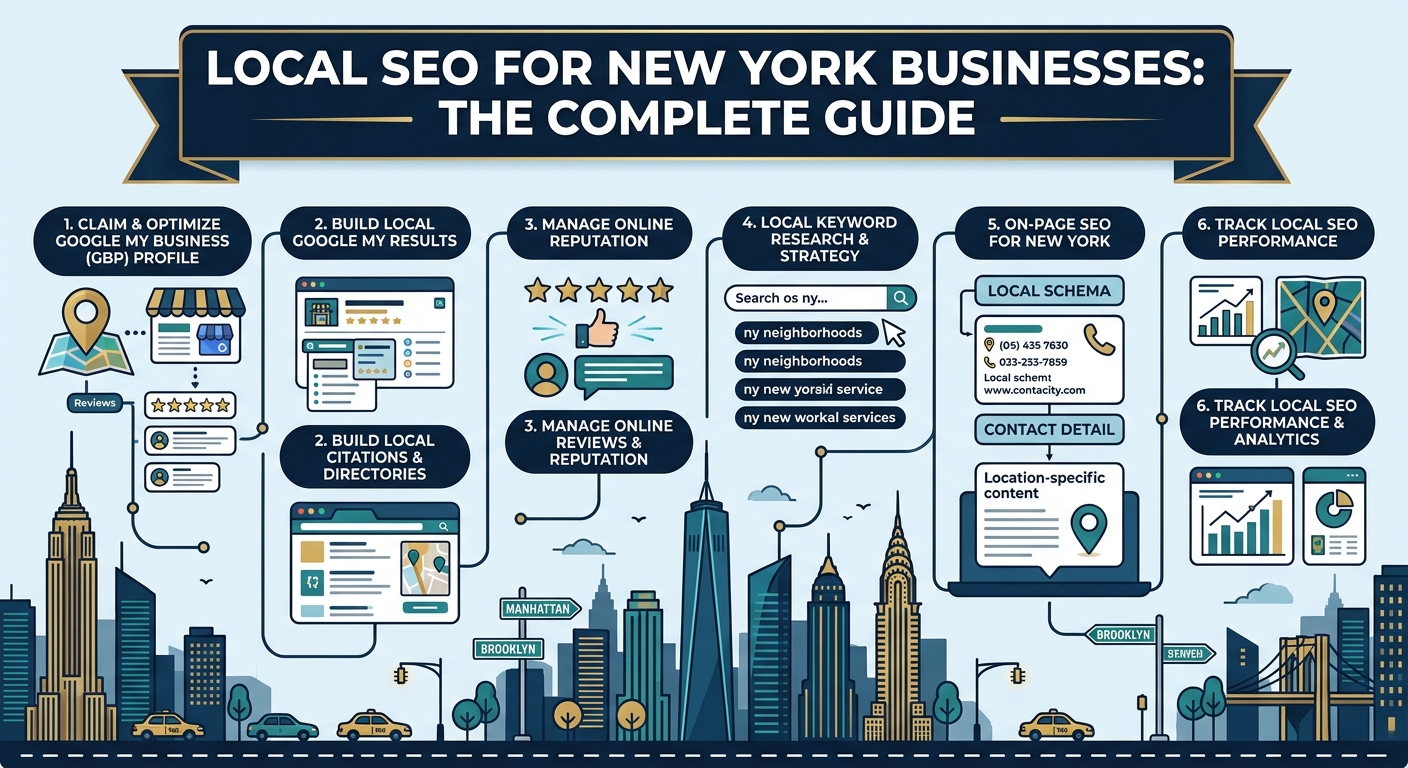
Startups with a New York office, coworking space, or event venue should also set up local profiles. Claim and verify your Google Business Profile if customers or candidates can visit, and complete every section with accurate details. Keep your name, address, and phone number consistent across every directory and platform so that your local presence is clear and reliable.
Set up tracking from the very beginning. Connect analytics and search performance tools to your site so that you can see which pages attract visitors, which searches bring them, and which actions they take. Early data gives you a baseline, and it helps you make better decisions as your startup grows.
Finally, remember that your foundation needs regular attention. Products evolve, pages change, and new features appear, so a monthly review helps keep everything healthy. With a clean and well organized base in place, you are ready to build a website and content strategy that turns more searches into real users and customers.

Startup Website Essentials
Your website is the center of your online presence, and for most startups it is the first place that investors, customers, and candidates form an opinion. When someone finds you through a search result, a news mention, or a referral, the next step is a visit to your site. A clear, fast, and credible website can turn that visit into a demo request, a signup, or a conversation within minutes.
Clear messaging comes first. Visitors should understand within a few seconds what your product does, who it is for, and why it matters. Avoid vague slogans and heavy jargon, and use simple language that explains the problem you solve and the result customers can expect.
Speed and mobile design are equally important. Many decision makers browse on their phones while commuting through the city or moving between meetings, so slow pages and cluttered layouts can lose them quickly. Compress images, keep scripts lean, and choose a design that reads clearly on small screens.
Conversion paths should be easy to find. Place a primary action such as start a free trial, book a demo, or join the waitlist near the top of every key page, and repeat it at natural points as visitors scroll. Every extra step between interest and action gives a busy visitor another reason to leave, so keep forms short and the next step clear.
The table below outlines the essential website elements and why each one matters.
| Website Element | Purpose | Why It Helps SEO and Growth |
|---|---|---|
| Clear homepage message | Explains the product and audience quickly | Reduces early exits and sets context for search engines |
| Fast mobile friendly design | Smooth browsing on every device | Improves user experience and supports rankings |
| Product and solution pages | Describes features, benefits, and use cases | Helps the site appear for specific searches |
| Pricing page | Answers cost questions openly | Attracts high intent visitors and builds trust |
| Customer proof and case studies | Shows real results | Strengthens credibility and conversion rates |
| Resource or blog section | Publishes helpful guides and insights | Captures early stage searches and builds authority |
| Clear calls to action | Guides visitors toward a demo or signup | Turns traffic into leads and customers |
| About and team pages | Shows the people and mission behind the company | Builds trust with customers, partners, and candidates |
Trust signals deserve a visible place across the site. Display customer logos where you have permission, share short testimonials, and explain your approach to security and privacy in plain language. A real team page with photos and short biographies helps visitors feel that they are dealing with credible people.
Keep your core business details consistent across every platform. Your company name, description, and contact information should match on your website, social profiles, and directories. Treat your website as the main source of truth and update it first whenever something changes.
Keyword Strategy for Startups
Keywords are the words and phrases that people type into search engines when they are looking for answers or solutions. A smart keyword strategy helps you understand what your audience wants and then match your pages to those needs. For startups, the key is to choose terms that are relevant, realistic, and connected to real business goals.
New companies usually have less authority than established competitors, so competing for the most popular terms can be difficult. A better approach is to focus on specific phrases where the competition is lower and the intent is clear. A search such as invoicing software for freelance designers is easier to win than invoicing software, and the visitor is often much closer to a decision.
Start by listing the problems your product solves and the audiences you serve. Then consider the exact words your customers use, which may differ from the terms inside your company. Talking with early customers, reviewing sales calls, and reading support questions are excellent ways to discover real phrasing.
Here are the main keyword groups to consider:
- Problem keywords, such as how to track remote team productivity
- Solution keywords, such as tools for managing remote teams
- Audience keywords, such as software for small agencies or startups in healthcare
- Comparison keywords, such as best tools for a specific task or one product versus another
- Alternative keywords, such as options similar to a well known competitor
- Feature and integration keywords, such as software that connects with a popular platform
Match each keyword group to a specific page whenever possible. Problem keywords fit blog guides, solution keywords fit product pages, and comparison keywords fit dedicated comparison pages. This structure gives search engines a clear picture of what each page offers and helps visitors land on the most relevant information.
Think about intent as well as wording. A person searching for how to solve a problem wants education, while a person searching for the best tool is ready to compare options. Writing each page to satisfy its main purpose leads to stronger engagement than simply repeating keywords.
The table below shows how different search intentions connect to page types.
| Search Intent | Example Search | Best Page to Show | Key Feature to Include |
|---|---|---|---|
| Learn about a problem | How to reduce customer churn | Guide or blog article | Practical steps and a gentle introduction to your solution |
| Find a solution | Software to manage customer onboarding | Product or solution page | Clear benefits, use cases, and a call to action |
| Compare options | Best onboarding tools for small teams | Comparison page | Honest feature comparison and clear positioning |
| Check pricing | Onboarding software pricing | Pricing page | Transparent plans and answers to common questions |
| Find a local company | Tech startup in Brooklyn hiring engineers | Careers or company page | Location details, culture, and open roles |
Finally, write for people first. Search engines understand meaning very well, so there is no need to repeat the same phrase many times. Clear and helpful writing that answers real questions will always outperform pages filled with awkward or forced keywords.
Product and Solution Page Optimization
Product and solution pages are where interest turns into action, so they deserve careful attention. Each page should focus on a single product, feature, or audience and explain it in enough depth to answer the questions a buyer is likely to have. Thin pages with only a few lines of general marketing language rarely perform well in a competitive market.
A strong product page begins with a clear heading that states what the product does and who it helps. It then explains the main benefits, shows how the product works, and gives examples of real use cases. Screenshots, short videos, and simple diagrams can make complex ideas easier to understand and keep visitors engaged.
Use case pages are especially valuable for startups. Instead of describing everything your product can do on one page, create separate pages for the audiences and situations you serve, such as marketing teams, finance leaders, or small retailers. Each page can speak directly to a specific need, which helps you appear for more targeted searches and makes the message feel personal.
Use this short checklist when optimizing each page:
- Write a unique title and short description for every page
- Use one clear main heading that states the product or use case
- Explain benefits in plain language and support them with examples
- Add screenshots, short videos, or diagrams that show the product in action
- Include customer proof, such as testimonials or short case study highlights
- Place a visible call to action near the top and the bottom of the page
Pricing pages deserve special care. Visitors who reach pricing are often close to a decision, so clear plans, honest explanations, and answers to common questions can remove hesitation. If you cannot publish exact prices, explain how pricing works and what factors affect the cost.
Titles and descriptions play a big role in how your pages appear in search results. A good page title includes the product or topic, a key benefit, and your brand name in a natural and readable way. The short description under the title should invite action, such as seeing how the product works or starting a trial.
Consider adding structured details that help search engines understand your product. Information such as product name, category, ratings, and pricing can be presented in a format that search tools read easily. This can help your pages appear with richer details in results, which often increases clicks.
Internal links connect your site and guide visitors deeper. Link blog guides to related product pages, connect use cases to relevant case studies, and add clear paths from pricing to demos. A logical link structure shows that your site covers each topic thoroughly and keeps visitors exploring longer.
Content That Drives Growth
Content is one of the most powerful tools a startup can use to earn attention without a large advertising budget. Helpful guides, honest comparisons, and original insights bring in people who are searching for answers and introduce your company as a trusted source. Over time, a strong library of content can become one of your most valuable assets.
Plan your content around the customer journey. Early stage content can explain problems and share practical tips, middle stage content can compare approaches and describe solutions, and late stage content can show proof, pricing, and next steps. Covering all three stages helps you meet buyers wherever they are.
Quality matters far more than volume. A small number of detailed, accurate, and genuinely useful articles will outperform many short and generic posts. Write from real experience, include specific examples, and answer the questions that your sales and support teams hear every day.
Here are practical content ideas for startups:
- Step by step guides that solve a specific problem for your target audience
- Comparison pages that explain the differences between approaches or tools
- Case studies that show how real customers achieved measurable results
- Original research, surveys, or data from your own product usage
- Thought leadership articles that share your perspective on industry trends
- Resource pages such as templates, checklists, and glossaries
Thought leadership can set a startup apart in the New York tech scene. Founders and team members who share honest lessons, market insights, and behind the scenes stories help build a recognizable voice. Author pages with real names, photos, and short biographies show readers who is behind the ideas and strengthen trust.
Case studies are among the most persuasive formats. A clear story that explains the customer’s challenge, the solution, and the outcome gives prospects confidence that your product works in real situations. Always get permission before sharing customer details, and use specific results whenever you can.
Keep your content fresh and accurate. Product updates, new features, and changing industry practices can make older articles outdated, so schedule regular reviews to update or remove pages that no longer help. Updated content signals that your startup is active and reliable, and it keeps your pages useful for visitors.
Repurpose your best content across channels. A strong guide can become a short video, a newsletter series, a webinar, or a set of social posts, which extends its reach and supports your brand. This approach helps small teams get more value from every piece they create.
With a clear website, a smart keyword plan, well optimized product pages, and content that serves real needs, you have created the tools needed to attract more of the right users and customers. The next step is building proof and authority, earning mentions across the New York tech community, and tracking results so that your growth continues over time.

Reviews and Social Proof
Social proof is one of the fastest ways for a startup to earn trust. New companies do not yet have the long track record of established brands, so evidence from real customers carries extra weight. Reviews, testimonials, and case studies help buyers feel that choosing you is a safe and sensible decision.
Software and service review platforms are especially important for technology companies. Buyers often check these sites while comparing options, and a strong profile with recent and detailed feedback can place you on the shortlist. Complete your company profile, add screenshots and clear descriptions, and keep your product information accurate as features change.
Ask for reviews at the right moment. The best time is shortly after a customer reaches a clear success, such as completing onboarding, hitting a milestone, or receiving great support. A short and personal request with a direct link works better than a generic message, and it helps to explain that honest feedback helps other teams make good decisions.
Responding to reviews shows that real people stand behind your product. Thank customers for their time, address concerns calmly, and explain how you plan to improve when feedback points to a real gap. A thoughtful reply to a critical review can turn a negative moment into proof of excellent service.
Follow these habits to build strong social proof:
- Request reviews after a clear customer success, with a direct link
- Display ratings, testimonials, and customer logos where you have permission
- Reply to every review in a warm and professional tone
- Turn your best customer stories into detailed case studies
- Never offer payment or gifts for positive reviews, since most platforms forbid it
Use feedback as a source of insight. Repeated praise shows which features customers value most, and repeated complaints point to areas where a small improvement could make a large difference. Sharing these insights with your product and support teams helps the whole company grow.
Local Listings and Startup Directories
Startups benefit from being visible in more places than their own website. Business directories, startup platforms, and community resources all create extra paths for customers, partners, and candidates to find and trust you. Accurate and consistent details across these platforms strengthen your overall online presence.
If your company has a New York office, coworking space, or event venue, local visibility matters. Claim and verify your Google Business Profile, add accurate hours and contact details, and keep your address consistent everywhere. Candidates and local partners often search for companies by neighborhood, and a complete profile helps you appear in those searches.
Startup and technology platforms add industry relevance. Company profiles on startup databases, product launch communities, software marketplaces, and professional networks help investors, journalists, and customers learn about you. Keep descriptions consistent, update funding and product details when they change, and link every profile back to your website.
The table below shows how to think about the main platform types.
| Platform Type | Main Purpose | Priority Level | Tip for New York Startups |
|---|---|---|---|
| Your own website | Brand control and conversions | Essential | Treat it as the main source of truth for all details |
| Google Business Profile | Local and map visibility for physical locations | High | Keep hours, photos, and contact details current |
| Software review platforms | Comparison and buyer trust | High | Collect detailed reviews and keep product information accurate |
| Startup and funding databases | Visibility with investors and media | High | Update company, team, and funding details regularly |
| Product launch communities | Early awareness and feedback | Medium to high | Prepare clear messaging and visuals before launch |
| Professional networks and social profiles | Brand discovery and hiring | High | Link every profile to your website and keep descriptions consistent |
| Local business directories | Citations and local relevance | Medium | Use the same name, address, and phone number everywhere |
| New York tech community listings | Local credibility and partnerships | Medium | Join groups, events, and member directories relevant to your field |
Consistency is the rule that connects every listing. Use one standard version of your company name, description, and contact details, and update every platform whenever something changes. A short quarterly audit helps you catch duplicate profiles, old addresses, and outdated product descriptions that can confuse customers and search engines.
Link Building and Brand Authority
Links from respected websites act as endorsements and help search engines understand that your startup is trusted. Quality matters far more than quantity, so a few links from relevant and reputable sources are worth more than many from weak or unrelated sites. Earn links through real contributions rather than shortcuts.
Technology media and industry publications are natural partners. Journalists and editors often look for fresh stories, original data, and expert commentary, and a clear press page with company facts, images, and contact details makes it easy for them to feature you. Thoughtful and personal outreach usually leads to better relationships than mass messages.
The New York tech community offers many chances to build authority. Meetups, conferences, demo days, and accelerator programs bring founders, investors, and journalists together, and speaking or sponsoring can lead to mentions on event pages and community sites. Partnerships with complementary companies can also lead to shared resources, integrations, and natural links.
Here are practical ways to earn quality links and mentions:
- Publish original research or data that other sites find useful to reference
- Offer expert commentary to technology journalists and industry newsletters
- Speak at local events, webinars, and community gatherings
- Build integrations and partnerships that lead to shared listings and guides
- Contribute helpful guest articles to respected publications in your field
Avoid buying links or joining link schemes. Search engines can detect unnatural patterns, and penalties can take months to repair. Honest relationships and genuinely useful content create authority that lasts.
Turning Visitors Into Customers
Traffic only matters when it leads to action. Once a visitor lands on your website, your goal is to make the next step feel easy, valuable, and low risk. Every unnecessary form field or unclear message gives a busy visitor another reason to leave.
Place clear calls to action across your pages. Buttons such as start free trial, book a demo, or get early access should be easy to see on desktop and mobile. Use direct and friendly wording, and explain what happens after the visitor clicks so that the next step feels clear.
Different visitors need different paths. Some are ready to try the product immediately, while others want to read a case study, watch a short video, or talk to someone first. Offering a few simple options, such as a trial, a demo, and a contact form, lets every visitor choose a comfortable way to continue.
Follow up quickly and consistently. A fast response to a demo request or a helpful onboarding email after signup can make a major difference in conversion. Use simple systems to track every lead, send useful messages rather than pushy ones, and keep improving based on what you learn.
Tracking results shows you what is working and where to improve. Review your numbers once a month using the checklist below so that your efforts stay focused and measurable.
| Monthly Task | What to Check | Why It Matters |
|---|---|---|
| Organic traffic | Visits from search to key pages | Shows whether visibility is growing |
| Top search terms | Phrases that bring visitors to your site | Reveals new content and product ideas |
| Conversion actions | Signups, demo requests, and trial starts from search | Connects SEO work to real business results |
| Page speed and mobile use | Loading time and mobile experience | Prevents lost leads from slow pages |
| Review and mention activity | New reviews, ratings, and press mentions | Confirms that your reputation and authority are growing |
| Content performance | Pages that attract and convert the most visitors | Guides what to create, update, or retire |
Use what you learn to make steady improvements. If many visitors leave a product page, add clearer explanations or stronger proof, and if searches for a certain problem are rising, publish a helpful guide and link it to your solution. Small, consistent changes often deliver better results than occasional large overhauls.
Common Startup SEO Mistakes to Avoid
Many startups lose valuable time and traffic because of small and avoidable mistakes. Knowing these problems in advance helps you protect your visibility and your reputation. Most of them come from rushed setup, unclear goals, or a lack of regular checks.
- Targeting very broad keywords that are too competitive for a new website
- Publishing thin or generic content that does not answer real questions
- Using vague messaging that does not explain what the product does
- Ignoring technical basics such as speed, mobile design, and crawlable content
- Hiding pricing or contact details so that buyers cannot take the next step
- Using different company names or descriptions across platforms
- Neglecting reviews, case studies, and other proof of results
- Expecting instant results and abandoning SEO before it has time to work
Each of these issues can quietly reduce growth without any obvious warning. A simple monthly review of your website, content, and listings will catch most of them early. Treat your online presence with the same care you give your product, and it will reward you with steady and lasting growth.
Why Choose DealMate
Building a startup in New York leaves very little time for detailed SEO work. DealMate helps early stage and growing companies build a strong and reliable search presence so that more of the right users, customers, and partners can find them. Our team combines local market knowledge with practical, step by step execution that fits the fast pace of the tech world.
We begin by reviewing your website structure, content, listings, and reviews to see exactly where you stand. From there we create a plan that fits your product, your audience, and your goals, covering everything from technical health to keyword research and content planning. Every action follows search engine and platform guidelines, so your visibility grows in a safe and lasting way.
Here is what you can expect when you work with DealMate:
- A complete review of your current search presence with clear findings
- Keyword and content planning built around your customers and your stage of growth
- Optimization of your product pages, resource content, and local profiles
- Consistent and accurate listings across the platforms that matter most
- Transparent monthly reporting that connects our work to traffic, leads, and growth
We believe that great startups deserve to be found by the people who need them most. With DealMate, you gain a trusted partner who understands the energy and competition of the New York tech scene. Contact us to start turning more searches into signups and more signups into loyal customers.
Frequently Asked Questions
What is SEO for startups?
SEO for startups is the process of improving your website and online presence so that more of the right people can find your company through search engines. It covers your website structure, product pages, content, reviews, and listings on other platforms. The goal is to appear in searches related to the problems you solve and the products you offer. When done well, it brings steady and relevant traffic that can turn into users and customers.
How long does SEO take to work for a new startup?
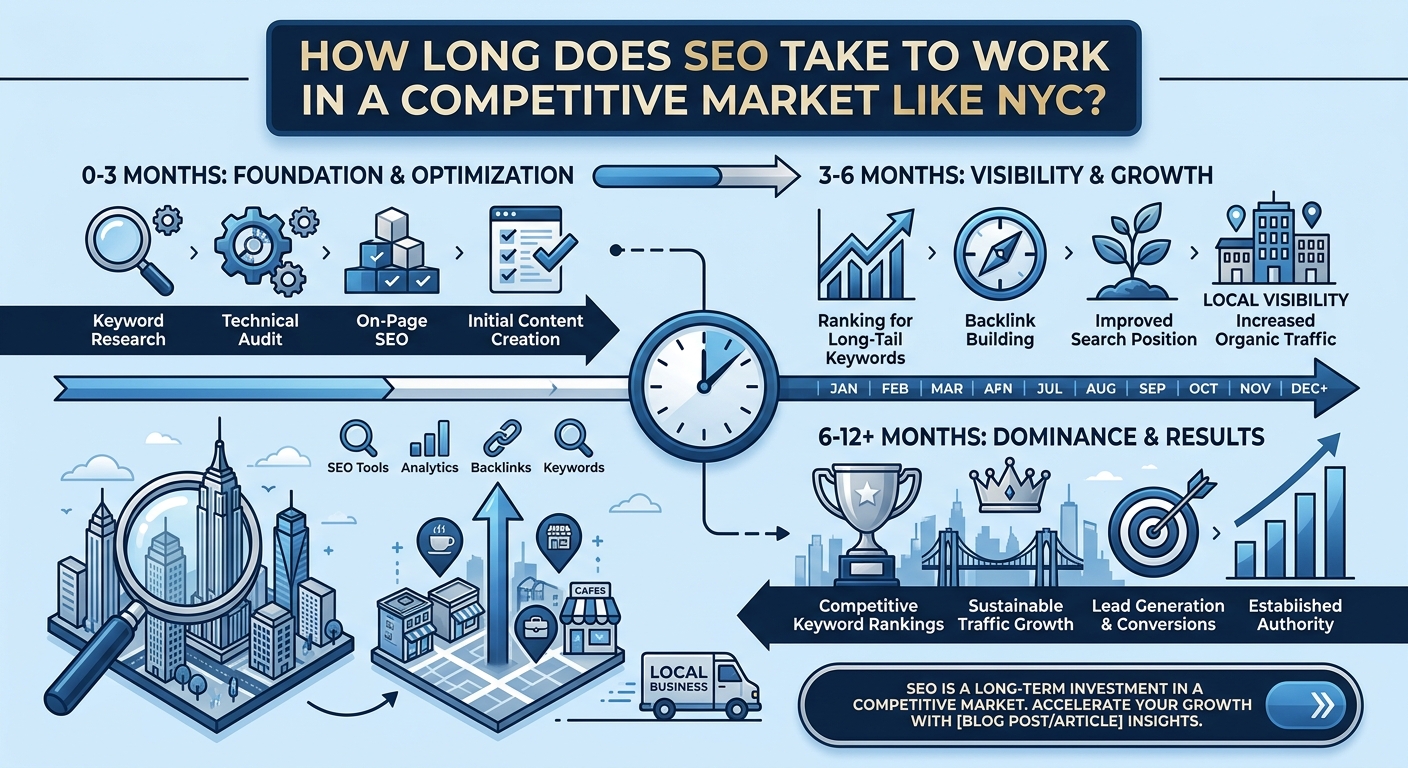
Some improvements, such as fixing technical issues and clarifying page messaging, can show results within a few weeks. Larger gains from content, reviews, and authority usually build over six months or longer. The timeline depends on your competition, your industry, and the current state of your website. Steady effort over time tends to deliver the strongest and most lasting results.
Should a startup invest in SEO or paid advertising first?
Many startups benefit from using both, but the right mix depends on budget, goals, and timing. Paid advertising can bring quick traffic and useful data, while SEO builds a lasting asset that keeps attracting visitors. Starting SEO early gives your content time to grow while you test other channels. A balanced plan often delivers the best long term results.
What keywords should a startup target first?
You should begin with specific phrases that match real problems and clear audiences, such as software for a certain type of team or a certain task. These terms usually have less competition and higher intent than broad industry words. As your site gains authority, you can expand to more competitive topics. Always match each keyword to a page that truly answers the search.
Do startups need a blog?
A blog is not required, but it is one of the most effective ways to attract early stage searchers and build authority. Helpful articles answer common questions and introduce your company to people who may need you later. They also give you more pages that can appear in search results. Quality, accuracy, and consistency matter more than posting frequently.
How important are customer reviews for a tech startup?
Reviews are very important because new companies need to build trust quickly. Buyers often check review platforms and testimonials before booking a demo or starting a trial. Strong feedback can improve your visibility and increase conversion rates. Responding to reviews also shows that your team cares about every customer.
Is local SEO useful for a technology startup?
Local SEO is useful if your company has an office, coworking space, or events in New York. A complete Google Business Profile helps nearby partners, candidates, and customers find you. Consistent details across directories strengthen trust with search engines. Even remote focused startups can benefit from showing a clear connection to the local tech community.
How can a startup earn quality links with a small team?
Start by creating content that is genuinely useful, such as original data, practical guides, or clear explanations of complex topics. Share your expertise with journalists and community organizers who cover your field. Take part in local events and partnerships that naturally lead to mentions. Focus on a few strong relationships rather than chasing many weak links.
How often should I update my website and content?
You should update your website whenever your product, pricing, or company details change. Even without changes, a monthly review helps you catch errors, broken links, and outdated content. Articles and guides should be refreshed when information or industry practices shift. Regular updates protect your credibility and show that your startup is active.
Should I hire a professional for startup SEO?
You can manage basic tasks yourself if you have the time and a clear process. Many startups choose professional help because SEO involves ongoing work across technical health, content, listings, and reviews. A skilled partner can save time, avoid common mistakes, and track results clearly. DealMate can support your startup with each step so that you can focus on building your product.
Conclusion
SEO gives startups in the New York tech scene a practical way to stand out in one of the most competitive business environments in the world. By building a strong foundation, creating a clear and credible website, publishing helpful content, and earning genuine proof from customers, you make it easier for the right people to find and choose your company. Each improvement works together to turn searches into signups and signups into lasting relationships.
The most successful startups treat SEO as a steady habit rather than a one time project. Keep your information accurate, track your results every month, and make small improvements based on what you learn. Start with one change today, and you will see your visibility, leads, and reputation grow across every audience you serve.