Introduction to Real Estate SEO in New York
New York is one of the most active and most competitive real estate markets in the world. Every day, buyers, sellers, and renters across Manhattan, Brooklyn, Queens, the Bronx, and Staten Island search for apartments, townhomes, and trusted agents to guide them. With thousands of licensed agents competing for the same clients, standing out takes more than a great personality and a strong network.
Most property journeys now begin online. A first time buyer might type a question about co-op boards, a landlord might search for help finding a tenant, and a family might look for a home in a particular school zone before contacting anyone. The agents who appear in those searches with clear information, helpful guidance, and a trustworthy reputation are often the ones who receive the first call.
Search engine optimization, commonly called SEO, is the practice of making your business easier to find and easier to trust online. It involves your website, your Google Business Profile, your neighborhood content, your reviews, and every place your name appears on the internet. When these pieces work together, they help potential clients discover you at the exact moment they are ready to make a move.
This guide explains how New York real estate agents can use SEO to attract more leads and win more listings in a crowded market. The first part covers why SEO matters, how people search for agents and properties in the city, and how to build a strong local foundation. Here is what you will learn throughout the full guide:
- Why online visibility has become essential for modern real estate professionals
- How buyers, sellers, and renters search in New York and what they expect to see
- How to set up profiles and listings that build trust and support steady inquiries
- How to create a website and content plan that shows real local expertise
- How to track results and keep improving over time
Why SEO Matters for New York Real Estate Agents
Real estate decisions are among the largest financial choices people ever make. Because the stakes are so high, clients take time to research, compare, and read about agents before making contact. A strong online presence helps answer their questions and concerns long before the first phone call.
The New York market is also extremely crowded. A single neighborhood such as the Upper West Side or Park Slope may have hundreds of agents working within a few blocks, many with similar experience and similar listings. In such a dense environment, even a small advantage in search visibility can lead to a noticeable increase in the number of inquiries you receive.
SEO also gives agents more control over their own pipeline. Property portals and lead generation services can be useful, but they often charge high fees and may send the same lead to several agents at once. A strong website and well optimized profiles bring clients directly to you, which builds relationships on your own terms and lowers the cost of every new client over time.
The table below shows common ways people find real estate agents and how SEO supports each path.
| Discovery Method | How Clients Use It | SEO Opportunity |
|---|---|---|
| Map and local pack results | Searching for an agent near me or in a neighborhood | Optimize your Google Business Profile and local signals |
| Search engine results | Looking for a neighborhood, property type, or question | Build helpful guides and detailed area pages |
| Property portals | Browsing listings and comparing agents | Keep agent profiles complete and consistent |
| Review platforms | Reading client feedback before choosing an agent | Collect honest reviews and respond professionally |
| Referrals from friends and family | Searching an agent’s name after a recommendation | Make sure your name leads to a complete, accurate profile |
| Social media | Watching tours, tips, and market updates | Link profiles to your website and keep details consistent |
Notice that even referrals usually end with an online search. When a friend recommends an agent, the next step is almost always to look up the name and check the website and reviews. If your information is missing, outdated, or unclear at that moment, you may lose a client who was already inclined to choose you.
Trust is another reason SEO matters so much in real estate. Search engines favor pages that show real expertise, local knowledge, and a good reputation, especially on topics that involve large amounts of money. Agents who publish clear guidance, show real credentials, and maintain strong reviews tend to perform better because they match what both search engines and clients are looking for.
How Buyers, Sellers, and Renters Search in New York
Understanding how people search is the starting point for any effective real estate SEO plan. Buyers, sellers, and renters all have different needs, and each group uses different words and expects different information. When you understand these patterns, you can shape your website and profiles to meet each audience at the right moment.
Buyers often search by neighborhood, property type, and budget, such as condos in Long Island City, brownstones in Bedford Stuyvesant, or two bedroom apartments in Astoria. Many also search for guidance, such as how to buy a co-op in New York or what closing costs to expect. These early questions give you a chance to introduce yourself well before the buyer chooses an agent.
Sellers search with a different mindset. They want to know what their home may be worth, how long it might take to sell, and which agent can market it best. Searches such as sell my condo in Brooklyn or best real estate agent in Forest Hills often show strong intent and a readiness to talk.
Renters and landlords form another large group in the city. Renters look for apartments, broker fees, and neighborhood guides, while landlords look for help with tenant placement and property management. Because New York has one of the largest rental markets in the country, content that serves these audiences can bring steady traffic.
Here are common search types that matter for real estate agents:
- Neighborhood and property searches, such as townhouses in Staten Island
- Near me searches, which rely heavily on mobile use and map results
- Question based searches, such as how much do I need for a down payment
- Agent searches, such as top real estate agent in Manhattan
- Branded searches, where the person already knows your name and wants details
- Market searches, such as home prices in Queens this year
Mobile behavior is especially important. Many New Yorkers browse listings and research agents on their phones while commuting, walking between showings, or waiting in line. If your website is slow, hard to read on a small screen, or makes it difficult to call or send a message, the visitor will quickly move on to another agent.
Speed matters in this market. Good properties can be gone in days, and clients often contact several agents at once, so the agent who responds first with clear and helpful information has a real advantage. Clear contact options and a quick response process help you capture these fast moving opportunities.
Building a Strong Local SEO Foundation
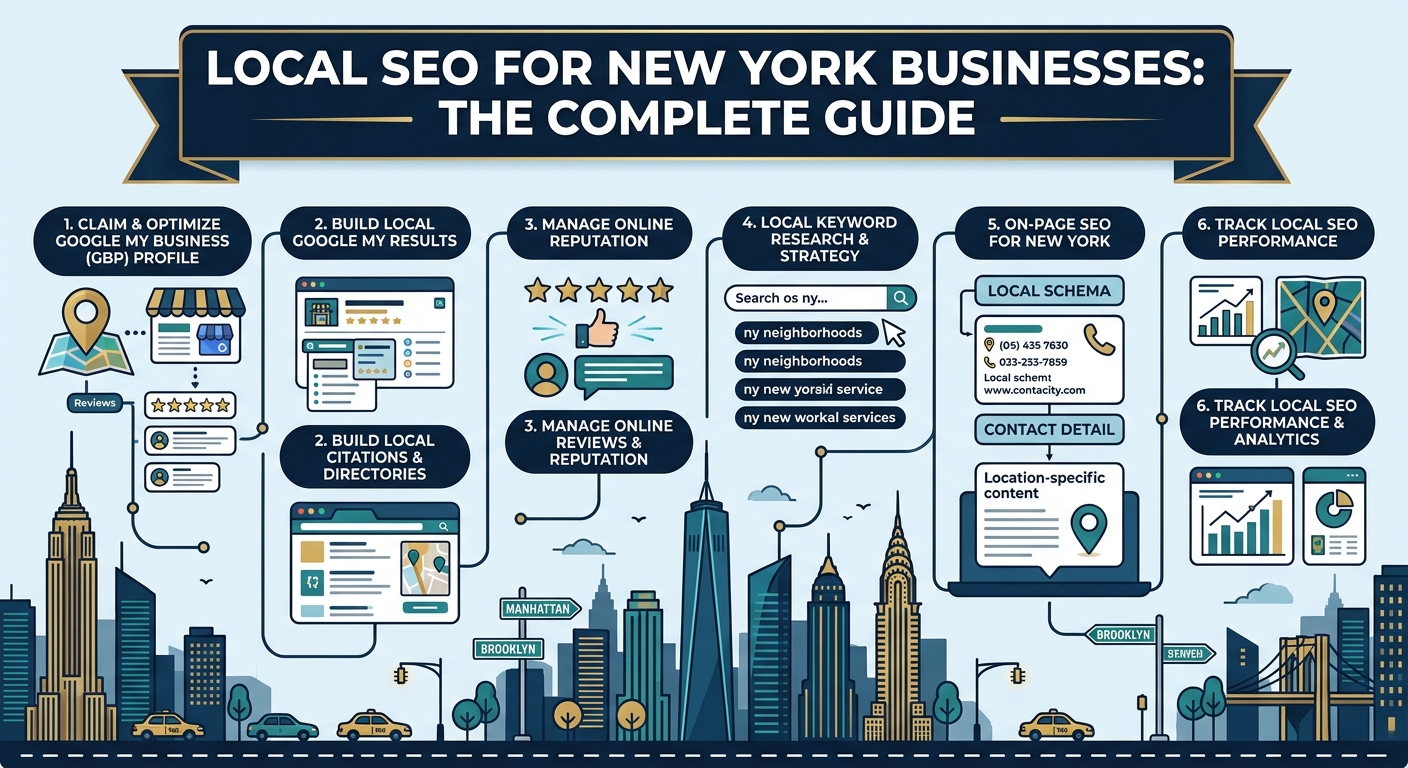
Before investing in new content or advanced strategies, make sure your basic local information is complete, accurate, and consistent. This foundation tells search engines exactly who you are, where you work, and what you do. It also gives potential clients a dependable first impression no matter where they find you.
Your Google Business Profile is one of the most important assets for an agent or brokerage. It appears in map results and local searches and often shows your address, phone number, hours, reviews, and website in one place. Claim and verify your profile, then complete every section with care and accuracy.
Choose a primary category that fits your work, such as real estate agent or real estate agency, and add secondary categories only when they truly apply. Write a clear description that explains your specialties, the neighborhoods you serve, and the types of clients you help in natural language. Add professional photos of your office, your team, and your recent work so that clients can see who they will be working with.
Consistency across the web is the next priority. Your name, address, and phone number should appear in exactly the same format on every directory, social profile, and real estate platform. Even small differences, such as a missing suite number or a different phone number, can confuse search engines and weaken your visibility.
Agents who work under a larger brokerage should be careful about how their information appears. Decide whether your profile will use your personal name, your team name, or the brokerage name, and keep that choice consistent everywhere. Teams with several agents can create individual profile pages while keeping one shared company identity.
Use this checklist to build your foundation:
- Claim and verify your Google Business Profile and complete every available field
- Set up profiles on Apple Maps, Bing, and other major map platforms
- Use one standard version of your name, address, and phone number everywhere
- List your service areas, specialties, and languages spoken accurately
- Upload professional photos of yourself, your team, and your office
- Link every profile to your official website and key area pages
Real estate marketing also comes with professional and legal rules that you should respect. Display your license information where required, follow fair housing guidelines in all of your wording and images, and follow the advertising rules of your brokerage and state. Honest and careful communication protects your reputation and builds trust with both clients and search engines.
Finally, remember that your local foundation needs regular attention. Agents move between brokerages, offices relocate, and phone numbers change, so a quick monthly review helps keep everything accurate. With a clean and complete base in place, you are ready to build a website and content strategy that turns more of those searches into real client conversations.

Real Estate Website Essentials
Your website is the center of your online presence, and it is often where a casual browser becomes a serious client. When someone finds you through a map result, a property portal, or a referral, the next step is usually a visit to your site. A clear, fast, and trustworthy website can turn that visit into a conversation within minutes.
Speed and mobile design come first. Most property searches in New York happen on phones, often while people are commuting or walking between viewings. Compress your images, keep your layout simple, and make sure buttons, phone numbers, and search tools are easy to tap on a small screen.
Property search tools can set an agent apart when they are fast and easy to use. Visitors should be able to filter by neighborhood, price, bedrooms, and property type without confusion, and every listing page should load quickly with clear photos. If your site connects to a listing feed, make sure each property page has its own address, description, and details so that search engines can understand it.
Contact paths should be clear and simple. Place your phone number at the top of every page, add a short form that asks only for the essentials, and offer options such as scheduling a viewing or requesting a home valuation. Every extra step between interest and contact gives a visitor another reason to leave, so keep the process as easy as possible.
The table below outlines the essential website elements and why each one matters.
| Website Element | Purpose | Why It Helps SEO and Lead Growth |
|---|---|---|
| Fast mobile friendly design | Smooth browsing on phones | Improves user experience and reduces early exits |
| Property search tool | Lets visitors find homes by their needs | Keeps visitors engaged and increases inquiries |
| Visible phone number and contact form | Quick path to reach the agent | Turns visits into conversations |
| Agent profile and credentials | Shows experience, license, and specialties | Builds trust and supports expertise signals |
| Neighborhood guides | Explains areas in detail | Helps the site appear for local searches |
| Client reviews and testimonials | Provides social proof | Strengthens credibility and conversion rates |
| Home valuation request form | Captures seller leads | Attracts clients ready to list |
| Secure connection and clean structure | Protects visitors and helps search engines explore the site | Supports technical health and rankings |
Trust signals deserve a visible place on every important page. Display your license details, brokerage affiliation, years of experience, and recent sales or rentals where appropriate. A professional photo and a warm introduction help visitors feel that they are dealing with a real person who understands their needs.
Keep your core details identical to what appears on your Google Business Profile and other listings. If your website shows one phone number and a directory shows another, clients lose trust and search engines receive mixed signals. Treat your website as the main source of truth and update it first whenever something changes.
Keyword Strategy for Agents
Keywords are the words and phrases that people type into search engines when they are thinking about a move. A smart keyword strategy helps you understand what potential clients are looking for and then match your pages to those needs. For real estate agents, the best keywords usually combine a location, a property type, and a clear intent.
Start by listing the neighborhoods you know best and the types of clients you want to serve. An agent who specializes in luxury condos in Manhattan will use very different language from one who helps first time buyers in the Bronx or families looking for houses in Staten Island. Think about the exact questions your clients ask and the words they use to describe what they want.
Neighborhood keywords are especially powerful in New York, because people think and search in terms of areas such as Williamsburg, Harlem, Jackson Heights, and Riverdale. Mentioning these areas naturally across your site helps you appear for local searches, but avoid listing dozens of unrelated places in a single block of text. Focus on the areas where you have real experience and can offer real value.
Here are the main keyword groups to consider:
- Neighborhood keywords, such as homes for sale in a specific area or borough
- Property type keywords, such as condos, co-ops, townhouses, lofts, or multifamily homes
- Intent keywords, such as buy a home, sell my apartment, or find a rental
- Question keywords, such as how does a co-op board approval work
- Audience keywords, such as first time buyers, investors, or relocating families
- Service keywords, such as home valuation, tenant placement, or property management
Match each keyword group to a specific page whenever possible. Your homepage can focus on your name, your main areas, and your core services, each neighborhood page can target one area, and each guide can target one question. This structure gives search engines a clear picture of what every page offers and helps clients land on the most relevant information.
Think about intent as well as wording. A person asking a general question is usually early in the process and wants to learn, while a person searching for an agent in a specific neighborhood is closer to making contact. Writing each page to satisfy its main purpose leads to stronger engagement than simply repeating keywords.
The table below shows how different search intentions connect to page types.
| Search Intent | Example Search | Best Page to Show | Key Feature to Include |
|---|---|---|---|
| Find an agent | Real estate agent in Brooklyn Heights | Homepage or agent profile | Clear specialties, reviews, and contact options |
| Browse homes | Condos for sale in Long Island City | Listing or search page | Fast filters, photos, and neighborhood details |
| Learn about the process | How to buy a co-op in New York | Buyer guide | Step by step explanation and a gentle invitation to contact |
| Sell a property | What is my apartment worth in Queens | Seller page | Valuation form and explanation of the selling process |
| Rent a property | Pet friendly apartments in Astoria | Rental page | Available units, rental guidance, and contact details |
| Check the market | Home prices in the Bronx | Market update page | Clear data in plain language and local insight |
Finally, write for people first. Search engines have become very good at understanding meaning, so there is no need to repeat the same phrase many times. Clear and helpful writing that answers real client questions will always outperform pages filled with awkward or forced keywords.
Neighborhood and Listing Pages
Neighborhood pages are among the most valuable assets on a real estate website. Each one should focus on a single area and explain it in enough depth to help a visitor imagine living there. Thin pages with only a few sentences rarely perform well, especially in a market as competitive as New York.
A strong neighborhood page begins with a clear heading that states the area and your role as a local agent. It then describes the character of the neighborhood, typical property types, transportation options, schools, parks, dining, and daily conveniences. Real details written in a warm and honest tone help visitors feel that you truly know the area.
Include practical information that clients actually need. Mention general price ranges in careful terms, describe the commute to major business districts, and explain what makes the area different from nearby neighborhoods. Always keep information accurate and up to date, and avoid statements that could be seen as steering, since fair housing rules apply to all real estate marketing.
Use this short checklist when building each neighborhood page:
- Write a unique title and short description for every page
- Use one clear main heading that states the neighborhood and your services
- Describe housing types, transit, schools, parks, and local amenities in plain language
- Add real photos and short captions that show the character of the area
- Include a short frequently asked questions section based on real client concerns
- Place a visible contact option near the top and the bottom of the page
Individual listing pages also need care. Give each property a unique description that goes beyond a list of features, and include the address, neighborhood, price, and key details in clear text. Use high quality photos with descriptive names and short captions, and consider adding a floor plan, a video tour, or a virtual walkthrough to keep visitors engaged.
Remember to handle sold and expired listings thoughtfully. Instead of deleting pages that have earned visitors and links, mark them as sold and guide readers to similar available properties. This keeps your site useful and can also show your track record to potential sellers.
Titles and descriptions play a big role in how your pages appear in search results. A good page title includes the neighborhood, the property type or service, and your name in a natural and readable way. The short description under the title should invite action, such as viewing available homes or requesting a free consultation.
Internal links help both visitors and search engines. Connect neighborhood pages to related listings, buyer guides, and market updates so that readers can move easily through your site. A logical link structure shows that your website covers each subject thoroughly and keeps visitors exploring longer.
Content That Builds Authority
Real estate is built on trust, and trust grows through content that shows real knowledge and care. Search engines look for pages that demonstrate experience, expertise, and reliability, particularly on topics that involve major financial decisions. Publishing accurate and helpful content is one of the best ways to show these qualities.
A blog or resource center gives you space to answer the questions clients ask every day. You can explain how closings work, describe the differences between co-ops and condos, share tips for preparing a home for sale, and summarize local market trends in plain language. Each helpful article gives you another chance to appear in search results and to introduce yourself to someone who may need you later.
Market updates are especially useful for building authority. Short monthly or quarterly summaries of what is happening in your key neighborhoods, written in simple terms, show that you follow the market closely. Be careful to describe trends honestly and to avoid making promises about future prices.
Here are practical content ideas for real estate agents:
- Step by step guides for buyers, sellers, renters, and landlords
- Neighborhood spotlights that highlight local shops, parks, and community events
- Explanations of New York specific topics, such as co-op boards and transfer costs
- Seasonal advice, such as the best times to list or tips for winter showings
- Success stories that explain how you helped a client reach a goal, shared with permission
- Checklists that help clients prepare for a viewing, an application, or a closing
Photos and video are among the strongest tools you have. Bright, accurate images and short walkthrough videos help visitors picture themselves in a home and increase the time they spend on your pages. Add clear descriptions to each image and keep file sizes small so that pages stay fast on mobile.
Agent profile pages deserve special care because they connect real people to your business. Include your background, specialties, languages spoken, neighborhoods you know best, and a professional photo, and write in a friendly and approachable tone. Clients often choose an agent because they feel comfortable with the person, and a thoughtful profile helps create that connection before the first call.
Do not forget to keep your content fresh. Outdated market data, expired promotions, and broken pages can weaken trust and make your site look neglected. A quick quarterly review to refresh or remove old material keeps your website accurate and signals that you are active and reliable.
With a well built website, a smart keyword plan, detailed neighborhood pages, and trustworthy content, you have created the tools needed to attract more of the right clients. The next step is strengthening your reputation, earning authority through listings and mentions, and tracking results so that your growth continues over time.

Reviews and Reputation for Agents
Reviews are one of the strongest trust signals in real estate. Buyers, sellers, and renters want proof that other people have had a smooth and honest experience before they share personal financial details with an agent. Strong and recent reviews also support your visibility in map results and local searches.
The best time to ask for a review is right after a positive milestone, such as a successful closing, a signed lease, or a smooth viewing process. At that moment the client feels relieved and grateful, and the details are still fresh. A short email or text with a direct review link, sent within a few days, usually works better than a late or repeated reminder.
Make the request personal and simple. Thank the client for their trust, explain that honest feedback helps others make confident decisions, and avoid asking for a specific rating. Never offer payment or gifts in exchange for reviews, since most platforms forbid it and professional rules may also limit how testimonials can be requested.
Responding to reviews matters just as much as collecting them. Thank each reviewer by name, mention a detail from their experience without revealing private financial information, and invite them to stay in touch. When a review is critical, respond calmly, express willingness to resolve the issue, and move the conversation to a private channel.
Follow these habits to build a healthy reputation:
- Ask satisfied clients for feedback at a natural and appropriate moment
- Reply to every review in a warm and professional tone
- Share selected testimonials on your website and social profiles with permission
- Review your feedback each month to find patterns in service and communication
- Check your brokerage and state advertising rules before publishing testimonials
Reviews also help you learn. Repeated praise shows which parts of your service clients value most, and repeated concerns point to areas where a small change could improve the experience. Use these insights to refine your process and to shape the messages you share on your website.
Real Estate Directories and Citations
Directories and citations help search engines confirm that your business is real, active, and located where you say it is. They also place your name in front of clients who browse property portals and compare agents side by side. Accurate listings across trusted platforms build both visibility and credibility.
Start with the major map and search platforms, then add real estate specific portals and agent directories that match the type of clients you want to attract. Brokerage pages, local business directories, and community listings in your neighborhoods can add further value when your details are accurate. Chamber of commerce and neighborhood association listings can also strengthen your local relevance.
The table below shows how to think about the main platform types.
| Platform Type | Main Purpose | Priority Level | Tip for New York Agents |
|---|---|---|---|
| Google Business Profile | Maps, local pack, and direct calls | Essential | Keep services, photos, and reviews current |
| Apple Maps and Bing | Navigation and voice search results | High | Complete every field and confirm your details |
| Property portals | Listing exposure and agent comparison | High | Keep your agent profile complete and consistent |
| Agent directories | Comparison by area and specialty | High | Match credentials and descriptions to your website |
| Review platforms | Client feedback and discovery | High | Respond professionally and follow platform rules |
| Local business directories | Citations and neighborhood relevance | Medium | Use the same name, address, and phone number everywhere |
| Chamber and community listings | Local trust and referrals | Medium | Join groups connected to the areas you serve |
Consistency is the rule that connects every listing. Use one standard version of your name, address, and phone number, and update every platform whenever anything changes. A short quarterly audit helps you catch duplicate listings, old addresses, and outdated brokerage details that can confuse both clients and search engines.
Link Building and Local Authority
Links from respected websites act as endorsements and help search engines understand that your business is trusted. In real estate, quality matters far more than quantity, so a few links from relevant and reputable local sources are worth more than many from weak or unrelated sites. Earn links through real contributions rather than shortcuts.
Community involvement is a natural place to begin. Sponsoring a neighborhood event, supporting a local school fundraiser, or partnering with a charity often leads to mentions on community websites. Hosting free workshops for first time buyers or tenants can also attract coverage and show your commitment to the neighborhoods you serve.
Local businesses and professionals can become strong partners. Mortgage brokers, home inspectors, attorneys, interior designers, and moving companies all serve the same clients, and sharing helpful resources with each other can lead to natural links and referrals. Local news outlets and neighborhood blogs also welcome clear and honest commentary about market trends and community changes.
Here are practical ways to earn quality links and mentions:
- Publish original neighborhood guides or market summaries that other sites find useful to reference
- Offer expert commentary to local journalists and community bloggers
- Speak at community events, schools, and professional gatherings
- Partner with related professionals to create shared resources for buyers and renters
- Join professional associations and keep your member profiles updated
Avoid buying links or joining link schemes. Search engines can detect unnatural patterns, and penalties can take months to repair. Honest relationships and genuinely useful content create authority that lasts.
Turning Visitors Into Clients
Visibility only matters when it leads to real conversations. Once a person lands on your website or profile, your goal is to make contacting you feel easy, safe, and worthwhile. Every unnecessary step gives a busy visitor another reason to leave.
Place clear calls to action across your website. A phone number that can be tapped on mobile, a short form, and prompts such as schedule a viewing or request a home valuation should appear on every key page. Use friendly and direct wording, and explain what happens after the visitor reaches out so that the next step feels clear.
Lead capture should be balanced with respect for privacy. Ask only for the details you truly need, such as a name, phone number, and preferred area, and explain how you will use the information. Offering something of real value, such as a neighborhood guide or a buyer checklist, can encourage visitors to share their contact details willingly.
Follow up quickly and consistently. Many clients contact several agents in a row, and the one that responds first with warmth and useful information often wins the relationship. Set up reminders, use a simple system to track every inquiry, and send helpful messages rather than pushy ones.
Tracking results shows you what is working and where to improve. Review your numbers once a month using the checklist below so that your efforts stay focused and measurable.
| Monthly Task | What to Check | Why It Matters |
|---|---|---|
| Profile views and actions | Calls, direction requests, and website clicks | Shows how many people are ready to contact you |
| Lead count | Calls, form submissions, and valuation requests from search | Connects SEO work to real inquiries |
| Search terms | Phrases that bring visitors to your site | Reveals new content and neighborhood ideas |
| Review activity | New reviews, ratings, and responses | Confirms that your reputation is growing |
| Website speed and mobile use | Loading time and mobile experience | Prevents lost leads from slow pages |
| Listing accuracy | Name, address, and phone number on major platforms | Protects trust and local visibility |
Use what you learn to make steady improvements. If many visitors leave a neighborhood page, add clearer details or a stronger call to action, and if searches for a certain property type are rising, publish a helpful guide on it. Small, consistent changes often deliver better results than occasional large overhauls.
Common Real Estate SEO Mistakes to Avoid
Many agents lose potential clients because of small and avoidable mistakes. Knowing these problems in advance helps you protect your visibility and your reputation. Most of them come from rushed setup, outdated information, or a lack of regular checks.
- Publishing thin neighborhood pages with only a few sentences of general text
- Using different names, addresses, or phone numbers across directories and portals
- Copying the same description across many listing or area pages
- Making the phone number or contact form hard to find on mobile
- Ignoring reviews or replying with defensive language
- Using wording or images that could break fair housing guidelines
- Leaving sold listings, old market data, or outdated agent details online
- Relying only on paid lead services and neglecting long term organic growth
Each of these issues can quietly reduce leads without any obvious warning. A simple monthly review of your profiles, website, and reviews will catch most of them early. Treat your online presence with the same care you give your clients, and it will reward you with steady growth.
Why Choose DealMate
Working in New York real estate leaves very little time for detailed SEO work. DealMate helps agents and brokerages build a strong and reliable online presence so that more of the right clients can find them and reach out with confidence. Our team combines local market knowledge with practical, step by step execution that respects the standards of the real estate profession.
We begin by reviewing your Google Business Profile, website, listings, and reviews to see exactly where you stand. From there we create a plan that fits your neighborhoods, your property focus, and your goals, covering everything from profile optimization to area pages and local listings. Every action follows platform guidelines and professional advertising rules, so your visibility grows in a safe and lasting way.
Here is what you can expect when you work with DealMate:
- A complete review of your current search presence with clear findings
- Optimization of your profiles, website pages, and neighborhood content for local searches
- Consistent and accurate listings across the platforms that matter most
- Guidance on collecting and responding to reviews in a compliant way
- Transparent monthly reporting that connects our work to calls, visits, and new inquiries
We believe that great agents deserve to be found by the clients who need them most. With DealMate, you gain a trusted partner who understands the pace and competition of the New York property market. Contact us to start turning more searches into conversations and more conversations into lasting client relationships.
Frequently Asked Questions
What is SEO for real estate agents?
SEO for real estate agents is the practice of improving your online presence so that buyers, sellers, and renters can find and trust you. It covers your website, Google Business Profile, neighborhood content, reviews, and directory listings. The goal is to appear in searches for your areas and services. When done well, it brings more calls, inquiries, and listing opportunities.
How long does real estate SEO take to work?
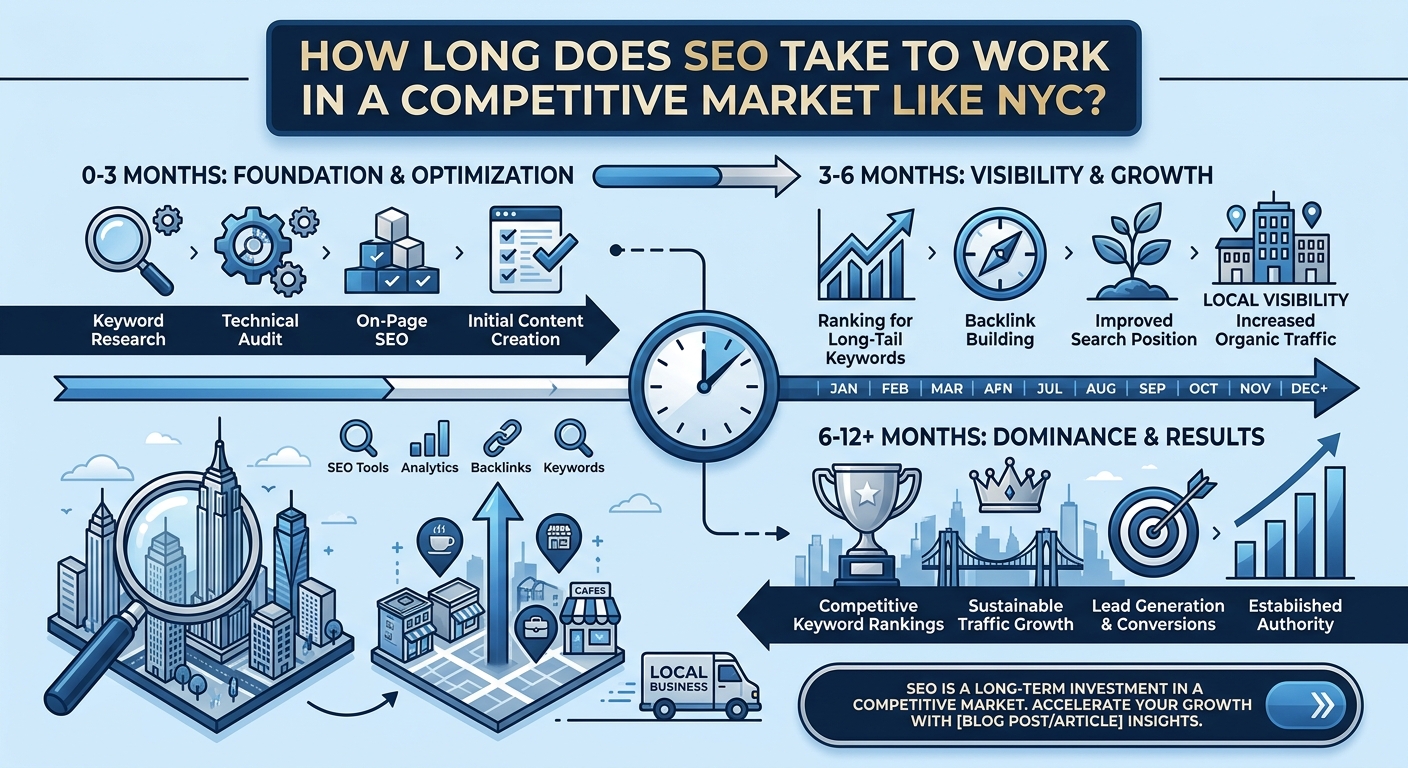
Some improvements, such as fixing profile details, can show results within a few weeks. Larger gains from website content, reviews, and authority usually build over four to six months or longer. The timeline depends on your competition, your neighborhoods, and your current online presence. Steady effort over time tends to deliver the strongest and most lasting results.
Why is Google Business Profile important for agents?
Your Google Business Profile appears in map results and local searches, which are where many clients begin their search. It shows your address, phone number, reviews, and website in one place. A complete and active profile helps you stand out from nearby competitors. It also gives clients a quick and trusted way to contact you.
How many neighborhood pages should my website have?
You should create one detailed page for each neighborhood where you actively work and have real knowledge. Each page should explain the area in plain language and avoid copying text from other pages. Starting with your strongest areas is better than creating many thin pages. You can add more pages over time as your experience and content grow.
Can I use client testimonials on my website?
In most cases you can, but you should always get permission and follow the advertising rules of your brokerage and state. Avoid sharing private financial details or anything that could identify a client without consent. Keep testimonials honest and avoid implying guaranteed results. Reviewing your brokerage policy helps you stay on safe ground.
What keywords should a New York real estate agent target?
You should focus on keywords that combine neighborhoods, property types, and client intent. Examples include condos for sale in a specific area, co-op buying guidance, or rental help in a certain borough. Question based keywords can also attract people who are early in their research. Always write naturally and match each keyword to a page that truly answers the search.
Do I need a blog for my real estate website?
A blog is not required, but it is one of the best ways to show expertise and attract early stage searchers. Helpful articles answer common questions and introduce you to people who may need you later. They also give you more pages that can appear in search results. Quality, accuracy, and regular updates matter more than posting frequently.
How important are property portals and directories?
Property portals and directories help clients discover you and confirm that your business is real and active. They also create citations that support your local visibility. Accurate details across all listings strengthen trust with both clients and search engines. Regular audits keep errors and duplicates from weakening your presence.
How often should I update my website and listings?
You should update your website and listings whenever your services, brokerage, contact details, or listings change. Even without changes, a review every few months helps you catch errors and outdated content. Market updates and neighborhood pages should be refreshed when conditions shift. Regular updates protect your reputation and show that you are active.
Should I hire a professional for real estate SEO?
You can manage basic tasks yourself if you have the time and a clear process. Many agents choose professional help because SEO involves ongoing work across profiles, websites, listings, and reviews. A skilled partner can save time, avoid common mistakes, and track results clearly. DealMate can support you with each step so that you can focus on your clients.
Conclusion
SEO gives New York real estate agents a practical way to stand out in one of the most competitive property markets in the world. By building a strong local foundation, creating a fast and helpful website, publishing accurate neighborhood content, and earning genuine reviews, you make it easier for clients to find and choose you. Each improvement works together to turn searches into conversations and conversations into lasting relationships.
The most successful agents treat SEO as a steady habit rather than a one time project. Keep your information accurate, track your results every month, and make small improvements based on what you learn. Start with one change today, and you will see your visibility, leads, and reputation grow across every neighborhood you serve.