
Introduction: Two Paths to Better Search Visibility
Every New York business that wants to grow online eventually faces the same question. Should you hire a freelance SEO expert who works with you on a flexible basis, or bring an in-house SEO specialist onto your payroll as a full-time team member? Both paths can lead to stronger rankings and steadier leads, but they differ sharply in cost, commitment, and day-to-day experience.
The right answer depends on far more than budget. It depends on the size of your website, the speed at which you want to grow, the skills you already have on staff, and how much management time you can give to a new hire. A choice that suits a Brooklyn boutique may be a poor fit for a Manhattan software company with a large content library.
This guide compares the two options in plain language so you can decide with confidence. You will see what each role actually does, where each one shines, and where each one falls short. By the end, you will have a practical framework for matching the hiring model to your goals, your team, and your budget.
Here is what you will gain from reading this guide:
- A clear picture of how freelancers and in-house specialists really work
- Honest comparisons of cost, skills, speed, and flexibility
- A simple way to match each option to your type of business
- Practical questions to ask before you make an offer or sign a contract
Why the Hiring Model Matters in New York
New York is among the most competitive search markets in the world. Thousands of businesses across Manhattan, Brooklyn, Queens, the Bronx, and Staten Island compete for the same customers, and many already invest heavily in digital marketing. In a market this crowded, small gaps in strategy often decide who gets the phone call and who gets overlooked.
Costs are also higher here than in most regions. Salaries for experienced marketing professionals, office space, software tools, and content production all carry a premium. A hiring mistake therefore costs more in New York than it would in a smaller city, which makes the choice of model especially important.
Local intent adds another layer of complexity. People search by neighborhood, subway stop, and even street name, so a strategy that treats the whole city as one market will miss many of the customers who are closest and most ready to buy. Whoever you hire must understand how search behavior changes from one borough to the next.
Search itself is changing quickly as well. Google now shows AI-generated summaries on many results pages, voice queries have become routine, and mobile users expect fast and accurate answers. These shifts reward businesses that publish clear, trustworthy, and well-structured information, and they require a professional who keeps learning as the rules evolve.
Keep these local factors in mind as you compare the two options:
- Heavy competition in nearly every industry
- Higher salaries and operating costs than most regions
- Neighborhood-level search behavior that demands local knowledge
- Rapid changes in AI-powered search features
What a Freelance SEO Expert Does
A freelance SEO expert is an independent professional who offers search optimization services to several clients at once. You usually work with one person who audits your website, plans the strategy, and carries out many of the tasks directly. Engagements can be monthly retainers, hourly arrangements, or fixed-price projects.
A typical freelancer covers a wide range of responsibilities. They review your site for technical problems, refine titles and headings, plan content around the questions your customers ask, and improve your local listings. Many also prepare monthly reports that explain progress in everyday language instead of technical jargon.
Common tasks handled by a freelancer include the following:
- Website audits and technical fixes
- Keyword research and content planning
- On-page improvements such as titles and internal links
- Google Business Profile and local listing management
- Basic link outreach and monthly reporting
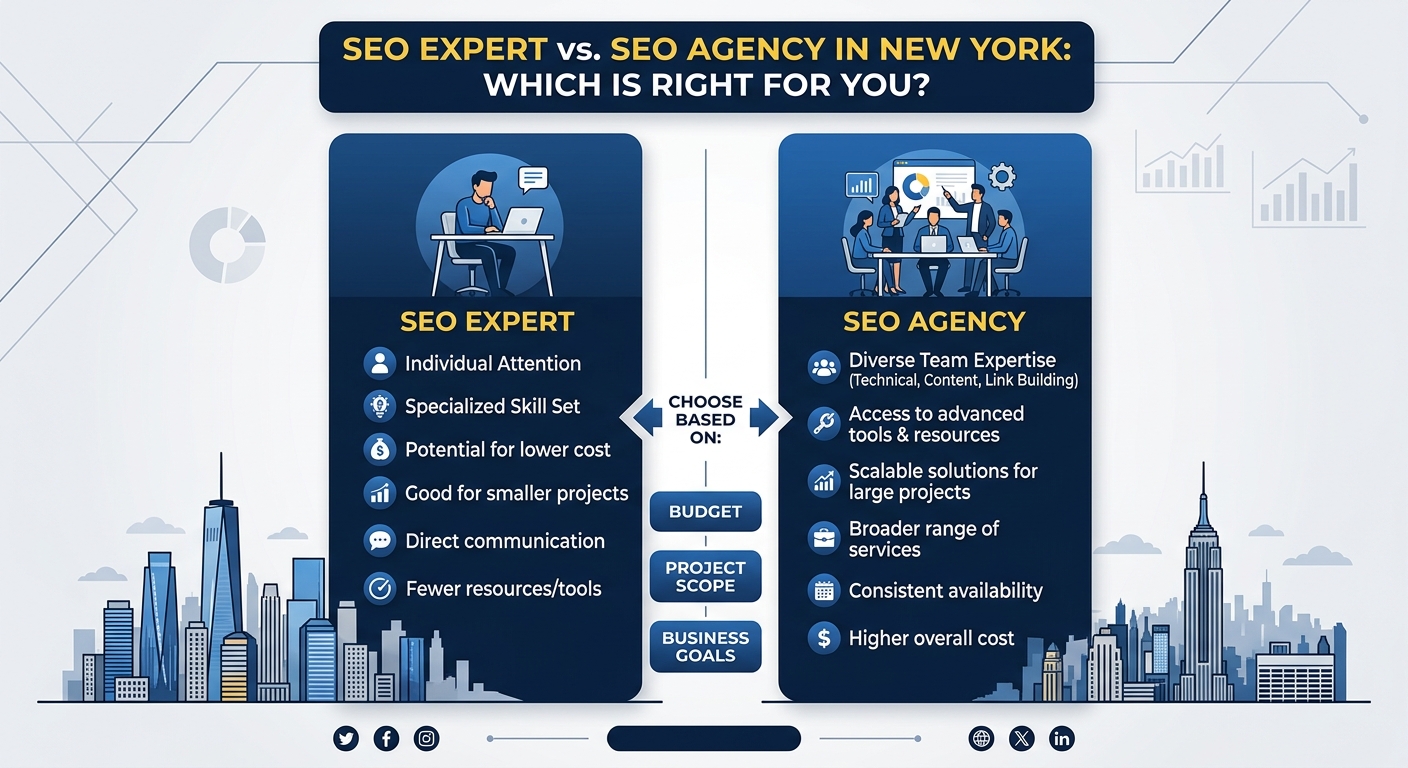
The greatest strength of a freelancer is flexibility. You can start quickly, adjust the scope as your needs change, and scale the work up or down without the commitments that come with a full-time employee. Rates are also usually lower than the total cost of a salaried hire, which makes freelancers attractive for startups and neighborhood businesses with limited budgets.
Experienced freelancers often bring exposure to many industries, and that variety can be valuable. They see which tactics work for different types of businesses and can apply those lessons to your project. This breadth of experience is harder to build inside a single company.
The main limitation is shared attention. A freelancer divides their time among several clients, so your project may not receive their full focus every day. If they become ill, take on too many clients, or lack a specific skill you need, progress can slow down noticeably.
The main advantages of hiring a freelancer are listed below:
- Lower cost and flexible working arrangements
- Quick start and easy changes to the scope of work
- Broad experience gained from many different clients
The main drawbacks to consider before choosing this route are listed here:
- Limited time because attention is shared with other clients
- A narrower range of specialist skills than a larger team
- Risk to your project if the freelancer becomes unavailable
What an In-House SEO Specialist Does
An in-house SEO specialist is a full-time employee who works exclusively for your company. They attend your meetings, learn your products inside out, and focus entirely on improving your search performance. Because they sit within your team, they can respond to changes in your business almost immediately.
The daily work of an in-house specialist goes beyond the tasks a freelancer handles. They coordinate with designers, developers, writers, and sales teams to make sure search considerations are built into every launch, campaign, and website update. They also track performance closely and adjust priorities as your business goals shift.
Typical responsibilities of an in-house specialist include the following:
- Ongoing technical monitoring and website improvements
- Content planning and collaboration with writers and designers
- Local SEO management across all your locations
- Internal training so other team members understand search basics
- Reporting directly to leadership on traffic, leads, and revenue
The biggest advantage is depth of brand knowledge. An in-house hire understands your customers, your tone of voice, your products, and your internal processes in a way an outside provider rarely can. This closeness makes it easier to create content that feels authentic and to spot opportunities that come from inside the business.
Dedicated attention is another major strength. Your specialist is available during working hours, answers questions quickly, and does not divide focus among other clients. For companies with constant search needs, such as large online stores or publishers, this level of availability can be very valuable.
The main limitation is cost and breadth. A full-time specialist brings salary, benefits, software tools, and management time, and one person rarely masters every part of SEO. You may still need outside help for specialized work such as large-scale link building, technical migrations, or high-volume content production.
The main advantages of hiring an in-house specialist are listed below:
- Deep knowledge of your brand, products, and customers
- Dedicated focus and fast response during working hours
- Close collaboration with other teams in your company
The main drawbacks to consider before choosing this route are listed here:
- Higher total cost including salary, benefits, and tools
- Limited range of skills compared with an outside team
- Hiring, training, and management time required from your leaders
Both models can succeed, and neither is automatically better than the other. The right choice depends on your budget, your growth plans, and how much you value flexibility compared with dedicated focus.

Cost Comparison in New York
Money is often the first factor owners weigh, and the numbers can be surprising. A freelancer looks cheaper at first glance because the monthly fee is lower than a full salary. However, the true cost of an in-house hire includes far more than the paycheck, and a fair comparison needs to count every expense.
Freelancers in New York usually charge through monthly retainers, hourly rates, or fixed project fees. Because they carry their own software, equipment, and overhead, you pay only for the work you receive. You also avoid long-term commitments, which makes budgeting easier when your needs change from month to month.
An in-house specialist brings a salary plus several additional costs. Benefits, payroll taxes, paid time off, software subscriptions, training, and management time all add to the total. In a high-cost city like New York, these extras can add a significant amount on top of the base salary.
Cost should also be viewed through the lens of output. A freelancer with a modest retainer may deliver strong results for a small website, while a full-time hire may be wasted if your site does not need daily attention. On the other hand, a large company with constant search work may find a salaried specialist more economical than paying hourly rates for the same hours.
The table below compares typical costs for the two options. These figures are general estimates and will change with experience, industry, and scope of work.
| Cost Item | Freelance SEO Expert | In-House SEO Specialist |
|---|---|---|
| Monthly fee or salary | $1,000 to $5,000 per month | $6,000 to $11,000 per month in salary |
| Hourly rate | $75 to $200 | Not applicable |
| Benefits and payroll taxes | Not required | Often 20 to 30 percent on top of salary |
| Software tools | Usually covered by the freelancer | $200 to $800 per month for your company |
| Recruiting and onboarding | Minimal | Time and fees to hire and train |
| Commitment | Month to month or short term | Ongoing employment |
Notice that the gap between the two options grows once hidden costs are included. A full-time hire is a long-term investment that makes sense when you have steady, high-volume work. A freelancer is usually the smarter value when your needs are focused or still growing.
Skills, Focus, and Availability
Cost matters, but the real question is who can do the work well. Search optimization blends technical engineering, content strategy, local marketing, and data analysis, and few people excel at every area. Comparing skills, focus, and availability shows where each option is strongest.
Freelancers tend to bring breadth gained from working with many clients. They have seen different industries, tested many tactics, and learned from a wide range of results. This variety can help them spot problems quickly and suggest ideas that an inside team might never consider.
In-house specialists bring depth of context instead. They know your products, your customers, and your internal processes, which helps them create content that sounds authentic and fits your brand. They can also join planning meetings and influence decisions before problems appear, rather than fixing them afterward.
Availability differs as well. A freelancer splits time among clients and may respond within hours or days, while an in-house specialist is present during your working hours and can answer urgent questions immediately. If your business launches products often or runs time-sensitive campaigns, that closeness can be a real advantage.
Skill coverage is a limit for both options. A single freelancer or a single employee cannot be an expert in technical SEO, writing, outreach, and analytics all at once. Many businesses solve this by pairing their chosen option with outside specialists for areas that fall outside the main person’s strengths.
The table below gives a side-by-side view of the most important contrasts.
| Factor | Freelance SEO Expert | In-House SEO Specialist |
|---|---|---|
| Brand knowledge | Learns your business over time | Deep and constant understanding |
| Range of experience | Broad, from many industries | Focused on your company only |
| Availability | Shared among several clients | Dedicated during working hours |
| Flexibility | Easy to change scope or end the work | Harder to adjust once hired |
| Collaboration | Works with your team on a schedule | Works daily alongside your team |
| Management needed | Light oversight and monthly reviews | Ongoing management and support |
| Best fit | Small and growing businesses | Larger companies with constant needs |
Neither column wins every row. A freelancer tends to win on flexibility and range, while an in-house specialist tends to win on closeness and focus. The better choice depends on which of those qualities your business needs most right now.
Results, Speed, and Scalability
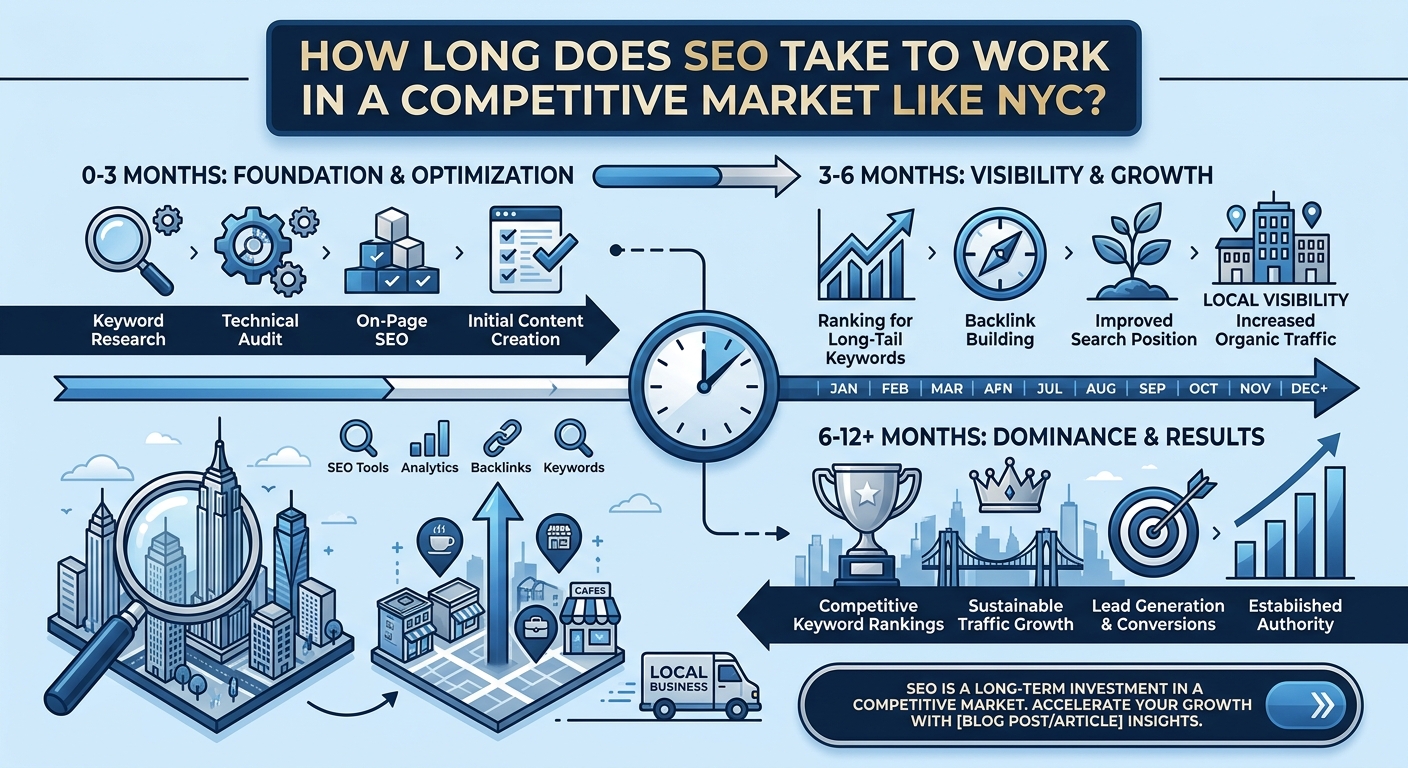
In a competitive market, meaningful search results take time no matter who does the work. Early improvements such as better visibility and more impressions often appear within three to four months, while stronger gains in crowded industries may need six to twelve months. Be cautious of anyone who promises a quick jump to the first page.
The speed of getting started does differ between the two options. A freelancer can usually begin within days, review your site, and start fixing problems almost immediately. Hiring an in-house specialist takes much longer, because you must write a job description, interview candidates, negotiate an offer, and wait through a notice period before the person even starts.
Once both are working, in-house teams can move faster on day-to-day decisions. Questions can be answered at a desk instead of through email, and search needs can be built into product launches from the start. Freelancers can match that speed only when you plan work in advance and give them clear priorities.
Scalability is where the gap becomes clearest. If your business grows quickly, one freelancer or one employee may reach their limit, and you will need to add more people or outside support. Freelancers make this easier because you can bring in a second professional without adding to your permanent headcount, while in-house expansion means more hiring and more fixed costs.
Consistency matters too. An employee is bound to your company and plans for long-term work, which supports steady progress over several years. A freelancer can deliver excellent quality, but the outcome depends on their availability, focus, and willingness to keep your project as a priority.
Many businesses begin with a freelancer and add an in-house specialist as demand grows. Others hire an in-house lead and use freelancers for specialized tasks such as content or link outreach. Both paths work well when you keep full ownership of your accounts, content, and data from the start.
Risks and Red Flags to Watch For
Every hiring choice carries risk, and the SEO industry has no official license to protect buyers. Learning to recognize warning signs early can save you months of lost momentum and thousands of dollars. Some red flags apply to both options, while others appear more often with one model.
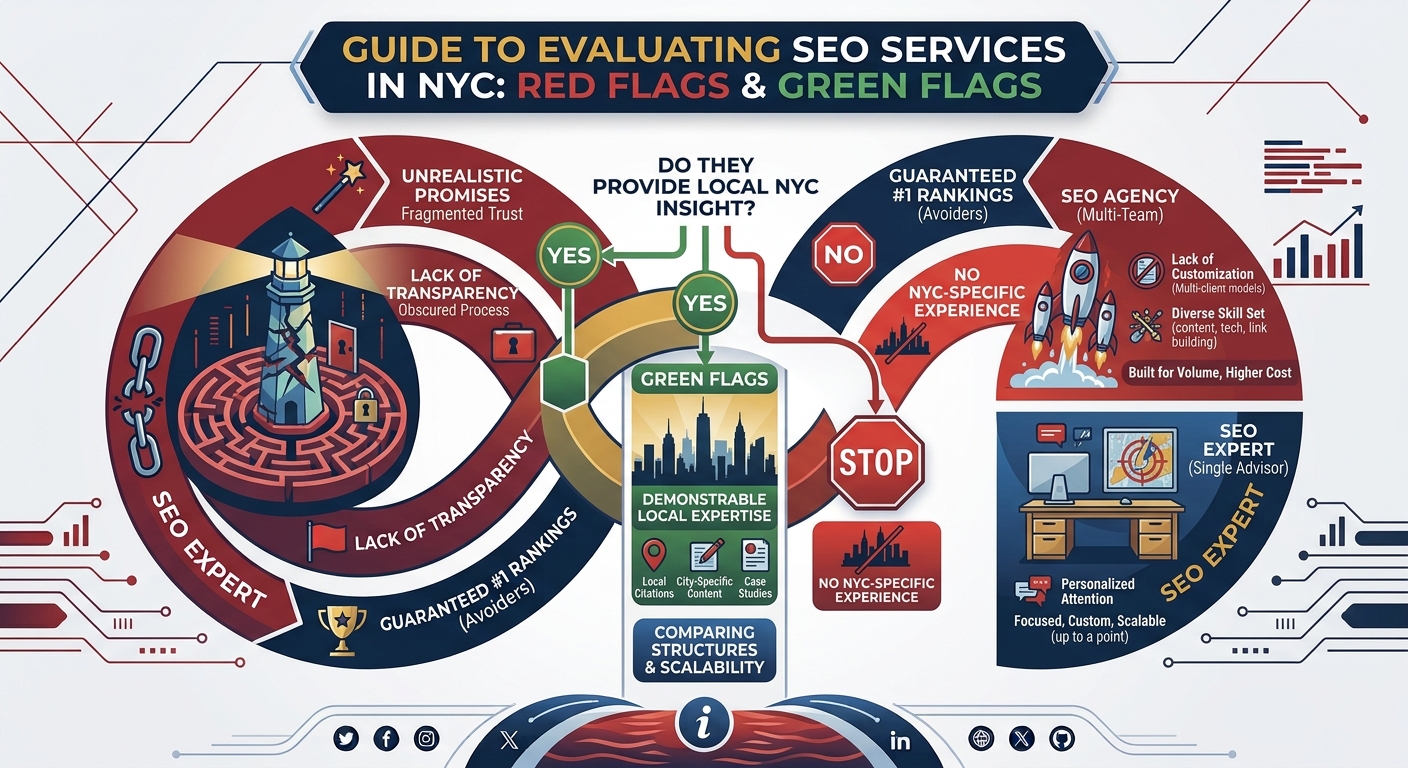
These warning signs apply to freelancers and in-house candidates alike:
- Guaranteed rankings or promises of instant results
- Secret methods that the person refuses to explain
- No real case studies or measurable results from past work
- Reports that show only traffic screenshots instead of leads
- Reliance on risky tactics such as bought links or copied content
When hiring a freelancer, pay special attention to capacity and backup plans. Some freelancers take on too many clients at once, which leaves each project with less attention than promised. Ask who will handle your account during illness or holidays, and confirm in writing that you will own all accounts, content, and data.
When hiring an in-house specialist, focus on skill fit and support. A junior hire with limited experience may struggle without guidance, and an employee who works alone can become isolated from new ideas. Make sure you have a plan for training, tools, and measurable goals, and check that the candidate can show real results rather than only certificates.
Another risk is dependence. If your entire search knowledge lives in one person, their departure can leave a serious gap. Ask for clear documentation of work, shared access to accounts, and regular reports so that your business can continue smoothly if the person moves on.
A single warning sign does not always mean dishonesty, but several together should end the conversation. Trust your instincts and ask for written clarification whenever something sounds too good to be true. Honest professionals welcome tough questions and answer them openly, whether they work independently or inside your company.
With the differences, costs, and risks now clear, the final step is matching them to your own business.

Which Option Fits Your Business Best
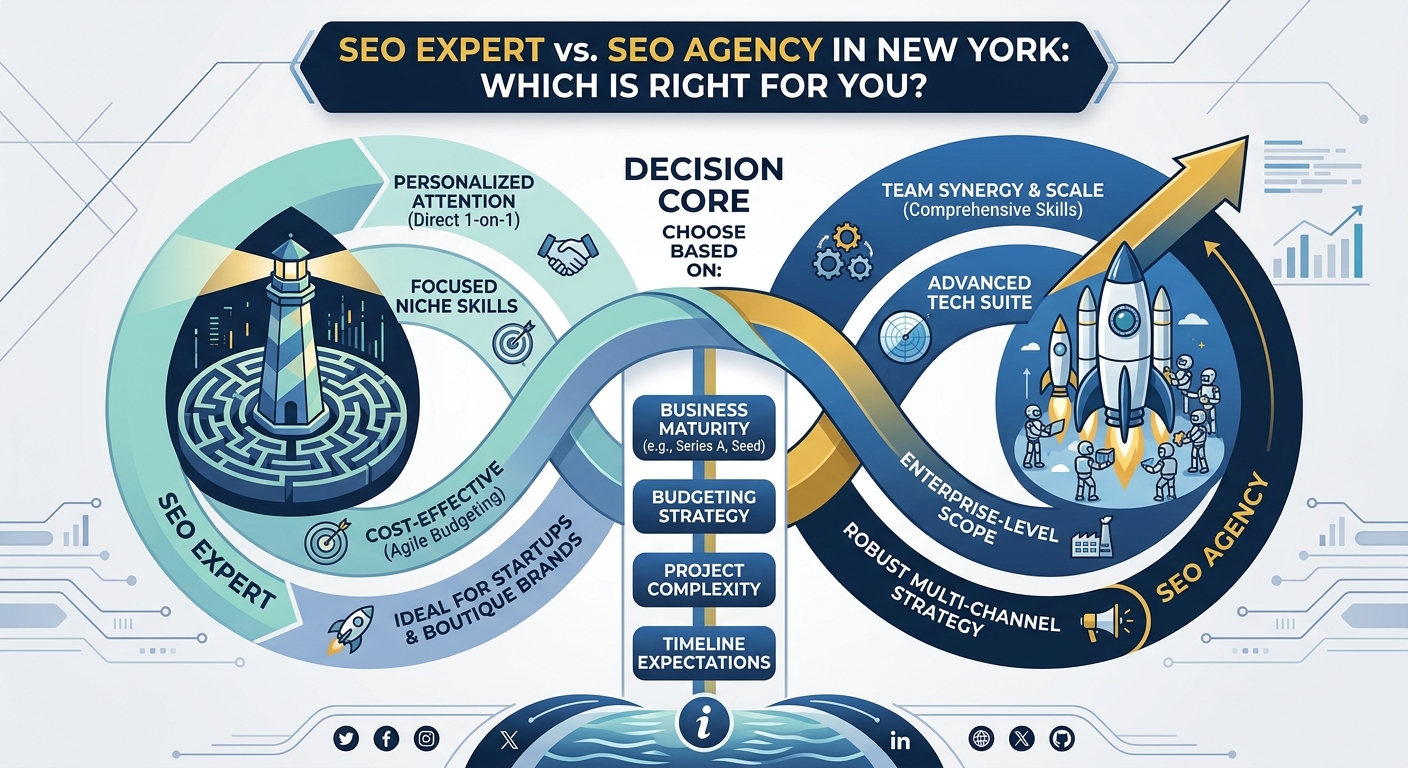
Choosing between a freelancer and an in-house specialist becomes easier when you start with your own situation rather than with the candidates. Think about your budget, your growth plans, the size of your website, and how much management time you can give to a new person. The answers usually point clearly in one direction.
Startups and small local businesses such as cafes, salons, clinics, and neighborhood service providers often do well with a freelancer. Their needs focus on local listings, a handful of service pages, and steady review collection, which one skilled person can manage on a part-time basis. The lower cost and flexible terms also suit tighter budgets.
Growing companies with a larger website, regular content, and several locations are often ready for a closer relationship. At this stage, many owners keep a freelancer for strategy and add support for content or outreach. Others begin planning for a full-time hire once the workload clearly fills most of a week.
Large brands with constant search needs usually benefit from an in-house specialist. Online stores with thousands of products, publishers with daily content, and companies with frequent launches need someone who can respond immediately and coordinate across departments. A salaried specialist can also train other team members and keep search considerations part of every project.
A hybrid approach often works best in the middle. You might hire an in-house lead to own the strategy while freelancers handle writing, technical projects, or link outreach. This setup gives you dedicated focus and flexible extra capacity without the cost of building a large team.
Your own involvement matters too. If you enjoy reviewing ideas and working side by side with someone every day, an in-house hire will feel natural. If you would rather receive a clear report each month and leave the details to an expert, a freelancer will probably feel more comfortable.
The table below gives a quick guide to matching your situation with the right choice.
| Your Situation | Better Fit | Main Reason |
|---|---|---|
| Startup or single location with a modest budget | Freelance SEO Expert | Lower cost and flexible terms |
| Two to five locations across boroughs | Either, depending on workload | Needs vary with the amount of work |
| Large website with daily content needs | In-House SEO Specialist | Dedicated focus and fast response |
| Need many skills for a short project | Freelance SEO Expert | Easy to hire for a specific goal |
| Want deep brand knowledge and training | In-House SEO Specialist | Full-time presence inside the company |
| Growing fast with uncertain needs | Hybrid approach | Flexibility with dedicated leadership |
Use this simple checklist to confirm your decision:
- Do you have enough weekly work to keep a full-time person busy?
- Is your monthly budget closer to $1,500 or to $10,000 and above?
- Do you want a close daily relationship or a structured monthly process?
- Will your needs grow significantly within the next twelve months?
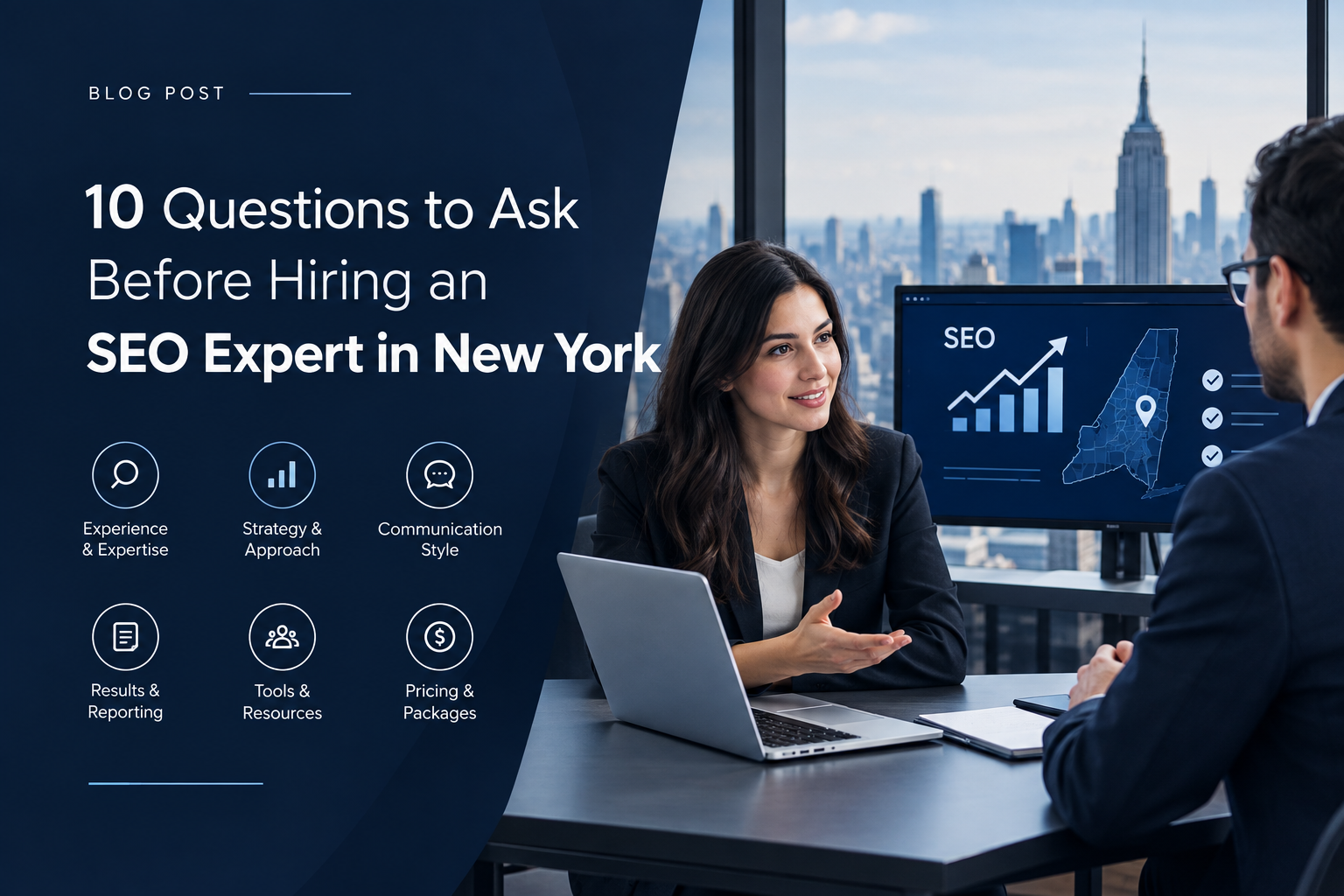
Questions to Ask Before You Hire
Even after choosing a model, the individual candidate still matters a great deal. Interviews reveal how a person thinks long before any money changes hands, so prepare the same questions for everyone you speak with. Compare the answers side by side and listen for specific details instead of vague reassurance.
Start with questions about results and strategy:
- Can you show case studies from businesses similar to mine?
- How will you audit my website and what will you fix first?
- What timeline is realistic for my industry and area?
Then move on to questions about tools and process:
- Which tools do you use and who pays for them?
- How often will we meet and what will each report include?
- How will you handle local searches across different neighborhoods?
Finish with questions that protect you:
- Will I own my accounts, content, and data if we stop working together?
- How will you document your work so someone else could continue it?
- What are the contract length and cancellation terms, or the notice period for employment?
Clear, confident, and honest answers are a strong sign of quality. Hesitation about ownership, pricing, or past failures is a good reason to keep looking, and it is far better to learn this during an interview than after you have signed.
Take notes during every conversation and score each candidate on the same points. A simple rating from one to five for experience, communication, transparency, and local knowledge keeps your decision grounded in evidence instead of memory or charm.
Why Choose Dealmate
Dealmate treats search optimization as a partnership built on honesty, clear communication, and measurable outcomes. Every engagement begins with a thorough review of your website, your competitors, and your local market, so the strategy fits your goals instead of following a generic package.
You always know what is being done, why it matters, and how it connects to growth. The team uses ethical, long-term methods that protect your site and build lasting authority, avoiding shortcuts that risk penalties. Here is what you can expect when you work with Dealmate:
- A custom strategy built around your business, industry, and neighborhood
- Plain-language monthly reports that connect search activity to leads
- Full ownership of your accounts, content, and data
- Named contacts with clear response times
- Honest timelines with no impossible promises
Dealmate combines the personal attention of a freelance expert with the structure and depth of a full team, and it can also support an in-house specialist with extra capacity. If you want to test the questions in this guide, the team welcomes every one of them.
Frequently Asked Questions
Is a freelance SEO expert cheaper than an in-house specialist?
In most cases, yes, because a freelancer has no benefits, payroll taxes, or recruiting costs attached to the fee. Monthly retainers for freelancers often start well below the cost of a full salary. However, a lower price may also mean less dedicated time and fewer services. Compare the scope of work and not just the number on the proposal.
How long does it take to see results from either option?
Early improvements often appear within three to four months. Competitive New York industries may need six to twelve months for strong ranking gains. Search engines need time to evaluate changes, so patience is essential. Anyone promising first-page results in a few weeks deserves caution.
Can I start with a freelancer and hire in-house later?
Yes, many businesses follow this exact path as they grow. The move is smooth when you own your accounts, analytics, and content from the beginning. Ask your freelancer to document the work so a new employee can continue without losing progress. Plan the transition carefully to avoid gaps in activity.
Do I need a full-time person for SEO?
Not always, because many websites do not need daily attention. A full-time hire makes sense when you have steady, high-volume work such as constant content, frequent launches, or a very large site. Smaller businesses often get better value from a freelancer or a part-time arrangement. Review your weekly workload honestly before you decide.
Which tools will my SEO person need?
Most professionals use tools for audits, keyword research, rank tracking, and analytics. Freelancers usually cover their own tools, while an in-house specialist needs a software budget from your company. Ask any candidate which tools they use and who will pay for them. Make sure you receive access to your own data and reports.
How important is local SEO for a New York business?
Local SEO is critical because many customers search by neighborhood or borough. It covers your Google Business Profile, consistent listings, reviews, and location-focused content. In a dense city, these signals often decide who receives the call. Strong local work brings steady traffic from nearby customers who are ready to buy.
How does AI search affect this decision?
AI summaries reward pages that are clear, accurate, and well organized. Your SEO person should know how to structure content so it answers questions directly and builds trust. Ask candidates how they are adapting their methods to these changes. A thoughtful, specific answer is a good sign of up-to-date skills.
What should an SEO report include?
A useful report shows organic traffic, keyword movement, local map visibility, and the leads or sales that came from search. It should also list completed tasks and planned next steps. Plain language matters more than complicated charts. If you cannot understand a report, ask for a clearer format.
Do I need to own my website and accounts?
Yes, you should always keep full ownership of your website, analytics, listings, and content. This protects you if you change providers or if an employee leaves. Confirm ownership terms in writing before work begins. A trustworthy professional will agree without hesitation.
Can anyone guarantee a number one ranking?
No honest professional can guarantee a specific ranking. Search results are shaped by hundreds of factors that change constantly and are controlled only by the search engine. Anyone offering a guarantee is either misleading you or using risky tactics. Look instead for clear strategies and measurable progress.
Conclusion: Choosing the Right Fit
The choice between a freelance SEO expert and an in-house SEO specialist in New York comes down to fit rather than a clear winner. Freelancers offer flexibility, broad experience, and lower cost, while in-house specialists offer dedicated focus, deep brand knowledge, and close collaboration. Your budget, your workload, and the level of involvement you want should guide the final decision.
Whichever path you take, protect yourself with clear scope, honest timelines, plain-language reporting, and full ownership of your accounts and data. Ask the questions from this guide, compare your options fairly, and trust the professional who explains the work openly instead of making bold promises.