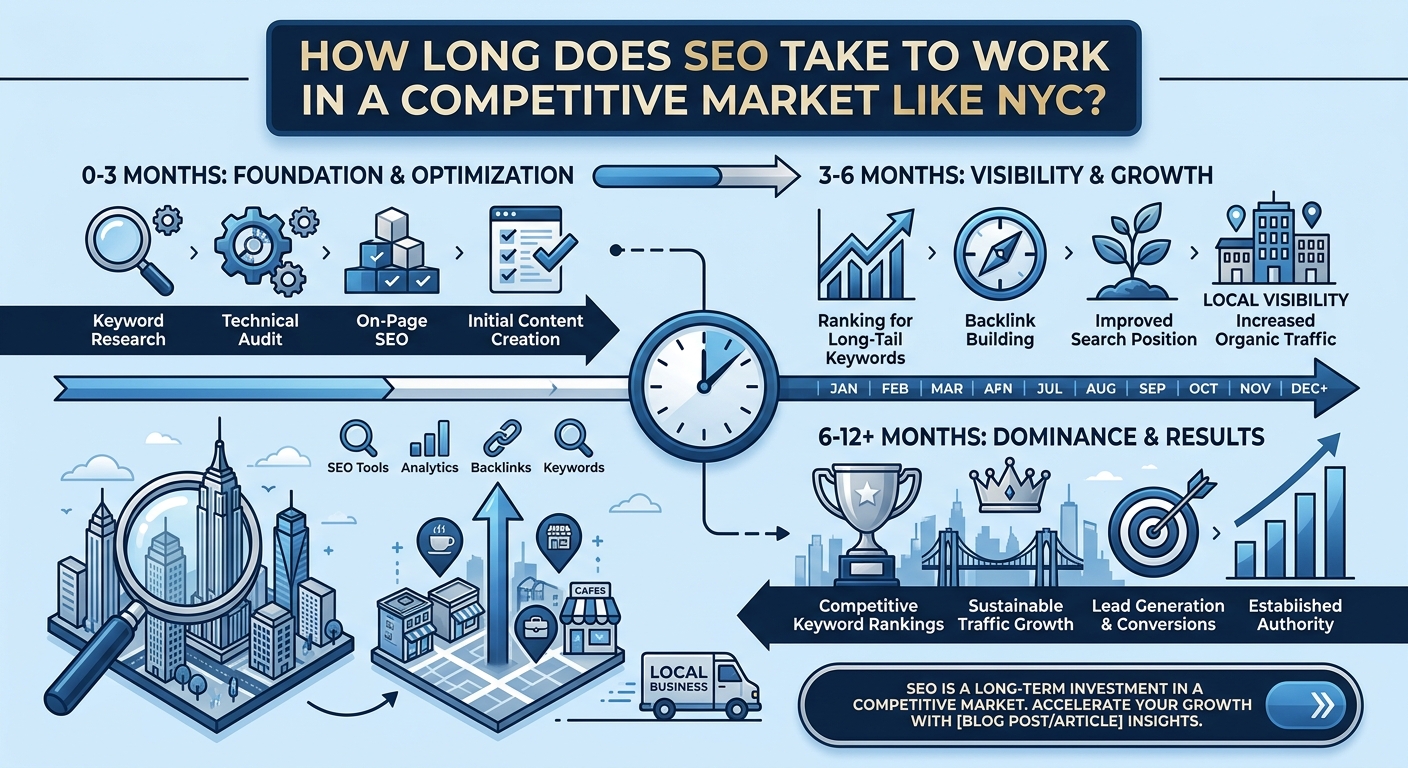
Introduction to SEO Timelines in New York City
If you have ever asked an agency or a fellow business owner how long SEO takes, you probably received an answer that began with the words it depends. That response can feel frustrating, especially when you are paying rent, payroll, and supplier bills in one of the most expensive cities in the world. The good news is that the answer is not a mystery, and understanding what shapes the timeline will help you plan with confidence.
New York adds extra weight to this question. A business in Manhattan, Brooklyn, Queens, the Bronx, or Staten Island often competes with dozens of established rivals within a few blocks, and many of them have spent years building reviews, content, and reputation. Starting SEO in this environment is like opening a new shop on a busy street where everyone else already has loyal customers.
Search engine optimization, commonly called SEO, is the practice of making your business easier to find and easier to trust when people search online. It covers your website, your Google Business Profile, your reviews, your listings across the web, and the helpful content you publish. Because search engines evaluate these signals over time, results build gradually rather than appearing overnight.
This guide explains how long SEO usually takes in a competitive market like New York City, why timelines differ from one business to another, and what you can do to move faster without risky shortcuts. The first part covers the short answer, the reasons New York is a tougher market, and the factors that control your speed. Here is what you will learn throughout the full guide:
- Realistic time ranges for different kinds of SEO effort
- Why competition in the city stretches timelines and how to work with that reality
- What typically happens in each stage, from the first month to a full year and beyond
- How to track early progress before your rankings move
- Practical ways to speed up results and avoid mistakes that cause delays
The Short Answer and Why It Varies
For most New York businesses, SEO begins to show early signs of progress within one to three months, produces noticeable gains in four to six months, and delivers strong and stable results in six to twelve months or more. Highly competitive categories, such as legal services, real estate, home repair, and dining in busy neighborhoods, may take longer to reach the top positions. Less crowded niches and smaller neighborhoods can sometimes move faster.
These numbers are ranges rather than promises, and that is an important distinction. Search engines make their own decisions, and no honest provider can guarantee an exact date for a specific ranking. What a good provider can do is explain the stages, set realistic expectations, and show you evidence of progress along the way.
The timeline also depends on what kind of result you are chasing. Fixing an incorrect phone number on a major platform can improve your visibility within days or weeks, while ranking for a highly competitive phrase can take many months of steady work. Thinking in terms of different types of goals helps you judge your progress fairly.
The table below shows general timelines for different kinds of effort.
| Type of SEO Effort | Typical Time to Show Impact | Notes for New York Businesses |
|---|---|---|
| Fixing profile and listing errors | A few days to several weeks | Fast wins that improve accuracy and trust |
| Optimizing Google Business Profile | Two to eight weeks | Often moves map visibility first |
| Technical fixes such as speed and mobile design | One to three months | Improves user experience and supports other efforts |
| New service pages and content | Two to six months | Pages need time to be found and tested by search engines |
| Building reviews and reputation | Ongoing, noticeable within two to four months | A steady flow matters more than a sudden burst |
| Earning authority through links and mentions | Four to twelve months | Slower but valuable for competitive keywords |
| Ranking for highly competitive phrases | Six to eighteen months or more | Depends heavily on competitors and consistent effort |
It also helps to separate visibility from revenue. You may see more impressions, profile views, and website visits before you see a big change in sales, because customers need time to find you, trust you, and take action. Tracking each stage of that journey gives you a clearer picture than watching rankings alone.
Finally, remember that SEO is not a switch that turns on and off. Work you complete today continues to support your visibility for months and years, which is why patience is rewarded. Businesses that treat SEO as a long term asset usually see stronger returns than those that expect instant outcomes.
Why NYC Is a Slower and Tougher Market
Competition is the biggest reason SEO can take longer in New York than in smaller cities. In a town with a handful of dentists or accountants, a well optimized profile can reach the top quickly. In New York, hundreds of businesses in the same category may be fighting for the same few top positions, and many of them have been investing in their online presence for years.
Established competitors have advantages that take time to match. They often have large numbers of reviews, long histories of content, and many links from respected websites, all of which search engines interpret as signs of trust. A newer business must build these signals step by step, and each signal takes time to accumulate.
Search demand in the city is also very high. Millions of residents, commuters, students, and visitors search every day, which means the rewards for ranking well are large, and so is the effort other businesses put in. When many competitors are actively improving, standing still means falling behind, so steady progress matters even more.
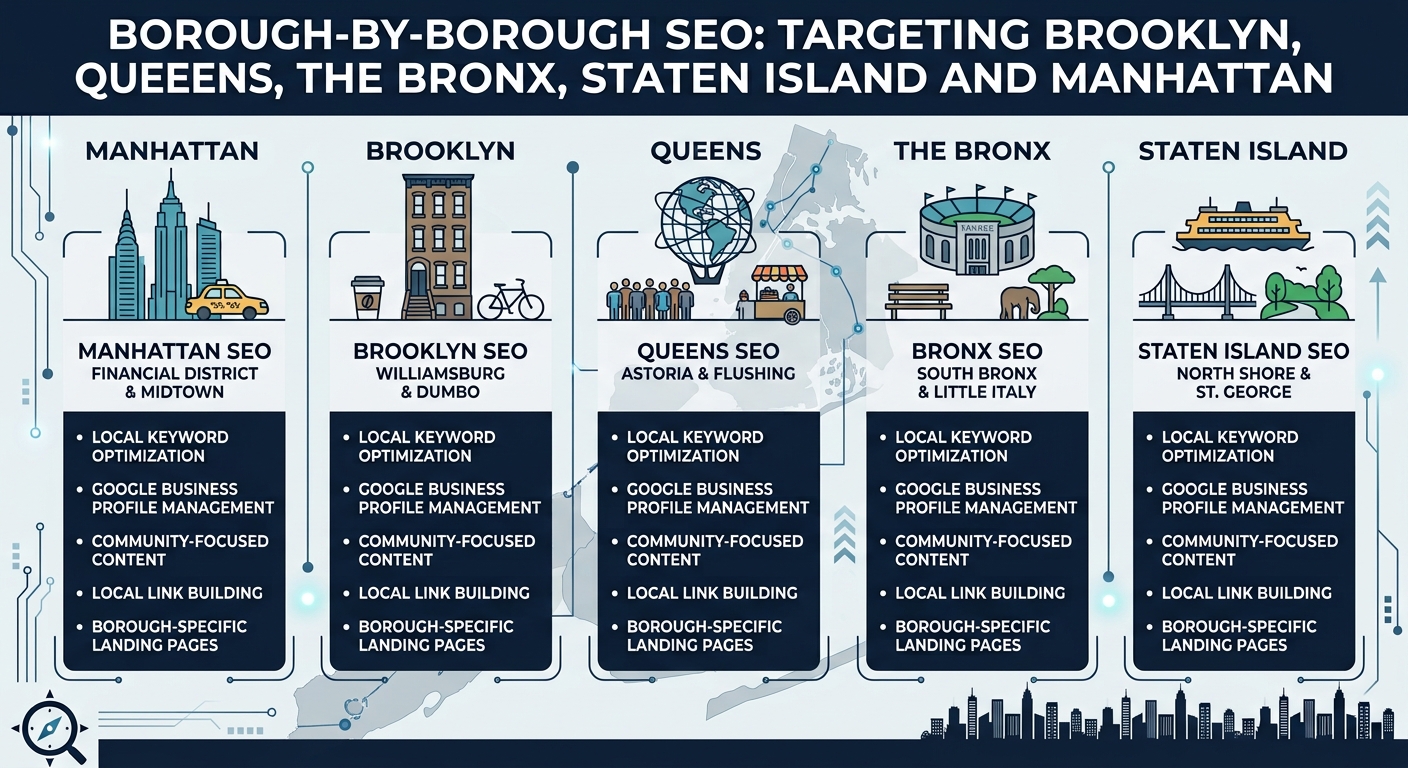
Borough and neighborhood differences add another layer. A business in a dense area such as Midtown Manhattan faces more competition than one in a quieter part of Staten Island or the Bronx. Neighborhood level searches can give smaller businesses a chance to rank sooner, because the pool of nearby competitors is smaller than the pool across the entire city.
Here are the main reasons the New York market can slow down results:
- A very high number of competitors in almost every category
- Established rivals with strong reviews, content, and authority
- Heavy search volume that attracts constant investment from other businesses
- Many shared addresses and similar business names that make accuracy and consistency more important
- A diverse population that searches in many languages and expects relevant results
There are also advantages that can help you move faster than you might expect. Customers in New York search constantly on their phones, so even a modest improvement in local visibility can produce quick gains in calls and visits. A complete profile, accurate listings, and strong reviews can sometimes move a business into the map results within a few months, even before broader rankings change.
The key is to match your strategy to your situation. Instead of trying to win the most competitive phrase in the city on day one, focus first on the neighborhoods, services, and customer questions where you can build momentum. Early wins in these areas create the visibility, reviews, and authority that support more ambitious goals later.
Factors That Affect How Fast SEO Works
No two businesses start from the same place, which is why SEO timelines vary so widely. Several factors shape how quickly search engines recognize your improvements and how far ahead your competitors are. Understanding these factors helps you set realistic expectations and decide where to focus first.
The age and condition of your website matter a great deal. An older site with a clean history and some existing authority may respond faster than a brand new site that search engines have never seen. A site with technical problems, slow loading pages, or thin content may need repairs before new efforts can have their full effect.
The quality and consistency of your listings are equally important. Businesses with accurate names, addresses, and phone numbers across directories tend to progress faster, because search engines can verify their details easily. Businesses with duplicate listings, old addresses, or conflicting information often need a cleanup phase before gains appear.
Reviews and reputation also influence speed. A steady flow of recent and genuine reviews builds trust with both customers and search engines, and it can help your profile appear more often in local results. A business with only a few old reviews may need several months of consistent collection to catch up with nearby rivals.
The table below summarizes the main factors and how they affect the pace of results.
| Factor | Faster Progress When | Slower Progress When |
|---|---|---|
| Website age and authority | The site is established with a clean history | The site is new or has past penalties |
| Technical health | Pages load quickly and work well on mobile | The site is slow, broken, or hard to use on phones |
| Content quality | Pages are detailed, original, and helpful | Pages are thin, copied, or outdated |
| Listing accuracy | Details are consistent across all platforms | Duplicates and errors confuse search engines |
| Reviews and reputation | Reviews are steady, recent, and genuine | Reviews are few, old, or mostly negative |
| Competition level | Nearby rivals are weak or inactive | Rivals are strong and actively improving |
| Budget and consistency | Effort is steady and well planned | Work is irregular or stops too early |
Your goals also change the timeline. Ranking for a specific neighborhood service, such as a pediatric dentist in Astoria, is usually faster than ranking for a broad phrase such as dentist in New York. Choosing a mix of specific and broader targets gives you earlier wins while you build toward bigger objectives.
Finally, consistency is one of the strongest accelerators. Businesses that publish helpful content, collect reviews, and maintain accurate listings month after month tend to see faster and more lasting results than those that work in short bursts. With these factors in mind, you are ready to look at what a typical SEO timeline looks like from the first month to the first year and beyond.

Month One: Audit and Foundation
The first month is about laying the groundwork, and most of the visible progress happens behind the scenes. A thorough review of your website, Google Business Profile, listings, and reviews shows exactly where you stand compared with nearby competitors. This audit becomes the roadmap for everything that follows, so it is worth doing carefully.
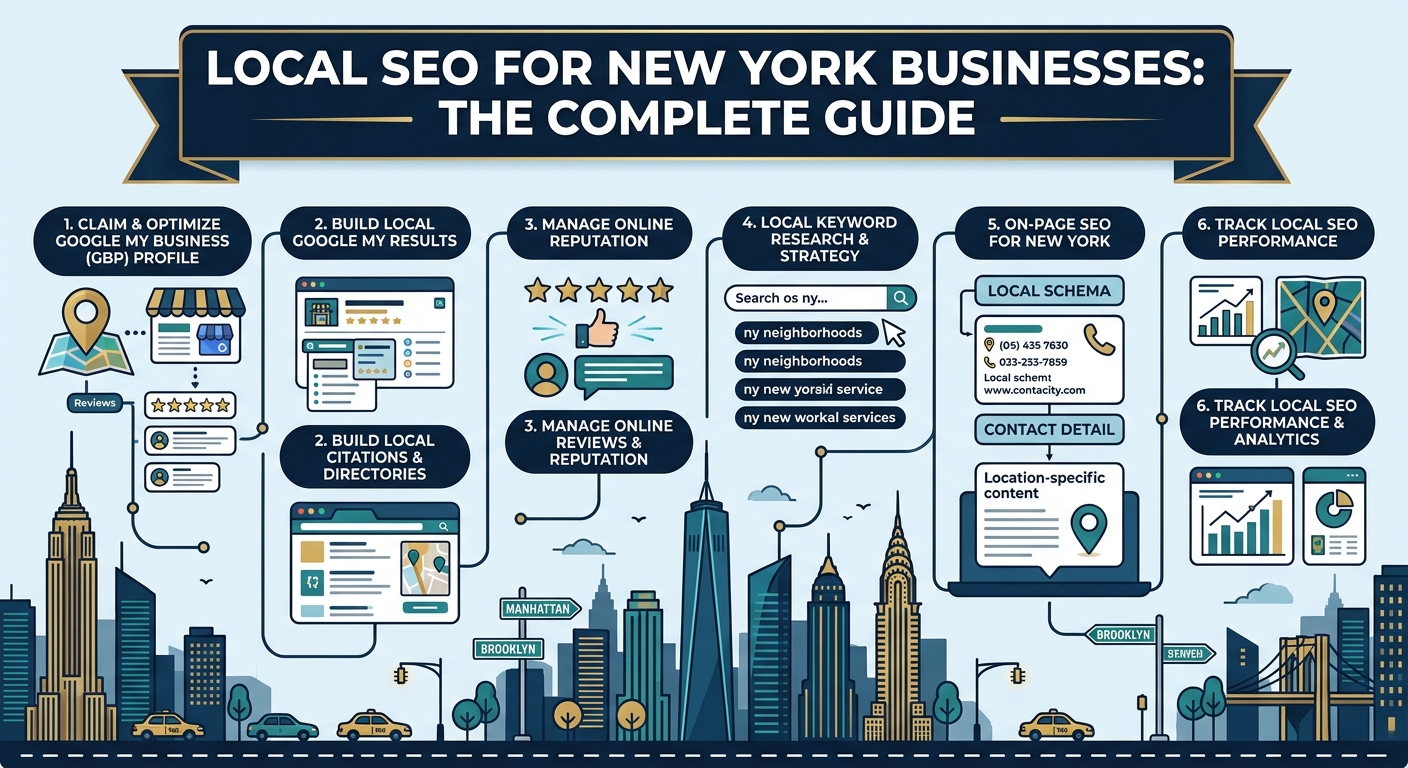
Profile setup and cleanup come first. Claim and verify your Google Business Profile, choose accurate categories, write a clear description, and add real photos of your location, team, and work. Then check your name, address, and phone number across major directories and correct any differences, since even small inconsistencies can slow down progress later.
Technical fixes also begin in this stage. Pages that load slowly, layouts that break on phones, and broken links all create friction for visitors and make it harder for search engines to read your site. Resolving these issues early gives every later improvement a stronger base to build on.
During the first month, you should also decide on your priorities. Choose the services, neighborhoods, and customer questions that matter most, and plan the pages and content that will support them. A clear plan prevents scattered effort and helps you reach early wins faster.
Typical activities in the first month include the following:
- A complete audit of your website, profiles, and listings
- Claiming, verifying, and completing your major business profiles
- Correcting inaccurate or duplicate listings
- Fixing speed, mobile, and structural problems on your website
- Researching keywords and planning service pages and content
- Setting up tracking so that you can measure progress from the start
Do not expect dramatic ranking changes in this stage. Some businesses notice small improvements, such as better profile accuracy and a few more direction requests, but the main value is a clean and organized foundation. Think of this month as preparing the soil before planting, since the strength of everything that grows later depends on it.
Months Two and Three: Early Signals
In the second and third months, the work you started begins to produce early signals. Search engines revisit your website and profiles, notice the corrected details, and start to test your new and improved pages. You may see small movements in impressions, profile views, and the number of searches that include your business.
New content plays a major role in this stage. Service pages, neighborhood pages, and helpful answers to common customer questions give search engines more to understand and more to show. These pages usually take some time to be discovered and tested, so patience is important, but each one adds to your overall visibility.
Reviews start to make a difference as well. A steady routine of asking satisfied customers for feedback, combined with thoughtful responses, builds trust and freshness on your profile. Even a modest increase in recent reviews can help your business stand out in the local map results, particularly in neighborhoods where competitors have been inactive.
You may also begin to see improvements for less competitive searches. Phrases that include a specific neighborhood, a specific service, or a specific customer need often respond sooner than broad terms. For example, a business that targets pediatric dentist near Forest Hills may see movement earlier than one that targets dentist in New York.
Here are the signs of early progress to watch for:
- More impressions and clicks from search to your website and profile
- A rise in direction requests, calls, and profile views
- New pages starting to appear for specific local searches
- A growing number of recent reviews and improved response habits
- Fewer errors and warnings in your technical reports
Keep in mind that early signals are not the same as full results. Rankings may move up and down as search engines test your pages, and that is a normal part of the process. The goal in this stage is to confirm that your efforts are being noticed and that the trend is moving in the right direction.
Months Four to Six: Visible Momentum
Between the fourth and sixth months, many businesses begin to see visible momentum. Pages that were published earlier have had time to settle, reviews have accumulated, and search engines have more confidence in your business. This is often the stage where calls, visits, and inquiries from search start to rise in a way that owners can feel.
Rankings for more specific searches usually improve first. A business may move into the map results for several neighborhood level searches, and its service pages may begin to appear on the first page for targeted phrases. These gains bring in more qualified visitors, because people who search for specific services are often ready to take action.
Content and authority work begins to pay off. A growing library of helpful pages and guides gives you more chances to appear for questions customers ask, and mentions from local organizations and respected websites strengthen your credibility. Even a small number of quality mentions can make a meaningful difference in a market where many competitors have none.
This is also a good time to review what is working and adjust. Look at which pages attract the most visitors, which searches bring them, and which actions they take. Doubling down on strong performers and improving weaker pages helps you build on your progress rather than repeating effort in the wrong places.
Common developments in this stage include the following:
- Improved positions in local map results for neighborhood level searches
- Steady growth in website visits from search engines
- More calls, form submissions, bookings, or orders linked to search
- A healthier review profile with a consistent flow of recent feedback
- Early visibility for broader phrases that were out of reach before
In a very competitive category, the top positions for the broadest terms may still be out of reach, and that is normal. Larger and older competitors often hold those spots, and displacing them can take longer. The important point is that your business is becoming more visible, more trusted, and more likely to be chosen by the customers who matter most.
Six to Twelve Months and Beyond: Compounding Growth
After the first six months, SEO often begins to show its compounding effect. Each page, review, and mention you have earned continues to work, and new efforts build on top of them. Growth that felt slow in the beginning can start to feel steadier and more predictable.
Authority becomes a stronger factor in this stage. As your website earns more genuine mentions, positive reviews, and helpful content, search engines gain more confidence in your business as a trusted source. This confidence can help you compete for more difficult phrases that were previously out of reach.
Many businesses see a lower cost per customer during this period. Because the pages and profiles keep attracting visitors without a fee for every click, the same level of monthly effort can bring in more inquiries than it did at the start. This is why owners who stay consistent often describe SEO as one of their most reliable sources of new customers.
Maintenance and growth go hand in hand. Competitors continue to improve, search engines continue to change, and your own business evolves, so ongoing attention is needed to protect your gains. Regular updates to your content, listings, and reviews help you keep your position and move higher over time.
The table below summarizes typical milestones across the stages of an SEO campaign.
| Stage | Main Focus | Typical Milestones | What You May Notice |
|---|---|---|---|
| Month one | Audit, profile setup, listing cleanup, and technical fixes | Accurate profiles and a clear plan | Small improvements in accuracy and profile activity |
| Months two and three | New content, review building, and early optimization | First signs of movement in impressions and local searches | More profile views and early gains for specific searches |
| Months four to six | Content growth, authority building, and refinement | Stronger map visibility and rising traffic | More calls, visits, and inquiries from search |
| Six to twelve months | Expansion, competitive keywords, and consistent upkeep | Higher rankings and steadier results | Lower cost per customer and more predictable growth |
| Beyond twelve months | Maintenance, new opportunities, and ongoing improvement | Lasting visibility and a strong reputation | A durable asset that supports long term growth |
For the most competitive phrases in New York, it can take a year or longer to reach the top positions. This does not mean the earlier months are wasted, since many smaller gains arrive along the way. A business that has steadily grown its visibility for several months is usually in a far better position than one that has not started at all.
The most important lesson from this timeline is that consistency matters more than speed alone. Businesses that keep improving month after month, rather than stopping when results first appear, tend to build the strongest and most lasting advantages. With the stages clear, the next step is understanding why local results often move faster, how to speed up your progress, and how to measure it before rankings change.

Local SEO Versus Competitive Keywords
One of the most helpful ways to understand SEO timelines is to separate local results from broad competitive rankings. Local results, such as the map listings that appear for searches like electrician near me or bakery in Park Slope, often respond faster than rankings for broad phrases. The reason is that the pool of competitors is smaller, since only businesses near the searcher are considered, and search engines place strong weight on proximity, relevance, and reputation.
Broad competitive keywords work differently. A phrase such as lawyer in New York or best restaurants in Manhattan is contested by hundreds of businesses and large publishers, many of which have years of authority behind them. Ranking for these terms usually requires a deep library of content, strong reviews, and many trusted mentions, which takes longer to build.
This difference suggests a practical strategy. Start with the searches closest to your real customers, such as your neighborhood, your most profitable services, and the specific questions people ask before they buy. Early wins in these areas bring in calls and visits while you continue building toward more competitive goals.
The table below compares the two approaches.
| Search Type | Example | Typical Speed | Competition Level | Best Use |
|---|---|---|---|---|
| Neighborhood level local search | Dentist near Forest Hills | Faster, often within a few months | Moderate | Early wins and steady inquiries |
| Service plus borough search | Immigration lawyer in Queens | Moderate | Moderate to high | Core growth target |
| Broad city wide search | Best lawyer in New York | Slower, often twelve months or more | Very high | Long term brand authority |
| Question and guide search | How long does a root canal take | Moderate | Moderate | Building trust and early stage traffic |
Neither approach is better on its own, and the strongest plans combine both. Local and specific searches deliver momentum and revenue sooner, while broader efforts build lasting visibility and brand recognition. Balancing the two helps you see results along the way instead of waiting for a single big breakthrough.
How to Speed Up Your Results
While no honest provider can force search engines to move faster, there are practical steps that help your progress. Most of them involve removing obstacles, building trust, and staying consistent. The goal is to make it easy for search engines and customers to understand, believe, and choose your business.
Begin by making sure your foundation is clean. Accurate listings, a complete Google Business Profile, and a fast and mobile friendly website allow every later effort to work at full strength. Businesses that skip this stage often spend months wondering why their content is not performing.
Next, focus on relevance and depth. Create a separate page for each main service, explain it clearly, and include the neighborhoods you serve in a natural way. Helpful pages that answer real customer questions tend to earn visibility faster than short pages filled with general statements.
Reviews are another powerful accelerator. A steady routine of asking happy customers for feedback, replying to every comment, and keeping your profile active builds trust quickly, especially in local results. Never buy reviews or offer rewards for them, since this can lead to removed reviews and penalties that slow you down further.
Follow these steps to support faster progress:
- Fix inaccurate or duplicate listings before publishing new content
- Complete every section of your Google Business Profile and keep it updated
- Improve your website speed and mobile experience early in the process
- Publish detailed service pages and neighborhood pages with helpful information
- Build a steady flow of genuine reviews and respond to each one
- Earn mentions from local organizations, chambers, and community websites
- Review your results monthly and act on what the data shows
Authority also grows through real relationships. Sponsoring a local event, partnering with complementary businesses, or sharing expert tips with community publications can lead to natural mentions that strengthen your credibility. These efforts take time, but they often create advantages that competitors find hard to copy.
Finally, avoid the temptation to change direction too often. Search engines need time to test your updates, and constant redesigns or shifting strategies can reset progress. A clear plan, followed steadily and adjusted with care, usually delivers the fastest dependable results.
How to Measure Progress Before Rankings Move
Rankings are only one way to judge progress, and they are often the slowest to change. Many other indicators show that your efforts are working long before you reach the first page for a competitive phrase. Tracking these early signs helps you stay confident and make better decisions.
Start with visibility measures. Impressions show how often your pages and profile appear in search, and an upward trend means search engines are showing your business to more people. Clicks, profile views, and direction requests show how many of those people are interested enough to take the next step.
Then look at customer actions. Calls, form submissions, bookings, and orders linked to search connect your efforts to real business outcomes. Even a small but steady rise in these actions can signal that your visibility is turning into revenue.
Review your numbers once a month using the checklist below so that your efforts stay focused and measurable.
| Monthly Task | What to Check | Why It Matters |
|---|---|---|
| Impressions and clicks | Search appearances and visits to your website | Shows whether visibility is growing |
| Profile views and actions | Calls, direction requests, and website clicks from your map listing | Shows how many nearby customers are ready to contact you |
| Keyword movement | Positions for your priority neighborhood and service searches | Reveals which targets are gaining ground |
| Leads and sales | Calls, forms, bookings, and orders linked to search | Connects SEO work to real revenue |
| Review activity | New reviews, ratings, and your responses | Confirms that your reputation is growing |
| Listing accuracy | Name, address, phone number, and hours on major platforms | Protects trust and local visibility |
| Website speed and mobile use | Loading time and mobile experience | Prevents lost customers from slow pages |
Compare your results over several months rather than from one week to the next. Rankings and traffic naturally rise and fall, so a longer view gives a more accurate picture. If the overall trend is moving upward, your plan is probably on track, even when individual days or weeks look uneven.
Common Mistakes That Slow SEO Down
Many businesses lose months of progress because of avoidable mistakes. Knowing these problems in advance helps you protect your timeline and your investment. Most of them come from impatience, inconsistency, or a lack of regular checks.
- Expecting instant results and abandoning the work too early
- Using different business names, addresses, or phone numbers across directories
- Leaving profiles unclaimed or incomplete on major platforms
- Publishing thin or copied content that does not help customers
- Ignoring reviews or replying to critical feedback with defensive language
- Letting the website stay slow, outdated, or difficult to use on mobile
- Buying links or reviews, which can lead to penalties and removed content
- Changing strategy constantly before search engines have time to respond
Each of these issues can quietly add months to your timeline without any obvious warning. A simple monthly review of your profiles, website, and reviews will catch most of them early. Treat your online presence with the same care you give your customers, and it will reward you with steady and lasting growth.
Why Choose DealMate
Waiting for SEO to work is easier when you trust the plan behind it. DealMate helps New York businesses build a strong and reliable online presence with realistic timelines, clear communication, and steady execution. Our team combines local market knowledge with practical, step by step work that respects the pace of a competitive city.
We begin by reviewing your Google Business Profile, website, listings, and reviews to see exactly where you stand compared with nearby competitors. From there we create a roadmap that fits your industry, your neighborhood, and your goals, with early wins identified first and larger targets planned over time. Every action follows search engine and platform guidelines, so your visibility grows in a safe and lasting way.
Here is what you can expect when you work with DealMate:
- A complete review of your current search presence with clear findings
- A realistic timeline that explains what to expect at each stage
- Optimization of your profiles, website pages, and content for local searches
- Consistent and accurate listings across the platforms that matter most
- Transparent monthly reporting that shows early signals as well as final results
We believe that honest expectations build better partnerships. With DealMate, you gain a trusted partner who explains the process, shares the data, and keeps improving your visibility month after month. Contact us to start turning more searches into customers and more customers into lasting relationships.
Frequently Asked Questions
How long does SEO take to work in New York City?
Most New York businesses see early signs of progress within one to three months and noticeable gains in four to six months. Strong and stable results often take six to twelve months or longer, especially in crowded categories. The exact timeline depends on your competition, your website, and the consistency of your effort. A good provider will explain these factors clearly and avoid exact guarantees.
Why does SEO take longer in a competitive market like NYC?
Competition is much higher because many businesses in the same category are fighting for the same search results. Established rivals often have years of reviews, content, and authority that you must match over time. Search demand is also very high, which encourages constant investment from competitors. These factors stretch timelines, although smart targeting can still produce earlier wins.
Can I see results in a few weeks?
You can often see small improvements within a few weeks, especially after fixing listing errors or completing your Google Business Profile. These early changes may improve accuracy, profile activity, and local visibility. Larger gains such as higher rankings for competitive phrases take longer. Treat early results as a good sign rather than the final outcome.
Does local SEO work faster than broad SEO?
Local SEO often moves faster because the pool of nearby competitors is smaller than the pool for broad city wide searches. Search engines also place strong weight on proximity, relevance, and reviews for local results. This means a well prepared profile can appear in map results within a few months. Broad rankings usually require deeper authority and take more time.
What can I do to speed up my SEO results?
You can speed up progress by fixing listing errors, completing your profiles, and improving your website speed early. Detailed service pages, steady review collection, and local mentions also help. Consistency matters more than sudden bursts of activity. Avoid shortcuts such as buying links or reviews, since they can cause penalties and delays.
Why are my rankings not changing yet?
Rankings can take time because search engines need to find, test, and trust your updates. Strong competitors, technical problems, or inconsistent listings may also slow progress. Check whether impressions, profile views, and clicks are rising, since these often move before rankings do. If they are not improving after several months, a deeper review of your strategy may be needed.
Is it normal for rankings to go up and down?
Yes, small ups and downs are a normal part of SEO. Search engines run tests, update their systems, and respond to changes by competitors. Looking at trends over several months gives a more accurate picture than checking daily or weekly numbers. A steady upward trend matters more than short term movement.
What happens if I stop SEO after a few months?
Your existing pages and profiles will not disappear, but progress may slow and results can decline over time. Competitors who keep publishing content and collecting reviews may overtake your position. Outdated information can also hurt trust and visibility. Ongoing attention is the best way to protect and build on the gains you have made.
How do I know if my SEO provider is doing a good job?
A good provider explains the plan, shares clear reports, and connects their work to calls, visits, and sales. They avoid promises of instant top rankings and follow search engine guidelines. You should be able to see early signals such as rising impressions and profile actions. Regular communication and honest explanations are strong signs of a trustworthy partner.
Is SEO still worth it if results take several months?
SEO is still worth it because the results can keep working long after the initial effort is complete. Unlike paid ads, organic visibility does not disappear the moment you stop paying for each click. Over time it can lower your cost per customer and give your business a stable source of inquiries. Starting sooner gives your efforts more time to compound.
Conclusion
SEO in a competitive market like New York City takes time, but the timeline is far from mysterious. Most businesses see early signals within a few months, visible momentum around the half year mark, and stronger compounding results after a year of steady effort. By starting with local and specific targets, keeping your information accurate, and measuring progress through the right indicators, you can stay confident while your visibility grows.
The most successful businesses treat SEO as a long term asset rather than a quick fix. Set realistic expectations, track your results every month, and keep improving based on what you learn. Start with one change today, and you will move closer to the visibility, customers, and reputation you want across every neighborhood you serve.