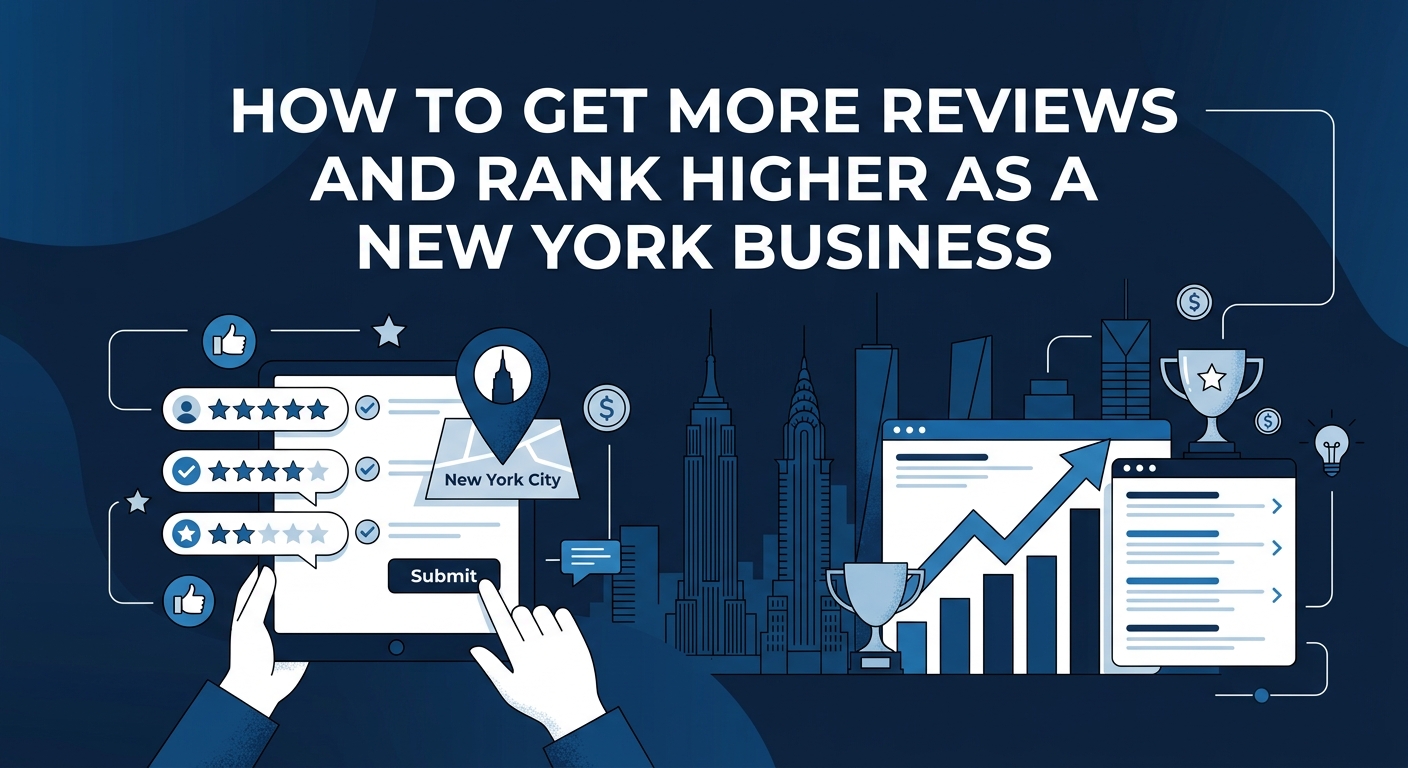
Introduction to Reviews and Local Rankings in New York
New York is a city where choices are everywhere and attention is short. A person looking for a dentist in Queens, a coffee shop in Brooklyn, or a lawyer in Midtown can compare dozens of options in less than a minute. In that quick comparison, the business with stronger and fresher reviews almost always earns the click, the call, or the visit.
Reviews do two powerful jobs at the same time. They convince real customers that your business is trustworthy, and they send signals to search engines that your business is active, relevant, and worth showing in local results. This means that every review you earn works as both a sales tool and a ranking tool, which makes it one of the most valuable assets a local company can build.
Many owners know that reviews matter but are unsure how to collect them consistently or how to turn them into better visibility. This guide walks through the full process in a clear and practical way, from understanding how reviews affect rankings to asking for them, managing them, and using them to grow. The first part focuses on the foundation you need before you begin asking customers for feedback.
Here is what you will learn throughout this guide:
- Why reviews carry so much influence in the New York market
- How review signals affect your position in local search results
- How to prepare your profiles so that every new review counts
- Practical ways to ask, respond, and build a steady flow of feedback
Why Reviews Matter for New York Businesses
New Yorkers are experienced, busy, and careful shoppers. They live in a city where competition is intense in nearly every category, so they rely on the experiences of other people to decide quickly. A strong set of reviews acts like a personal recommendation from hundreds of neighbors, and that kind of social proof is difficult to match with advertising alone.
Reviews also shape first impressions before a customer ever speaks with you. Many people read reviews on their phones while walking, riding the subway, or standing outside a storefront. If your profile shows a high rating with recent, detailed comments, you gain trust instantly, while a profile with few or outdated reviews can make even a great business look uncertain.
There is also a clear link between reviews and revenue. Businesses with more positive feedback tend to receive more calls, more direction requests, and more website visits. Even a small improvement in your average rating can change how many people choose you over a nearby competitor offering a similar service.
The table below shows how different review qualities affect customer behavior in a busy urban market.
| Review Quality | What Customers Notice | Likely Effect on Decisions |
|---|---|---|
| High average rating | A quick sign of overall satisfaction | Higher click and call rates |
| Large number of reviews | Proof of an established and active business | Stronger trust and credibility |
| Recent reviews | Evidence that the business is currently operating well | Greater confidence in booking or visiting |
| Detailed written feedback | Specific stories about service and results | Better understanding of what to expect |
| Owner responses | A sign that the business listens and cares | Improved reputation and loyalty |
The diversity of New York adds another reason to care about reviews. The city includes residents from every part of the world, and many customers search and write reviews in different languages. Collecting feedback from a wide range of customers helps your business appear welcoming and relevant to the many communities that make up the five boroughs.
Reviews also protect your reputation when something goes wrong. A single unhappy comment looks very different when it sits among dozens of positive ones, because readers see it in context. A steady stream of good reviews gives you a cushion, and it shows that occasional problems are the exception rather than the rule.
How Reviews Influence Local Search Rankings
Local search results are shaped by three main ideas, which are relevance, distance, and prominence. Relevance is how closely your profile matches what someone searched for, distance is how near you are to the searcher, and prominence is how well known and trusted your business appears. Reviews feed directly into prominence, and they also support relevance through the words customers use.
Search engines look at several review related signals when deciding how to rank local businesses. These signals work together, so improving one area while ignoring another usually gives limited results. Understanding each signal helps you build a balanced plan instead of focusing only on star ratings.
The main review signals include the following:
- The total number of reviews your business has earned over time
- The average star rating across all reviews
- The recency of reviews, which shows that your business is active today
- The content of reviews, including the services and neighborhoods customers mention
- The way your business responds to feedback
Review content deserves special attention because customers often describe your business in natural language. When a reviewer mentions a service name, a neighborhood such as Astoria or Park Slope, or a specific result, that wording can help search engines connect your profile to related searches. You cannot script these words, but you can encourage detailed feedback by asking open questions and making it easy for customers to share their story.
Recency matters as much as total volume. A business with five hundred reviews that stopped arriving two years ago can look less active than a competitor with one hundred reviews and new ones arriving every week. A steady rhythm of fresh feedback tells both customers and search engines that your business is thriving right now.
The table below summarizes the main review factors and how they influence your visibility.
| Review Factor | Influence on Rankings | Influence on Customers | Where to Focus |
|---|---|---|---|
| Review quantity | Supports prominence | Builds trust through volume | Steady collection every month |
| Star rating | Contributes to quality perception | Drives quick decisions | Consistent service quality |
| Recency | Signals ongoing activity | Shows current performance | Regular requests after each job |
| Keyword and location mentions | Supports relevance for specific searches | Gives clear detail | Open ended review requests |
| Owner responses | Shows engagement | Builds loyalty and confidence | Timely and thoughtful replies |
Local pack visibility is the area where reviews often make the biggest difference. The local pack is the group of three map results that appears near the top of many searches, and it captures a large share of clicks from people ready to act. Businesses in the local pack usually have strong ratings, healthy review counts, and complete profiles, which is why review building is such an important part of any ranking strategy.
Across the five boroughs, this competition becomes even more focused on neighborhoods. A restaurant in the East Village competes with a different set of businesses than one in Flushing or Staten Island, so your review goals should reflect the standards of your immediate area. Look at the top ranking competitors near your location and use their review counts and ratings as a practical benchmark.
Setting Up Your Profiles for Review Success
Before you ask for a single review, make sure your profiles are complete and accurate. A customer who follows your request to a half finished or incorrect profile may leave without writing anything. Taking time to prepare gives every review a stronger and more trustworthy home.
Your Google Business Profile is the most important place to begin, because it controls how your business appears in maps and local search. Claim and verify the profile, then complete every section, including your business name, address, phone number, website, hours, categories, services, and description. Add clear photos of your location, team, and work, since profiles with images tend to attract more engagement and more reviews.
Consistency is just as important as completeness. Your business name, address, and phone number should match exactly across every platform, including your website and social profiles. Use the same suite or floor number everywhere, and keep your hours updated for holidays and seasonal changes, since inaccurate details frustrate customers and can lead to negative comments.
Next, prepare the other platforms that matter for your industry. Many New York customers also check Yelp, Facebook, Apple Maps, and specialized sites that focus on fields such as legal services, healthcare, home improvement, and dining. Claiming these profiles ensures that you control the information shown and that you can respond when reviews arrive.
Use this checklist to confirm that your profiles are ready:
- Claim and verify each major profile that applies to your business
- Add accurate categories, services, and a helpful description written in natural language
- Upload recent, high quality photos that show your business as it really looks
- Confirm that your name, address, phone number, and hours match everywhere
- Turn on messaging or notification settings so that you see new reviews quickly
It also helps to review the rules of each platform before you begin. Every major review site has its own policies about how businesses may ask for feedback, and breaking those rules can lead to removed reviews or even profile penalties. Reading these guidelines once and sharing them with your team will save you from avoidable problems later.
Finally, decide who inside your business will own the review process. Assigning one person to monitor new reviews, send requests, and prepare responses keeps the effort consistent. When a single owner is responsible, review building becomes a routine habit rather than a task that gets forgotten during busy weeks.
With your profiles ready and your goals clear, you are in a strong position to begin collecting feedback from customers. The next step is learning when and how to ask, so that more of your happy customers share their experience in a way that supports your growth.

Best Times and Ways to Ask for Reviews
The best moment to ask for a review is right after a customer has had a clearly positive experience. At that point the details are fresh, the feeling of satisfaction is strong, and the customer is far more likely to take a minute to share it. Waiting several weeks usually lowers the response rate, because the experience fades and daily life takes over.
Different businesses have different natural moments for a request. A restaurant can ask after a meal when the guest compliments the food, while a contractor can ask once a project is completed and the client has seen the final result. A medical or professional office can ask after a successful appointment or when a case reaches a good outcome.
Here are some of the most effective moments to make a request:
- Right after a customer thanks you or gives a compliment in person
- When a project, service, or order is completed to the customer’s satisfaction
- After a positive follow up call, message, or survey response
- When a loyal customer returns for a second or third visit
- After a problem has been solved quickly and the customer expresses relief
The way you ask matters as much as the timing. A personal and sincere request tends to work better than a generic message, because it shows that you value the customer’s opinion. Saying that their feedback helps other neighbors find a trustworthy business gives the customer a meaningful reason to respond.
There are several ways to deliver a request, and most businesses benefit from using more than one. In person requests feel warm and direct, while emails and text messages allow you to include a link and reach customers who have already left. Printed cards and receipts can also work well in places where customers visit physically, such as shops, cafes, and clinics.
Keep your message short, friendly, and free of pressure. Thank the customer for their business, explain that honest feedback helps your team improve and helps others decide, and then provide a simple way to respond. Avoid asking only for five stars, since the goal is genuine feedback and most platforms discourage any attempt to steer the rating.
Making the Review Process Easy
Even happy customers will skip a review if the process feels complicated. Every extra click, login, or confusing instruction lowers the chance that someone finishes. Your job is to remove as much friction as possible so that leaving a review takes less than a minute.
A direct review link is the most useful tool you can create. Instead of asking customers to search for your business and find the right button, a direct link takes them straight to the review box on your profile. You can place this link in emails, text messages, invoices, and follow up notes so that it is always one tap away.
QR codes are especially helpful in a city where people are often on the move. A small code printed on a counter sign, receipt, business card, or table card allows customers to scan with a phone and reach your review page immediately. This approach works well for restaurants, salons, retail shops, fitness studios, and any business that serves people in person.
Clear and simple instructions also make a difference. Some customers are not familiar with how to leave a review on a particular platform, so a short line explaining the steps can help. Mentioning that they only need an account on the platform and a few sentences about their experience makes the request feel easy.
The table below compares common request methods so that you can choose the right mix for your business.
| Request Method | Effort Required | Best For | Response Potential |
|---|---|---|---|
| In person request | Low | Shops, restaurants, clinics, salons | High when the experience was strong |
| Email with direct link | Low | Service businesses and online orders | Moderate to high |
| Text message with link | Low | Appointments and home services | High because messages are read quickly |
| QR code on signs or receipts | Low after setup | Walk in customers and events | Moderate and steady |
| Printed cards | Low | Retail and hospitality | Moderate |
| Follow up phone call | Medium | High value services and professional firms | Moderate to high |
Consider the language needs of your customers as well. New York has residents who speak a wide range of languages, and a request written in a customer’s preferred language often feels more welcoming. Offering a short message in the language your customers use most can increase responses and show that you value the community you serve.
Finally, test your own process from start to finish. Click the link on a phone, scan the code, and read the message as if you were a customer who had never seen it before. If any step feels slow or unclear, adjust it until the path from request to review is as smooth as possible.
Review Platforms That Matter in New York
Not every review platform deserves equal attention. Google is the most important for most local businesses because it appears directly in search results and maps, which means that reviews there influence both rankings and customer decisions. Building a strong base on Google should be the first priority for almost every business in the city.
Yelp holds a special place in New York, particularly for restaurants, beauty services, home services, and entertainment. Many residents and visitors use it as a starting point for discovery, and its audience is active in dense urban neighborhoods. Yelp also has strict policies and automated filters, so it is important to follow its rules carefully and avoid direct solicitation in ways that the platform discourages.
Facebook remains useful for community driven businesses because customers can recommend you to friends and neighbors. Reviews and recommendations there add social proof and often appear when people search for your business name. Apple Maps and other map platforms also display ratings and are increasingly used by people who rely on their phones for directions.
Industry specific platforms deserve attention based on your field. Legal professionals often benefit from attorney directories, healthcare providers from patient review sites, and home service companies from contractor marketplaces. Hospitality businesses can gain visibility from travel and booking platforms, which are especially valuable in a city that welcomes millions of visitors.
The table below outlines how to think about the main platform types.
| Platform Type | Main Value | Priority Level | Notes for New York Businesses |
|---|---|---|---|
| Google reviews | Direct impact on maps and local pack | Essential | Focus on steady volume and recency |
| Yelp | Strong discovery in dense urban areas | High | Follow its guidelines on asking for reviews |
| Facebook recommendations | Community and word of mouth | Medium to high | Good for neighborhood driven businesses |
| Apple Maps ratings | Visibility for iPhone users | Medium | Keep your listing complete and accurate |
| Industry directories | Targeted and high intent traffic | High for relevant fields | Choose platforms active in your borough |
| Travel and booking sites | Visibility for visitors and tourists | High for hospitality | Keep photos and details current |
Every platform comes with rules that you should respect. Common restrictions include not paying for reviews, not offering gifts in exchange for feedback, not reviewing your own business, and not asking only happy customers to post while discouraging others. Breaking these rules can result in removed reviews, lowered visibility, or even suspended profiles, so it is worth reading each policy and training your team accordingly.
It is better to build a healthy presence on two or three key platforms than to spread your effort thinly across many. Start with the platforms where your customers are most active, and expand only when you can keep each profile updated and responded to on a regular basis. Quality attention on a few platforms will always outperform scattered effort across a long list.
Building a Steady Review Habit
Review building works best as an ongoing habit rather than a one time campaign. A sudden burst of reviews followed by months of silence can look unnatural and does little to support long term visibility. A steady flow, even if it is modest, signals that your business is consistently serving customers and earning their approval.
Start by setting a realistic monthly goal based on your size and customer volume. A small shop might aim for a handful of new reviews each week, while a busy clinic or restaurant could target a higher number. Tracking this goal in a simple sheet helps you see progress and spot slow periods before they become a problem.
Your team plays a major role in this effort. Train every employee who speaks with customers to understand why reviews matter and how to make a polite request at the right moment. Giving them simple wording, such as a friendly thank you followed by a mention of your review link, makes the process feel natural instead of forced.
Follow up routines turn good intentions into consistent results. Many businesses send an automatic message after each completed job, appointment, or order, and then send one gentle reminder a few days later if no response arrives. Limiting reminders to one or two keeps the experience pleasant and respectful.
Here are practical habits that help build momentum:
- Add a review request step to your standard process for every completed job or visit
- Review new feedback at least once a week and share positive comments with your team
- Recognize employees who are mentioned by name in reviews to encourage great service
- Update your request message every few months so that it feels fresh and sincere
- Review your results monthly and adjust timing or methods based on what works best
Across the five boroughs, the best review habits also reflect the community you serve. Customers in different neighborhoods may prefer different channels, such as text messages in one area and in person requests in another. Paying attention to these preferences and adapting your approach will help you reach more people and collect feedback that represents the full range of your customers.
With a clear process, a ready team, and a simple path for customers, you can create a dependable stream of feedback that grows over time. The final step is learning how to respond to reviews, handle difficult feedback, and turn your growing reputation into stronger rankings and lasting business growth.

Responding to Reviews Like a Professional
Responding to reviews is one of the simplest ways to show that your business is active, attentive, and proud of the service it provides. A thoughtful reply tells the reviewer that their time was valued, and it shows every future reader that real people are behind your brand. Search engines also notice ongoing engagement, which supports the overall picture of an active and trustworthy business.
For positive reviews, keep your response warm, personal, and specific. Thank the customer by name, mention something from their comment, and invite them to return or recommend you to friends. A reply that refers to the exact service or experience feels genuine and avoids the copied tone that customers can spot instantly.
You can also use responses to naturally reinforce what your business offers. Mentioning a service name or the neighborhood you serve, such as a block in Williamsburg or a street near Flushing, can add helpful context without sounding forced. The goal is to sound like a real person, so never stuff your replies with repeated phrases or unnatural wording.
Here are the qualities of a strong review response:
- A personal greeting that uses the reviewer’s name
- A sincere thank you that refers to a detail from the review
- A short and friendly closing that invites future contact or a return visit
- A natural mention of the service or neighborhood only where it fits
- A reply posted within a day or two so that it feels timely
Timing matters because quick responses signal that you are paying attention. Setting aside a few minutes each day or week to read and answer new reviews keeps your profile fresh and prevents feedback from piling up. Consistent attention also helps you spot patterns in what customers love and what they would like you to improve.
Handling Negative and Fake Reviews
Every business eventually receives a review that is critical, and how you respond often matters more than the complaint itself. Prospective customers read negative reviews closely to see how a company behaves under pressure. A calm, respectful, and helpful reply can turn a difficult moment into a reason for others to trust you.
Begin by reading the review carefully and taking time to understand the issue before you reply. Thank the customer for sharing their experience, apologize for any disappointment, and explain briefly what you will do to look into the matter. Offer a direct way to continue the conversation, such as a phone number or email address, so that the details can be resolved privately.
Avoid arguing, blaming the customer, or sharing private information in a public reply. Even when you disagree with the facts, a polite and professional tone protects your reputation and shows maturity. If the customer is satisfied after your follow up, you can kindly invite them to update their review, but never pressure them to do so.
Fake or abusive reviews require a different approach. These may come from competitors, people who never used your service, or accounts that violate platform rules through hateful language, spam, or conflicts of interest. Instead of responding with anger, document the issue and use the platform’s official reporting tools to request a review of the content.
The table below outlines how to handle common situations.
| Situation | Recommended Response | Action to Take | Goal |
|---|---|---|---|
| Genuine complaint | Polite apology and offer to resolve | Contact the customer privately | Repair trust and show care |
| Misunderstanding | Calm clarification without blame | Share facts briefly and invite discussion | Correct the record respectfully |
| Fake or spam review | No emotional reply | Report through the platform tools | Remove content that breaks the rules |
| Abusive language | Brief professional note if needed | Flag the review as inappropriate | Protect your team and reputation |
| Review from a former employee or competitor | Stay neutral | Report the conflict of interest | Maintain a fair profile |
Keep records of any problematic reviews, including screenshots and dates, since platforms may ask for supporting details. Be patient, because removal decisions can take time and are not always granted. In the meantime, continue collecting genuine positive reviews, since a strong base of honest feedback is the best long term protection against unfair comments.
Using Reviews to Rank Higher
Collecting reviews is only the first step, because the real value comes from using them across your marketing. Displaying feedback in more places builds trust at every stage of the customer journey. It also gives search engines more signals that your business is trusted and well regarded.
Your website is the first place to showcase reviews. Add a section on your homepage and service pages that features recent comments, and consider creating a dedicated testimonials page. Real quotes from customers, shared with permission, can strengthen your pages and help visitors feel confident about contacting you.
Social media is another useful channel for sharing positive feedback. Posting a thank you message that highlights a recent review, or sharing a short story about a satisfied customer, extends the reach of your reputation. Be sure to protect customer privacy and share only what the customer has made public or approved.
You can also learn from the words your customers use. Reviews often reveal the services they value most, the neighborhoods they come from, and the questions they had before choosing you. Use these insights to improve your website content, update your service descriptions, and answer common questions in a clear and natural way.
Tracking your progress helps you stay consistent and spot opportunities. The monthly checklist below gives a simple structure for reviewing your results and planning improvements.
| Monthly Task | What to Check | Why It Matters |
|---|---|---|
| Count new reviews | Total number added this month | Shows whether your request process is working |
| Check average rating | Changes in your overall score | Highlights service strengths or problems |
| Review recency | Date of the most recent reviews | Confirms that your profile looks active |
| Measure response rate | Share of reviews you answered | Reflects engagement and care |
| Study review themes | Repeated praise or complaints | Guides service and content improvements |
| Compare with competitors | Their counts and ratings nearby | Sets realistic goals for your area |
Reviews work best when combined with other local ranking efforts. A complete Google Business Profile, accurate citations, a fast and helpful website, and regular posts all support one another. When these elements work together, your business becomes easier for both customers and search engines to trust, and your visibility grows steadily over time.
Common Review Mistakes to Avoid
Many businesses lose the benefits of reviews through small and avoidable mistakes. Knowing these pitfalls in advance helps you protect your profiles and your reputation. Most problems come from rushing, ignoring platform rules, or treating reviews as a one time task.
- Buying reviews or offering rewards in exchange for feedback, which violates most platform policies
- Asking only happy customers for reviews while avoiding others, a practice known as review gating
- Writing reviews for your own business or asking friends and family to post exaggerated praise
- Ignoring negative comments or replying with anger or defensiveness
- Using the same copied reply for every review, which feels impersonal
- Letting your profile go quiet for months without any new feedback
- Failing to read the rules of each platform before sending requests
Each of these mistakes can lead to removed reviews, lower visibility, or damaged trust. The safest path is to focus on honest service, simple requests, and thoughtful responses. When you treat reviews as a genuine conversation with your customers, the results tend to be more natural and more lasting.
Why Choose DealMate
Managing reviews takes time, consistency, and a clear understanding of how local search works. DealMate helps New York businesses build a strong and trustworthy reputation without adding stress to your daily routine. Our team combines practical strategy with careful execution so that every step supports your long term growth.
We begin by reviewing your current profiles, ratings, and customer feedback to understand where you stand. From there, we create a plan that fits your industry, your borough, and your customers, covering everything from request methods to response guidelines. Our approach always follows platform rules, so your reputation grows in a safe and sustainable way.
Here is what you can expect when you work with DealMate:
- A complete review of your profiles with clear findings and next steps
- A simple and compliant system for requesting reviews from real customers
- Professional guidance on responding to positive, negative, and unfair reviews
- Support in keeping your business information accurate across major platforms
- Transparent reporting that shows your progress and highlights new opportunities
We believe that strong rankings should come from honest work and genuine customer experiences. With DealMate, you gain a reliable partner who understands the pace and pressure of the New York market. Contact us to start building a review profile that earns trust, wins more customers, and supports lasting success.
Frequently Asked Questions
Why are reviews important for local rankings?
Reviews are a major part of how search engines judge the prominence and trustworthiness of a business. They show that real customers have used your service and shared their opinions. Fresh and detailed reviews also signal that your business is active today. Together these factors can improve your chances of appearing in the local map results.
How many reviews does my business need?
There is no fixed number that works for every business. The best target depends on your industry, your location, and the review counts of top competitors nearby. Looking at the leading businesses in your neighborhood gives you a practical benchmark. Your goal should be steady growth rather than a quick spike.
What is the best way to ask customers for reviews?
The best way is to make a sincere and simple request right after a positive experience. A direct link sent by text or email removes extra steps and increases the chance of a response. In person requests also work well when the customer has just expressed satisfaction. Always keep the message friendly and avoid pressuring anyone to give a certain rating.
Is it allowed to offer discounts for reviews?
Most major platforms forbid offering payment, discounts, or gifts in exchange for reviews. Doing so can lead to removed reviews and penalties on your profile. It also reduces the honesty that makes reviews valuable to customers. It is safer to focus on great service and an easy review process.
How should I respond to a negative review?
Respond calmly, politely, and without blaming the customer. Thank them for their feedback, apologize for their experience, and offer a way to resolve the issue privately. A professional reply shows future customers that you take concerns seriously. In many cases it can also encourage the reviewer to reconsider their opinion.
Can I remove a bad review from my profile?
You can request removal only when a review breaks the platform’s rules, such as spam, fake accounts, or abusive language. Honest negative reviews usually remain even if they are unpleasant. The best response is to reply professionally and keep collecting genuine positive feedback. Over time, a strong base of good reviews reduces the impact of a single critical comment.
How often should I ask for new reviews?
You should ask after every positive customer experience so that requests become a regular habit. A steady flow of reviews looks more natural and more active than occasional bursts. Setting a monthly goal helps you stay consistent. Sending only one or two gentle reminders keeps the process respectful.
Do reviews in different languages help my business?
Yes, reviews in different languages show that your business serves a diverse community. They can also help you reach customers who search in their preferred language. New York has residents from every part of the world, so this variety can strengthen your reputation. Make sure your review request is easy to understand for each group of customers.
How long does it take to see ranking improvements from reviews?
Some businesses notice changes within a few weeks, while others need several months of steady effort. The timeline depends on your competition, your current review count, and the quality of your overall profile. Consistent requests and thoughtful responses tend to deliver better long term results. Reviews work best when paired with accurate listings and a helpful website.
Should I hire a professional to manage my reviews?
You can manage reviews yourself if you have the time and a clear process. Many owners prefer professional help because it saves time and reduces the risk of policy mistakes. A trusted partner can build a request system, handle responses, and track results for you. DealMate can support you with each step so that you can focus on serving your customers.
Conclusion
Reviews are among the most powerful tools a New York business can use to earn trust and rise in local search. By preparing your profiles, asking at the right moments, making the process easy, and responding with care, you build a reputation that customers and search engines both respect. Each honest review adds another reason for a new customer to choose you over a competitor.
The most successful businesses treat review building as a daily habit rather than a short project. Keep your requests steady, follow platform rules, learn from feedback, and use your best comments to strengthen your marketing. Start with one small improvement today, and you will see your reputation and your rankings grow across every neighborhood you serve.