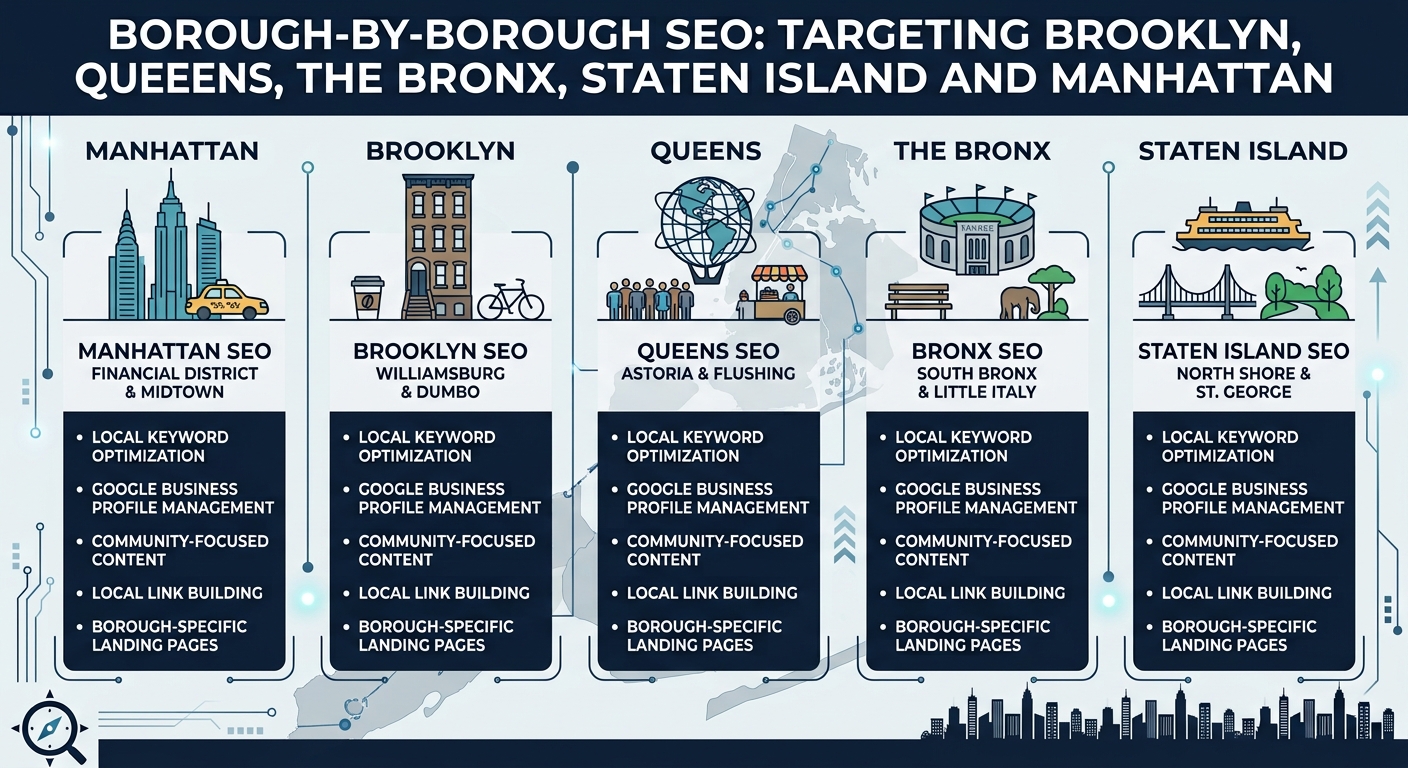
Introduction
New York City is often described as a single giant market, but anyone who has tried to grow a local business here knows the truth is very different. Each of the five boroughs has its own personality, its own customers and its own way of searching online. A strategy that works perfectly in Manhattan may bring almost no results in Staten Island or the Bronx.
Search engines understand these differences better than many business owners do. When someone looks for a bakery in Astoria or a mechanic near the Grand Concourse, Google reads that location carefully and tries to show the most relevant nearby options. Businesses that speak directly to a specific borough and neighborhood tend to win these searches over those that stay vague.
This guide walks through a borough by borough approach to search engine optimization, from the shared foundation every business needs to the tactics that suit each part of the city. You will learn how local search behaves at borough scale, how to organize your website, and how to tailor your message to different audiences. The goal is simple, which is to help your business appear in front of the right people in the right place.
Whether you run a single shop, a service company that travels across the city or a growing brand with several locations, the ideas here will fit your situation. Some strategies are technical and others focus on content or reputation, but all of them work together. Let us start by looking at why thinking borough by borough makes such a difference.
Why Borough Level SEO Matters in New York City
New York City is home to millions of residents spread across five very different areas. Manhattan is packed with offices, hotels and tourist attractions, while Brooklyn is known for creative businesses and fast changing neighborhoods. Queens is one of the most diverse places on earth, the Bronx has deep community roots, and Staten Island offers a quieter and more car friendly environment.
These differences shape how people search. A commuter in Midtown may look for a quick lunch spot on a phone while walking, whereas a family in Staten Island may plan a larger purchase from home and drive to the store. If your content and your profile treat both audiences the same way, you lose the chance to connect with either one.
Searchers also use borough and neighborhood names directly in their queries. Phrases such as plumber in Bay Ridge, dentist in Flushing or restaurant in Riverdale are extremely common. When your website and listings mention these places naturally, Google gains confidence that you serve those exact areas.
Here are the main reasons borough level targeting pays off:
- It matches the way real customers describe where they live and where they want to shop
- It lets you compete in smaller and more winnable markets instead of one crowded citywide race
- It builds trust, since customers prefer businesses that clearly understand their neighborhood
- It reduces wasted traffic from people who are too far away to become customers
- It gives you clearer data about which areas bring the best return
Competition also varies widely from one borough to the next. Manhattan searches are crowded with well funded businesses, while parts of Queens, the Bronx and Staten Island often have fewer optimized competitors. This creates real openings for businesses willing to invest in focused local content.
Another benefit of borough level work is better conversion. A visitor who lands on a page that mentions their own neighborhood feels understood and is more likely to call, book or visit. That personal connection is hard to build with a single generic page that tries to speak to everyone at once.
How Local Search Works Across the Five Boroughs
Google decides which local businesses to show using three core ideas, which are relevance, distance and prominence. Relevance asks how well your business matches the search, distance asks how close you are to the searcher or the place named in the search, and prominence asks how well known and trusted you are. All three apply in every borough, but each one carries a different weight depending on where the search happens.
Distance at Borough Scale
Distance matters enormously in a city of this size, because travel times can vary far more than the map suggests. Two locations that look close together may be separated by a bridge, a river or a long subway ride. Google often favors businesses that sit near the searcher, so a shop in Brooklyn may struggle to appear for a search made in the Bronx.
This is why a single address cannot easily cover the whole city. If you serve several boroughs, you need clear signals for each area, such as service area settings, dedicated pages and local mentions. Businesses with real locations in more than one borough can create separate profiles for each, as long as every location is genuine and staffed.
Relevance Through Local Language
Relevance grows when your content uses the words people actually type. Customers in different boroughs may describe the same service differently, and they often mention nearby landmarks, streets or transit stops. Writing with this local language in mind helps Google connect your pages with specific searches.
Prominence and Local Reputation
Prominence is built through reviews, citations, links and mentions across the web. A business that is praised by customers in its own neighborhood and mentioned by local sites sends strong signals of trust. Reviews that mention the neighborhood or the service area add extra context that supports your ranking.
The table below shows how these three factors apply in a multi borough strategy.
| Ranking Factor | What It Means Across Boroughs | Practical Action |
|---|---|---|
| Relevance | Matching the services and local words customers use in each area | Create content that names the borough, neighborhoods and nearby landmarks |
| Distance | Closeness to the searcher, which changes sharply between boroughs | Use accurate addresses and honest service areas for each location |
| Prominence | Reputation, reviews and mentions from each local community | Earn reviews and links from businesses and sites in each borough |
Search behavior also changes with the device and the moment. Manhattan searches lean heavily toward mobile and immediate needs, while outer borough searches often include longer research and comparison. Understanding these habits helps you decide which pages, offers and calls to action to place in front of each audience.
One more point deserves attention, which is the rise of searches with no borough named at all. Phrases like near me rely on the searcher’s live location, so your profile and your website must signal clearly where you operate. Consistent details across the web make it easier for Google to place you correctly.
Building the Foundation Before Targeting Each Borough
Before you create content for any single borough, you need a solid base that supports every location. Skipping this step is one of the most common reasons businesses fail to rank, even when their borough pages are well written. A strong foundation makes every later effort work harder.
Google Business Profile
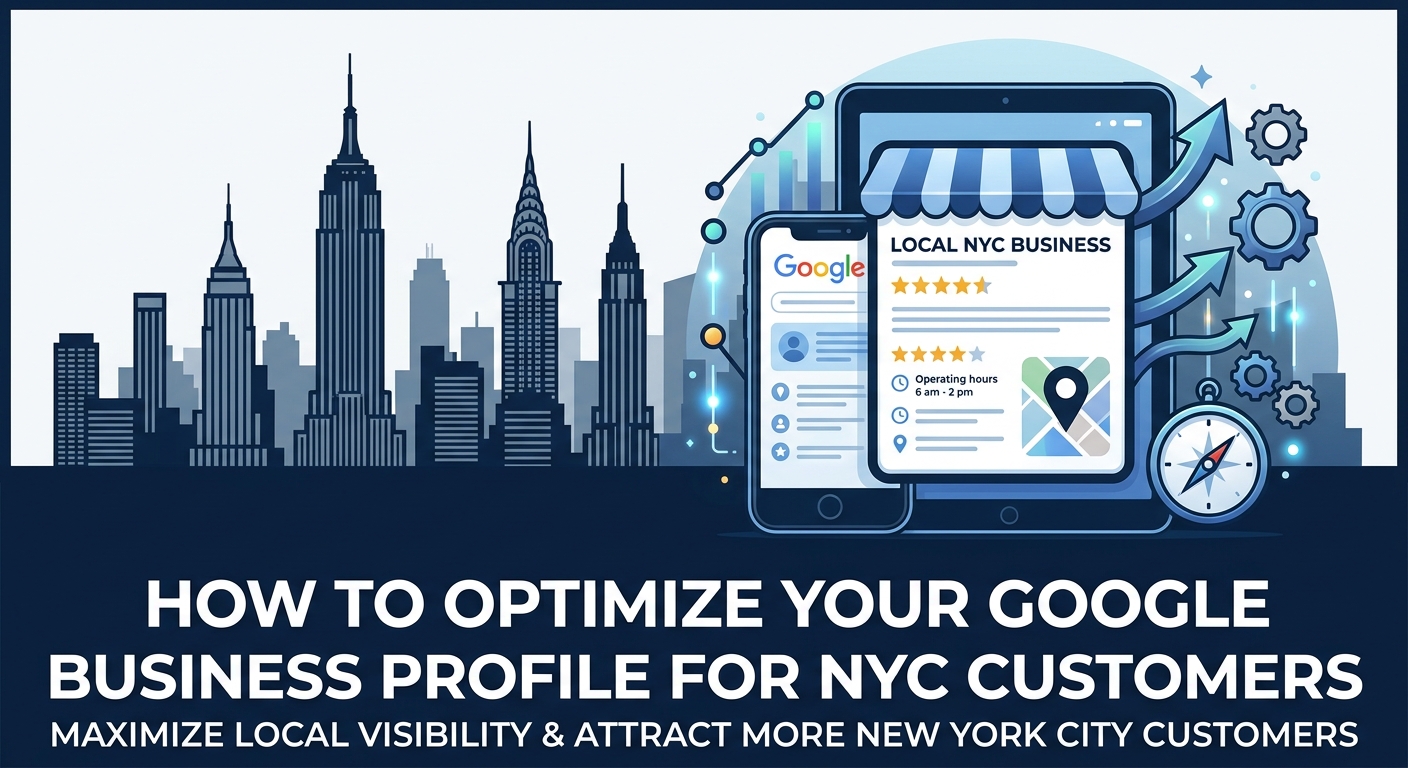
Your Google Business Profile is the most important local asset you own. Claim and verify it, choose accurate categories, and fill in every field including hours, services, attributes and photos. Keep your business name exactly as it appears on your signage, since adding extra keywords can lead to suspension.
If you have more than one real location, create a separate profile for each and make sure each one has its own phone number, address and local photos. Businesses that travel to customers can hide their address and list the boroughs and neighborhoods they serve. Choose service areas you can genuinely reach, because listing too many places can look misleading.
Consistent Business Details
Your name, address and phone number should be written the same way everywhere, including your website, directories and social profiles. Even small differences, such as suite versus floor or a missing zip code, can create confusion. Regular checks help you catch outdated listings, duplicate profiles and old addresses that quietly hurt your ranking.
Website Structure for Multiple Boroughs
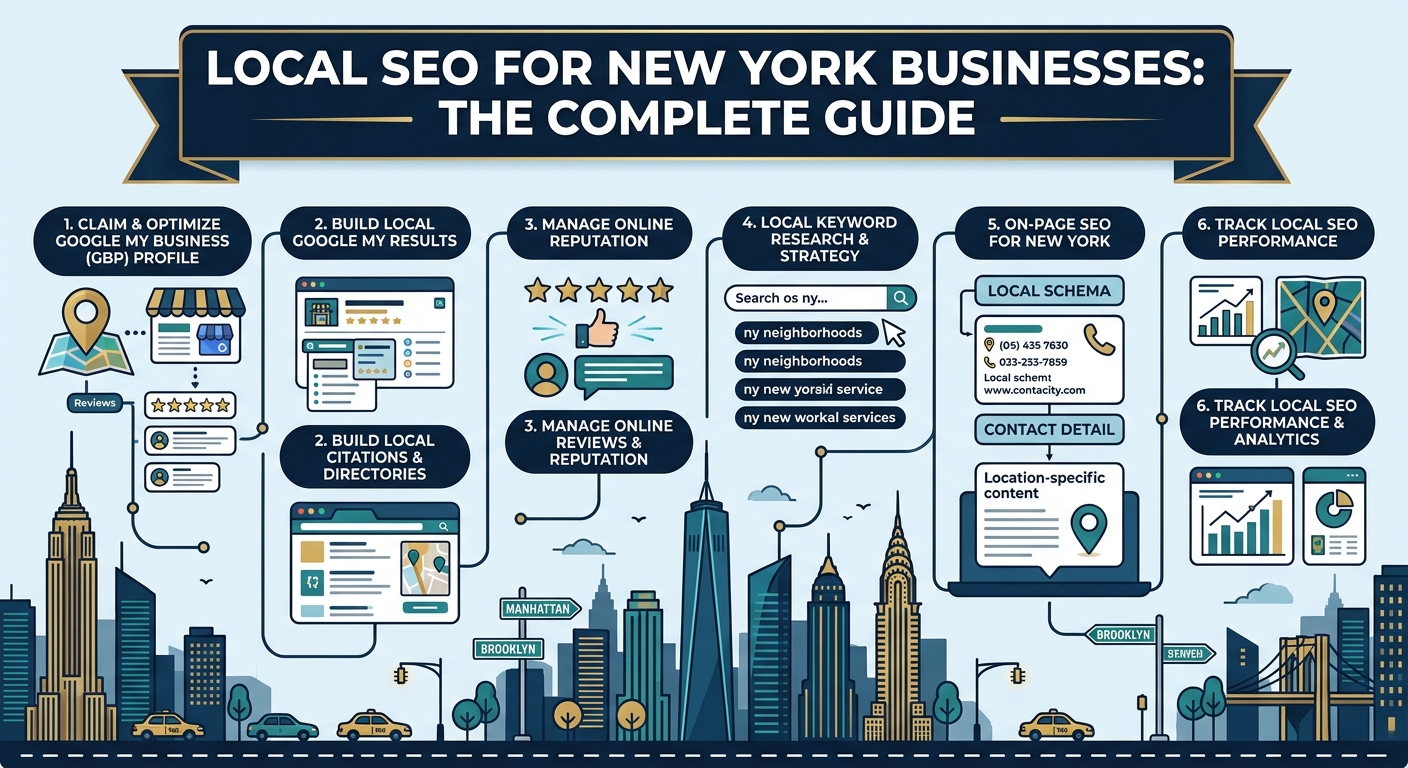
A clear website structure helps both visitors and search engines understand where you operate. The most effective setup gives each borough its own page, with unique and helpful content rather than copied text. Each page should explain your services in that area, mention real neighborhoods, include local proof such as reviews or case examples, and offer a clear next step.
Follow these steps to prepare your website:
- Create a main services page that explains what you offer in simple, clear language.
- Build a dedicated page for each borough you serve, with original content written for that audience.
- Link these pages together and connect them to your main navigation so they are easy to find.
- Add your address, phone number and map to the contact page of every real location.
- Make sure every page loads quickly and looks clean on a mobile phone.
Technical Basics
Technical quality supports everything else. Use secure browsing, fast page speeds and a mobile friendly design, because most New York searches happen on phones. Add local business schema markup so search engines can read your details clearly, and keep your page titles and headings accurate and descriptive.
With these basics in place, you are ready to focus on the unique character of each borough. The next part of this guide looks closely at the audiences, competition and opportunities in Manhattan, Brooklyn and Queens.

Manhattan
Manhattan is the most competitive search environment in the city, and possibly in the country. Thousands of businesses pack into a small island, and many of them invest heavily in marketing. Winning here takes precision, patience and a strong understanding of how people move through the borough.
Understanding Manhattan Searchers
Manhattan searchers fall into a few clear groups, including office workers, residents, students and a constant stream of tourists. Many of them search on mobile phones while walking, commuting or taking a short break. Their intent is often immediate, so they want fast answers such as opening hours, directions and a way to call.
Because of this, your profile and website must make key details easy to find. Clear hours, a visible phone button, accurate directions and a simple booking option can make the difference between a visit and a lost customer. Speed and clarity matter far more here than long explanations.
Neighborhood Targeting in Manhattan
Manhattan is really a collection of smaller markets, each with a different audience. Midtown focuses on offices and visitors, the Financial District serves professionals, and the Upper East and Upper West Sides lean toward families and long term residents. Harlem, Greenwich Village, Chelsea and the Lower East Side each carry their own culture and search habits.
Build content that reflects these differences instead of using one general message. A law firm in the Financial District might highlight fast corporate support, while a pediatric clinic on the Upper West Side would stress family care and convenient hours. Mention nearby landmarks, transit lines and streets so Google and customers both understand exactly where you are.
Manhattan Tactics That Work
Competition is high, so small advantages add up. Focus on the following priorities:
- Choose the most accurate primary category and add secondary categories for related services
- Collect a steady stream of recent reviews, since review volume is a major trust signal in crowded markets
- Use a real storefront or staffed office address, because virtual addresses often cause suspensions
- Create specific pages for the neighborhoods you serve rather than one broad Manhattan page
- Earn mentions from local publications, business improvement districts and neighborhood guides
Manhattan also rewards long tail searches, which are longer and more specific phrases. A search like emergency dentist open late in Midtown has far less competition than a simple dentist search. Targeting these focused phrases can bring ready to buy customers while you build authority for broader terms.
Brooklyn
Brooklyn is a borough of strong identity, creative energy and fast change. Neighborhoods such as Williamsburg, Park Slope, Bushwick, Bay Ridge and Sunset Park each feel like their own small city. Residents often prefer independent and locally rooted businesses, which creates a great opportunity for brands that show real community connection.
Understanding Brooklyn Searchers
Brooklyn searchers tend to research before they decide, and they care about authenticity, reviews and local reputation. They often search by neighborhood name rather than the borough name alone, using phrases like brunch in Greenpoint or physical therapist in Park Slope. This habit makes neighborhood level content especially valuable.
Many Brooklyn customers also search for services close to home rather than near work. That means evenings and weekends can bring strong search activity, and your hours and offers should reflect this rhythm. Seasonal events, street fairs and local festivals also create bursts of interest that smart businesses can use.
Neighborhood Pages and Local Stories
Brooklyn rewards businesses that tell local stories. Instead of generic descriptions, share how your business connects to the neighborhood, whether through a founding story, a community project or a partnership with another local brand. Content like this earns attention, builds trust and gives other websites a reason to link to you.
Create separate pages for the neighborhoods you serve and give each one its own helpful content. Include local landmarks, common customer needs and examples of work done nearby. Avoid copying the same text across pages with only the neighborhood name changed, because Google can spot thin and repeated content easily.
Brooklyn Tactics That Work
Use these steps to build strength in Brooklyn:
- Claim and complete your Google Business Profile with photos that show real Brooklyn surroundings.
- Ask happy customers for reviews that naturally mention their neighborhood and the service they received.
- Build neighborhood pages with unique and practical information for each area you serve.
- Connect with local blogs, community groups and business associations to earn trusted mentions.
- Share posts and updates about neighborhood events, offers and community involvement.
Competition in Brooklyn is strong in popular neighborhoods but lighter in many others. Areas such as Bensonhurst, Flatbush, Canarsie and Sheepshead Bay often have fewer well optimized businesses than trendier spots. Focusing on these communities can bring faster progress and loyal local customers.
Queens
Queens is the largest borough by area and one of the most culturally diverse places in the world. Residents speak hundreds of languages, and communities such as Flushing, Jackson Heights, Astoria, Forest Hills and Jamaica each have a distinct character. This variety creates rich opportunities for businesses that understand and respect local audiences.
Understanding Queens Searchers
Queens searchers often look for services that match their language, culture and daily needs. Someone in Flushing may search for a service using a term from their first language, while a customer in Astoria may search for something very different. Businesses that reflect this diversity in their content can reach audiences that competitors overlook.
Distances in Queens are also larger than in Manhattan or much of Brooklyn. Many residents travel by car or bus, so proximity, parking and transit access play a bigger role in decisions. Mentioning these practical details on your profile and website can improve both rankings and conversions.
Language and Cultural Relevance
If your customers speak multiple languages, consider offering key pages in those languages. Translated content, when written carefully by a fluent speaker, can open up search results that are far less crowded. Mention the languages your team speaks on your profile, since this detail can be a deciding factor for many customers.
Cultural awareness also matters in how you present your business. Photos, reviews and community involvement that reflect the local population build trust quickly. Sponsoring a local festival or supporting a neighborhood group can earn both goodwill and valuable local links.
Service Area Strategy in Queens
Because Queens is so large, businesses that travel to customers should plan their service areas carefully. List the neighborhoods you can truly reach in a reasonable time, and create content that speaks to each one. Avoid claiming the whole borough if your team cannot realistically serve it, because honest service areas protect your profile and your reputation.
Local landmarks, airports, parks and transit hubs make useful reference points in your content. Mentioning places like major stations, shopping streets or well known parks helps Google connect your business with the right searches. These details also help customers picture exactly where you are.
The table below summarizes how the first three boroughs differ in their search habits and best tactics.
| Borough | Searcher Behavior | Competition Level | Priority Tactics |
|---|---|---|---|
| Manhattan | Fast mobile searches focused on immediate needs | Very high | Long tail phrases, strong reviews, neighborhood pages |
| Brooklyn | Research driven searches by neighborhood name | High in popular areas, lighter elsewhere | Local stories, community links, neighborhood content |
| Queens | Diverse and language specific searches across large distances | Medium, with many gaps | Multilingual content, honest service areas, local landmarks |
Each of these boroughs rewards a different style of marketing, so avoid copying one plan across all of them. Study your own customers, track where your calls and visits come from, and adjust your content to match real behavior. With Manhattan, Brooklyn and Queens covered, the final part of this guide turns to the Bronx and Staten Island and brings the full strategy together.

The Bronx
The Bronx is a borough with deep community roots, proud local culture and a population that often relies on neighborhood businesses. Areas such as Fordham, Riverdale, Mott Haven, Pelham Bay and the Grand Concourse each have their own identity and customer base. Many businesses here still treat online search as an afterthought, which leaves real room for those who invest in it.
Understanding Bronx Searchers
Bronx searchers often look for trusted services close to home, and word of mouth carries great weight in the decision. They tend to value clear prices, honest reviews and businesses that feel like part of the community. A profile with real photos, genuine customer feedback and a friendly tone can build confidence very quickly.
Mobile searches are common, and many people look for practical details such as hours, directions and phone numbers. Making these details easy to find reduces friction and turns searches into visits. Language options can also matter, since many Bronx neighborhoods include large Spanish speaking communities.
Opportunities in the Bronx
Competition in many Bronx categories is lighter than in Manhattan or Brooklyn, which creates faster paths to the top of the local pack. Businesses that build complete profiles, collect steady reviews and publish neighborhood content can stand out with relatively modest effort. This makes the Bronx one of the most promising boroughs for businesses ready to move early.
Follow these ideas to grow in the Bronx:
- Build neighborhood pages for areas such as Fordham, Riverdale, Morris Park and Throgs Neck with original content
- Offer key information in both English and Spanish where it suits your audience
- Partner with local schools, churches, sports leagues and community groups for trusted mentions
- Encourage reviews from loyal customers who already know your work
- Highlight nearby transit stops and parking, since access is a frequent concern
Staten Island
Staten Island is the quietest and most suburban of the five boroughs, with a strong sense of local pride. Residents often travel by car, shop close to home and value businesses they know and trust. Neighborhoods such as St. George, Tottenville, New Dorp and Great Kills each have loyal local customers.
Understanding Staten Island Searchers
Staten Island searchers tend to compare options carefully and often visit businesses in person after reading reviews. They care about convenience, parking and reliable service more than trends. Searches frequently include terms like near me and open now, so a complete and accurate profile is essential.
Because the borough is separated from the rest of the city, many residents prefer to stay local for daily needs. This means a business that dominates its own part of the island can build a steady and loyal customer base. Strong local reputation often matters more here than anywhere else in the city.
Low Competition and Local Trust
Many Staten Island categories have far fewer well optimized competitors, so ranking improvements can arrive more quickly. A business with a polished profile, a fast website and consistent reviews can often outperform much larger names. This is a major advantage for small and mid sized companies.
Trust signals carry extra weight in a close knit community. Show real team photos, local awards, community involvement and customer stories that residents recognize. Mentioning familiar landmarks, shopping areas and neighborhoods helps customers feel that you truly belong to the island.
Borough Comparison Table
Seeing all five boroughs side by side makes it easier to decide where to focus your time and budget. The table below compares competition, searcher habits and the tactics that tend to work best in each area.
| Borough | Competition Level | Typical Searcher Habit | Best Tactics |
|---|---|---|---|
| Manhattan | Very high | Fast mobile searches for immediate needs | Long tail phrases, strong reviews, neighborhood pages |
| Brooklyn | High in popular areas | Research by neighborhood before deciding | Local stories, community links, neighborhood content |
| Queens | Medium | Diverse and language specific searches | Multilingual pages, honest service areas, landmarks |
| The Bronx | Low to medium | Trust based searches close to home | Bilingual content, community partnerships, review growth |
| Staten Island | Low | Car based searches with careful comparison | Parking details, local trust signals, steady reviews |
Use this comparison to set priorities rather than treating every borough equally. A business with limited resources may win faster by focusing on boroughs with lower competition first. Once those rankings are stable, you can expand into tougher markets with more confidence.
Content and Link Strategy Across Boroughs
A strong content plan ties all five boroughs together while keeping each page unique. Start with a main services hub, then branch into borough pages and neighborhood pages that go deeper into local needs. Every page should offer useful and original information instead of repeating the same paragraph with a different place name.
Local links add the final layer of authority. Sponsor neighborhood events, join business associations, and share real news with local blogs and publications. Mentions from respected local sources show Google that your business is trusted in each community you serve.
Here are practical content ideas for every borough:
- Write neighborhood guides that connect your services to local needs and landmarks.
- Publish customer stories that show real work completed in each area.
- Share seasonal tips that match local weather, events and traffic patterns.
- Answer common questions asked by residents of each borough in clear and simple language.
- Update your pages regularly so they stay fresh, accurate and useful.
Internal links also matter. Connect your borough pages to related services and to each other where it makes sense, so visitors and search engines can move through your site easily. A well linked structure spreads authority and helps every page perform better.
Common Mistakes to Avoid
Many businesses weaken their local results with a handful of repeated errors. Most of these come from trying to move fast with shortcuts rather than building real local strength. Watch for these problems:
- Creating borough pages that copy the same text with only the place name changed
- Using fake or virtual addresses to appear present in boroughs where you have no location
- Stuffing neighborhood names into titles, descriptions and business names
- Listing service areas far beyond places your team can realistically reach
- Letting old listings and duplicate profiles stay active across the web
- Ignoring reviews instead of replying with care and professionalism
Avoiding these mistakes protects your profile from suspension and keeps your reputation healthy. An honest and consistent approach may take longer, but it produces results that last.
Measuring Results by Borough
Tracking each borough separately shows you where your effort is paying off and where it needs adjustment. Review your profile insights for calls, direction requests, website clicks and the search terms that bring people to you. Compare these numbers month by month to spot trends and respond early.
Check your rankings from different parts of the city, since results can change sharply from one borough to the next. A business that ranks well in Brooklyn may still be invisible in Queens, and only separate checks will reveal this. Keep a simple record of rankings, reviews and conversions for each borough so every decision rests on real data.
Set clear goals for each area, such as more calls from the Bronx or more direction requests from Staten Island. Revisit these goals every quarter and shift your resources toward the boroughs showing the strongest return. Steady measurement turns local SEO from guesswork into a clear and repeatable process.
Why Choose Dealmate
Targeting five very different boroughs takes local knowledge, careful planning and steady execution. Dealmate builds focused local search strategies that respect the character of each area while keeping your overall brand consistent. The approach relies on real customer signals and honest methods rather than risky shortcuts.
Working with Dealmate gives you support across every stage covered in this guide. Here is what you can expect:
- Complete setup and optimization of your Google Business Profile for each location
- Borough and neighborhood content written uniquely for each audience
- Review growth strategies that follow platform guidelines
- Citation cleanup and consistent listings across trusted directories
- Clear monthly reporting that shows results borough by borough
Instead of guessing where to focus, you receive a practical plan that fits your business, your customers and your goals. This saves time, reduces wasted spending and helps you compete with confidence across the entire city.
FAQs
Do I need a separate page for each borough?
Yes, a dedicated page for each borough you serve is one of the most effective local SEO steps. Each page should contain original content that speaks to that borough and its neighborhoods. Copying the same text across pages with only the name changed can hurt your rankings. Unique and helpful pages give Google and customers a clear reason to choose you.
Can one Google Business Profile cover all five boroughs?
A single profile is meant for one real location, so it cannot honestly cover the entire city. Businesses that travel to customers can set service areas for the places they truly reach. If you have real staffed locations in several boroughs, each one can have its own profile. Honest setup protects you from suspension and builds long term trust.
Which borough is easiest to rank in?
Staten Island and the Bronx often have lower competition in many categories, so progress can come faster there. Results still depend on your industry and the quality of your profile and content. Manhattan tends to be the hardest because so many businesses compete for the same searches. Choosing a starting borough based on your real customers usually works best.
How long does borough level SEO take to show results?
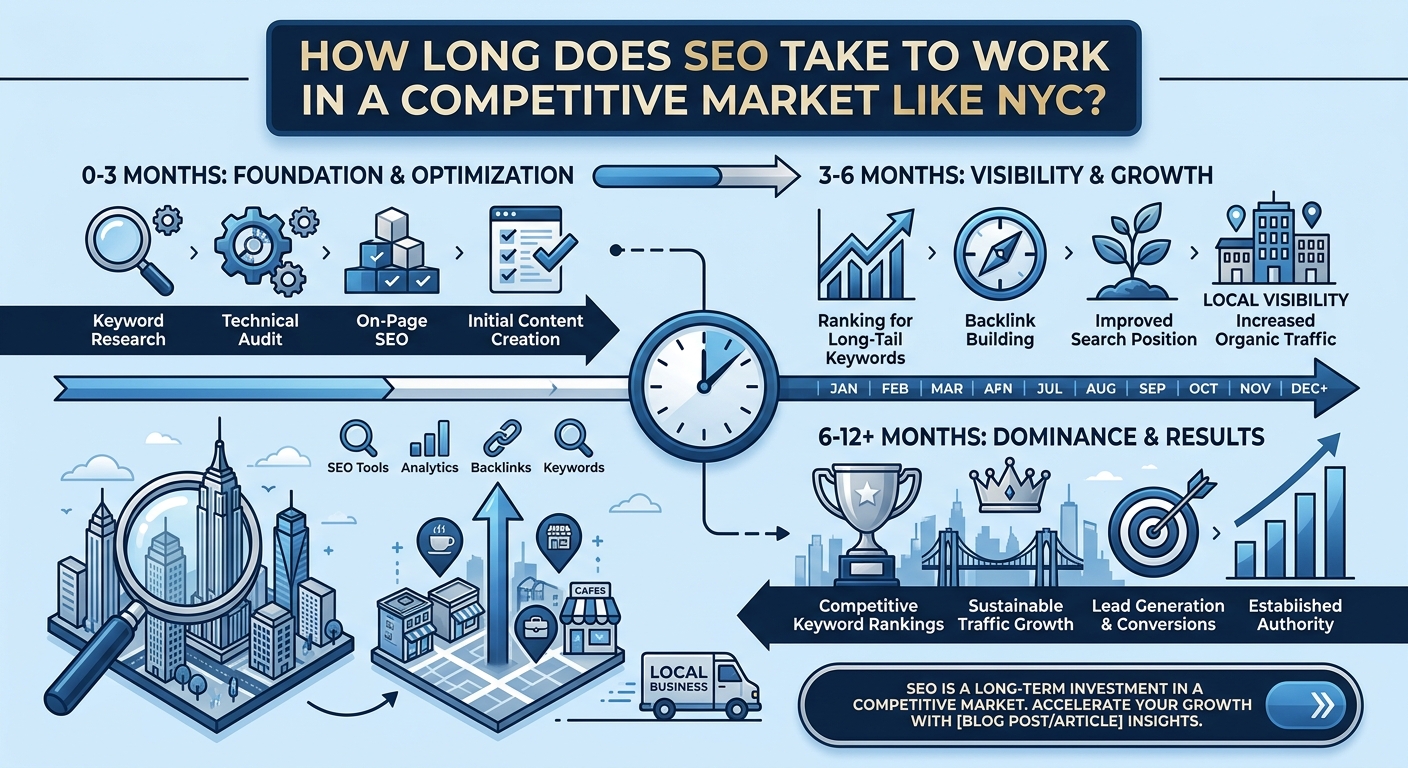
Many businesses see early movement within a few weeks, but stronger results usually take three to six months. Low competition boroughs may respond faster than crowded ones. Steady work on reviews, citations and content speeds up progress. Patience and consistency matter more than any quick trick.
Should I use neighborhood names in my content?
Yes, neighborhood names help Google and customers understand exactly where you serve. Use them naturally in your page content, headings, posts and review replies. Avoid packing long lists of places into a single paragraph. Focus on the neighborhoods you genuinely reach and know well.
Do I need multilingual content for New York City?
Multilingual content is not required, but it can be a real advantage in diverse areas such as Queens and the Bronx. Pages written in a customer’s first language often face far less competition. Make sure a fluent speaker writes or reviews the content so it reads naturally. Mentioning the languages your team speaks on your profile also helps.
How many reviews do I need in each borough?
There is no fixed number, so aim to match or exceed the leading competitors in your category and area. Review quality, freshness and your replies matter as much as the total count. A steady flow of new reviews each month looks natural and builds trust. Encourage customers to mention the service and neighborhood in their feedback.
Can I use a virtual office to appear in another borough?
You should not use a virtual office or mailbox address to claim a presence you do not truly have. Google expects a real location where customers can be served, and fake addresses often lead to suspension. If you cannot open a real location, use service areas to reach customers in other boroughs. This honest approach keeps your profile safe and your reputation strong.
How do I track results for each borough separately?
Review your profile insights for calls, direction requests and website clicks, and note which areas they come from. Check your rankings from different locations across the city to see how visibility changes by borough. Use separate landing pages and tracking numbers where possible to measure each area clearly. Compare the numbers monthly and adjust your plan based on what the data shows.
Should I hire a specialist or handle borough SEO myself?
Many owners can manage the basics, such as claiming profiles, adding details and asking for reviews. Managing five boroughs well is demanding, and the work never fully ends. A specialist can save time, find technical problems and build stronger local signals across the city. The right choice depends on your time, budget and growth goals.
Conclusion
Borough by borough SEO recognizes a simple truth, which is that New York City is five different markets sharing one name. Manhattan rewards precision, Brooklyn rewards local stories, Queens rewards cultural awareness, the Bronx rewards community trust, and Staten Island rewards reliability and local pride. A strong foundation of accurate profiles, consistent listings and a well structured website supports every one of them.
Success comes from treating each borough with the care it deserves while keeping your brand clear and consistent. Keep your content fresh, earn real reviews, build genuine local connections and measure your results every month. With steady effort and an honest approach, your business can rise in every borough you serve and turn local searches into loyal customers.