Introduction to Law Firm SEO in New York City
New York City is home to one of the largest and most competitive legal markets in the world. Thousands of attorneys practice across Manhattan, Brooklyn, Queens, the Bronx, and Staten Island, and many of them handle the same types of cases. For a firm that wants to grow, standing out from this crowd takes more than strong legal skills and a good reputation.
Today, most people begin their search for a lawyer online. Someone facing an accident, a divorce, an immigration issue, or a business dispute will often pick up a phone and type a question into a search engine before speaking to a single person. The firms that appear at the top of those results, with clear information and trustworthy reviews, are the ones that earn the first call.
Search engine optimization, commonly called SEO, is the practice of making your firm easier to find and easier to trust online. It involves your website, your Google Business Profile, your content, your reviews, and every place your firm is listed on the internet. When these pieces work together, they help potential clients discover you at the exact moment they need legal help.
This guide explains how New York law firms can use SEO to attract better leads and win more clients in a crowded market. The first part covers why SEO matters, how people search for attorneys in the city, and how to build a reliable local foundation. Here is what you will learn throughout the full guide:
- Why online visibility has become essential for legal practices
- How clients in New York search for attorneys and what they expect to see
- How to set up profiles and listings that build trust and support steady calls
- How to create a website and content strategy that reflects real expertise
- How to track results and keep improving over time
Why SEO Matters for NYC Law Firms
Legal services are different from many other industries because the decision to hire an attorney is often urgent, personal, and high stakes. People want to feel confident that the lawyer they choose is experienced, honest, and local. A strong online presence helps answer these concerns before the first conversation even begins.
The New York market is also extremely crowded. A single practice area such as personal injury, family law, or criminal defense can include hundreds of firms competing for the same clients, all within a few miles of each other. In such a dense environment, even a small advantage in search visibility can lead to a noticeable difference in the number of inquiries you receive.
SEO also offers long term value that paid advertising alone cannot provide. Paid campaigns can bring quick results, but costs in competitive legal categories can be very high and the traffic stops when the budget ends. A well built SEO foundation continues to attract visitors month after month, which can lower your cost per client over time and build a more stable flow of leads.
The table below shows common ways people find attorneys and how SEO supports each path.
| Discovery Method | How Clients Use It | SEO Opportunity |
|---|---|---|
| Map and local pack results | Searching for a lawyer near me or in a borough | Optimize your Google Business Profile and local signals |
| Search engine results | Looking for a practice area or legal question | Build helpful, detailed service pages and guides |
| Legal directories | Comparing attorneys by rating and specialty | Complete and maintain profiles on trusted platforms |
| Review platforms | Reading client feedback before calling | Collect honest reviews and respond professionally |
| Referrals from friends or other lawyers | Searching a name after a recommendation | Make sure your name leads to a complete, accurate profile |
| Social and professional networks | Researching an attorney’s background | Keep profiles consistent and linked to your website |
Notice that even referrals often end with an online search. When a friend or colleague recommends a lawyer, the next step is almost always to look up the name and check the website and reviews. If your information is missing, outdated, or unclear at that moment, you may lose a client who was already inclined to choose you.
Trust is another reason SEO matters so much for law firms. Search engines prefer to show reliable, helpful, and accurate information, especially on topics that affect a person’s money, safety, or legal rights. Firms that publish clear content, display real credentials, and maintain a strong reputation tend to perform better because they match what both search engines and clients are looking for.
How Clients Search for Lawyers in New York
Understanding how clients search is the starting point for any effective legal SEO plan. People do not all search in the same way, and each type of search reveals a different need. When you understand these patterns, you can shape your website and profiles to meet clients at the right moment.
Many searches focus on a practice area combined with a location, such as divorce lawyer in Brooklyn, immigration attorney in Queens, or business lawyer in Manhattan. These searches show strong intent because the person already knows what kind of help they need and where they want it. Others begin with a question, such as what to do after a car accident or how long a green card process takes, and these informational searches give you a chance to introduce your firm early.
Urgency plays a large role in legal searches. Someone who has been arrested, injured, or served with legal papers wants immediate answers and will often call the first firm that looks credible and available. Clear phone numbers, visible hours, and fast loading pages make a major difference in these moments.
Here are common search types that matter for law firms:
- Practice area and location searches, such as employment lawyer in Manhattan
- Near me searches, which rely heavily on mobile use and map results
- Question based searches, such as how much does a lawyer cost for a divorce
- Emergency searches, such as criminal defense attorney open now
- Branded searches, where the person already knows your firm and wants details
- Comparison searches, such as best personal injury lawyers in the Bronx
Mobile behavior is especially important. Many New Yorkers search from their phones while commuting, waiting in an office, or sitting in a courthouse hallway. If your website is slow, hard to read on a small screen, or makes it difficult to call or send a message, the visitor will quickly move on to another firm.
Language and community also shape how people search. New York is one of the most diverse cities in the world, and many clients prefer to find an attorney who speaks their language or understands their community. Offering clear information about the languages you speak and the communities you serve can help you reach clients that other firms may overlook.
Building a Strong Local SEO Foundation
Before investing in new content or advanced strategies, make sure your basic local information is complete, accurate, and consistent. This foundation tells search engines exactly who you are, where you practice, and what you do. It also gives potential clients a dependable first impression no matter where they find you.
Your Google Business Profile is one of the most important assets for a law firm. It appears in map results and local searches and often shows your address, phone number, hours, reviews, and website in one place. Claim and verify your profile, then complete every section with care and accuracy.
Choose a primary category that best describes your main practice, such as law firm or a more specific attorney category when it fits. Write a clear description that explains your practice areas, your experience, and the communities you serve in natural language. Add professional photos of your office, your team, and your entrance so that clients know what to expect when they visit.
Consistency across the web is the next priority. Your firm name, address, and phone number should appear in exactly the same format on every directory, social profile, and legal listing. Even small differences, such as a missing suite number or a different phone number, can confuse search engines and weaken your visibility.
Law firms with several offices should create a separate profile and a separate website page for each location. Each office needs its own address, local phone number, hours, and unique description, which helps every branch appear in its own area. Avoid using virtual or shared addresses that do not match a real office, since this can cause problems with verification and trust.
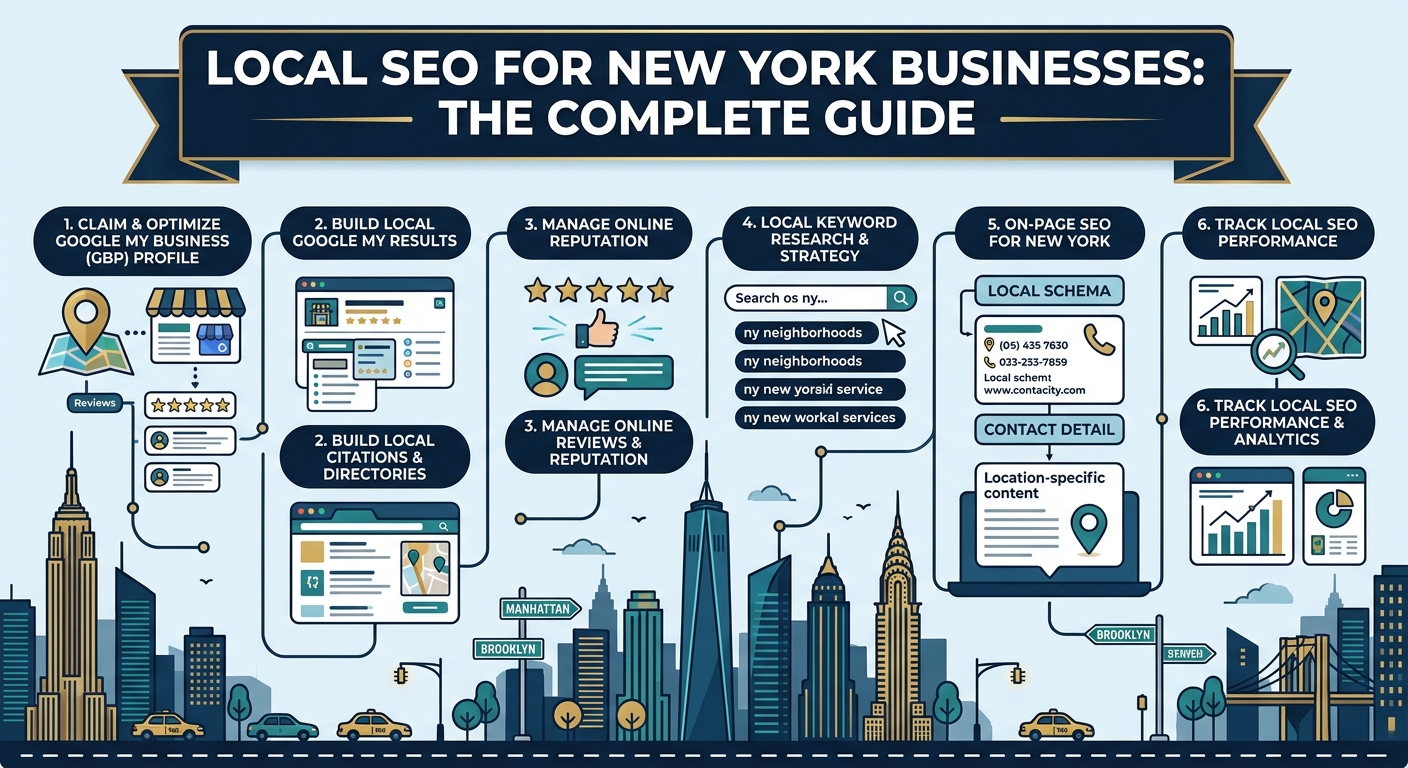
Use this checklist to build your foundation:
- Claim and verify your Google Business Profile and complete every available field
- Set up profiles on Apple Maps, Bing, and other major map platforms
- Use one standard version of your firm name, address, and phone number everywhere
- List your practice areas, languages spoken, and accessibility details accurately
- Upload professional photos of your office and attorneys
- Link every profile to your official website and key service pages
Legal marketing also comes with professional rules that you should respect. Be accurate in how you describe your services, avoid promising specific outcomes, and follow the advertising guidelines that apply to attorneys in New York. Honest and careful wording protects your reputation and builds trust with both clients and search engines.
Finally, remember that your local foundation needs regular attention. Attorneys join or leave, offices move, and hours change, so a quick monthly review helps keep everything accurate. With a clean and complete base in place, you are ready to build a website and content strategy that turns more of those searches into real client conversations.

Law Firm Website Essentials
Your website is the center of your online presence, and it is often the deciding factor between a call and a lost opportunity. When a potential client finds you through a map result, a directory, or a referral, the next step is usually a visit to your site. A clear, trustworthy, and easy to use website can turn that visit into a consultation within minutes.
Speed and mobile design come first. Most legal searches in New York happen on phones, often in stressful moments when people want answers quickly. Compress your images, keep your layout simple, and make sure buttons and phone numbers are easy to tap on a small screen.
Trust signals deserve a visible place on every important page. Clients want to know who you are, what experience you have, and whether other people have been satisfied with your work. Attorney biographies, bar admissions, years of practice, professional memberships, and genuine client feedback all help build confidence before the first conversation.
Contact paths should be clear and simple. Place your phone number at the top of every page, add a short contact form that asks only for the essentials, and offer options such as a callback request or a scheduling link. Every extra step between interest and contact gives a visitor another reason to leave, so keep the process as easy as possible.
The table below outlines the essential website elements and why each one matters.
| Website Element | Purpose | Why It Helps SEO and Client Growth |
|---|---|---|
| Fast mobile friendly design | Smooth browsing on phones | Improves user experience and reduces early exits |
| Visible phone number and contact form | Quick path to reach the firm | Turns visits into consultations |
| Attorney profile pages | Shows experience and credentials | Builds trust and supports expertise signals |
| Practice area pages | Explains each service in detail | Helps the firm appear for specific legal searches |
| Client reviews and testimonials | Provides social proof | Strengthens credibility and conversion rates |
| Office location and map | Helps clients find and visit the firm | Supports local relevance and clarity |
| Secure connection and clean structure | Protects visitors and helps search engines explore the site | Supports technical health and rankings |
Accessibility is another important point for a legal website. Use readable fonts, strong color contrast, and clear headings so that people with different needs can use your site comfortably. A site that is easy for everyone to read also tends to perform better with search engines.
Keep your core details identical to what appears on your Google Business Profile and other listings. If your website shows one phone number and a directory shows another, clients lose trust and search engines receive mixed signals. Treat your website as the main source of truth and update it first whenever something changes.
Keyword Strategy for Attorneys
Keywords are the words and phrases that people type into search engines when they need legal help. A smart keyword strategy helps you understand what potential clients are looking for and then match your pages to those needs. For law firms, the best keywords usually combine a practice area, a location, and a clear intent.
Start by listing every service your firm provides and the types of clients you want to attract. A firm focused on commercial leases in Manhattan will use very different language from a firm that handles workplace injury claims in the Bronx. Think about the exact problems your clients face and the words they might use to describe them.
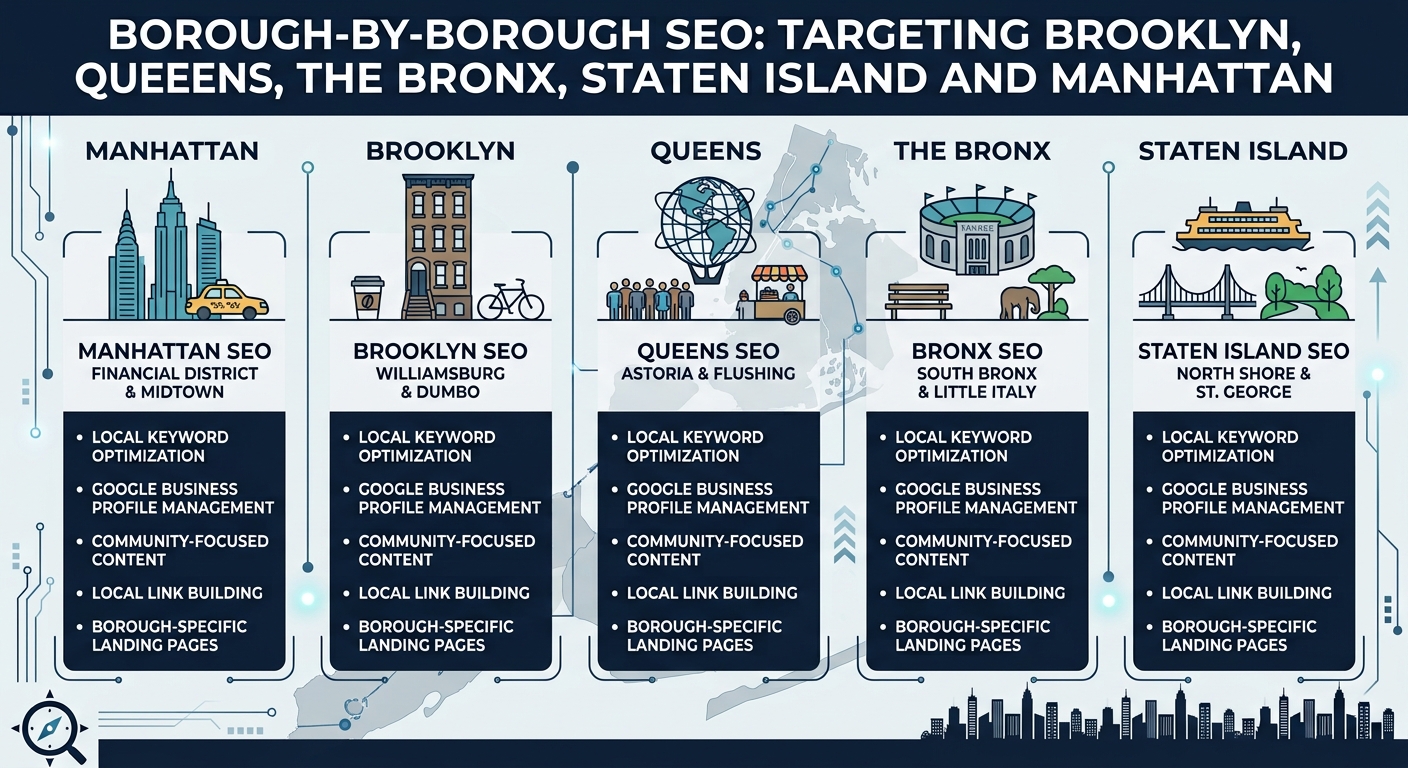
Location keywords are especially powerful in New York. People often search by borough or neighborhood, such as lawyer in Brooklyn Heights, attorney near Downtown Brooklyn, or law firm in Long Island City. Mentioning the areas you serve naturally across your site helps you appear for these local searches, but avoid listing dozens of unrelated places in a single block of text.
Here are the main keyword groups to consider:
- Practice area keywords, such as family law, immigration, estate planning, or personal injury
- Location keywords, such as boroughs, neighborhoods, and nearby courthouses
- Intent keywords, such as free consultation, hire an attorney, or legal help
- Question keywords, such as what happens after an arrest or how to file for divorce
- Audience keywords, such as small business owners, tenants, or immigrant families
- Credential keywords, such as board certified or experienced trial attorney, used only when accurate
Match each keyword group to a specific page whenever possible. Your homepage can focus on your firm and your main practice areas, each service page can target one legal topic, and each location page can target one office area. This structure gives search engines a clear picture of what every page offers and helps clients land on the most relevant information.
Think about intent as well as wording. A person asking a general question is usually early in the process and wants to learn, while a person searching for an attorney near them is ready to make contact. Writing each page to satisfy its main purpose leads to stronger engagement than simply repeating keywords.
The table below shows how different search intentions connect to page types.
| Search Intent | Example Search | Best Page to Show | Key Feature to Include |
|---|---|---|---|
| Find a lawyer | Divorce attorney in Queens | Practice area page | Clear service details and contact options |
| Learn about a legal issue | What to do after a car accident | Guide or article | Helpful steps and a gentle invitation to contact the firm |
| Compare attorneys | Best immigration lawyers in Manhattan | Attorney profile and reviews | Credentials, experience, and client feedback |
| Get immediate help | Criminal defense lawyer available now | Contact page | Phone number, hours, and quick response options |
| Check costs | Lawyer fees for estate planning | Pricing or FAQ page | Honest explanation of fee structures and consultations |
Finally, write for people first. Search engines have become very good at understanding meaning, so there is no need to repeat the same phrase many times. Clear and helpful writing that answers real client questions will always outperform pages filled with awkward or forced keywords.
Practice Area and Location Pages
Practice area pages are among the most valuable assets on a law firm website. Each one should focus on a single legal service and explain it in enough depth to help a visitor understand their situation and see why your firm is a good choice. Thin pages with only a few sentences rarely perform well, especially in a market as competitive as New York.
A strong practice area page begins with a clear heading that states the service and the location. It then explains who the service is for, what the legal process usually involves, what questions clients commonly have, and how your firm can help. Plain language is important, since many visitors are not familiar with legal terms and want information they can actually use.
Include helpful sections that answer real concerns. Explain typical timelines in general terms, describe how consultations work, and outline what clients should prepare before meeting an attorney. Avoid promising results or guaranteeing outcomes, and always make clear that every case is different.
Use this short checklist when building each practice area page:
- Write a unique title and short description for every page
- Use one clear main heading that states the service and location
- Explain the legal process in simple, accurate language
- Add a short frequently asked questions section based on real client concerns
- Display attorney credentials and relevant client feedback where appropriate
- Place a visible contact option near the top and the bottom of the page
Location pages matter for firms with more than one office or those serving several boroughs. Create a separate page for each office with its own address, phone number, hours, directions, parking or transit details, and a short description of the neighborhood. Avoid copying the same text across locations, since unique pages help each office rank for its own area.
Titles and descriptions play a big role in how your pages appear in search results. A good page title includes the practice area, the location, and your firm name in a natural and readable way. The short description under the title should invite action, such as scheduling a consultation or learning more about the process.
Consider adding structured details that help search engines understand your firm. Information such as your firm name, address, phone number, practice areas, and attorney profiles can be presented in a format that search tools read easily. This can improve how your listing appears and may help your firm show richer information in results.
Internal links also help both visitors and search engines. Connect related pages, such as a divorce page linking to child custody and property division pages, so that readers can explore the topics they need. A logical link structure shows that your site covers each subject thoroughly and makes navigation easier for everyone.
Content That Builds Authority
Legal decisions involve trust, and trust is built through content that shows real knowledge and care. Search engines look for pages that demonstrate experience, expertise, and reliability, particularly on topics that affect a person’s rights, money, or safety. Publishing accurate and helpful content is one of the best ways to show these qualities.
A blog or resource center gives you space to answer the questions clients ask every day. You can explain common legal processes, describe recent changes that affect New York residents, and offer practical advice on what to do in specific situations. Each helpful article gives you another chance to appear in search results and to introduce your firm to someone who may need you later.
Frequently asked questions pages are especially useful. Clients often search with a direct question, and a clear and honest answer can earn trust right away. Organize questions by practice area so that visitors can quickly find what applies to them.
Here are practical content ideas for law firms:
- Step by step guides that explain common legal processes in plain language
- Answers to frequently asked questions for each practice area
- Explanations of local courts, procedures, and deadlines in the city
- Attorney profiles that share background, education, and approach to client service
- Community focused articles that address issues facing specific neighborhoods or groups
- Checklists that help clients prepare for a consultation or hearing
Accuracy and ethics must guide everything you publish. Review content carefully, update it when laws or procedures change, and include a clear note that information is general in nature and does not replace personal legal advice. Avoid misleading claims, and follow the advertising rules that apply to attorneys so that your content protects both your clients and your license.
Attorney profile pages deserve special care because they connect real people to your firm. Include education, bar admissions, notable experience, languages spoken, and a professional photo, and write in a warm and approachable tone. Clients often choose a lawyer because they feel comfortable with the person, and a thoughtful profile helps create that connection before the first call.
Do not forget to keep your content fresh. Outdated articles, expired information, and broken pages can weaken trust and make your site look neglected. A quick quarterly review to refresh or remove old material keeps your website accurate and signals that your firm is active and reliable.
With a well built website, a smart keyword plan, detailed practice area pages, and trustworthy content, you have created the tools needed to attract more of the right clients. The next step is strengthening your reputation, earning authority through listings and mentions, and tracking results so that your growth continues over time.

Reviews and Reputation for Law Firms
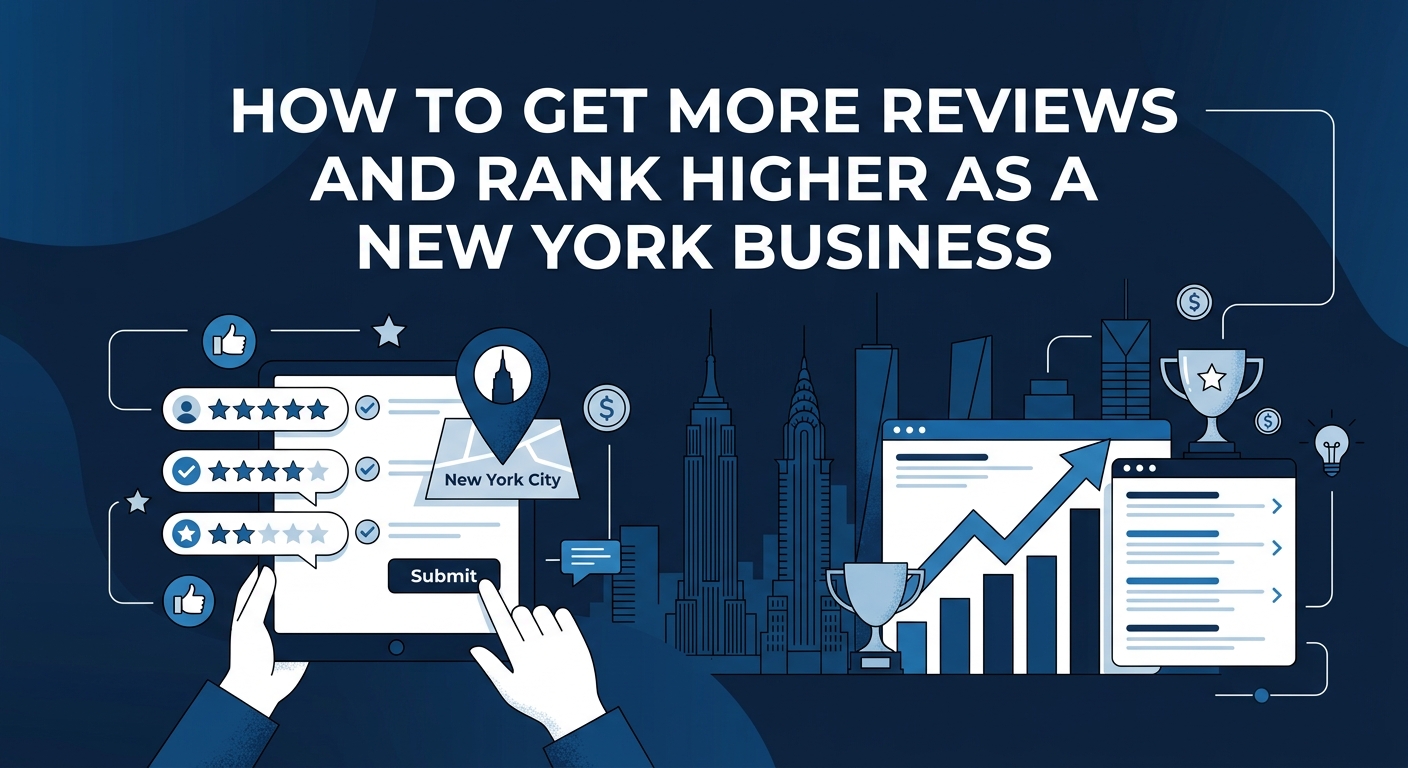
Reviews play a major role in how potential clients judge a law firm. People facing legal issues want reassurance that others have been treated fairly and professionally, and honest feedback gives them that confidence. Strong, recent reviews also support your visibility in map results and local searches.
Collecting reviews in the legal field requires extra care. Client confidentiality always comes first, so never ask a client to share details that could reveal private information, and remind them that they are free to keep their comments general. Ask only after a matter has reached a point where the client feels satisfied with the service, such as the end of a consultation or the successful close of a case.
Make the request simple and respectful. A short email or text with a direct review link, sent a few days after a positive moment, usually works better than a pushy reminder. Never offer payment or gifts in exchange for reviews, since most platforms forbid it and bar rules may also limit how attorneys request testimonials.
Responding to reviews is just as important as collecting them. Thank reviewers politely, keep replies general, and never confirm that a person was a client or discuss any details of a case in public. When a review is critical, respond calmly, express willingness to talk, and move the conversation to a private channel.
Follow these habits to build a healthy reputation:
- Ask satisfied clients for feedback at a natural and appropriate moment
- Reply to every review in a professional tone without sharing case details
- Display selected client comments on your website with proper permission
- Review feedback each month to find patterns in service and communication
- Check your state and local advertising rules before publishing testimonials
Legal Directories and Citations
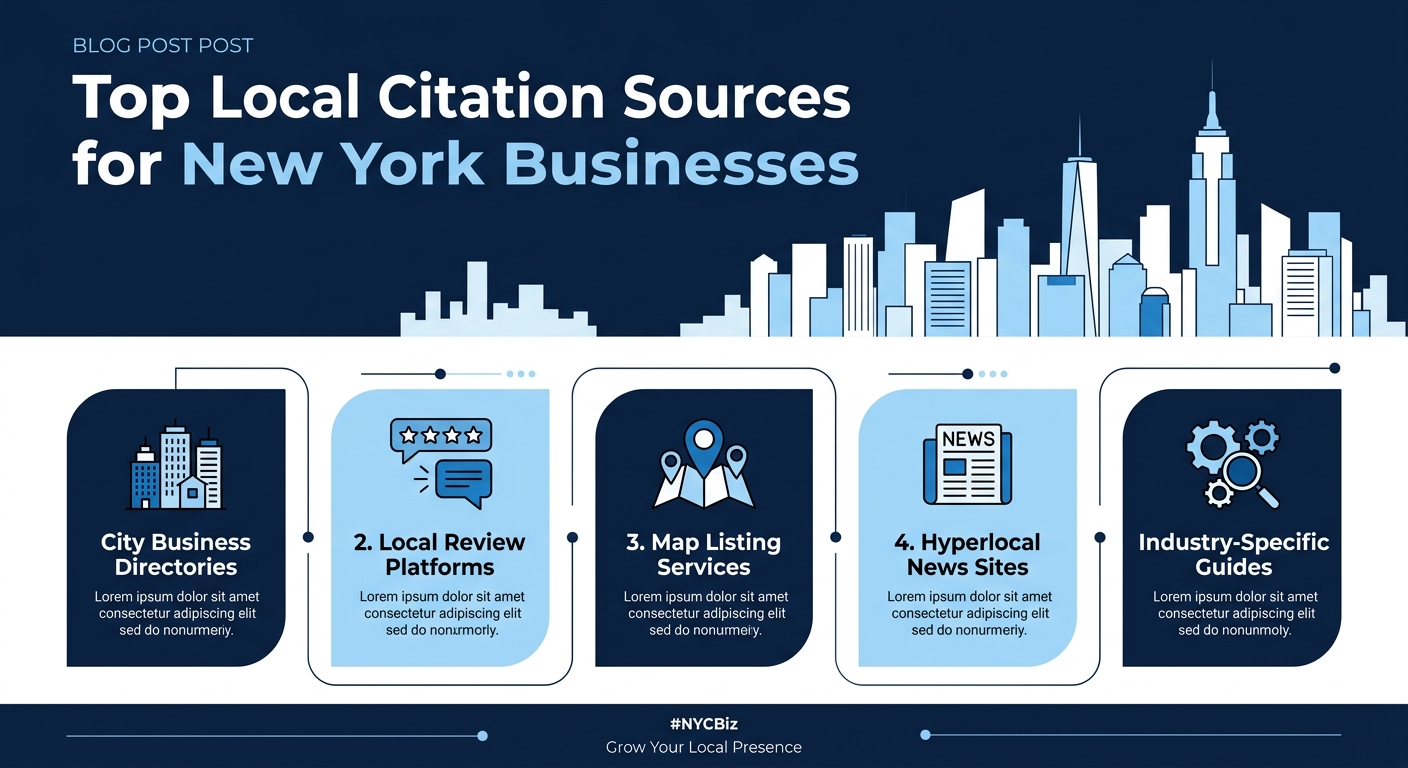
Directories and citations help search engines confirm that your firm is real, active, and located where you say it is. They also place your name in front of clients who browse by practice area and compare attorneys side by side. Accurate listings across trusted platforms build both visibility and credibility.
Start with the major map and search platforms, then add legal specific directories that match your practice areas. Bar association listings, attorney rating sites, and local business directories all add value when your details are accurate. Community and chamber of commerce listings in your borough can also strengthen your local relevance.
The table below shows how to think about the main platform types.
| Platform Type | Main Purpose | Priority Level | Tip for New York Law Firms |
|---|---|---|---|
| Google Business Profile | Maps, local pack, and direct calls | Essential | Keep hours, services, photos, and reviews current |
| Apple Maps and Bing | Navigation and voice search results | High | Complete every field and confirm your details |
| Attorney directories | Comparison by practice area and rating | High | Match credentials and descriptions to your website |
| Bar association listings | Professional verification and trust | High | Keep contact details and areas of practice updated |
| Review platforms | Client feedback and discovery | High | Respond professionally and follow platform rules |
| Local business directories | Citations and neighborhood relevance | Medium | Use the same name, address, and phone number everywhere |
| Chamber and community listings | Local trust and referrals | Medium | Join groups connected to the communities you serve |
Consistency is the rule that connects every listing. Use one standard version of your firm name, address, and phone number, and update every platform when anything changes. A short quarterly audit helps you catch duplicate listings, old addresses, and attorneys who have moved on.
Link Building and Local Authority
Links from respected websites act as endorsements and help search engines understand that your firm is trusted. In the legal field, quality matters far more than quantity, so a few links from relevant and reputable sources are worth more than many from weak or unrelated sites. Earn links through real contributions rather than shortcuts.
Community involvement is a natural place to begin. Sponsoring a local event, offering free educational workshops, or supporting a neighborhood organization often leads to mentions on community websites. Pro bono programs, legal clinics, and partnerships with nonprofits can also earn coverage and show your commitment to the city.
Press and publications offer another path. Local news outlets and legal publications often look for attorneys who can explain new laws, court decisions, or issues affecting residents. Sharing clear and helpful insights, and responding quickly to reporters, can lead to quotes and features that build both authority and links.
Here are practical ways to earn quality links and mentions:
- Publish original guides or research that other sites find useful to reference
- Offer expert commentary to local journalists and legal writers
- Speak at community events, schools, and professional gatherings
- Join professional associations and keep your member profiles updated
- Partner with related professionals, such as accountants or real estate advisors, for shared resources
Avoid buying links or joining link schemes. Search engines can detect unnatural patterns, and penalties can take months to repair. Honest relationships and genuinely useful content create authority that lasts.
Turning Visitors Into Clients
Visibility only matters when it leads to real conversations. Once a person lands on your site or profile, your goal is to make contacting you feel easy, safe, and worthwhile. Every unnecessary step gives a stressed visitor another reason to leave.
Place clear calls to action across your website. A phone number that can be tapped on mobile, a short form, and a prompt to schedule a consultation should appear on every key page. Use friendly and direct wording, and explain what happens after the visitor reaches out so that the next step feels clear.
Your intake process should be quick and professional. Answer calls promptly, return messages the same day when possible, and consider after hours options such as a call back request or a chat tool. Many potential clients contact several firms in a row, and the one that responds first with warmth and clarity often wins the case.
Tracking results shows you what is working and where to improve. Review your numbers once a month using the checklist below so that your efforts stay focused and measurable.
| Monthly Task | What to Check | Why It Matters |
|---|---|---|
| Profile views and actions | Calls, direction requests, and website clicks | Shows how many people are ready to contact you |
| Lead count | Calls and form submissions from search | Connects SEO work to real inquiries |
| Search terms | Phrases that bring visitors to your site | Reveals new content and service ideas |
| Review activity | New reviews, ratings, and responses | Confirms that your reputation is growing |
| Website speed and mobile use | Loading time and mobile experience | Prevents lost leads from slow pages |
| Listing accuracy | Name, address, and phone number on major platforms | Protects trust and local visibility |
Use what you learn to make steady improvements. If many visitors leave a practice area page, add clearer explanations or a stronger call to action, and if searches for a certain topic are rising, publish a helpful guide on it. Small, consistent changes often deliver better results than occasional large overhauls.
Common Law Firm SEO Mistakes to Avoid
Many firms lose potential clients because of small and avoidable mistakes. Knowing these problems in advance helps you protect your visibility and your reputation. Most of them come from rushed setup, outdated information, or a lack of regular checks.
- Publishing thin practice area pages with only a few sentences of general text
- Using different firm names, addresses, or phone numbers across directories
- Copying the same content across several location pages
- Making the phone number or contact form hard to find on mobile
- Ignoring reviews or replying with defensive language or case details
- Making guarantees about results that break advertising rules
- Leaving outdated articles, attorney profiles, or office details online
- Relying only on paid ads and neglecting long term organic growth
Each of these issues can quietly reduce leads without any obvious warning. A simple monthly review of your profiles, website, and reviews will catch most of them early. Treat your online presence with the same care you give your clients, and it will reward you with steady growth.
Why Choose DealMate
Running a law firm in New York leaves very little time for detailed SEO work. DealMate helps attorneys build a strong and reliable online presence so that more of the right clients can find them and reach out with confidence. Our team combines local market knowledge with practical, step by step execution that respects the professional standards of the legal field.
We begin by reviewing your Google Business Profile, website, listings, and reviews to see exactly where you stand. From there we create a plan that fits your practice areas, your boroughs, and your goals, covering everything from profile optimization to service pages and local listings. Every action follows platform guidelines and professional advertising rules, so your visibility grows in a safe and lasting way.
Here is what you can expect when you work with DealMate:
- A complete review of your current search presence with clear findings
- Optimization of your profiles, website pages, and practice area content for local searches
- Consistent and accurate listings across the platforms that matter most
- Guidance on collecting and responding to reviews in a compliant way
- Transparent monthly reporting that connects our work to calls, visits, and new inquiries
We believe that strong law firms deserve to be found by the clients who need them most. With DealMate, you gain a trusted partner who understands the pace and competition of the New York legal market. Contact us to start turning more searches into consultations and more consultations into lasting client relationships.
Frequently Asked Questions
What is SEO for law firms?
SEO for law firms is the practice of improving your online presence so that potential clients can find and trust your firm. It covers your website, Google Business Profile, content, reviews, and directory listings. The goal is to appear in searches for your practice areas and locations. When done well, it brings more calls, form submissions, and consultations.
How long does it take for law firm SEO to work?
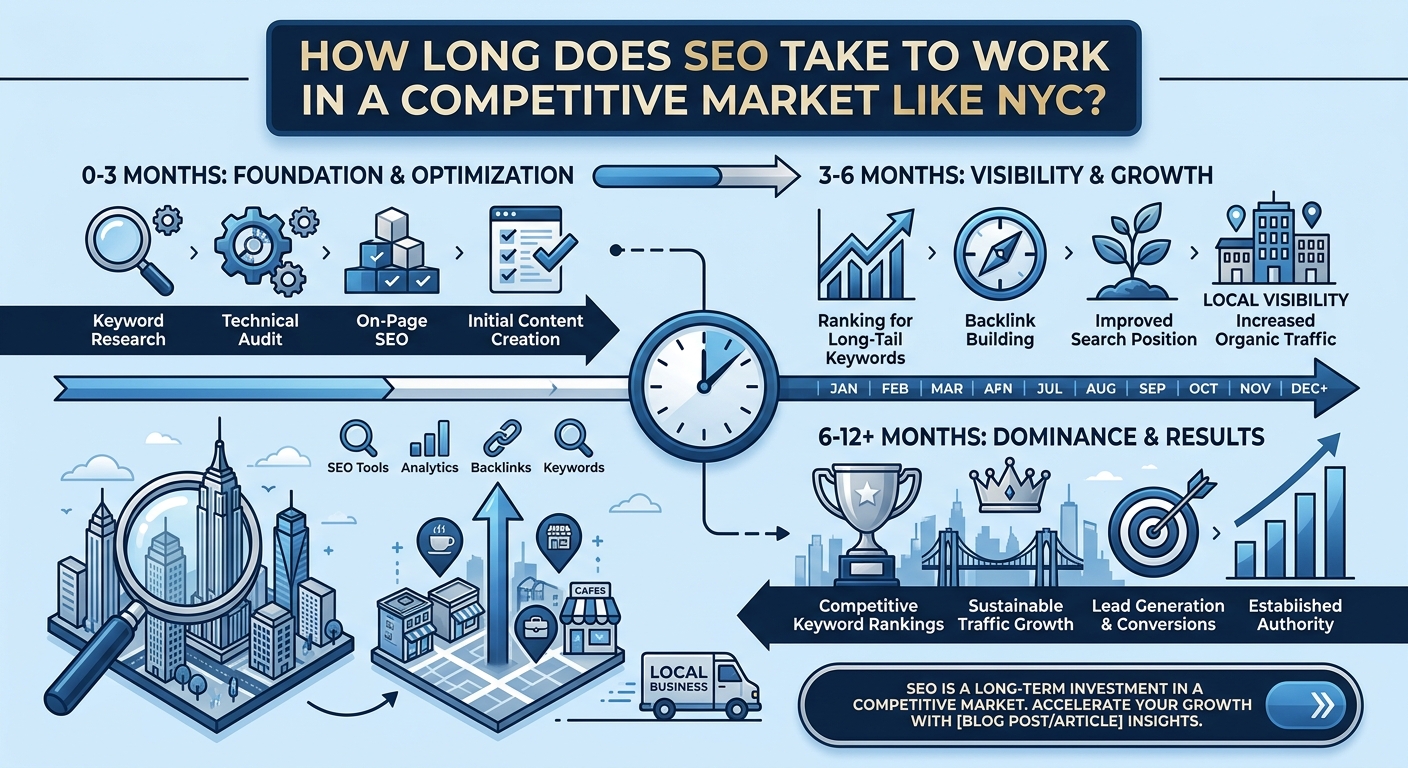
Some improvements, such as fixing profile details, can show results within a few weeks. Larger gains from website content, reviews, and authority usually build over four to six months or longer. The timeline depends on your competition, your practice area, and your current online presence. Steady effort over time tends to deliver the strongest and most lasting results.
Why is Google Business Profile important for attorneys?
Your Google Business Profile appears in map results and local searches, which are where many clients begin their search. It shows your address, phone number, hours, reviews, and website in one place. A complete and active profile helps you stand out from nearby competitors. It also gives clients a quick and trusted way to contact you.
How many practice area pages should my firm have?
You should create one detailed page for each major service your firm offers. Each page should focus on a single topic and explain it clearly in plain language. Avoid combining unrelated services on one page, since this makes it harder for search engines and clients to understand your focus. You can add more pages over time as you expand your services.
Can I use client reviews and testimonials on my website?
In most cases you can, but you must follow the advertising and confidentiality rules that apply to attorneys in New York. Always get permission, avoid sharing private case details, and never imply a guaranteed result. Make clear that past outcomes do not predict future results where required. Reviewing the rules with your firm’s compliance guidance helps you stay on safe ground.
What keywords should a New York law firm target?
You should focus on keywords that combine your practice areas with the boroughs and neighborhoods you serve. Examples include divorce attorney in Brooklyn, immigration lawyer in Queens, or business law firm in Manhattan. Question based keywords can also attract people who are early in their research. Always write naturally and match each keyword to a page that truly answers the search.
Do I need a blog for my law firm?
A blog is not required, but it is one of the best ways to show expertise and attract early stage searchers. Helpful articles answer common questions and introduce your firm to people who may need you later. They also give you more pages that can appear in search results. Quality, accuracy, and regular updates matter more than posting frequently.
How important are directories and citations for law firms?
Directories and citations help confirm that your firm is real, active, and located where you say it is. They also place your firm in front of clients who browse legal platforms and compare attorneys. Accurate details across all listings strengthen trust with both clients and search engines. Regular audits keep errors and duplicates from weakening your visibility.
How often should I update my website and listings?
You should update your website and listings whenever your attorneys, services, hours, or office details change. Even without changes, a review every few months helps you catch errors and outdated content. Articles and practice area pages should be refreshed when laws or procedures change. Regular updates protect your reputation and show that your firm is active.
Should I hire a professional for law firm SEO?
You can manage basic tasks yourself if you have the time and a clear process. Many firms choose professional help because SEO involves ongoing work across profiles, websites, listings, and reviews. A skilled partner can save time, avoid common mistakes, and track results clearly. DealMate can support your firm with each step so that you can focus on your clients.
Conclusion
SEO gives New York law firms a practical way to stand out in one of the most competitive legal markets in the world. By building a strong local foundation, creating a fast and trustworthy website, publishing accurate and helpful content, and earning genuine reviews, you make it easier for clients to find and choose you. Each improvement works together to turn searches into consultations and consultations into lasting relationships.
The most successful firms treat SEO as a steady habit rather than a one time project. Keep your information accurate, track your results every month, and make small improvements based on what you learn. Start with one change today, and you will see your visibility, leads, and reputation grow across every borough you serve.