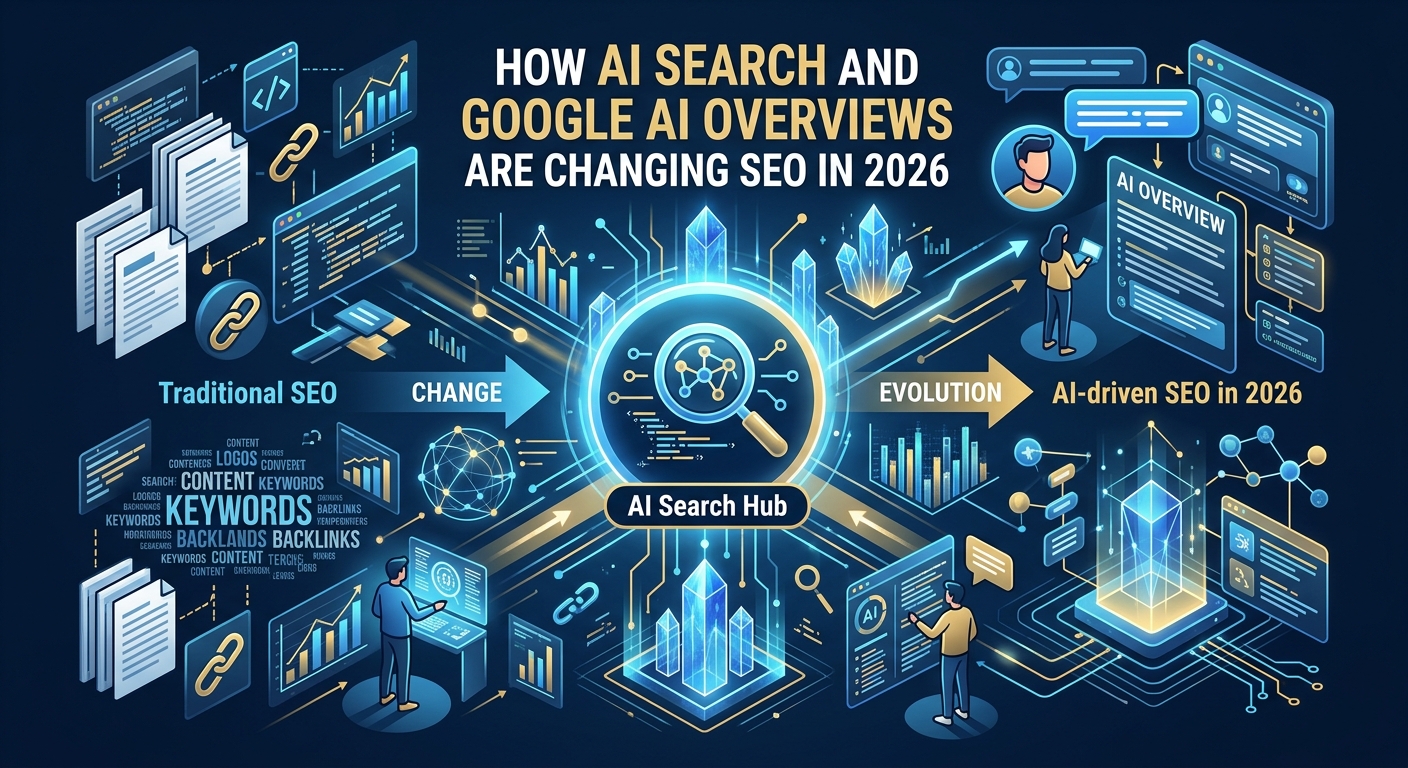
Introduction: The New Search Era in 2026
Search has changed more in the past two years than in the previous ten. Instead of a simple list of blue links, people now often see an AI generated summary at the very top of the page, followed by suggested follow up questions and a conversational way to keep exploring. For business owners and marketers, this shift raises a fair question about whether traditional SEO still matters.
The honest answer is that SEO is not disappearing, but it is changing shape. AI systems still need trustworthy sources to build their answers, and those sources come from the same web that search engines have always crawled and ranked. The websites that win in 2026 are the ones that earn a place inside those answers as well as in the standard results below them.
This guide explains how AI search and Google AI Overviews work, how they are changing user behavior and what these systems look for when they choose which websites to cite. You will also learn practical ways to adapt your content, your technical setup and your measurement habits. Each section is written to be clear and actionable, whether you manage a small local business or a large content team.
Understand AI Search and Google AI Overviews
AI search blends traditional ranking systems with large language models that can read, compare and summarize information from many pages at once. Rather than asking the visitor to open several websites and piece together an answer, the system produces a short explanation and links to the sources it relied on. Google AI Overviews are the most visible example, appearing above the usual results for many informational and research style queries.
These summaries are not written from imagination. They draw on pages that the search engine already considers relevant and reliable, then combine the key points into a single readable response. That means your content can still be discovered, quoted and linked, but only if it is clear, accurate and easy for the system to interpret.
Alongside overviews, conversational search modes allow people to ask longer questions and follow up naturally, almost like speaking with a knowledgeable assistant. Other platforms, including standalone AI assistants and answer engines, work in a similar way and also cite web pages as sources. This creates several new places where your brand can appear, which makes visibility a wider goal than a single ranking position.
Not every query triggers an AI generated answer. Broad educational questions, comparisons, how to requests and multi part problems are the most likely to produce one, while simple navigational searches and some local or transactional queries still lean on classic results. Understanding which of your target searches fall into each group helps you decide where to invest your effort first.
The table below compares the main features of traditional search results with AI generated answers so you can see what has changed.
| Feature | Traditional Search Results | AI Generated Answers |
|---|---|---|
| Format | List of ranked page links | Short summary with cited sources |
| Query style | Short keyword phrases | Longer and conversational questions |
| User effort | Open and compare several pages | Read one combined explanation first |
| Source visibility | Every ranking page gets a listing | A smaller group of pages is cited |
| Follow up | New search for each question | Suggested follow ups in the same session |
| Main goal for sites | Rank as high as possible | Be selected as a trusted source and still rank well |
It is also worth remembering that these systems keep evolving. Features, layouts and triggers change regularly, so a flexible mindset works better than chasing any single tactic. Brands that focus on quality and clarity tend to adapt more easily whenever the interface shifts again.
How User Behavior Is Changing
People are searching differently because the tools now invite them to. Instead of typing a few keywords, many users ask full questions such as which running shoes suit flat feet and a budget under a certain amount. These longer queries carry more detail about intent, which means the best answers are those that address specific situations rather than broad topics.
Voice and mobile use add to this trend. Questions spoken to a phone or smart speaker tend to sound natural and complete, and the answers returned are expected to be direct and brief. Content that reads like a helpful conversation with a knowledgeable person is much more likely to match these searches.
Zero click behavior is also growing, because a clear AI summary can satisfy the question without any further visit. For simple facts, definitions and quick comparisons, many users read the answer and move on. This does not mean traffic is gone for good, but it does mean the visitors who do click are often more serious, more informed and closer to a decision.
Research journeys are becoming more compressed as well. A person who once needed several searches and many open tabs can now explore a topic in a single session, moving from an overview to pricing to reviews through follow up questions. Brands that appear at several points in that journey, with consistent and helpful information, build trust faster than those that appear only once.
Here are the main behavior shifts to keep in mind when planning content:
- Questions are longer, more specific and more conversational than before.
- Users expect a direct answer first and are happy to read deeper only if it helps.
- Fewer simple informational searches end in a click, while complex and high intent searches still drive visits.
- People compare sources inside the search experience before choosing a website to trust.
- Mobile and voice searches continue to push content toward a natural, spoken style.
These patterns reward businesses that understand their audience deeply. If you know the exact questions your customers ask at each stage of their decision, you can create pages that answer them clearly and earn a spot in the summary as well as the click that follows.
What AI Systems Look for When Choosing Sources
AI systems are designed to reduce errors, so they lean toward sources that signal reliability. Experience, expertise, authority and trust remain the foundation, and they are judged through many signals across your site and across the wider web. A page written by a clearly identified expert, supported by real examples and backed by a reputable brand, has a much stronger chance of being used.
Originality matters more than ever. When many websites repeat the same generic advice, the system has little reason to prefer any one of them, whereas a page that offers unique data, first hand experience or a fresh perspective stands out. Adding real case details, original photographs, local knowledge or proprietary numbers gives your content something that cannot be copied easily.
Clear structure helps machines understand your message. Pages that use descriptive headings, short and focused paragraphs, tidy lists and direct answers near the top are simpler to read and summarize correctly. If the answer to a question is buried under long introductions, the system may choose a competitor whose answer is easier to extract.
Freshness and accuracy are equally important. Outdated statistics, old prices and expired advice can cause your page to be skipped, especially for topics that change quickly. Reviewing your most valuable pages on a regular schedule and updating facts, dates and examples keeps them eligible for selection.
These are the qualities that most often help a page earn a citation:
- A clear and complete answer to the main question within the first few lines.
- Visible author details, credentials and a real connection to the topic.
- Original insight such as data, examples or experience that other pages lack.
- Clean formatting with descriptive headings, lists and well organized sections.
- Accurate and recently reviewed information supported by reliable context.
- Strong technical health, including fast loading, mobile friendliness and proper indexing.
Reputation beyond your own website plays a part too. Mentions in respected publications, consistent business details across the web, positive reviews and an active presence in your industry all reinforce the idea that your brand is real and trusted. In the AI era, being known and recommended in several places can be as valuable as having a single well optimized page.

Optimize Content for AI Overviews
The most effective way to prepare for AI generated answers is to write with a clear answer first approach. Begin each page, and each major section, with a direct response to the question in two or three plain sentences, then expand with detail, examples and context. This gives both readers and AI systems a clean passage to extract, while still rewarding visitors who want the full explanation.
Headings should mirror the real questions your audience asks. Instead of a vague label such as Overview, use a heading like How Long Does a Kitchen Remodel Take, then answer it immediately beneath. Question based headings help search systems match your content to conversational queries and make the page far easier to scan on a phone.
Formatting plays a larger role than many people expect. Short paragraphs, descriptive subheadings, numbered steps for processes and bullet lists for features all make your information easier to interpret and quote correctly. Tables are especially useful for comparisons, prices and specifications, because they present structured facts in a form that machines can read with confidence.
Depth still matters after the opening answer. A page that gives a quick summary and then covers related questions, common mistakes, costs and next steps tends to satisfy the user completely, which is exactly what the system wants to reward. Think of each page as a complete resource that anticipates what someone would ask next.
Follow these writing habits to make your pages easier to select:
- Place a concise answer within the first 40 to 60 words of each section.
- Use one main idea per paragraph so passages can stand on their own.
- Define important terms in plain language the first time they appear.
- Add a short frequently asked questions section to cover follow up searches.
- Keep sentences clear and avoid filler that hides the main point.
Strengthen Experience, Expertise and Trust
AI systems are cautious by design, so they prefer content that shows who is speaking and why that person can be trusted. Every important page should display the author name, a short biography and relevant credentials, such as years in the field, certifications or notable projects. For topics that affect health, money or safety, these signals matter even more because mistakes carry real consequences.
First hand experience is one of the strongest differentiators in a web full of similar articles. Describe what you actually did, tested or observed, and include original photographs, screenshots, measurements or results from real work. A line such as after reviewing 120 client websites, we found that most slow pages shared the same three problems carries far more weight than a generic statement.
Trust is also built through transparency. Clear contact details, an accurate about page, visible business information, honest pricing, return and privacy policies and a straightforward editorial approach all show that real people stand behind the content. When claims are made, support them with specific numbers, sources you can explain in your own words and a note about when the information was last reviewed.
Your reputation away from your website feeds directly into how AI systems view you. Mentions in respected industry publications, interviews, podcast appearances, speaking engagements and consistent customer reviews all strengthen the picture of a genuine and established brand. Even unlinked mentions can help, because language models learn associations between your name and your area of expertise.
These actions help build lasting authority:
- Publish detailed author profiles and connect them to the articles they write.
- Share original case studies, test results and behind the scenes processes.
- Earn mentions in trusted publications through expert commentary and useful research.
- Collect and respond to genuine customer reviews on major platforms.
- Keep your brand name, descriptions and contact details consistent everywhere.
Structured Data and Technical Foundations
Strong technical health is the base that every other tactic depends on. If a page cannot be crawled, rendered or indexed properly, it cannot be used in any search result, whether classic or AI generated. Regular checks of your robots rules, sitemaps, redirects and index coverage keep your best pages available to the systems that need to read them.
Structured data helps machines understand exactly what each page contains. Markup for articles, organizations, products, services, reviews, frequently asked questions and local businesses gives search engines clear labels for names, prices, ratings, hours and relationships between entities. While markup alone will not guarantee inclusion in an AI summary, it removes ambiguity and supports rich features that increase your visibility.
Page experience still counts. Fast loading, stable layouts and smooth mobile performance keep visitors engaged and show that your site is well maintained. Because many searches now happen on phones and through voice, a slow or awkward page can lose both the click and the opportunity to be cited.
Content should also be accessible in the page itself rather than hidden behind scripts or interactions. Make sure your main text, headings and links appear in the rendered page and that important information is not locked inside images or tabs that never load for crawlers. Clear internal links between related pages help systems understand how your topics connect and which page is the main authority on each subject.
The checklist below covers the technical foundations worth reviewing every quarter:
- Confirm that key pages are crawlable, indexable and free from accidental blocks.
- Add and validate schema that matches the visible content on each page.
- Keep Core Web Vitals within recommended ranges on mobile devices.
- Use clean URLs, canonical tags and a logical internal linking structure.
- Update your XML sitemap whenever pages are added, merged or removed.
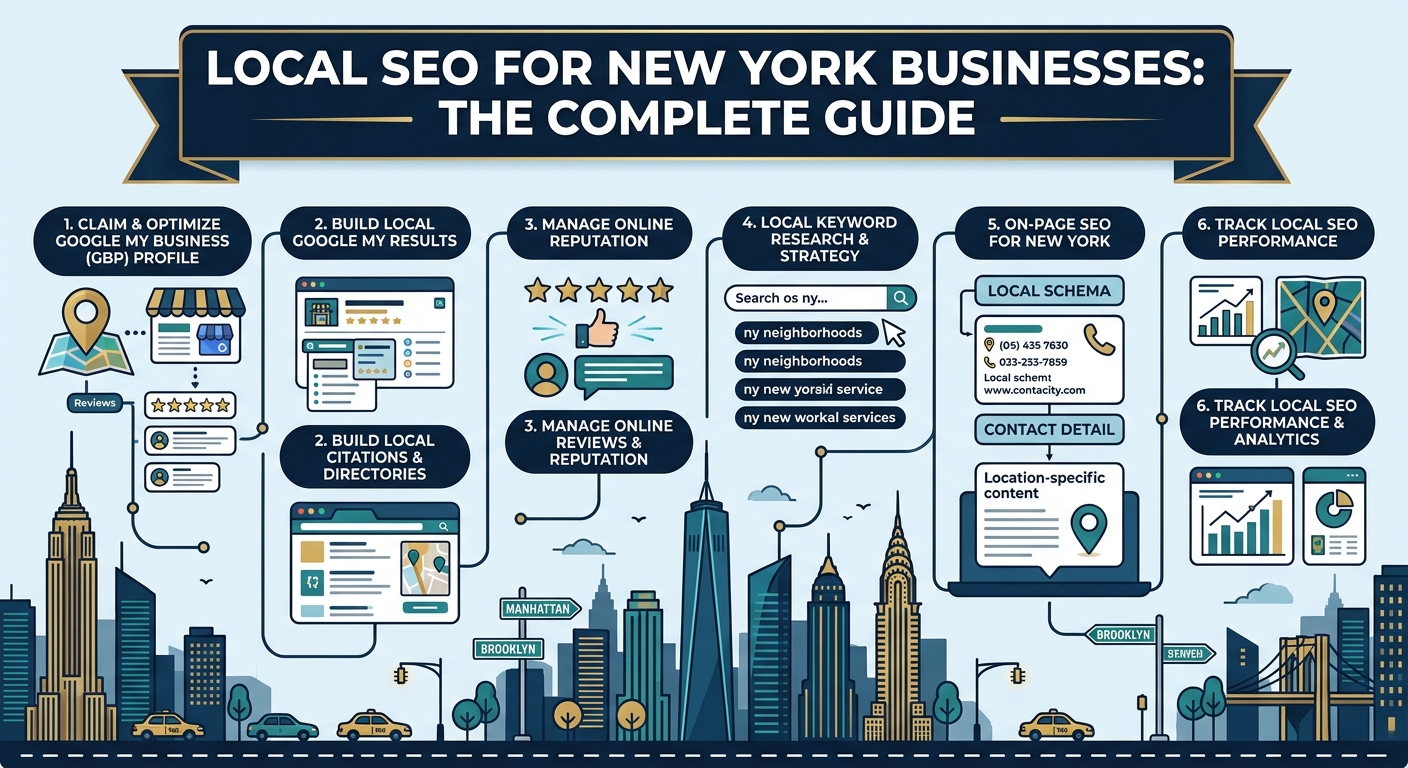
Local SEO in the AI Search Era
Local searches are increasingly conversational, with people asking questions such as which dentist near me takes walk ins on weekends or where can I find a quiet cafe to work in the evening. AI systems answer these by combining business profile data, reviews, website content and location signals. If your information is missing or inconsistent, you may simply be left out of the answer.
Your business profile is now one of your most important assets. Complete every field, choose accurate categories, upload fresh photos, list your services and respond to questions and reviews regularly. Make sure the details match your website exactly, including your name, address, phone number and opening hours.
Reviews carry extra weight because they provide real language that systems can analyze. Detailed reviews that mention specific services, staff members and neighborhoods give AI tools rich context about what you do well. Encourage satisfied customers to describe their experience in their own words, and always reply politely and helpfully to both positive and negative feedback.
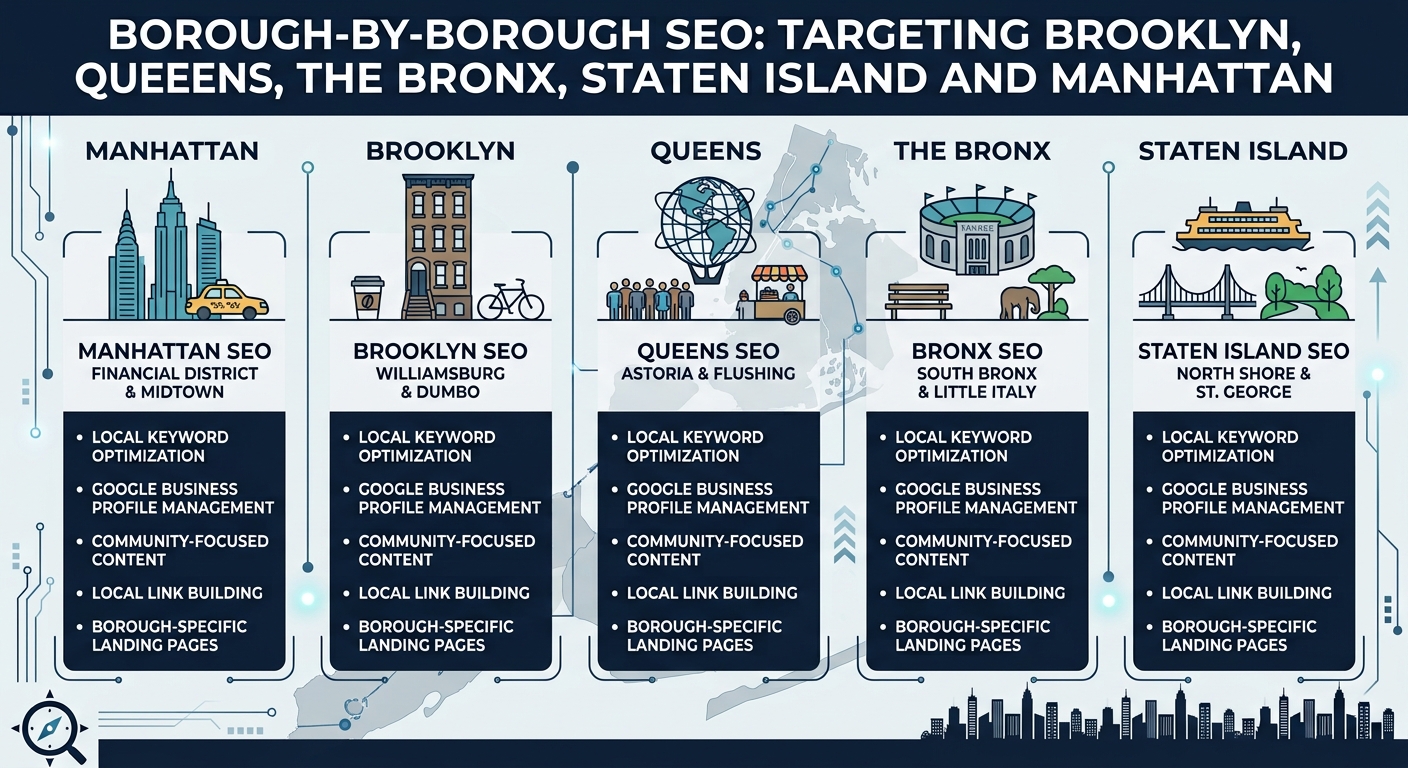
Your website should reinforce your local relevance with unique location pages, community involvement and helpful local content. Mention the neighborhoods you serve, share real examples from nearby projects and include a clear map and directions. Frequently asked questions written in a natural, spoken style also help your pages match the longer queries people now use.
Local factors to review regularly include the following:
- Accuracy of hours, holiday schedules and service lists across all listings.
- Fresh photos, posts and offers on your business profile.
- A steady flow of genuine reviews that mention specific services.
- Location pages with original content rather than copied templates.
- Local schema that matches your visible contact and service details.
Content Strategy for Topic Authority
In the AI era, winning on isolated keywords is far less effective than owning an entire subject. Systems look for websites that cover a topic thoroughly and consistently, so building clusters of connected pages around your core services creates a clear signal of expertise. A central guide supported by detailed articles, examples and answers to related questions shows that your knowledge is both broad and deep.
Start by mapping the full set of questions your customers ask before, during and after a purchase. Group them into themes and assign each theme to a main page and several supporting pages that link to each other. This approach reduces gaps in your coverage and gives AI systems many opportunities to find a relevant and trustworthy passage on your site.
Quality should always come before volume. Publishing large numbers of thin or repetitive articles, especially ones produced with little human review, can dilute your site and weaken trust. A smaller library of accurate, original and well edited pages will usually outperform a huge collection of generic content.
Original research is one of the strongest ways to stand out. Surveys, benchmark studies, pricing analyses and customer data give journalists, bloggers and AI systems something new to reference, and they often earn links and mentions that keep working for years. Even a small study based on your own client work can become a signature asset when it answers a question nobody else has measured.
Finally, keep your content alive. Review top pages every quarter, update statistics, replace outdated advice and add new questions that appear in your search reports and customer conversations. A living library signals that your brand is active and dependable, which is exactly what both people and AI systems want to see.

Tools and Metrics for Tracking AI Search Performance
Measuring success in 2026 requires a wider lens than rankings and clicks alone. AI generated answers now sit above traditional results, so teams must track whether their brand is mentioned, cited, or summarized inside those answers. A reporting setup that ignores these signals will understate the real value of your content.
The most useful approach combines classic analytics with manual and automated checks of AI answer surfaces. Search performance reports show impressions and clicks, while dedicated visibility trackers record how often your pages appear as sources in AI summaries. Reviewing both together gives a far more honest picture of how audiences discover your business.
| Metric | What It Shows | Why It Matters |
|---|---|---|
| Impressions | How often your pages appear in search results | Rising impressions with falling clicks often point to AI answers absorbing demand |
| Click Through Rate | Share of impressions that become visits | Helps you spot queries where summaries reduce traffic |
| AI Citation Frequency | How often your content is cited in AI answers | Shows authority in the eyes of answer engines |
| Brand Mention Volume | Number of unlinked and linked brand references | Signals growing awareness even without clicks |
| Branded Search Growth | Searches that include your company name | Indicates that AI exposure is building real interest |
| Conversion Rate by Source | Leads or sales from each channel | Proves that smaller traffic can still be higher quality |
Once the data is collected, review it monthly rather than daily, because AI answers fluctuate and short term swings can mislead. Look for patterns across topic groups instead of single keywords. This keeps your decisions grounded in trends rather than noise.
Useful tracking habits include the following:
- Test your priority questions in several AI search tools every month and record which sources appear.
- Tag landing pages by topic so you can compare performance across entire content clusters.
- Compare engagement quality, such as time on page and conversions, against raw traffic totals.
- Keep a simple log of content updates so you can connect changes to visibility shifts.
Common SEO Mistakes to Avoid in 2026
Many businesses lose ground not because they lack effort but because they rely on tactics built for an older search landscape. Recognizing these errors early saves months of wasted work. Avoiding them also helps your pages stay eligible for citation in AI generated answers.
The most frequent mistakes are listed below:
- Publishing thin, repetitive articles written only to hit keyword targets, which AI systems skip in favor of deeper sources.
- Ignoring direct answers, so that pages bury the key point under long introductions and never get quoted.
- Neglecting content updates, which lets statistics and advice go stale and reduces trust signals.
- Overlooking structured data, which makes it harder for machines to understand who you are and what you offer.
- Chasing traffic volume alone while ignoring lead quality, conversions, and brand visibility.
- Copying competitor content with minor edits, which adds no original value and rarely earns citations.
- Blocking crawlers by accident through misconfigured settings or slow, heavy pages.
Another costly mistake is treating AI search as a separate channel instead of an extension of good SEO. The pages that win in answer engines are usually the same ones that are clear, accurate, and well structured for people. Businesses that invest in quality across the board tend to benefit in both traditional and AI results.
A final error is waiting for perfect data before acting. AI search is evolving quickly, and the brands gaining visibility now are the ones testing and learning in small steps. Waiting for certainty often means arriving after competitors have already earned the citations.
The Future of SEO
The direction of travel is clear: search is becoming more conversational, more personalized, and more focused on trusted sources. Users will ask longer questions and expect complete answers, sometimes across text, images, and voice in a single session. Content that is genuinely helpful and easy to verify will keep earning attention as these interfaces mature.
Brand strength will matter more than ever, because AI systems lean on entities they recognize and trust. Consistent mentions across reputable sites, strong customer reviews, and a clear identity all contribute to being selected as a source. Over time, SEO will look less like a technical checklist and more like a blend of reputation building, content strategy, and data quality.
Professionals who adapt will also find new opportunities. Teams that understand how to structure knowledge, build topical authority, and measure influence beyond clicks will be in high demand. Learning these skills now, whether through hands on projects or a growing portfolio, creates a strong advantage for the years ahead.
Why Choose Dealmate
Dealmate focuses on helping businesses stay visible as search continues to change. Our approach blends strategic planning, quality content, and careful measurement so that every effort connects to real business goals. We believe that sustainable growth comes from clarity, consistency, and genuine value for the audience.
Working with a partner who understands both traditional SEO and AI driven search saves time and reduces costly experiments. We study how answer engines select sources, then shape content and site structure to match those expectations. Our reporting is transparent, so you always know what is working and why.
Here is what you can expect when you work with Dealmate:
- A tailored strategy built around your audience, industry, and growth targets.
- Original, well researched content written to earn trust from readers and search systems.
- Technical improvements that support fast, crawlable, and well structured websites.
- Clear monthly reporting that covers rankings, AI visibility, and business results.
- Ongoing support and updates as search platforms continue to evolve.
Frequently Asked Questions
What is the biggest change AI search has brought to SEO?
The biggest change is that answers are now delivered directly on the results page, often before a user clicks anything. This means visibility can happen without a visit to your website. Brands must therefore aim to be cited and recognized inside these answers. Strong, clear content remains the foundation for earning that placement.
Is traditional SEO still important in 2026?
Yes, traditional SEO still forms the base on which AI visibility is built. Crawlable pages, relevant content, and healthy backlinks continue to influence which sources are considered. AI answers usually draw from pages that already perform well in standard results. Treat the two approaches as partners rather than competitors.
How can my content appear in Google AI Overviews?
Start by answering common questions clearly and early in the page, then support the answer with useful detail. Make sure your site is technically sound and your information is accurate and current. Adding structured data and showing real expertise further improves your chances. There is no guarantee, but quality and clarity raise the odds considerably.
Will AI Overviews reduce my website traffic?
For some informational queries, clicks may decline because users get what they need from the summary. However, the visitors who do click are often more interested and more likely to convert. Tracking engagement and conversions alongside traffic gives a fairer view of performance. Many businesses find that fewer but better visits still support growth.
What type of content works best for AI search?
Content that is original, well organized, and genuinely helpful performs best. Pages with clear headings, direct answers, and supporting evidence are easier for AI systems to use. Fresh updates and expert perspective add extra trust. Generic or copied material is rarely selected as a source.
How important is structured data for AI visibility?
Structured data helps search systems understand the meaning and context of your pages. It clarifies details such as your organization, products, reviews, and frequently asked questions. While it is not a magic switch, it removes confusion and supports accurate representation. Most businesses benefit from implementing it carefully.
Do backlinks still matter with AI generated answers?
Backlinks remain a strong signal of authority and trust. Mentions from reputable websites also help AI systems recognize your brand as a reliable entity. Quality matters far more than quantity, so focus on earning relevant, meaningful references. Digital outreach and strong content both support this goal.
How do I measure success if clicks are declining?
Look beyond clicks to impressions, citations, brand mentions, and branded search growth. Pair these with conversion data to see whether your visibility leads to real business outcomes. Review results monthly to avoid reacting to short term changes. This broader view reflects how people now discover brands.
Can small businesses compete in AI search?
Yes, small businesses can compete by focusing on specific topics and serving their audience exceptionally well. Local expertise, genuine reviews, and clear, honest content help build trust. AI systems value relevance and reliability, not just size. A focused strategy often outperforms a broad but shallow one.
How often should I update my SEO strategy?
A light review every month and a deeper review every quarter works well for most teams. Search platforms change quickly, so staying flexible is important. Update content, test new formats, and watch how AI answers evolve. Small, steady improvements usually beat large, infrequent overhauls.
Conclusion
AI search and Google AI Overviews have changed how people find information, but they have not removed the need for strong SEO. They have raised the standard for clarity, accuracy, and trust, rewarding businesses that genuinely help their audience. Those who adapt their content, technical setup, and measurement habits will continue to grow.
The path forward is to combine proven fundamentals with new awareness of how answer engines choose their sources. Focus on original content, structured information, and a reputation that others can verify.