Introduction: Why Link Building Matters in New York
New York is one of the most competitive places on earth to rank in search results, and backlinks remain one of the strongest signals that separate winners from the rest. When a trusted website links to yours, it acts like a public recommendation that tells search engines your business deserves attention. In a city where hundreds of similar companies fight for the same customers, those recommendations can decide who appears first.
Not every link carries the same weight, and chasing quantity over quality is a mistake that has cost many businesses dearly. A handful of relevant links from respected local publications, industry bodies and community organizations will usually outperform hundreds of low quality directory entries. Search engines have become very good at spotting manipulation, so sustainable growth comes from earning links that make sense for real readers.
This guide explains the link building strategies that work for New York businesses today, from building a solid foundation to creating content that people genuinely want to reference. You will learn how to approach local outreach, how to judge link quality and how to measure results with confidence. Each section is written so you can apply it immediately, whether you run a single storefront in Brooklyn or a growing company serving all five boroughs.
Understand Link Building in the NYC Market
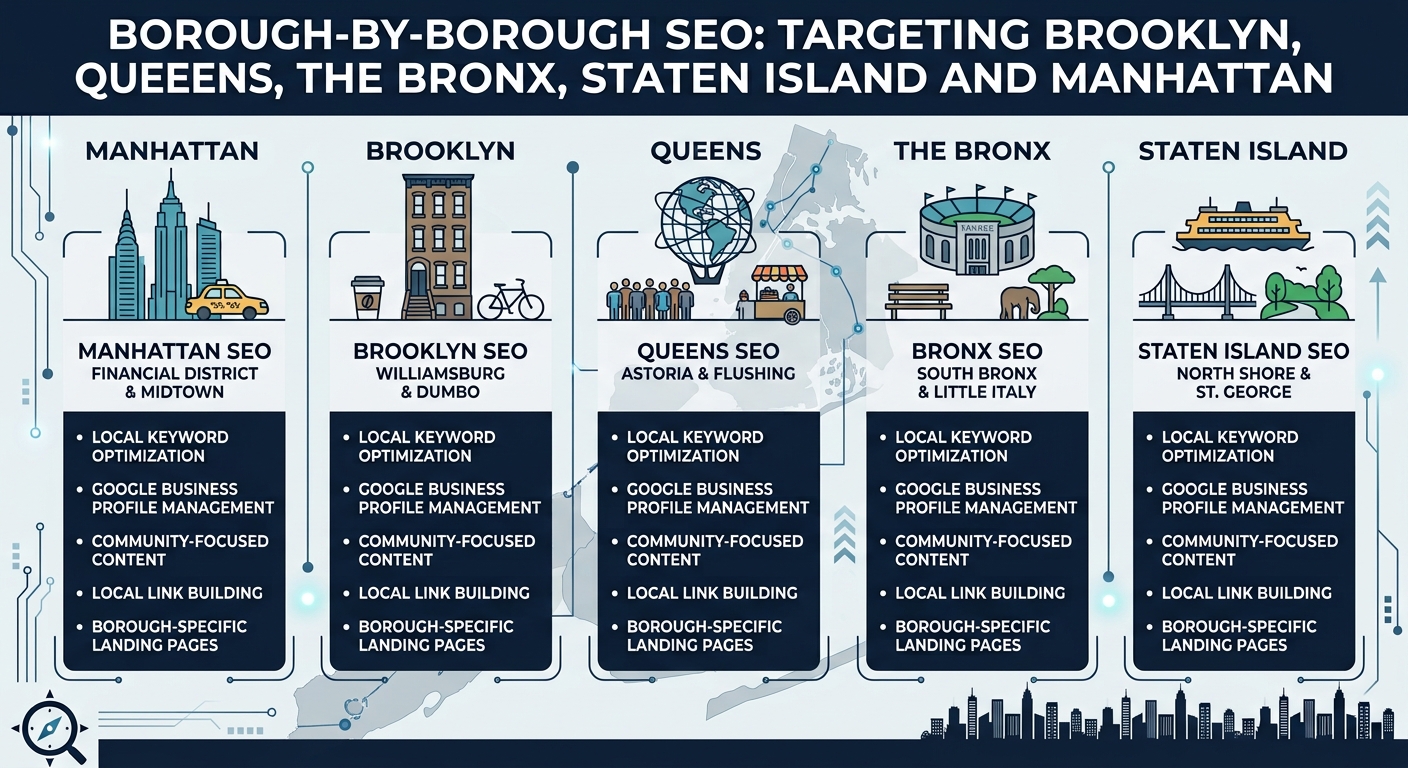
Link building in New York is different from link building in smaller markets because the competition is dense and the audience is highly segmented. A law firm in Manhattan competes with hundreds of other firms for the same publications and directories, while a restaurant in Queens competes for attention from food bloggers and neighborhood news sites. Knowing who you are really competing against helps you choose targets that are realistic and valuable.
Local relevance matters just as much as raw authority in this city. A link from a respected borough news outlet or a neighborhood association can send stronger local signals than a link from a famous national website with no connection to your area. The best strategies combine both kinds of links, using local ones to build trust in your service area and broader ones to lift overall authority.
New York also offers advantages that many other cities lack. The concentration of media outlets, universities, trade groups, startups, events and cultural institutions creates an enormous number of natural link opportunities for businesses that know where to look. A company that participates actively in its community often finds that links follow without any aggressive outreach.
The table below compares the most common link types, the value each one brings and the effort normally required to earn them.
| Link Type | Typical Value | Effort Level | Best Use for NYC Businesses |
|---|---|---|---|
| Local news and media mentions | Very high | High | Announcements, expert comments and community stories |
| Industry association links | High | Medium | Professional credibility and niche relevance |
| Chamber of commerce and business improvement district links | High | Low to medium | Strong local trust signals |
| Quality local directories | Medium | Low | Consistent business details and basic visibility |
| Guest articles on relevant sites | Medium to high | Medium | Authority building and referral traffic |
| Resource page and broken link placements | Medium | Medium | Steady links from helpful content |
| Sponsorships and event pages | Medium to high | Medium | Community presence and local mentions |
| Low quality or paid link schemes | Negative risk | Low | Should be avoided completely |
It is also helpful to think about link building as a long term investment rather than a quick campaign. Links build on each other over time, because a strong media mention can lead to further coverage and partnership offers. Patience and consistency usually beat short bursts of activity followed by months of silence.
Build a Link Building Foundation
Before you contact anyone, you need a clear picture of where your website stands today. Start with a full audit of your existing backlink profile to see which sites already link to you, which pages attract those links and whether any of them look harmful. This review often reveals easy opportunities, such as unlinked brand mentions or valuable links pointing to pages that no longer exist.
The next step is to study your competitors so you can see what is actually working in your industry. Compare the number and quality of links pointing to the top ranking businesses in your category, and note which sources they share. Gaps in this comparison highlight the publications, directories and organizations you should approach first.
Setting realistic goals keeps the whole effort focused and measurable. Rather than aiming for a vague number of links per month, choose targets tied to business results, such as improving rankings for a key service page or earning mentions from a certain group of local publications. Clear goals also make it easier to explain progress to partners, clients and team members.
Your own website must be ready to receive attention before you start outreach. Pages should load quickly, display correctly on phones, show clear contact details and offer something useful that visitors will want to share. Sending a journalist to a slow or confusing page wastes a rare opportunity and rarely produces a link.
Here are the foundation tasks to complete before launching any outreach:
- Review your current backlinks and mark which ones are strong, neutral or harmful.
- Identify the top three to five competitors and list their most valuable link sources.
- Fix broken pages that still receive links by restoring them or redirecting them properly.
- Find unlinked mentions of your brand and ask the publishers to add a link.
- Prepare a short profile of your business, your team and your expertise for media use.
Create Linkable Content Assets
People link to content that helps them, informs them or makes their own work easier, which means the quality of what you publish determines how many links you can earn. A linkable asset is a page that offers lasting value, such as a detailed guide, an original study, a handy tool or a clear visual resource. Without assets like these, outreach becomes a request for a favor instead of an offer of something useful.
Original research is one of the most reliable ways to attract high quality links in New York. Journalists and bloggers are always searching for fresh local data, so a survey of residents, an analysis of neighborhood trends or a study of pricing across boroughs can earn coverage that would be hard to win any other way. Even a modest dataset can work well if it answers a question people in the city genuinely care about.
Practical guides and tools also perform strongly because they continue to attract links long after publication. A step by step guide to opening a business in the city, a calculator that estimates costs for a common service or a checklist for local compliance can all become go to references. Adding clear visuals such as charts, maps and simple infographics makes these resources easier to share and easier for other writers to cite.
Neighborhood and borough focused content gives your brand a distinct local identity that national competitors cannot copy. Pieces such as a guide to the best commercial spaces in Long Island City or a history of small business growth in the Bronx appeal to local publications and community groups looking for credible sources. When this content includes real expertise and original details, it becomes far more attractive than generic articles.
These content formats consistently earn links for New York businesses:
- Original surveys and data studies about local behavior, costs or trends.
- Comprehensive guides that answer common questions in a single place.
- Free tools, templates and calculators that save visitors time.
- Visual resources such as maps, timelines and annotated charts.
- Expert roundups that feature respected local voices and encourage them to share the finished piece.
Once an asset is published, it needs a clear promotion plan so the right people actually see it. Share it with relevant journalists, community leaders, industry newsletters and partner businesses, and explain briefly why their audience would benefit. Great content combined with thoughtful outreach is the combination that turns a good idea into a steady stream of valuable links.

Local Citations and Business Directories
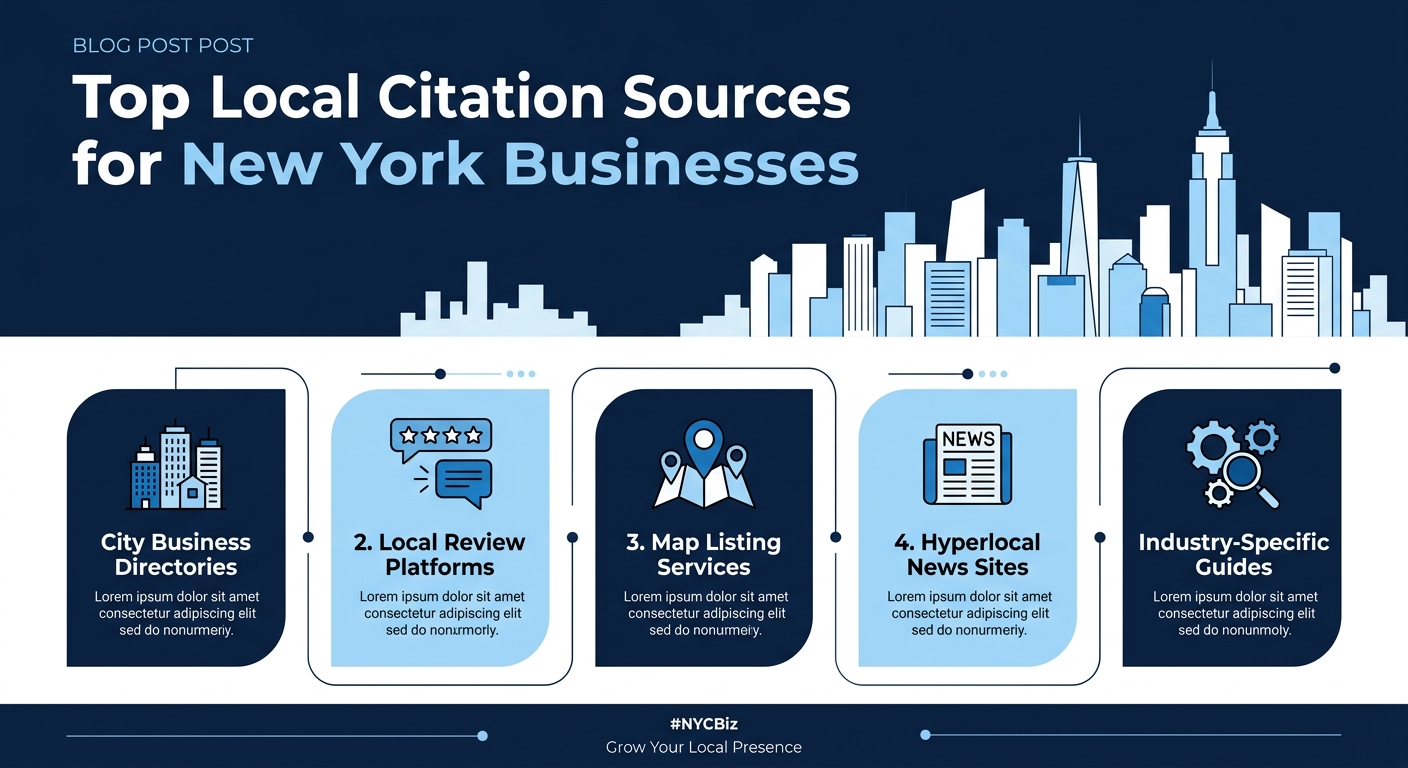
Local citations are online mentions of your business name, address and phone number, and they remain a useful building block for New York companies. They help search engines confirm that your business is real and that it operates where you say it does. While a single citation carries modest weight, a consistent set across trusted platforms creates a strong base of local trust.
Quality matters far more than volume when choosing where to be listed. Focus on well established directories, industry specific platforms, local business portals and listings tied to professional bodies in your field. Skip any directory that accepts every submission without review, since these sites rarely send traffic and can attract spam to your profile.
Consistency is the most important rule of all. Your business name, suite number, phone number and website address should appear in exactly the same format everywhere, because small differences can confuse search engines and weaken the signal. It is wise to create a master record of your details and copy from it every time you submit or update a listing.
Many citations also let you add categories, service descriptions, photos and opening hours. Filling in every field with accurate and helpful information makes your listing more useful to people and more likely to rank within the directory itself. Regular reviews of these profiles will also catch outdated details, duplicate entries and incorrect information added by third parties.
Here are the best habits for building citations that actually help:
- Start with the major data platforms and map services that other directories rely on.
- Add listings in industry directories and trade bodies connected to your sector.
- Search for existing duplicates and merge or remove them to avoid mixed signals.
- Use the same business description, categories and logo across every profile.
- Revisit your listings every quarter to confirm that all details are still correct.
Digital PR and Media Outreach
Digital PR is one of the most powerful ways to earn links from high authority websites, and New York gives you an exceptional advantage. The city is home to national newsrooms, borough papers, neighborhood blogs, trade magazines and university publications, all of which are constantly looking for fresh stories and expert voices. A well pitched idea can lead to coverage that no amount of directory listings could match.
Success starts with understanding what journalists actually want. They need timely stories, credible sources, original data and a clear local angle, and they receive dozens of generic pitches every day. A short and personal message that explains why your story matters to their readers will stand out far more than a long press release sent to a mass list.
Newsworthy angles for local businesses come in many forms. You can share findings from your own research, comment on a trend affecting your industry, announce a community initiative or offer an expert opinion on a breaking topic. Reacting quickly to current events with useful insight often leads to the best results, because reporters value sources who respond fast and speak clearly.
Building relationships matters more than any single pitch. Follow the work of reporters who cover your area, share their articles with thoughtful comments and offer help even when you are not asking for coverage. Over time, this approach turns you into a trusted source who is contacted directly when a story needs a local expert.
These practices improve your chances of earning media links:
- Create a simple press page with your story, team biographies, photographs and contact details.
- Prepare data, quotes and visuals in advance so you can respond to requests quickly.
- Tailor each pitch to the specific reporter, publication and audience.
- Offer exclusive insights or early access to your findings to the most relevant outlets.
- Always ask politely for a link to your source page when a story features your brand or data.
Many mentions appear without a link, and these are valuable opportunities. Set up alerts for your brand name, your key staff and your published studies, then reach out to publishers who mention you without linking. A friendly request that makes it easy to add the link often succeeds, because the writer already values your contribution.
Partnerships and Community Links
Community involvement is one of the most natural ways to earn links in New York, and it also strengthens your reputation among the people you want to serve. Chambers of commerce, business improvement districts, neighborhood associations and professional groups all publish member directories and news pages that can link to your website. These links carry strong local relevance, which search engines value highly.
Joining the right organizations is only the first step. Take part in their events, contribute to their newsletters and offer your expertise through talks or workshops, because active members are far more likely to be featured than passive ones. Many associations also publish member spotlights and event recaps that include links to the businesses involved.
Sponsorships and events create further opportunities. Supporting a local festival, a youth sports team, a charity fundraiser or a neighborhood cleanup often results in a mention and a link on the organizer’s website. These links are earned through genuine contribution, which makes them both safe and meaningful in the eyes of search engines.
Partnerships with complementary businesses can also work very well. A wedding photographer can collaborate with a florist and a venue, a law firm can work with an accountant, and a fitness studio can team up with a nutrition coach. Joint guides, shared events and cross referrals give each partner a reason to link to the others in a way that feels natural and useful.
Universities and educational institutions offer another strong source. Many colleges in the city welcome local professionals as guest speakers, mentors and internship providers, and their websites often credit these partners with a link. Scholarships and student competitions can also attract mentions from respected academic domains when they are run with genuine care.
These community activities consistently produce valuable local links:
- Membership pages and directories of local business associations.
- Event sponsor listings and recap articles from community organizers.
- Charity partnership pages that thank supporting businesses.
- Student programs, guest lectures and internship announcements.
- Joint content projects with neighboring businesses that serve a similar audience.
Guest Posting and Contributor Opportunities
Guest posting still works when it is done with care, and it should always be about sharing real knowledge rather than collecting links. The goal is to place useful articles on websites that your target customers already read, so that each piece builds authority, earns referral traffic and naturally includes a link to your work. Publications with genuine editorial standards are the only ones worth your time.
Finding the right sites requires some research. Look for local business blogs, industry magazines, neighborhood news sites and professional community platforms that regularly publish expert contributions. Check that their audience matches yours, that their content is of good quality and that they do not sell links openly, since these signs often point to low value or risky placements.
Pitching works best when you lead with a specific idea instead of a general request. Suggest two or three topics that fit the publication, explain what readers will learn and share links to your previous writing as proof of quality. Editors are far more willing to accept a pitch that clearly saves them time and serves their audience.
When you write the article, put the reader first and keep promotion to a minimum. Include practical advice, examples from your own experience and original details that cannot be found elsewhere. A short author biography and one natural link to a relevant page on your website are usually enough to deliver the benefit you want.
Contributing as an expert source offers an additional route. Many journalists and bloggers look for quotes and insights to include in their articles, and responding with a concise and helpful answer can earn a mention with a link. Keeping your expertise visible across several reputable sites gradually strengthens your overall profile.
Broken Link and Resource Page Building
Broken link building is a practical tactic that benefits everyone involved. Many websites contain links that point to pages which no longer exist, and website owners usually want to repair them because they harm the visitor experience. If you have a relevant page that can replace the missing resource, you can offer it as a helpful solution.
The process begins with finding suitable pages. Search for resource lists, local guides and industry articles in your field, then use a crawling tool to detect outgoing links that return errors. Once you find a dead link on a good website, check what the original page covered so you can recommend your own content only if it truly fits.
Your outreach should be short, polite and focused on being helpful. Mention the exact page where you noticed the problem, point to the broken link, and suggest your page as a replacement that offers similar or better information. Avoid pressure, and thank the site owner for their time whether or not they make the change.
Resource pages work in a similar way. Many organizations, universities and community groups maintain pages that list helpful tools, guides and services for their audience, and they are often happy to add a valuable new item. If your content genuinely belongs on the list, a simple and respectful message explaining its benefit can be enough to earn a lasting link.
Both tactics depend on having content that is actually worth recommending. Before you reach out, make sure your page is accurate, easy to read and clearly better than the missing or outdated resource. This honest approach builds goodwill with site owners and leads to links that remain in place for years.
Competitor Backlink Analysis
Studying the backlinks of your competitors is one of the fastest ways to find opportunities that are already proven to work. If several top ranking New York businesses in your field have earned links from the same publication, association or directory, there is a strong chance you can earn one too. This research saves months of guesswork and shows you exactly where to focus your first efforts.
Begin by choosing three to five competitors that consistently outrank you for your most valuable search terms. Export their backlink lists, then group the sources by type, such as media coverage, local organizations, directories, guest articles and resource pages. Pay special attention to sites that link to more than one competitor but not to you, because these gaps are usually the easiest wins.
Quality should guide every decision during this review. A link from a respected local news outlet or an industry body is worth far more than dozens of links from unknown sites, so rank each opportunity by relevance, authority and the effort needed to earn it. It also helps to note how each competitor earned the link, whether through a study, an event, a sponsorship or a simple listing, so you can plan a similar approach with a fresh angle.
The table below shows how common link opportunity types can be prioritized and how long each one normally takes to deliver results.
| Opportunity Type | Priority Level | Typical Timeline | Reason to Pursue |
|---|---|---|---|
| Unlinked brand mentions | Very high | One to three weeks | Easy requests to publishers who already know you |
| Chamber and association memberships | High | Two to six weeks | Strong local trust and low effort |
| Local directories and industry listings | Medium | One to four weeks | Consistent business details and basic visibility |
| Resource page placements | Medium | Four to eight weeks | Steady links from helpful reference pages |
| Guest articles and expert contributions | Medium to high | Six to twelve weeks | Authority building and referral traffic |
| Digital PR and media coverage | Very high | Eight to sixteen weeks | Powerful links from high authority publications |
| Original research campaigns | High | Ten to twenty weeks | Long lasting links that keep growing over time |
Outreach That Gets Replies
Even the best content will not earn links if nobody sees it, which makes outreach a skill worth developing. New Yorkers in media, business and education receive an enormous number of messages every day, so yours must be clear, short and genuinely useful. A good message explains who you are, what you are offering and why it matters to the reader within the first few lines.
Personalization is what separates replies from deleted emails. Mention a recent article the person wrote, a project their organization completed or a gap you noticed on their page, and connect it directly to what you are sharing. Generic templates with only a name swapped in are easy to spot and rarely produce a positive response.
Timing and follow up also make a difference. Messages sent early in the week and during normal working hours tend to perform better, and a polite reminder after five to seven days often brings a reply from someone who simply missed the first email. If there is still no answer after a second follow up, it is best to move on gracefully and keep the door open for the future.
Here are the most common outreach mistakes to avoid:
- Sending the same long message to hundreds of contacts without any customization.
- Asking for a link in the first sentence before explaining the value you offer.
- Using vague subject lines that give no hint about the content of the email.
- Following up too aggressively or more than two times without new information.
- Ignoring the website owner’s guidelines and submitting irrelevant content.
Treat every conversation as the start of a relationship rather than a one time transaction. People who have a good experience with you are far more likely to link again, recommend you to others or invite you to contribute in the future. Keep a simple record of contacts, past replies and results so your outreach improves with each campaign.
Anchor Text and Link Quality
Anchor text is the clickable wording of a link, and it gives search engines a clue about the topic of the page being linked to. A natural profile includes a healthy mix of brand names, plain web addresses, descriptive phrases and occasional keyword rich anchors. When too many links use the exact same commercial phrase, it can look forced and may attract unwanted attention from search engines.
Most of your best links will come with anchors that you do not control, because writers choose their own wording. That is a good sign, and it should not be changed or pushed unless a link is clearly misleading. Where you do have influence, such as in an author biography or a partner page, choose wording that is helpful to readers first and relevant to the page second.
Link quality deserves constant attention as your profile grows. Strong links come from websites that are relevant to your topic, trusted by real audiences and edited by people who care about their content. Warning signs include sites with no clear purpose, pages stuffed with unrelated outbound links, sudden bursts of links from unfamiliar domains and offers that promise guaranteed rankings in exchange for payment.
Review your backlink profile at least every quarter to spot problems early. If you find clearly harmful or spammy links that you did not create, you can first ask the site owner to remove them and use the disavow tool only as a last resort for serious cases. Staying active with these checks keeps your profile healthy and protects the progress you have worked hard to achieve.
Measuring Link Building Results
Measurement turns link building from guesswork into a repeatable process. The most useful numbers include the total count of new referring domains, the quality and relevance of those sources, the rankings of the pages that received links and the organic traffic those pages generate. Looking at all of these together gives a more honest picture than counting links alone.
Business results should always be part of the report. Track the number of calls, form submissions, direction requests and sales that come from organic search, and note any increase in referral visitors sent directly by the linking websites. A smaller number of links that produce real customers is more valuable than a large number that produce nothing.
A regular reporting rhythm keeps everyone aligned and helps you decide what to repeat or stop. Monthly updates are enough for most campaigns, with a deeper review every quarter to compare progress against your original goals and competitors. Over time, patterns will show which tactics earn the best links for the least effort, and you can place more energy into those.
These are the metrics worth tracking in every report:
- New referring domains gained each month and their relevance to your industry.
- Rankings for target pages and service terms in your main boroughs.
- Organic traffic, leads and conversions linked to pages that earned new links.
- Brand mentions, both linked and unlinked, across news and community sites.
- The overall health of your backlink profile, including removed and lost links.
Why Choose Dealmate
Dealmate builds link strategies that respect how New York really works. We understand which publications, associations and communities matter for each borough and industry, and we focus on earning links that make sense for your brand instead of chasing shortcuts. Every plan is shaped around your goals, your budget and the competition you face.
Our team handles the entire process, from backlink audits and competitor research to content creation, outreach and reporting. You receive clear updates in plain language that show what was done, what was achieved and what comes next. With Dealmate as your partner, your website gains the kind of trusted links that support lasting visibility and steady business growth across the city.
Frequently Asked Questions
What is link building and why is it important for New York businesses?
Link building is the practice of earning links from other websites to your own. Search engines treat these links as votes of trust, which can improve your rankings. In a crowded market like New York, they often decide which business appears first. A strong profile also brings referral visitors who are already interested in what you offer.
How long does link building take to show results?
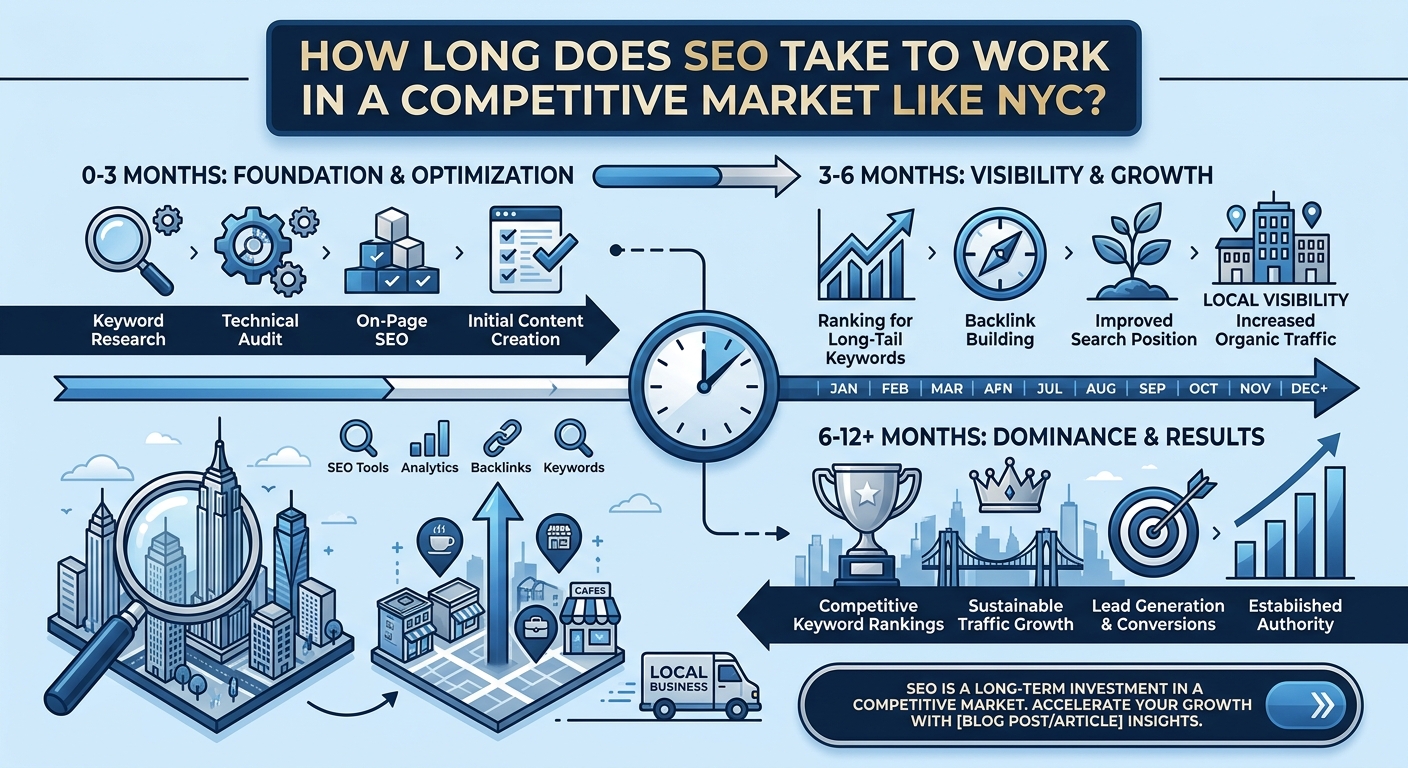
Most businesses begin to see early movement within three to six months of steady effort. Competitive industries in New York can take longer, especially for newer websites. The timeline depends on the quality of your links, the strength of your content and the competition you face. Consistent activity usually produces better and longer lasting results than short bursts.
How many backlinks do I need to rank in New York?
There is no single number that works for every website or industry. The right target depends on how many quality links your top competitors have and how relevant those links are. A smaller group of strong and relevant links often beats a large collection of weak ones. Studying the pages that already rank will give you a realistic goal.
Are paid links safe to use?
Paid links that are meant to pass ranking strength go against search engine guidelines and carry real risk. They can lead to ranking drops or manual penalties if they are discovered. Sponsorships and advertising are acceptable when they are clearly labeled and treated as promotion. Earning links through useful content and genuine relationships is the safest path.
What is the difference between local and national links?
Local links come from websites connected to your city, neighborhood or community, such as borough news sites and business associations. National links come from broader websites with a wider audience and often higher authority. Local links strengthen your relevance in the service area you want to win. A balanced profile that includes both tends to perform best.
Can I do link building on my own?
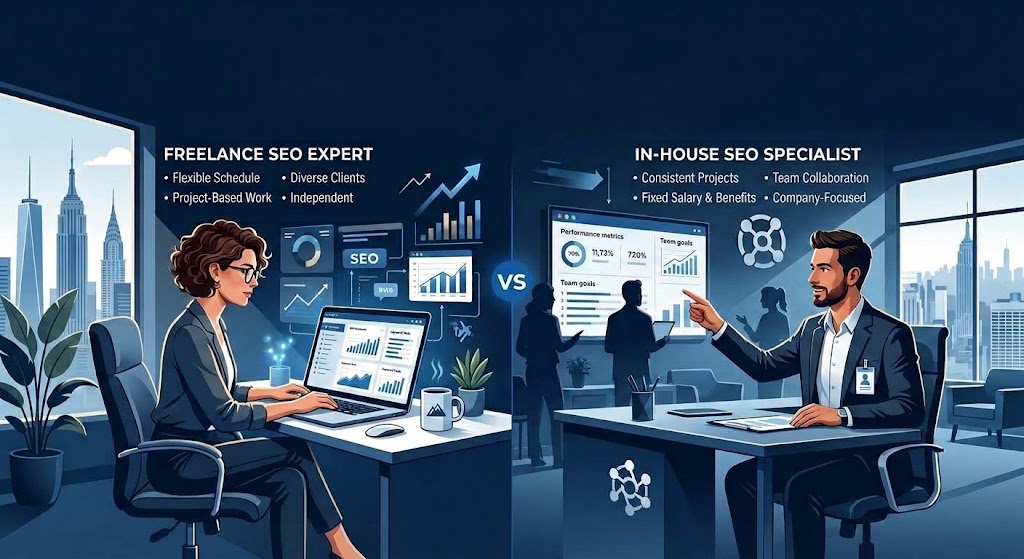
Many owners can handle simple tasks such as claiming listings, joining local associations and asking for unlinked mentions. Larger campaigns that involve research, content creation and media outreach need more time and specialized skills. An experienced team can also help you avoid costly mistakes. The right choice depends on your budget, your schedule and your growth goals.
What kind of content attracts the most backlinks?
Original research, practical guides, free tools and strong visual resources tend to attract the most links. People share content that saves them time or gives them facts they cannot find elsewhere. Local data and neighborhood focused resources work especially well in New York. The key is to offer something genuinely helpful that other writers will want to reference.
How do I find out if my backlinks are harmful?
Use a backlink analysis tool to review the sites that link to you and look for signs of low quality. Warning signs include irrelevant topics, spammy content, unnatural bursts of links and sites with no real audience. Check how the links appeared and whether you or someone working for you created them. Serious cases can be handled through removal requests first and the disavow tool as a last step.
Does anchor text still matter?
Anchor text still helps search engines understand what a linked page is about. The best profiles use a natural mix of brand names, web addresses and descriptive phrases. Too many exact match anchors can look unnatural and invite scrutiny. Focus on earning good links, and let the wording stay as natural as possible.
How do I measure the return on link building?
Track new referring domains, ranking improvements, organic traffic and the leads or sales that come from the pages you promoted. Compare these numbers month by month against the goals you set at the start. Pay attention to referral traffic sent directly by the linking sites as well. A clear report that connects links to business results shows the true value of the work.
Conclusion
Link building rewards New York businesses that focus on quality, relevance and real relationships. By building a solid foundation, creating content worth sharing, earning local citations, pursuing media coverage, joining community partnerships and running thoughtful outreach, you create a backlink profile that search engines trust. Steady measurement and honest reviews then keep the strategy sharp as your business and the city continue to change.
Start by auditing your current links and choosing two or three tactics that fit your resources, then repeat what works month after month.