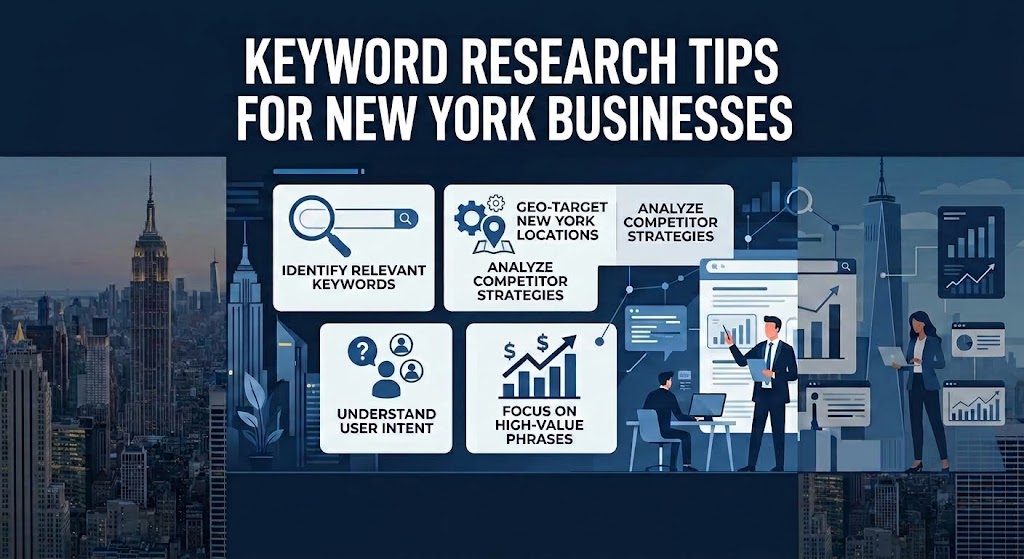
Introduction to Smarter Keyword Research in New York
New York is one of the most competitive business environments in the world, and that competition does not stop at your front door. Every day, millions of residents, commuters and visitors pull out their phones and type questions into search engines before they decide where to eat, who to hire or what to buy. If your business does not appear for those searches, a competitor a few blocks away will gladly take your place.
Keyword research is the process of discovering the exact words and phrases people use when they look for products and services like yours. It sounds simple, yet it shapes almost every marketing decision you make, from the pages on your website to the topics you cover on your blog. When done well, it connects your business with customers at the very moment they are ready to act.
This guide is written for owners, marketers and managers who want a practical and realistic approach to keyword research in the city that never sleeps. You will learn how search behavior differs across boroughs, how to set goals, how to build and refine keyword lists, and how to avoid common mistakes. By the end, you will have a clear framework you can apply whether you run a small bakery in Brooklyn or a growing law firm in Manhattan.
Think of keyword research as a conversation with your future customers. Instead of guessing what they want, you listen to the language they already use and respond with helpful content. That shift from guessing to listening is what separates businesses that grow steadily online from those that simply hope to be noticed.
Why Keyword Research Matters for New York Businesses
The New York market is dense, fast moving and full of choices. A person looking for a dentist in Queens can scroll through dozens of options within seconds, so the businesses that show up first earn a huge share of attention. Strong keyword targeting helps your pages appear in front of the right people instead of getting lost in the crowd.
Keyword research also protects your budget. Without it, many businesses spend money creating content or running ads for phrases that nobody searches or that attract the wrong audience. A short research phase can save weeks of wasted effort and thousands of dollars in misdirected spending.
Another benefit is a deeper understanding of your customers. The phrases people type reveal their worries, preferences and buying stages, which can inform everything from product descriptions to pricing pages. A restaurant owner who notices rising searches for gluten free brunch, for example, can adapt the menu and the website at the same time.
Here are the key benefits you can expect from a solid keyword strategy:
- Higher visibility in search results for services and products that match what local customers actually want.
- Better quality website visitors who are more likely to call, book an appointment or make a purchase.
- Smarter content planning, since every blog post and landing page is built around proven demand.
- Lower advertising costs, because you can bid on phrases with clear value instead of broad guesses.
- A stronger competitive position, since you can spot opportunities your rivals have overlooked.
Local search has become especially important in recent years. Many shoppers search with a location in mind, and search engines give priority to businesses that appear relevant to a nearby area. That means keyword research for a New York business should always include a local layer, which is something we will explore in detail as this guide continues.
Understanding the New York Search Landscape
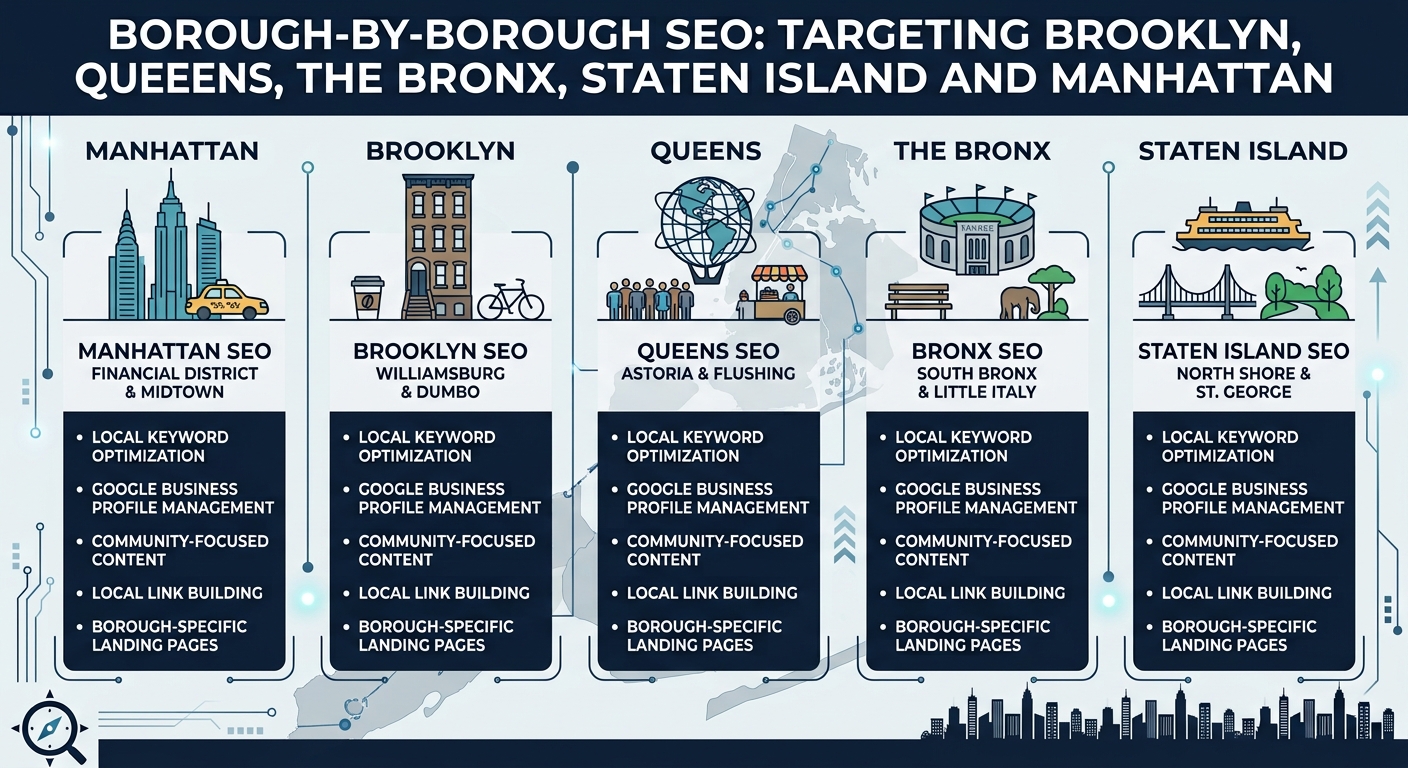
Searching in New York is unlike searching in most other places. The city is made up of five boroughs, hundreds of neighborhoods, and communities that speak dozens of languages. A phrase that works for a Manhattan audience may feel unnatural to someone in Staten Island, so one size rarely fits all.
Mobile usage is also remarkably high. New Yorkers search while walking, riding the subway or waiting in line, which leads to quick and highly specific queries such as open now or closest to me. These short bursts of intent often lead to a visit or a phone call within minutes, making mobile friendly pages and accurate local information essential.
Diversity adds another layer to the picture. Many residents search in Spanish, Chinese, Russian, Bengali, Haitian Creole and other languages, or they mix English with their home language. Businesses that recognize these patterns can capture audiences that larger competitors often ignore.
Tourists behave differently from residents as well. A visitor might search for things to do near Times Square or best pizza near my hotel, while a local searches for a reliable plumber in Astoria. Knowing which group you want to serve will help you choose phrases that fit the right mindset.
The table below summarizes general search patterns you may notice across the boroughs, along with a practical keyword tip for each one.
| Borough | Typical Search Style | Common Business Focus | Keyword Tip |
|---|---|---|---|
| Manhattan | Fast, professional and high intent | Finance, legal, hospitality and retail | Combine service terms with areas like Midtown or SoHo |
| Brooklyn | Community driven and trend aware | Creative services, food and boutique retail | Add neighborhood names like Williamsburg or Park Slope |
| Queens | Multilingual and family oriented | Restaurants, home services and healthcare | Test translated and mixed language phrases |
| The Bronx | Practical and value focused | Auto care, health, trades and education | Highlight affordability and nearby convenience |
| Staten Island | Car oriented and locally rooted | Home improvement, real estate and family services | Use island wide phrases with driving or parking cues |
These patterns are general observations, so always confirm them with your own data. Look at your website analytics, customer addresses and call records to see where your audience really comes from, and let those findings guide your choices.
Setting Clear Goals Before You Start
Before you open any research tool, decide what you want keyword research to achieve. A clear goal keeps you focused and prevents you from collecting thousands of phrases that never get used. Ask yourself whether you want more phone calls, more online orders, more newsletter subscribers or simply wider brand awareness.
Next, define your ideal customer in detail. Describe who they are, where they live, what problems they face and how they usually search. A boutique law firm serving small business owners in Midtown will target very different phrases than a family law practice in the Bronx, even though both belong to the same industry.
Your goals should also shape the type of keywords you pursue. Different objectives call for different kinds of phrases, and matching them correctly will improve your results:
- Sales goals call for transactional phrases such as buy, book, hire, order and pricing.
- Lead generation goals work well with service and comparison phrases like best accountant for freelancers.
- Awareness goals benefit from informational phrases such as how to choose a contractor or what is a tax lien.
- Local traffic goals depend on neighborhood phrases and near me searches that signal strong buying intent.
Finally, set measurable targets so you can tell whether your efforts are working. For example, you might aim to increase organic phone calls by twenty percent within six months or to rank on the first page for ten service related phrases. Write these targets down, review them every month, and adjust your plan whenever the numbers tell a different story than you expected.

Building a Strong Seed Keyword List
Every successful keyword strategy begins with a simple list of seed keywords. These are the broad phrases that describe what you sell or the problems you solve, and they act as the starting point for deeper research. A pet groomer in Brooklyn might begin with phrases such as dog grooming, cat grooming and pet spa.
The best seed lists come from real customer language rather than internal jargon. Business owners often describe their work with technical terms, while customers use plain and sometimes surprising words. Reading reviews, support emails, social media comments and chat transcripts will show you the exact wording people use when they describe their needs.
Here are some reliable ways to gather strong seed ideas:
- List every product and service you offer, then write two or three alternative names for each one.
- Collect the questions customers ask most often on calls, in store and through your contact form.
- Review competitor menus, service pages and category names for terms you may have missed.
- Ask your sales and front desk teams which phrases customers use when they first reach out.
- Check the suggestions that appear as you type into a search box, since they reflect real demand.
Once you have a list of twenty to fifty seed phrases, group them by theme. Grouping makes it easier to spot gaps, such as a service you offer but have never written about. It also gives you a natural structure for your website, because each group can become a service page or a content category.
Mastering Local and Neighborhood Keywords
Local intent is the heart of keyword research for New York businesses. A person searching for a florist rarely wants flowers from across the country, so search engines favor results that are close and relevant. Adding location signals to your keywords helps your pages match those searches more precisely.
Location modifiers can be as broad as a borough or as narrow as a street or landmark. A tutoring center might use phrases like math tutor in Brooklyn for wide reach and math tutor near Prospect Park for sharper targeting. Both approaches have value, so a balanced mix usually performs better than relying on one level alone.
Neighborhood names deserve special attention because New Yorkers identify strongly with where they live. People search for terms such as Upper West Side dentist, Jackson Heights restaurants or Long Island City movers because those names feel natural and trustworthy. Using them in page titles, headings and service descriptions shows both visitors and search engines that you understand the area.
Subway stops and landmarks can also work as helpful modifiers. A visitor might search for a cafe near Grand Central or a bookstore near the Union Square station. If your business is easy to reach from a major stop or attraction, mention it clearly on your location pages and in your business profile.
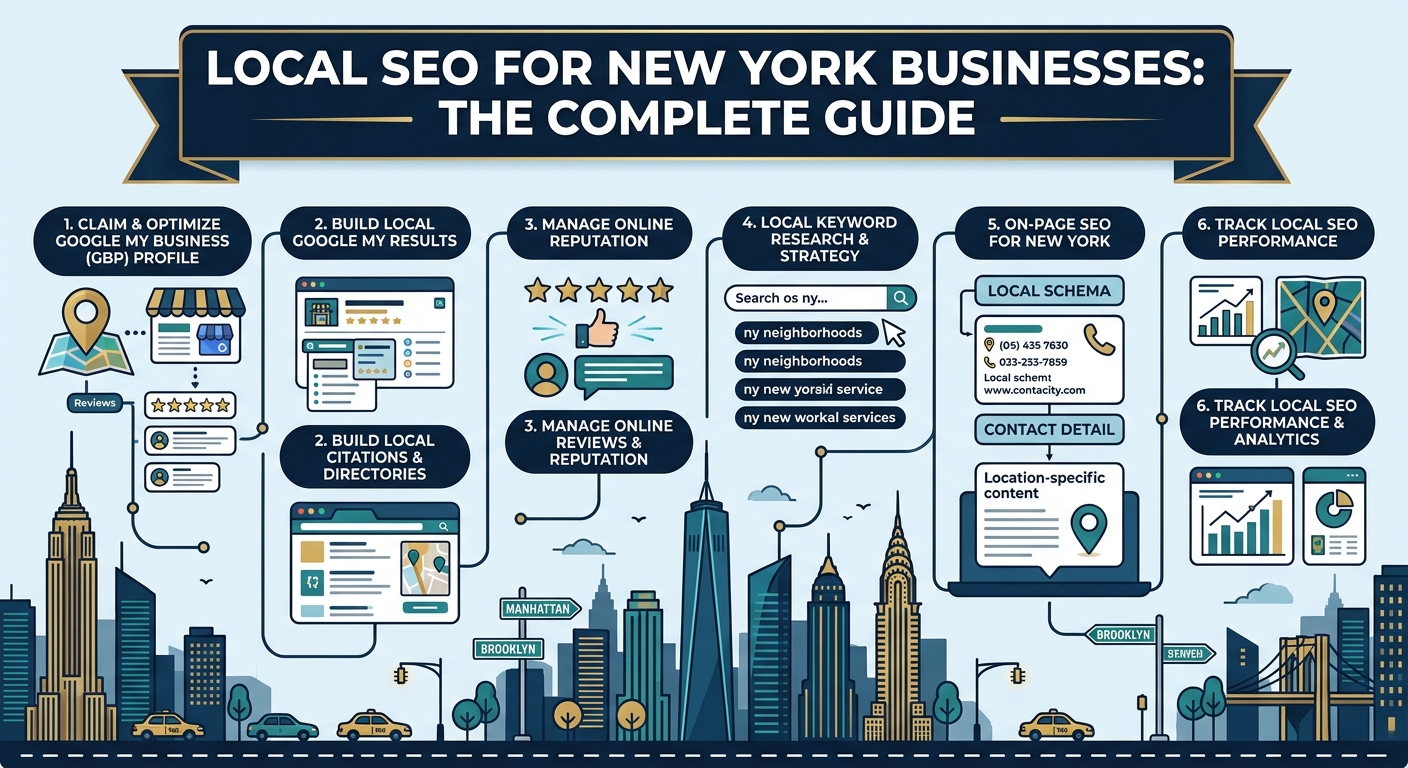
Your Google Business Profile plays a major role in local search visibility. Make sure your business name, address, phone number, hours and categories are accurate, and fill in your services and attributes completely. Encourage satisfied customers to leave reviews that naturally mention your services and neighborhood, since those words reinforce your relevance for local searches.
The table below shows how different business types can combine services with local modifiers to create strong target phrases.
| Business Type | Core Service Phrase | Local Modifier Example | Sample Target Keyword |
|---|---|---|---|
| Restaurant | Italian restaurant | Greenwich Village | Italian restaurant in Greenwich Village |
| Law firm | Immigration lawyer | Queens | Immigration lawyer in Queens |
| Fitness studio | Yoga classes | Park Slope | Yoga classes in Park Slope |
| Home services | Emergency plumber | Upper East Side | Emergency plumber Upper East Side |
| Real estate agency | Apartments for rent | Astoria | Apartments for rent in Astoria |
| Medical clinic | Urgent care | Near Penn Station | Urgent care near Penn Station |
Avoid creating dozens of nearly identical pages that only swap the neighborhood name. Search engines can recognize thin and repetitive content, and visitors quickly lose trust when every page says the same thing. Instead, add unique details to each location page, such as local landmarks, customer stories, directions and specific services offered in that area.
Analyzing Search Intent
Search intent describes the reason behind a query, and it is just as important as the words themselves. Two phrases can look similar yet come from people with completely different goals. Someone typing how to fix a leaking faucet wants instructions, while someone typing emergency plumber Manhattan wants to hire help immediately.
Most queries fall into four broad intent groups, and understanding each one helps you choose the right type of page:
- Informational intent: the searcher wants to learn something, such as how much does a wedding photographer cost in New York.
- Navigational intent: the searcher wants to reach a specific brand or page, such as the name of your business followed by hours.
- Commercial intent: the searcher is comparing options, using phrases like best, top rated or reviews.
- Transactional intent: the searcher is ready to act, using phrases like book now, buy, order or free quote.
Matching your page to the intent behind a keyword is one of the strongest ways to improve rankings and conversions. A product page will rarely satisfy someone who wants a guide, and a long article will frustrate someone who just wants to book an appointment. Always ask what the visitor expects to see after clicking, and design the page to deliver exactly that.
A simple way to check intent is to search for the keyword yourself and study the first page of results. If the results are mostly blog posts and guides, the search engine believes people want information. If they are mostly service pages, maps and directories, the intent is likely local or transactional, and your page should reflect that.
Many New York businesses benefit from covering all intent stages. Informational posts attract early stage researchers, comparison pages help people decide, and service pages capture ready buyers. Together they create a path that guides a visitor from curiosity to action without leaving your website.
Choosing the Right Keyword Research Tools
A good tool turns guesswork into evidence by showing how often people search for a phrase, how hard it is to rank and how it changes over time. There are many options available, ranging from free utilities to advanced professional platforms. The right choice depends on your budget, your experience and the size of your market.
Free resources are an excellent starting point for small businesses. Search engine autocomplete, related searches, the people also ask boxes and free analytics reports can reveal a surprising number of ideas. Google Search Console, for instance, shows the actual queries that already bring visitors to your site, which makes it a valuable source of real data.
Paid platforms offer deeper insights, including keyword difficulty scores, competitor comparisons and historical trends. They can be especially useful in a crowded market like New York, where small differences in difficulty can decide whether a page ranks or stays hidden. If your budget is limited, consider a monthly subscription for a few months while you build your initial strategy, then reassess.
When you review results, pay attention to the following metrics:
- Search volume: the estimated number of monthly searches, which indicates potential demand.
- Keyword difficulty: a score that estimates how hard it will be to rank on the first page.
- Cost per click: the average price advertisers pay, which often signals commercial value.
- Trend direction: whether interest is growing, stable or declining over the past year.
- Search features: whether maps, videos, featured answers or shopping results dominate the page.
Do not chase volume alone. A phrase with five hundred monthly searches from highly interested local buyers is often worth far more than a phrase with ten thousand searches from a general audience. Balance volume with relevance and difficulty, and favor phrases that clearly connect to something you can offer.
Studying Competitors in the New York Market
Your competitors are a rich source of keyword ideas because they are already trying to reach the same customers. Begin by identifying three to five businesses that appear consistently for your target searches. Include both direct rivals and larger directories or publishers that attract your audience.
Look closely at the pages that rank well for them. Notice which phrases appear in their titles and headings, how they structure their service pages and what kinds of questions their blog posts answer. This review often reveals topics you have not covered and formats that searchers clearly appreciate.
Keyword gap analysis takes this further by comparing the phrases your competitors rank for against your own list. Many professional tools can display these differences automatically, showing you opportunities where rivals appear and you do not. Even without paid software, you can manually compare page topics and spot missing subjects.
Competitor research should inspire improvement rather than imitation. If a rival has a basic page about wedding catering in Manhattan, you could create a more helpful version with sample menus, pricing guidance, venue tips and customer stories. Offering greater depth, clarity and local knowledge gives search engines a reason to prefer your page.
Finally, keep an eye on emerging competitors and changing results. New businesses open every month in the city, and search results shift as websites are updated. Revisiting your competitor review every quarter keeps your strategy fresh and helps you respond before rivals take the lead.

Long Tail Keywords for Higher Conversions
Long tail keywords are longer and more specific phrases, usually containing three or more words. They attract fewer searches than broad terms, but the people who type them know exactly what they want. A search such as affordable wedding photographer in Brooklyn with outdoor packages signals far stronger intent than a general phrase like photographer.
These phrases are also easier to rank for, which is a major advantage in a crowded city. Question based searches and voice queries often follow this pattern, since people speak naturally to their phones. Try these approaches to find them:
- Add qualifiers such as affordable, same day, open late or family owned to your core services.
- Turn customer questions into phrases, like how long does a green card renewal take in New York.
- Combine a service with a neighborhood and a specific need for very precise targeting.
Seasonal Trends and Local Events in New York
Demand in New York rises and falls with the calendar, and smart businesses plan their keywords months ahead. Fashion weeks, holiday markets, summer tourism and back to school periods all change what people search for. Publishing content before a peak gives search engines time to index it and gives you a head start on rivals.
Build a simple yearly calendar that lists the main events, the related phrases and the date you should publish. The table below shows an example of how this planning might look.
| Season or Event | Example Search Trend | Suggested Publishing Time |
|---|---|---|
| Winter holidays | Holiday gift ideas and festive dining | Early October |
| Spring | Apartment cleaning and wedding venues | Late January |
| Summer tourism | Rooftop bars and weekend activities | Early April |
| Back to school | Tutoring and school supplies | Mid June |
| Fashion weeks | Styling services and event outfits | Two months before each event |
Organizing and Prioritizing Your Keywords
Once you have collected hundreds of phrases, you need a system to turn them into action. Start by grouping similar keywords into topic clusters, where each cluster supports one main page or article. This prevents your own pages from competing against each other and keeps your website structure clear.
Then score each keyword using three simple factors: business value, relevance and difficulty. Phrases that are highly relevant, valuable and realistic to rank for should move to the top of your list. Save high difficulty phrases for later, when your site has gained more authority.
Tracking and Refining Your Strategy
Keyword research is never finished, because search behavior and competition keep changing. Review your rankings, clicks and conversions every month to see which phrases are working. Pay attention to pages that receive impressions but few clicks, since a better title or description can quickly improve them.
Schedule a deeper review every quarter to add new phrases, retire weak ones and refresh older content. Small, steady updates usually beat large, occasional overhauls. Keep notes on what you change so you can connect results to specific actions.
Common Keyword Research Mistakes to Avoid
Many businesses weaken their results by repeating the same errors. The most frequent problems include the following:
- Chasing high volume phrases that bring visitors with no interest in buying.
- Ignoring search intent and sending informational searchers to sales pages.
- Stuffing pages with repeated keywords, which makes the content awkward and can harm rankings.
- Forgetting local modifiers and missing nearby customers who are ready to act.
- Never updating the keyword list after the first round of research.
Why Choose Dealmate
Dealmate helps New York businesses turn search data into steady growth through a clear and practical approach. The team studies your market, your customers and your competitors before recommending a single phrase. Every plan is built around your goals instead of a generic template.
Clients benefit from transparent reporting, local market knowledge and a focus on results that can be measured, such as calls, bookings and sales. Communication stays simple and honest, so you always understand what is being done and why. Whether you are launching a new venture or improving an established brand, Dealmate offers support that fits your stage and budget.
FAQs
What is keyword research and why does it matter?
Keyword research is the process of finding the phrases people type into search engines when they look for products or services. It matters because it shows you what your customers truly want. With this knowledge, you can create pages that match real demand. It also helps you avoid spending money on topics nobody searches for.
How often should a New York business update its keywords?
A light review every month and a deeper review every quarter works well for most businesses. Search trends change with seasons, events and competitor activity. Regular updates keep your content aligned with what people are searching for today. Consistent small improvements usually outperform rare, large changes.
Are local keywords really necessary in New York?
Yes, because many searches in the city carry a location or a near me meaning. Search engines prefer results that are close and relevant to the searcher. Adding borough and neighborhood phrases helps your pages match those searches. This is especially valuable for restaurants, clinics, trades and professional services.
How many keywords should I target on one page?
Focus each page on one main keyword and a small group of closely related phrases. This keeps the content clear and helpful for visitors. Trying to target too many unrelated topics weakens the message. If you have several topics, create separate pages for each one.
Do I need paid tools to do keyword research?
You can start with free resources such as autocomplete suggestions, related searches and your website search reports. These sources provide real and useful ideas without any cost. Paid tools add deeper data on difficulty, trends and competitors. Many businesses begin free and upgrade as their strategy grows.
What is the difference between short and long tail keywords?
Short keywords are broad terms with high search volume and heavy competition. Long tail keywords are more specific phrases with fewer searches but stronger intent. They are often easier to rank for and more likely to convert. A healthy strategy uses both types together.
How long does it take to see results from keyword research?
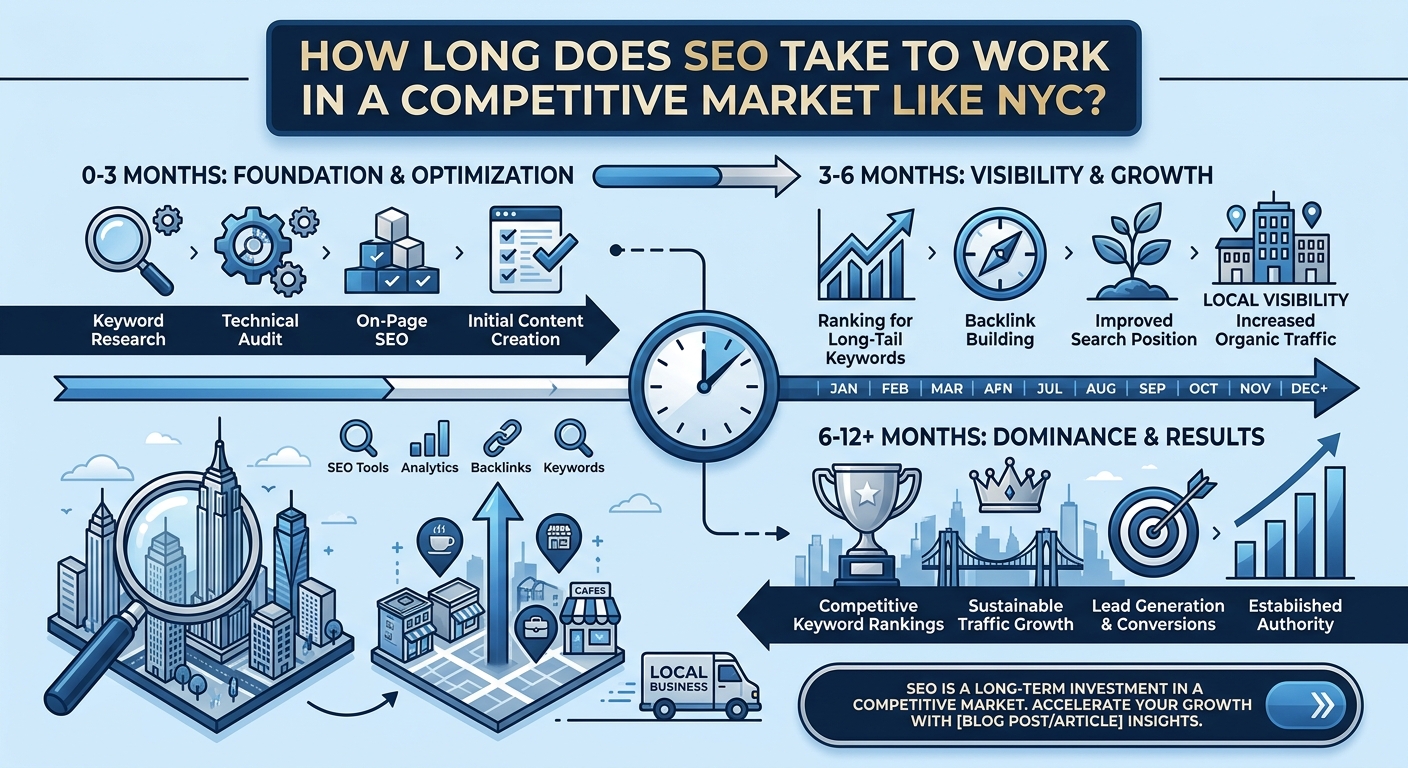
Most businesses begin to see movement within three to six months, depending on competition and website strength. New pages need time to be indexed and gain trust. Updating existing content can sometimes bring faster improvements. Patience and steady effort are essential in a competitive market like New York.
Can keyword research help my paid advertising?
Absolutely, since the same research identifies phrases with clear commercial value. It also helps you find low cost terms that competitors overlook. Better targeting reduces wasted clicks and improves your return on spend. Many advertisers also use organic data to refine their ad copy.
Should I target other languages for New York audiences?
If your customers speak other languages, targeting those phrases can open valuable opportunities. The city has large communities that search in Spanish, Chinese, Russian and many other languages. Competition for these searches is often lower. Always use natural wording, ideally reviewed by a native speaker.
How do I know if my keyword strategy is working?
Track rankings, organic traffic, phone calls, form submissions and sales over time. Compare these numbers against the goals you set at the start. Rising impressions and clicks show that your visibility is improving. Growth in conversions confirms that you are attracting the right audience.
Conclusion
Keyword research gives New York businesses a reliable way to understand their customers and stand out in a busy market. By setting clear goals, using local modifiers, studying intent and choosing the right tools, you build a foundation for lasting visibility. Long tail phrases, seasonal planning and regular tracking then keep that foundation strong as the city and its searchers evolve.
Start small by building your seed list and choosing a handful of high value phrases. Measure the results, learn from them and expand with confidence. With patience and consistency, the right keywords will bring the right customers to your door.