
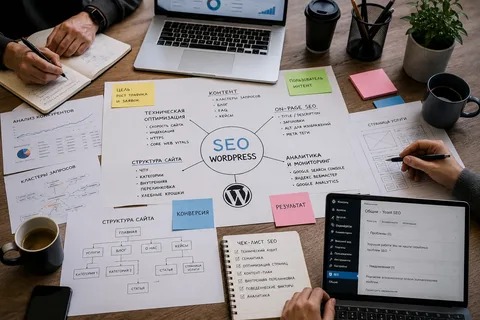
Launching a new WordPress website is an opportunity to build SEO into the site from the beginning instead of fixing problems later. A clear WordPress SEO strategy can help establish a strong technical foundation, organize content properly, and make important pages easier for search engines to discover.
The best time to plan SEO for a new website is before or during development, not after everything has already been published.
Choose an SEO-Friendly Structure
Start by deciding how the website should be organized.
For most business websites, the structure may include:
- Homepage
- About page
- Service pages
- Location pages where relevant
- Blog or resources
- Contact page
Each important service should have its own useful page when there is enough information to justify it.
Keep the navigation simple so users can easily reach important sections.
Research Keywords Before Creating Pages
Keyword research should happen before writing the website content.
Identify terms related to:
- Main services
- Products
- Customer problems
- Locations
- Industry topics
- Informational questions
Then map important keywords to appropriate pages.
For example, a main service keyword may belong on a service page, while a question-based keyword may be better suited to a blog article.
Create Clear Page Titles and Headings
Each page should clearly communicate its subject.
Use a descriptive title and one clear primary heading. Organize supporting information with relevant H2 and H3 headings.
Avoid creating titles that are vague or overly stuffed with keywords.
A visitor should understand what the page is about almost immediately.
Set Up Technical SEO Early
A new website should have its technical foundation configured correctly.
Important areas include:
- HTTPS
- XML sitemap
- Robots.txt
- Canonical URLs
- Search engine indexing
- Mobile responsiveness
- Page speed
- Clean URL structure
Be especially careful with development or staging settings. A website that is intentionally hidden from search engines during development needs to be configured correctly before launch.
Make the Website Mobile-Friendly

Test the website on different screen sizes before launch.
Check whether:
- Navigation works properly
- Text is readable
- Buttons are easy to use
- Images scale correctly
- Important content is accessible
- Pages load efficiently
A mobile-friendly experience is important for both users and overall website quality.
Build Internal Links From the Start
Internal linking becomes easier when the site structure is planned properly.
Connect related pages where useful.
For example, a service page could link to relevant educational articles, while those articles could link back to the service page when appropriate.
This creates clearer relationships between different sections of the website.
Publish Useful Supporting Content
A new website does not need dozens of articles immediately.
Start with content that answers genuine questions your target audience may have.
For a WordPress SEO business, useful topics could include:
- WordPress SEO basics
- Technical SEO
- Keyword research
- Website speed
- Local SEO
- Content optimization
Each article should serve a specific purpose and avoid repeating the same information.
Connect SEO With Conversion Goals
SEO should not be separated from the purpose of the website.
If the goal is generating leads, important pages should make it easy for visitors to take action.
Use clear calls to action such as:
- Request a consultation
- Get a quote
- Contact the team
- Book a service
- Learn more
The exact CTA should depend on the business and visitor’s stage in the buying process.
Monitor the New Website
After launch, connect suitable analytics and search monitoring tools.
Watch:
- Indexed pages
- Search impressions
- Organic clicks
- Keyword visibility
- Organic traffic
- Technical errors
- Conversions
Do not expect a new website to reach strong search visibility immediately. SEO performance develops as search engines crawl, understand, and evaluate the site’s content and authority.
Build Authority Carefully
Once the website has useful content and a solid technical foundation, work on earning relevant mentions and backlinks.
Potential approaches include:
- Industry publications
- Digital PR
- Useful resources
- Expert contributions
- Business partnerships
- Relevant directories
Focus on genuine relevance rather than purchasing large quantities of low-quality links.
Keep Improving After Launch
Launching the website is only the beginning.
Use performance data to identify pages that need improvement, topics that deserve additional content, and technical problems that need attention.
For businesses that want a structured process, a WordPress SEO consultant can help with keyword mapping, technical setup, content planning, and ongoing optimization.
Building SEO into a new website from the beginning creates a stronger foundation and reduces the need for major corrections later.

















