Introduction
🔎 Search engines have become one of the most important ways for customers to discover businesses, products, and services in California. Whether you operate a local service company in Los Angeles, an e-commerce store in San Diego, a technology business in San Jose, or a professional service company in San Francisco, strong search visibility can help you reach people who are actively looking for what you offer.
📈 However, achieving consistent organic visibility is not simply a matter of adding keywords to website pages. Search engine optimization involves technical website improvements, keyword research, content strategy, local search optimization, authority building, user experience, analytics, and continuous monitoring. Because search algorithms and customer behavior continue to change, many businesses choose to work with an experienced SEO expert who can create and manage a strategy based on their specific goals.
🤝 Hiring an SEO expert is an important business decision because the quality of the strategy can directly affect your website visibility, qualified traffic, leads, and potential sales. The right professional should understand your business, target audience, competitors, location, and growth objectives rather than applying the same SEO checklist to every website.
🌴 California is one of the most competitive business markets in the United States, with companies competing for customers across local, regional, national, and international search results. This makes it especially important to select an SEO professional who understands both general SEO principles and the unique requirements of competing in California markets.
💡 This complete guide explains how to evaluate SEO professionals, what services to expect, which questions to ask before hiring, how to compare candidates, what factors influence pricing, and how to build a productive long-term SEO partnership. By understanding these areas before making a decision, you can reduce the risk of choosing an unsuitable provider and increase the chances of building a strategy that supports sustainable business growth.
Understanding SEO Experts in California
An SEO expert is a professional who helps websites improve their visibility in search engine results and attract relevant organic visitors. Their work can include researching search terms, improving website structure, optimizing content, resolving technical issues, developing local search strategies, analyzing competitors, monitoring rankings, and using performance data to identify new opportunities.
🧠 A strong SEO expert does more than attempt to increase rankings for individual keywords. The broader objective is to connect a business with the right audience at the right stage of the customer journey. For example, a California home services company may want to appear when nearby customers search for a specific service, while an e-commerce business may focus on product-related searches that indicate strong purchase intent.
💻 SEO professionals can work in different ways depending on their business model and expertise. A freelancer may provide direct communication and specialized support, an SEO agency may offer a wider range of services through a team, and an in-house SEO professional may work exclusively with one organization and become deeply familiar with its products, customers, and internal processes.
SEO Freelancer
👤 An SEO freelancer is an independent professional who typically works with several clients. Freelancers can be a practical choice for small businesses that need specialized assistance without hiring a full internal marketing team.
A freelancer may handle specific SEO responsibilities such as keyword research, content optimization, technical audits, or local SEO. However, businesses should carefully evaluate the person’s availability, experience, communication process, and ability to manage the required scope of work before hiring.
SEO Agency
🏢 An SEO agency usually has multiple specialists who can work across different areas of search optimization. Depending on the agency, a client may receive support with technical SEO, content, local search, link acquisition, analytics, conversion optimization, and digital marketing.
An agency can be useful when a business needs a broader strategy or wants multiple specialists involved in its SEO campaign. However, companies should understand exactly who will manage their account and how communication will work rather than assuming that every agency provides the same level of individual attention.
In-House SEO Specialist
👩💻 An in-house SEO specialist works directly for the business and can become highly familiar with its products, services, customers, brand, and internal goals. This model can be valuable for companies with ongoing SEO requirements and sufficient resources to support a dedicated position.
The main consideration is that hiring internally can involve salary, benefits, recruitment, training, software, and other employment costs. Businesses should therefore compare the long-term value of an in-house specialist with the flexibility offered by external SEO professionals.
Why California SEO Requires Local Knowledge
📍 California contains a wide range of markets, industries, customer demographics, and competitive environments. A search strategy that works for a small local business in Sacramento may not produce the same results for a technology company targeting customers throughout Silicon Valley.
Local search behavior can also vary between cities and regions. Customers may use location-specific terms, neighborhood names, service-area searches, and phrases that reflect how people naturally search for businesses in their area. An SEO professional should be able to identify these differences during keyword research and strategy development.
🏙️ For businesses serving specific California locations, local SEO can be particularly important. Optimizing location pages, business information, service descriptions, local content, and other relevant search signals can help a company become more visible to people searching for nearby services.
🌐 At the same time, not every California business needs to focus only on local searches. An online company may target customers throughout the state or across the United States, while a software company may compete for national or international searches. The SEO strategy should therefore reflect the actual business model instead of assuming that every California company needs the same local approach.
When Your Business Needs an SEO Expert
🚨 Many businesses consider SEO only after experiencing a significant problem, such as a sudden traffic decline or poor search visibility. While an SEO expert can help address these issues, bringing professional support into the strategy earlier can make it easier to build a strong foundation and avoid expensive mistakes.
Your Website Has Low Organic Traffic
📉 If your website receives very little traffic from search engines despite offering valuable products or services, the problem may involve keyword targeting, technical performance, content quality, website structure, competition, or search intent. An SEO professional can investigate the website and identify which areas may be limiting its visibility.
Low traffic does not always mean that a website needs more content. Publishing large quantities of poorly targeted pages can create unnecessary work without attracting qualified visitors, so the first step should be understanding what potential customers are actually searching for and whether the existing website can satisfy those needs.
Your Rankings Have Declined
⚠️ A decline in organic rankings can happen for many reasons, including technical problems, changes in search algorithms, stronger competitors, outdated content, website changes, or shifts in search behavior. An SEO expert can analyze historical performance and identify possible causes instead of making random changes.
A professional approach should focus on evidence and data. Search performance should be reviewed alongside website changes, traffic patterns, indexing information, content updates, and competitor activity before deciding what corrective actions are appropriate.
You Are Launching a New Website
🚀 A new website has an opportunity to establish a strong SEO foundation from the beginning. URL structure, page organization, technical settings, internal links, metadata, content structure, mobile usability, and performance should be considered before a website becomes heavily dependent on search traffic.
Hiring an SEO expert during development can help prevent technical and structural problems that may become more difficult to correct later. SEO should not necessarily be treated as an activity that begins only after a website is published.
You Are Entering a Competitive Market
🏆 Highly competitive industries can require a more sophisticated SEO strategy because many businesses may already have established websites, strong content libraries, quality backlinks, local visibility, and brand recognition. Simply targeting broad keywords may not be enough to compete effectively.
An experienced SEO professional can identify realistic opportunities by analyzing competitors, search intent, keyword difficulty, content gaps, location-based opportunities, and areas where your business can provide stronger value.
Your Business Depends on Local Customers
📌 If customers need to find your business in a specific city or service area, local SEO can play a major role in your digital marketing strategy. Restaurants, healthcare providers, contractors, legal professionals, real estate businesses, salons, repair companies, and many other local businesses can benefit from improving their visibility for relevant local searches.
Local SEO should be connected to the broader customer journey. The objective is not simply to appear in search results but to help potential customers discover useful information, understand your services, trust your business, and take an appropriate action.
What to Look for in an SEO Expert
🔍 Choosing an SEO expert requires more than checking how many years someone has worked in digital marketing. Experience is valuable, but you should also examine the person’s knowledge, strategic thinking, communication style, analytical ability, and understanding of your business objectives.
Proven SEO Experience
📊 Look for an SEO professional who can explain how they have approached real SEO projects. Ask about the types of websites they have worked with, the industries they understand, the challenges they encountered, and how they measured progress.
A strong candidate should be comfortable explaining both successful and unsuccessful experiences. SEO rarely follows a perfectly predictable path, so an honest professional should be able to discuss testing, adjustments, setbacks, and lessons learned.
Technical SEO Knowledge
⚙️ Technical SEO is an important part of website optimization because search engines need to discover, crawl, understand, and index website content effectively. An SEO expert should understand areas such as site architecture, indexing, redirects, canonicalization, page performance, mobile usability, structured data, broken links, duplicate content, and crawl-related issues.
Technical knowledge becomes particularly important when working with large websites, e-commerce platforms, custom websites, or websites that have experienced migrations and redesigns. A professional should be able to identify technical problems and explain their business impact in language that non-technical stakeholders can understand.
Local SEO Expertise
📍 If your business serves customers in California locations, ask candidates about their local SEO experience. They should understand how location-based searches work and how businesses can improve their relevance and visibility for customers in specific service areas.
Local SEO may involve optimizing location-focused pages, improving business information, creating relevant local content, strengthening website signals, and analyzing competitors within the target market. The exact strategy should depend on the business and its service area.
Content Strategy Skills
✍️ SEO and content marketing are closely connected because search engines need useful information to understand what a website offers and whether its pages satisfy user intent. A capable SEO expert should know how to identify content opportunities and create or improve pages based on genuine customer needs.
Good SEO content should not simply repeat keywords. It should answer questions, explain products or services clearly, demonstrate expertise, address customer concerns, and guide readers toward useful next steps.
Data and Analytics Ability
📈 SEO decisions should be supported by data rather than assumptions. A professional should know how to interpret search performance, organic traffic, conversions, engagement metrics, indexing information, keyword trends, and other relevant indicators.
The ability to connect SEO activity with business outcomes is especially important. Ranking improvements can be useful, but a business ultimately needs qualified traffic, leads, sales, enquiries, bookings, or another meaningful outcome.
Communication and Reporting
💬 SEO is an ongoing process, so communication can strongly influence the success of the relationship. Before hiring someone, determine how frequently they will provide updates, what information will appear in reports, how meetings will be handled, and who you can contact when questions arise.
A useful SEO report should explain what was completed, what changed, what the data indicates, what problems were discovered, and what actions are planned next. Reports should help business owners understand progress rather than simply presenting a collection of complicated metrics.
Industry Experience
🏭 Experience in your specific industry can be helpful because an SEO professional may already understand common customer questions, competitors, terminology, and search behavior. However, industry experience should not automatically outweigh SEO expertise and strategic ability.
If a candidate has not worked directly in your industry, ask how they would learn about your market. A strong SEO professional should have a clear research process for understanding your audience, competitors, products, services, and customer journey.
SEO Services a California Expert Should Provide
🛠️ SEO is made up of multiple activities that work together. The exact services required will depend on the website, industry, competition, business objectives, and current search performance.
Technical SEO
Technical SEO focuses on the underlying structure and performance of a website. This can include identifying crawling and indexing problems, improving website architecture, resolving broken links, managing redirects, reviewing page performance, checking mobile usability, and addressing other technical issues that can affect search visibility.
On-Page SEO
On-page SEO involves improving individual website pages so that search engines and visitors can clearly understand their purpose. This may include optimizing headings, titles, descriptions, content structure, internal links, images, URLs, and other page elements.
The best on-page optimization balances search visibility with user experience. Pages should be created for people first while making their topic, purpose, and relevance clear to search engines.
Keyword Research
🔑 Keyword research identifies the words and phrases potential customers use when searching for products, services, information, or solutions. A professional should consider search intent, competition, relevance, location, business value, and the stage of the customer’s journey.
Effective keyword research does not focus only on search volume. A lower-volume search with strong commercial intent can sometimes be more valuable to a business than a high-volume search that attracts people who are unlikely to become customers.
Local SEO
📍 Local SEO helps businesses improve their visibility for searches connected to geographic locations. It can be especially valuable for businesses that serve customers within specific cities, regions, or service areas.
A local strategy should consider the business’s actual service locations and customer behavior. Creating location pages without meaningful local information or publishing repetitive city-based content is unlikely to provide the same value as genuinely useful local resources.
Content Optimization
📝 Content optimization involves improving existing pages and creating new content where there are meaningful opportunities. An SEO expert should assess whether pages are useful, accurate, relevant, well organized, and aligned with the intent behind target searches.
Refreshing existing content can sometimes be more effective than continuously producing new articles. An SEO professional should determine whether a page needs improvement, consolidation, expansion, restructuring, or replacement based on evidence.
Link Building
🔗 Links from relevant and trustworthy websites can contribute to a website’s authority and discoverability. However, businesses should be cautious about providers that promise large quantities of links without explaining how those links will be earned or evaluated.
A responsible SEO strategy should prioritize relevance, quality, and long-term value rather than attempting to manipulate search results through artificial or risky link-building practices.
Conversion Optimization
🎯 SEO should ultimately support business objectives, which means attracting visitors is only one part of the process. Conversion optimization can involve improving calls to action, page structure, contact forms, product information, navigation, trust signals, and other elements that help visitors take meaningful actions.
An SEO expert who understands conversions can evaluate whether increased organic traffic is actually contributing to business growth. This broader perspective can make SEO investment more valuable than focusing exclusively on rankings.
SEO Audits
🔎 An SEO audit provides a structured assessment of a website’s current search performance and identifies areas that may need improvement. Depending on the website, an audit may examine technical SEO, content, keywords, internal links, indexing, local visibility, competitors, user experience, and other relevant factors.
A useful audit should prioritize findings according to their potential impact and difficulty. A long list of technical observations is less useful if the business does not know which problems should be addressed first.
How to Evaluate SEO Experience
📂 Before hiring an SEO expert, ask to see examples of previous work where possible. A portfolio can help you understand the professional’s experience, but it should be evaluated carefully because different websites and industries can produce very different SEO challenges.
Review the Portfolio
Look for examples that demonstrate strategic thinking rather than only attractive reports or ranking screenshots. Ask what the starting situation was, what problems were identified, which actions were taken, and how results were measured.
Examine Case Studies
📊 Case studies can provide more useful information than general claims because they show how an SEO professional approached a particular challenge. Look for details about the objectives, strategy, implementation, measurement, and business impact.
Be cautious when a case study promises guaranteed rankings or unusually fast results without explaining the circumstances. SEO performance depends on many factors, including competition, website history, content quality, technical condition, industry, and search behavior.
Check Reputation
⭐ Reviews and testimonials can provide useful information about communication, professionalism, reliability, and customer experience. However, reviews should be considered alongside actual experience and evidence of SEO knowledge.
A professional with fewer reviews may still be highly capable, while a provider with many positive reviews may not necessarily be the right fit for your particular industry or business model.
Assess Practical Knowledge
🧠 Certifications can demonstrate that someone has completed training, but certificates alone do not prove that a person can successfully manage an SEO campaign. Practical knowledge, analytical ability, problem-solving skills, and experience working with real websites are equally important.
During the hiring process, ask candidates to explain how they would approach your website. Their response can reveal whether they understand SEO as a strategic discipline or simply plan to follow a generic checklist.
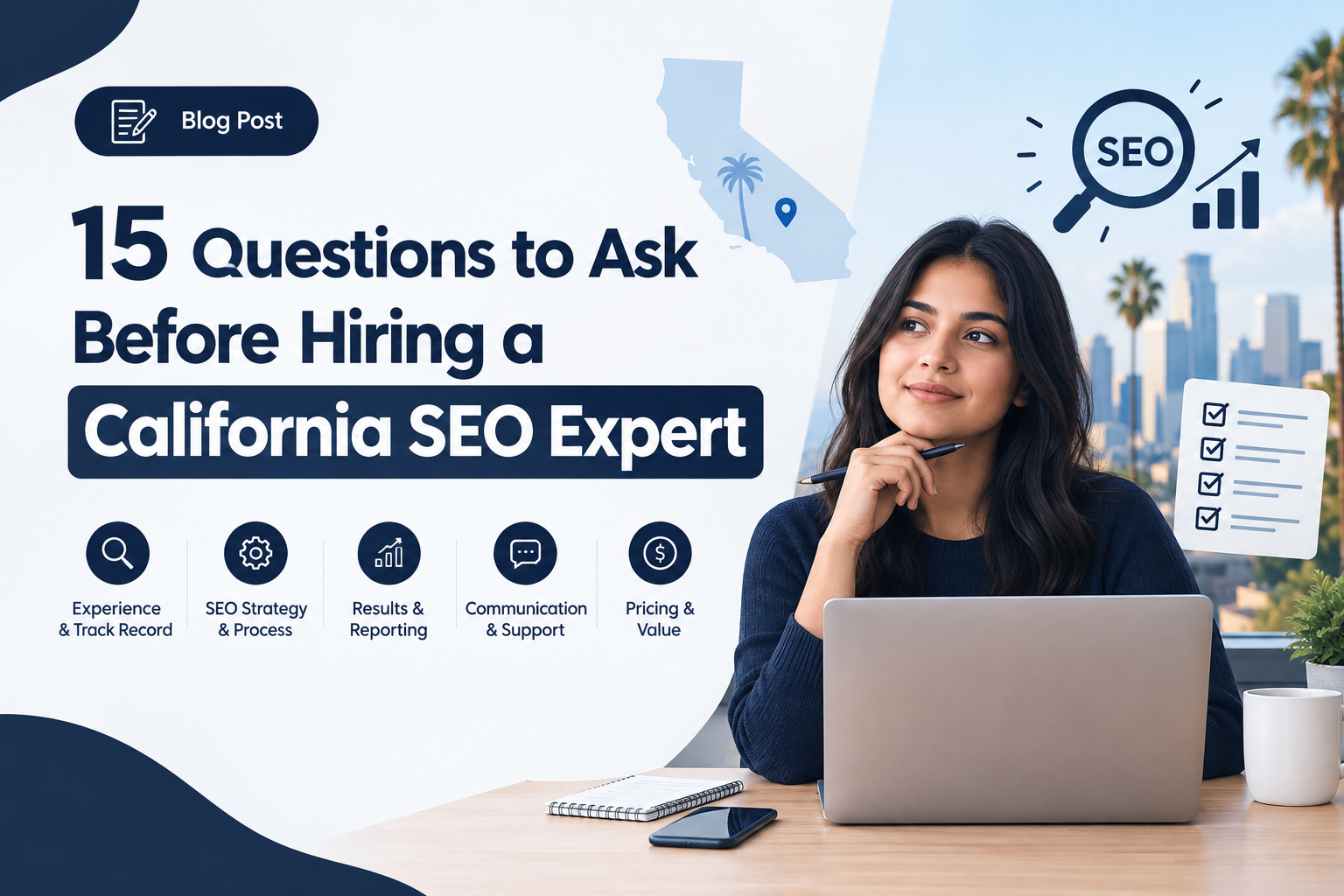
Questions to Ask Before Hiring
💬 Asking the right questions can help you understand whether an SEO professional is suitable for your business before signing an agreement. Instead of asking only about price, use the conversation to evaluate their strategy, transparency, communication, and expectations.
Consider asking:
What SEO problems do you see as the highest priorities for my website?
How would you research my target audience and competitors?
Which SEO services would you recommend and why?
How would you measure the success of the campaign?
How often would you provide performance reports?
Who would actually work on my website and manage the account?
What tools and data sources would you use to monitor performance?
How do you approach local SEO for California businesses?
How do you handle technical SEO problems?
What happens if the initial strategy does not produce the expected results?
These questions can help you distinguish between professionals who have a thoughtful process and providers who rely primarily on generic promises. The best candidate should be willing to explain their reasoning and adapt the strategy as new data becomes available.

How Much Does an SEO Expert Cost in California
💰 SEO pricing in California can vary considerably because businesses have different goals, website sizes, industries, competition levels, and service requirements. A small local business may need a focused local SEO campaign, while a large e-commerce company may require technical optimization, content production, enterprise-level analysis, digital PR, and ongoing strategic support.
The most important consideration should not be finding the cheapest SEO provider. Instead, businesses should evaluate whether the proposed investment is appropriate for the expected workload, business objectives, competition, and potential value of increased organic visibility.
Factors That Influence SEO Pricing
📊 Several factors can influence the cost of an SEO campaign. Understanding these factors makes it easier to compare proposals and identify why two SEO professionals may provide very different prices for seemingly similar services.
• Website size and complexity can affect the amount of technical analysis, optimization, and ongoing management required.
• Industry competition can increase the amount of research, content development, authority building, and strategic work needed.
• Geographic targeting can influence the campaign because targeting one local market is different from targeting multiple California cities or a nationwide audience.
• Existing website quality matters because a technically strong website with useful content may require less foundational work than a website with significant technical and content problems.
• Business objectives can also affect pricing because a campaign focused on brand awareness may require a different strategy from one focused on generating leads, sales, bookings, or online purchases.
Common SEO Pricing Models
💼 SEO professionals commonly use different pricing structures depending on the scope of work and relationship with the client. There is no single pricing model that is automatically best for every business.
| Pricing Model | How It Works | Suitable For |
|---|---|---|
| Monthly Retainer | A fixed monthly fee for ongoing SEO services | Businesses needing continuous optimization |
| Project-Based | A defined price for a specific SEO project | Audits, migrations, or website optimization |
| Hourly | Payment based on time spent working | Consulting or specialized tasks |
| Performance-Based | Compensation connected to agreed performance conditions | Carefully structured campaigns with measurable goals |
| Custom Package | A tailored combination of services | Businesses with specific SEO requirements |
A monthly retainer can provide continuity because SEO usually requires ongoing research, implementation, monitoring, and adjustment. However, businesses should understand exactly what activities are included instead of accepting a vague promise of ongoing SEO.
Project-based SEO can be useful when a business needs a specific service such as a technical audit, website migration review, keyword research project, or initial SEO strategy. After the project is completed, the business can decide whether ongoing SEO support is necessary.
Compare Value Instead of Price
💡 Two SEO providers may offer different prices because they may deliver completely different levels of research, strategy, implementation, reporting, and communication. A lower price may look attractive initially but can become expensive if the campaign produces little meaningful progress.
When comparing proposals, examine the actual deliverables. Look at the number and quality of services, strategic involvement, reporting, technical support, content requirements, communication, and expected workload rather than comparing monthly prices alone.
Comparing SEO Experts Before Hiring
🔍 Once you have identified several potential SEO professionals, create a structured comparison instead of choosing based on the first conversation. A simple evaluation system can help you identify which candidate offers the strongest combination of expertise, communication, strategy, and value.
| Evaluation Area | What to Check | Why It Matters |
|---|---|---|
| SEO Experience | Previous projects and practical knowledge | Shows ability to handle real SEO challenges |
| Technical Skills | Technical audits and website optimization | Helps identify issues affecting search visibility |
| Local SEO | Experience with location-based campaigns | Important for businesses targeting California customers |
| Content Strategy | Keyword-focused and user-focused content planning | Supports long-term organic growth |
| Analytics | Ability to interpret performance data | Helps connect SEO work with business results |
| Communication | Meetings, reports, and availability | Keeps the partnership transparent |
| Strategy | Customized approach rather than generic tasks | Ensures the campaign matches business goals |
| Ethics | Safe and sustainable SEO practices | Reduces the risk of search penalties |
| Pricing | Clear and understandable proposal | Helps control investment and expectations |
| Industry Fit | Understanding of your market | Makes strategy more relevant |
A strong candidate does not necessarily need to score perfectly in every category. The goal is to identify the professional whose strengths best match your current business needs and who can demonstrate a clear understanding of your goals.
Red Flags to Avoid When Hiring an SEO Expert
🚩 Choosing the wrong SEO provider can waste time, money, and valuable opportunities. Before signing an agreement, pay attention to warning signs that may indicate unrealistic expectations or poor professional practices.
Guaranteed Number One Rankings
⚠️ Search engine rankings are influenced by algorithms, competition, user behavior, website quality, search intent, and many other factors. No responsible SEO professional can guarantee that a website will permanently hold a particular position for a competitive keyword.
A professional can establish goals, identify opportunities, and work toward improved visibility, but they should explain that SEO results depend on multiple variables. Be cautious of anyone who guarantees specific rankings without explaining the limitations involved.
Extremely Fast Results
⏳ SEO can produce improvements at different speeds depending on the website and strategy. Some technical changes may produce relatively quick improvements, while building authority, creating useful content, and establishing strong organic visibility can take considerably longer.
Promises of dramatic results within an unusually short period should be evaluated carefully. Sustainable SEO generally requires research, implementation, monitoring, testing, and continuous improvement.
Lack of Transparency
🔎 If an SEO provider refuses to explain what they are doing, avoids answering basic questions, or provides reports that contain unexplained numbers, you may struggle to understand whether your investment is producing value.
Transparency does not mean revealing every internal process or overwhelming a business owner with technical information. It means explaining important actions, priorities, results, challenges, and next steps clearly.
Keyword Stuffing
📝 Repeating the same keyword excessively is not a modern content strategy. Search engines increasingly focus on understanding topics, context, relevance, and user intent, while readers expect natural and useful information.
An SEO expert should optimize content naturally and prioritize usefulness. If a provider suggests producing pages that exist primarily to repeat keywords without offering genuine value, that should be treated as a warning sign.
Buying Low-Quality Links
🔗 Some providers may offer thousands of backlinks for a very low price. Large quantities of irrelevant or low-quality links can create unnecessary risk and may provide little meaningful value.
Ask how links will be acquired and evaluated. A trustworthy professional should focus on relevance, quality, credibility, and sustainable strategies rather than promising enormous numbers of links.
No Business Goals
🎯 SEO should connect to the objectives of the company. If a provider talks only about rankings and traffic without asking about leads, sales, enquiries, bookings, customers, products, services, or revenue, the strategy may not be sufficiently business-focused.
A good SEO professional should want to understand what success means for your organization before recommending a campaign.
How the Hiring Process Works
🤝 Hiring an SEO expert does not need to be complicated, but it should be structured. A clear process helps you communicate your expectations, compare candidates fairly, and select a professional who understands your business.
Define Your SEO Goals
🎯 Before contacting SEO professionals, identify what you want to accomplish. Your goal may be increasing local visibility, generating more enquiries, improving e-commerce sales, increasing qualified organic traffic, recovering lost rankings, launching a new website, or building long-term search authority.
Try to make your objectives as specific as possible. Instead of saying that you simply want better SEO, identify the business outcome you want SEO to support.
Understand Your Current Situation
📋 Review the current condition of your website before interviewing candidates. You do not need to perform a complete SEO audit yourself, but understanding basic information such as current traffic, important services, target locations, major competitors, and existing search performance can make discussions more productive.
Gathering this information also helps candidates provide more relevant recommendations. It gives them context about where the business is today and where you want it to go.
Create a Shortlist
🔍 Search for several suitable candidates rather than contacting only one provider. Look at their experience, website, portfolio, client feedback, services, communication approach, and understanding of your industry.
A shortlist allows you to compare different approaches. You may discover that one candidate has stronger technical skills, another has excellent local SEO experience, and another has a particularly strong content strategy.
Conduct Interviews
💬 An interview gives you an opportunity to understand how an SEO expert thinks. Instead of asking only whether they can provide SEO services, ask them how they would approach your specific situation.
Pay attention to the questions they ask you as well. A strong professional should want to understand your audience, products, services, competitors, locations, website history, business goals, and previous marketing efforts.
Review the Proposal
📄 A professional SEO proposal should explain the recommended strategy, major activities, responsibilities, reporting process, communication expectations, timeframe, and pricing structure. The proposal should make it clear what you are paying for and what the provider expects from your business.
Avoid accepting proposals that contain only broad statements such as improving rankings or increasing traffic without explaining how the work will be performed. Clear deliverables make it easier to evaluate the relationship later.
Check References
⭐ If references are available, consider contacting previous or current clients where appropriate. Ask about communication, reliability, strategic ability, reporting, responsiveness, and whether the SEO professional delivered what was promised.
Do not focus only on whether rankings increased. Ask whether the SEO work contributed to meaningful business outcomes and whether the client felt informed throughout the process.
Start With Clear Objectives
🚀 Once you select an SEO professional, establish clear initial priorities. A campaign may begin with an audit, technical improvements, keyword research, content strategy, local optimization, or another area depending on the website.
Setting priorities at the beginning prevents the campaign from becoming a collection of unrelated SEO tasks. Everyone involved should understand what is being worked on, why it matters, and how progress will be evaluated.
Building a Successful SEO Partnership
🤝 Hiring an SEO expert is only the beginning. The relationship between the business and SEO professional can have a significant influence on the campaign’s effectiveness.
Maintain Open Communication
💬 Share important business updates with your SEO professional. New services, product launches, changes in target locations, promotions, website redesigns, seasonal campaigns, and changes in customer priorities can all affect SEO strategy.
At the same time, the SEO professional should communicate important search performance changes and recommendations. Regular communication creates a stronger connection between SEO activities and wider business decisions.
Give Access to the Right Information
🔐 SEO professionals may need access to relevant website and analytics platforms to perform their work effectively. Businesses should provide appropriate access while following good security practices and avoiding unnecessary sharing of sensitive account information.
It is also important to maintain ownership of your website, domain, analytics data, business profiles, and other critical digital assets. An SEO provider should work with your assets rather than making your business dependent on accounts that you cannot control.
Be Patient With the Process
⏳ SEO is generally a long-term marketing strategy rather than an instant advertising solution. Search engines need time to discover changes, evaluate content, observe user behavior, and reflect improvements in organic visibility.
This does not mean that an SEO campaign should operate without accountability. The business should receive regular updates and evidence of completed work while understanding that meaningful organic growth may require consistent effort over time.
Focus on Meaningful Metrics
📊 Rankings are useful indicators, but they should not be the only measure of SEO performance. Businesses should also consider organic traffic quality, conversions, leads, enquiries, sales, engagement, visibility for valuable search terms, and other metrics connected to their objectives.
For example, ranking highly for a keyword that produces little business value may be less important than gaining visibility for a smaller set of searches that attract customers who are ready to purchase or contact the company.
Continue Improving
🔄 Search behavior, competitors, websites, products, and search engine systems can change over time. An SEO strategy should therefore be reviewed and adjusted instead of being treated as a one-time project.
Ongoing optimization can involve updating existing content, identifying new keyword opportunities, improving technical performance, strengthening internal links, analyzing competitors, testing page improvements, and responding to changes in customer behavior.
Choosing the Right SEO Strategy for Your Business
🧩 There is no universal SEO strategy that works equally well for every California business. A local restaurant, software company, law firm, online retailer, healthcare provider, real estate company, and professional consultant can have completely different audiences and search journeys.
A suitable SEO strategy begins with understanding the business model. The SEO professional should identify who the customers are, what they search for, where they are located, what problems they are trying to solve, what competitors they consider, and what actions you want them to take after discovering the website.
🌱 For small businesses, the strategy may begin with foundational technical SEO, local visibility, service pages, customer-focused content, and conversion improvements. For larger organizations, the campaign may require more advanced technical analysis, large-scale content planning, international or national targeting, detailed competitor research, and coordination across multiple teams.
📍 California businesses should also consider whether they serve one location or multiple markets. A company serving customers throughout the state may need a broader strategy than a business serving one city, while a company with several physical locations may need carefully structured location-specific optimization.
Ultimately, the right SEO expert should not sell a predefined package simply because it is convenient. They should assess your website and business circumstances, identify the highest-value opportunities, and develop a strategy that can evolve as the campaign generates new information.
Creating Long-Term SEO Growth
🌱 Sustainable SEO growth comes from consistently improving the relationship between a website, its audience, and search engines. This involves creating useful content, maintaining a technically healthy website, understanding customer search behavior, improving user experience, and monitoring how the market changes.
A good SEO expert should think beyond short-term ranking increases. Their role should include identifying opportunities that can strengthen the website’s overall organic presence and create a foundation for future growth.
📈 Long-term SEO also requires businesses to recognize that search visibility is competitive. Competitors can publish new content, improve their websites, earn media coverage, launch new services, and change their marketing strategies. A website that performs well today still needs ongoing attention to maintain and improve its position.
The strongest SEO partnerships are built around continuous learning and improvement. When the business understands its objectives and the SEO professional brings expertise, research, analysis, and strategic execution, both sides can work toward measurable and sustainable growth.

Measuring SEO Success
📊 Hiring an SEO expert is only valuable when you can understand whether the work is moving your business in the right direction. SEO performance should be measured using a combination of search visibility, website traffic, engagement, leads, conversions, and other business-specific indicators rather than relying on one ranking position.
A professional SEO campaign should establish a baseline before major work begins. This makes it possible to compare future performance against the starting point and identify which areas have improved, which areas require additional attention, and which strategies should be adjusted.
Organic Traffic
🌐 Organic traffic shows how many visitors reach your website through unpaid search results. Increasing traffic can be a positive sign, but the quality of that traffic is more important than simply increasing visitor numbers.
A successful SEO campaign should aim to attract people who are genuinely interested in the products, services, or information your business provides. A smaller amount of highly relevant traffic can be more valuable than a large amount of visitors who have no intention of becoming customers.
Search Visibility
🔎 Search visibility reflects how frequently your website appears for relevant searches. Your SEO professional can monitor important keywords and topics to understand whether your website is gaining visibility within your target market.
Keyword positions should be interpreted carefully because rankings can vary by location, device, search history, competition, and search intent. Looking at broader visibility trends provides a more useful picture of SEO progress.
Leads and Conversions
🎯 Leads, enquiries, bookings, registrations, purchases, and other conversions can provide a stronger connection between SEO and business growth. These metrics help determine whether organic visitors are taking meaningful actions after arriving on the website.
The appropriate conversion will depend on your business model. An online store may focus on purchases, while a local service provider may prioritize phone calls, contact forms, appointment requests, or quote enquiries.
Revenue and Business Value
💰 For businesses that can accurately connect organic traffic with sales, revenue can become one of the most valuable SEO performance indicators. This helps decision-makers understand whether SEO is contributing to financial growth rather than simply increasing website activity.
Not every SEO result can be immediately connected to revenue, particularly during the early stages of a campaign. However, the long-term objective should be to understand how search visibility contributes to the customer journey and overall business performance.
How Long Does SEO Take
⏳ One of the most common questions businesses ask before hiring an SEO expert is how quickly they will see results. There is no universal timeline because SEO performance depends on website history, competition, technical condition, content quality, authority, industry, target keywords, and the amount of work being implemented.
Some improvements can become noticeable relatively quickly, particularly when an existing technical issue is identified and corrected. Other opportunities, such as building topical authority, earning quality links, improving competitive content, and establishing stronger organic visibility, may require sustained effort.
🚀 Businesses should therefore be cautious about providers who promise dramatic results within a fixed number of days. A responsible SEO professional should explain what can reasonably be improved in the early stages while establishing a longer-term strategy for sustainable growth.
The SEO process should also include regular evaluation rather than waiting for a final deadline. Monitoring performance allows the strategy to evolve when certain approaches produce stronger results than others.
Local SEO for California Businesses
📍 Local SEO can be particularly important for California businesses that depend on customers in specific cities or service areas. Potential customers often use location-based searches when they are looking for nearby businesses, professional services, restaurants, contractors, healthcare providers, retailers, and other local solutions.
A strong local strategy should provide genuine information about the business and its service areas. Location-focused pages should contain useful and unique information rather than simply replacing a city name across multiple pages.
🏙️ Businesses serving several California locations should also consider how their website structure represents those locations. Each important market should have a clear purpose and useful content that helps customers understand the services available in that area.
Local SEO should also connect with the rest of the website strategy. Strong service pages, helpful content, clear contact information, consistent business details, good user experience, and relevant local signals can work together to strengthen the overall customer journey.
SEO for California Small Businesses
🏪 Small businesses often face strong competition because they may be competing against larger companies with bigger marketing budgets. However, smaller businesses can still find valuable SEO opportunities by focusing on specific services, locations, customer questions, and areas where larger competitors provide less relevant information.
Instead of attempting to rank for every broad keyword, a small business can identify searches that closely match its products and services. A focused strategy can make better use of limited time and resources while attracting visitors who are more likely to become customers.
💡 Small businesses should also make sure that their website clearly communicates what they offer and where they operate. Visitors should be able to understand the business, services, service areas, benefits, and next steps without unnecessary difficulty.
An SEO expert can help prioritize opportunities so that the business does not spend its entire budget on low-impact activities. The strategy should focus on improvements that have a realistic connection to visibility, customer acquisition, and long-term growth.
SEO for E-Commerce Businesses
🛒 E-commerce SEO has additional considerations because online stores can contain hundreds or thousands of product and category pages. Poor website architecture, duplicate content, weak product descriptions, filtering systems, indexing problems, and slow pages can create significant SEO challenges.
An SEO professional should understand how product pages and category pages work together. The strategy should help search engines discover important products while providing customers with useful information that supports purchasing decisions.
📦 E-commerce businesses should also consider search intent at different stages of the buying journey. Informational searches may require educational content, while commercial searches may require comparison pages, category pages, buying guides, or highly optimized product pages.
The goal should not simply be to increase product page traffic. The website should attract qualified shoppers and make it easy for them to evaluate products, understand benefits, trust the business, and complete purchases.
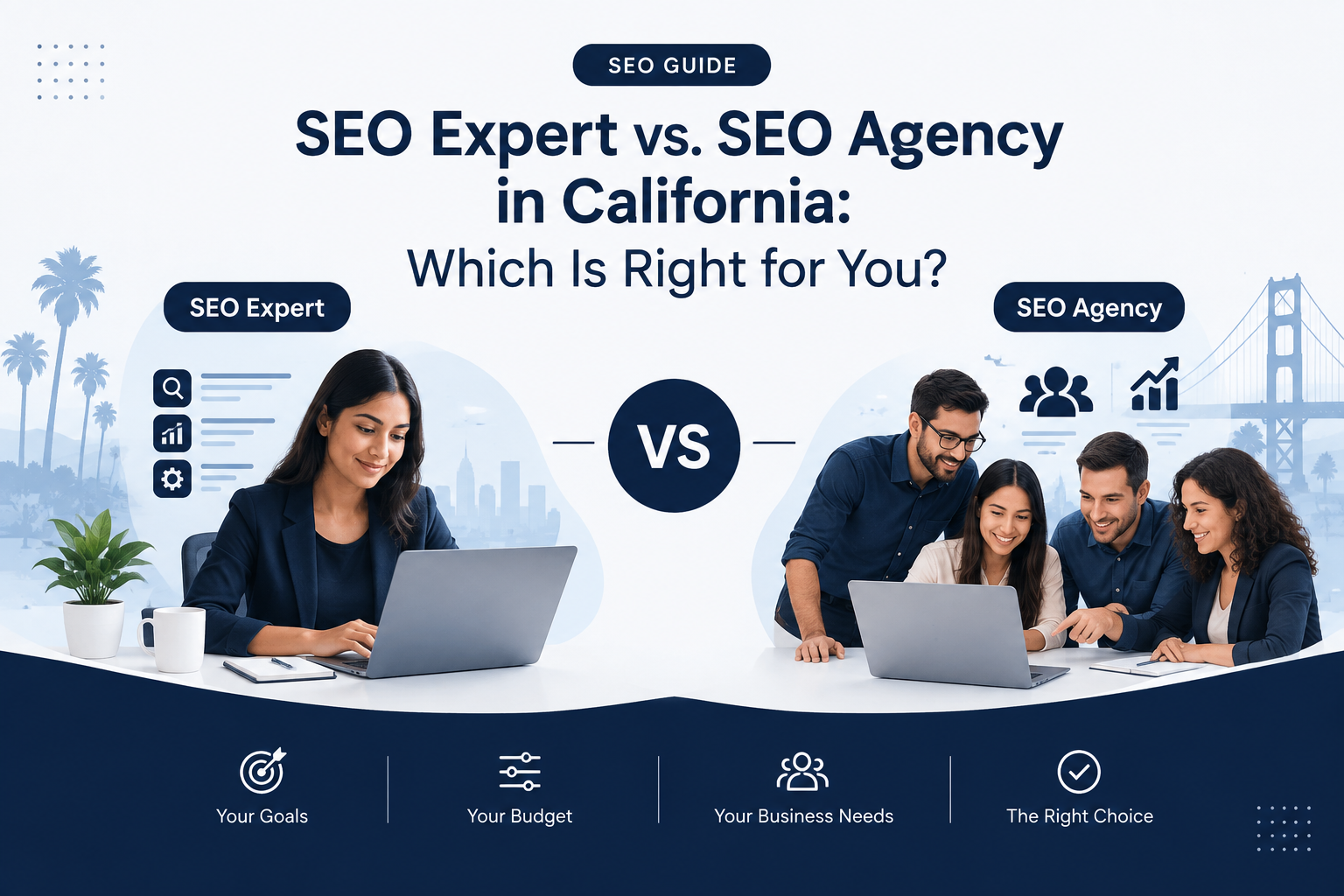
Choosing Between a Freelancer and an SEO Agency
👤 Choosing between a freelancer and an agency depends on the size, complexity, budget, and internal resources of your business. A freelancer may provide direct communication and focused expertise, while an agency may provide access to multiple specialists and broader services.
A freelancer can be a strong option when a business needs specialized support or has a clearly defined SEO requirement. Before hiring, confirm that the freelancer has enough availability to manage the required workload and understands the level of support you expect.
🏢 An agency may be more appropriate when a business requires several areas of digital marketing or a larger team. However, ask who will actually work on your account because the person involved during the sales process may not necessarily be the person managing your campaign.
There is no universally better option. The best choice is the provider whose skills, communication, resources, strategy, and working style match the needs of your business.
Creating an SEO Hiring Checklist
✅ Before making your final decision, review the candidate against a simple checklist. This can help you avoid selecting an SEO provider based only on a persuasive sales conversation.
Your checklist can include:
• Experience with websites similar to yours
• Understanding of technical SEO
• Strong keyword research skills
• Knowledge of local SEO when relevant
• Ability to create or optimize useful content
• Clear reporting process
• Transparent pricing
• Realistic expectations
• Ethical SEO practices
• Strong communication
• Evidence of previous work
• Understanding of business goals
• Clear deliverables
• Defined responsibilities
• Long-term optimization approach
A candidate does not need to satisfy every item in exactly the same way. The checklist should help you identify strengths, weaknesses, and areas that require clarification before signing an agreement.
Why Choose Dealmate
🤝 Choosing an SEO partner is ultimately about finding a team that understands your business goals and can turn SEO activity into a structured growth strategy. Dealmate focuses on providing businesses with a practical approach to search engine optimization that considers visibility, relevance, user experience, and long-term performance.
🎯 A customized strategy is important because every business has different customers, competitors, services, locations, and growth objectives. Dealmate can approach SEO based on the specific needs of a business rather than relying on a generic set of tasks that may not address its most important opportunities.
📊 Data and analysis should also play an important role in SEO decision-making. By examining search opportunities, website performance, competitors, content, and other relevant signals, an SEO strategy can be adjusted based on evidence rather than assumptions.
💬 Communication is another important part of a successful SEO partnership. Businesses should understand what work is being completed, why particular actions matter, what the available data indicates, and what opportunities should be considered next.
🌱 The objective of SEO should be sustainable growth rather than short-term promises. For businesses competing in California’s demanding digital market, having a strategic partner that understands the importance of consistent optimization, useful content, technical health, and measurable performance can provide a stronger foundation for long-term organic visibility.
Frequently Asked Questions
How do I know if I need an SEO expert?
🔎 You may benefit from an SEO expert if your website receives little organic traffic, has poor search visibility, or struggles to generate customers through search. Professional support can also be valuable when launching a new website or entering a highly competitive California market. An SEO expert can identify technical, content, keyword, and local search opportunities that may not be obvious to a business owner. The decision should ultimately depend on your goals, internal skills, available resources, and the complexity of your website.
How much does hiring an SEO expert in California cost?
💰 SEO costs vary depending on the website, industry, competition, services required, and campaign objectives. A small local campaign can require a different investment from a large e-commerce or multi-location SEO program. Businesses should compare the scope of work, expertise, reporting, communication, and expected value rather than selecting a provider only because of a low price. A clear proposal should explain what is included so that you can understand how your investment will be used.
How long does SEO take to produce results?
⏳ SEO does not have one guaranteed timeline because every website and market is different. Technical improvements can sometimes produce relatively quick changes, while content development, authority building, and competitive keyword growth may take considerably longer. A professional SEO expert should establish realistic expectations and monitor progress throughout the campaign. Sustainable SEO should be viewed as an ongoing growth strategy rather than a short-term marketing shortcut.
Should I hire a freelancer or an SEO agency?
👤 A freelancer can be suitable for businesses that need specialized support, direct communication, or a focused SEO project. An agency may be better suited to organizations that need multiple specialists or a broader range of digital marketing services. Neither option is automatically better because the right choice depends on your business requirements, budget, website complexity, and preferred working relationship. Always evaluate the actual people, experience, services, communication, and strategy behind the provider.
What should an SEO expert report every month?
📊 Monthly reporting should provide useful information about completed work, organic performance, important ranking trends, website issues, conversions, and upcoming priorities. The exact metrics should depend on the business objectives rather than following a generic reporting template. A useful report should explain what changed and why it matters instead of presenting numbers without context. Regular reporting also gives the business an opportunity to discuss concerns and adjust priorities.
Can an SEO expert guarantee first-page rankings?
⚠️ A responsible SEO professional should not guarantee a specific search ranking because search results depend on algorithms, competition, search intent, location, website quality, and many other factors. SEO experts can identify opportunities and implement strategies designed to improve visibility. However, no professional can fully control how search engines rank every page for every search. Be cautious when a provider guarantees exact positions or promises immediate dominance over competitive search results.
Is local SEO important for California businesses?
📍 Local SEO can be highly valuable for businesses that depend on customers in particular California cities, regions, or service areas. It can help businesses become more visible when potential customers search for relevant products and services in their area. The strategy should include genuinely useful local information rather than creating repetitive pages that only change city names. Businesses should focus on serving local search intent and making it easy for potential customers to understand their services.
What should I ask an SEO expert before signing a contract?
💬 Ask about their experience, recommended strategy, services, reporting process, communication, pricing, timelines, and approach to ethical SEO. You should also ask who will work on your campaign and how success will be measured. Understanding the provider’s process before signing helps prevent misunderstandings about responsibilities and expectations. A trustworthy SEO professional should be comfortable explaining their recommendations and answering reasonable questions about the campaign.
How can I tell whether an SEO expert is trustworthy?
⭐ A trustworthy SEO professional should be transparent about their process, communicate clearly, provide realistic expectations, and explain how their work connects to your business objectives. They should be willing to discuss both opportunities and limitations instead of promising effortless results. Reviewing portfolios, case studies, references, and previous work can help you evaluate their practical experience. You should also be cautious of providers who rely on guaranteed rankings, secret strategies, mass low-quality links, or unusually fast promises.
What makes a good SEO strategy for a California business?
🌴 A strong California SEO strategy begins with understanding the business, target customers, competitors, services, locations, and objectives. It can combine technical SEO, keyword research, content optimization, local SEO, authority development, conversion improvements, and ongoing performance analysis. The exact combination should be customized because a local business and a statewide e-commerce company have very different search requirements. The most effective strategy is one that continually adapts to data, customer behavior, competition, and changing search opportunities.
Conclusion
🌱 Hiring an SEO expert in California is an important decision for any business that wants to build stronger organic visibility and attract more qualified customers through search engines. The right professional should offer more than keyword research or ranking reports and should understand how technical SEO, content, local search, user experience, analytics, and business objectives work together.
🔍 Before hiring, take time to define your goals, evaluate potential candidates, review their experience, compare proposals, ask detailed questions, and identify any warning signs. Avoid providers that promise guaranteed rankings or instant results, and prioritize professionals who communicate clearly, use data responsibly, and develop strategies around your actual business needs.
📈 SEO is a long-term investment that requires continuous learning, optimization, measurement, and adaptation. By choosing the right SEO partner and establishing clear expectations from the beginning, California businesses can create a stronger foundation for sustainable search visibility, qualified traffic, leads, and long-term digital growth.