Local SEO in California: How to Rank in Your City and Beyond
Introduction
California is home to businesses of every size, from independent service providers and family-owned shops to growing companies and established brands. With customers increasingly using search engines to discover nearby products and services, having a strong online presence is essential for businesses that want to attract local customers. Local SEO helps businesses appear when people search for services in a particular city, neighborhood, or surrounding area, making it an important strategy for increasing visibility and generating qualified leads.
Imagine a homeowner in Los Angeles searching for a reliable plumber, a family in San Diego looking for a nearby restaurant, or a business owner in San Francisco searching for a digital marketing consultant. Each customer has a specific need and is likely to consider businesses that appear relevant, trustworthy, and accessible. By optimizing your website, business listings, local content, and online reputation, you can improve your chances of reaching these potential customers at the moment they are ready to take action.
However, ranking locally in California requires more than adding a city name to your website or creating a business listing. Effective local SEO combines accurate business information, relevant keywords, useful website content, genuine customer reviews, technical optimization, and credible local references. This guide explains how California businesses can strengthen their local search presence, compete in their target cities, and build a sustainable strategy for reaching customers beyond their immediate location.
Understanding Local SEO in California
Local SEO, or local search engine optimization, is the process of improving a business’s online visibility for searches connected to a particular geographic location. It helps search engines understand what a business offers, where it operates, and which customers are most likely to benefit from its products or services. For California businesses, local SEO can support visibility in traditional organic search results, Google Maps, and other location-oriented search experiences.
Unlike a general search such as “best digital marketing strategies,” a local search often includes a location or signals that the user wants a nearby solution. Examples include “SEO expert in California,” “electrician in Sacramento,” and “Italian restaurant near me.” These searches communicate a stronger connection between the user’s immediate needs and the businesses that can meet them, creating opportunities to attract customers with relevant search intent.
Local SEO is especially important in California because the state contains diverse markets with different customer expectations, business categories, and levels of competition. A company serving downtown Los Angeles may need to target different neighborhoods and search terms than a company serving residential communities in Fresno or smaller towns near Sacramento. Understanding the geographic areas your customers actually use helps you develop a focused strategy rather than trying to rank everywhere at once.
What Makes Local SEO Different From Traditional SEO?
Traditional SEO focuses on improving a website’s visibility for relevant searches regardless of whether the searcher is located near the business. It commonly involves content quality, technical performance, backlinks, keyword targeting, and website authority. Local SEO includes these same foundations but places additional emphasis on geographic relevance, business information, customer reviews, and location-based discovery.
For example, a website selling marketing software throughout the United States might target broad commercial keywords related to its products. A California-based marketing consultant, on the other hand, may want to appear for searches related to SEO services in San Jose, Los Angeles, or San Diego. The second business needs to demonstrate not only expertise in SEO but also a genuine connection to the places it serves.
The two approaches work best when they support one another. A technically sound website with helpful content gives search engines useful information, while accurate local business details and credible customer feedback help establish the business’s relevance within its service area. Combining both approaches allows businesses to pursue local leads while developing broader organic visibility over time.
How Google Maps and Local Search Help Businesses
Google Maps and local search results help customers discover businesses, compare available options, and evaluate which providers are suitable for their needs. When someone searches for a local service, Google may display a map with a selection of nearby businesses alongside organic website results. A well-maintained Google Business Profile can help an eligible business provide important details, including its location or service area, opening hours, telephone number, photographs, and customer reviews.
Visibility in these results can create several opportunities for customer engagement. A person may call a business directly, request directions, visit its website, or read customer feedback before making a decision. The usefulness of these interactions depends on the business category, the searcher’s needs, and how accurately the business information reflects the services available.
It is important to understand that local SEO cannot guarantee placement in the top results for every search. Google’s local results are influenced by relevance, distance, and prominence, and the businesses displayed may differ depending on the searcher’s location and query. A practical strategy focuses on improving the factors within your control while providing accurate information and a strong customer experience.
Why Local SEO Matters for California Businesses
California’s large population and diverse commercial environment create opportunities for businesses that can connect with the right audience. However, being located in a busy market does not automatically make a company visible online. Local SEO helps businesses communicate their relevance to customers in specific geographic areas, improving their chances of attracting people who are actively searching for related products or services.
For a small business, appearing in relevant local search results can provide an additional source of potential customers without depending entirely on paid advertising. A professional service provider may attract enquiries through a location-focused landing page, while a restaurant may receive website visits and calls from its business profile. The objective is to connect online visibility with meaningful customer actions.
Reaching Customers With Local Search Intent
Local search intent describes the reason behind a search that involves a location, a nearby service, or a business that can meet a geographically relevant need. Customers may be looking for immediate assistance, comparing service providers, or researching businesses before contacting them. Understanding these different situations helps companies create content that answers the questions customers have at each stage of their decision-making process.
For example, someone searching for “emergency plumber in Oakland” may need a provider as soon as possible. Someone searching for “how to choose an SEO consultant in California” may be researching options before deciding which company to contact. Both searches can support business growth, but they require different content and conversion approaches to meet the user’s expectations.
Businesses can target these opportunities by combining service-related keywords with relevant geographic terms. A California SEO company might develop useful pages for its actual service locations, while a dental clinic may publish information about its treatments, appointment process, and accepted payment options. The goal is to provide a relevant answer instead of simply repeating city names throughout the content.
Increasing Calls, Website Visits, and Customer Enquiries
Local SEO can help businesses attract visitors who are more likely to need their services in a specific area. When a website appears for relevant searches and clearly communicates its value, potential customers can more easily understand what the business offers and how to contact it. This can support enquiries through telephone calls, contact forms, appointment requests, directions, and online bookings.
However, website traffic alone does not determine whether a local SEO campaign is successful. A business may receive thousands of visits without generating meaningful enquiries if the visitors are outside its service area or looking for something it does not provide. Tracking conversions alongside organic traffic helps business owners understand whether their optimization efforts are reaching the right audience.
To improve the likelihood of conversion, businesses should make their contact details easy to find, explain their services clearly, and ensure their websites work properly on mobile devices. Calls to action such as “Request a Consultation,” “Book an Appointment,” or “Get a Service Estimate” can guide visitors toward the next step. These improvements help turn search visibility into a more practical business opportunity.
Building Trust and Online Credibility
Customers often compare several businesses before deciding whom to contact. They may examine reviews, photographs, service descriptions, website quality, and the consistency of business information across different platforms. A complete and accurate online presence helps potential customers understand what to expect and reduces uncertainty during the decision-making process.
Customer reviews can provide useful insights into service quality, communication, reliability, and the overall customer experience. Responding professionally to feedback also demonstrates that the business pays attention to customer concerns. Businesses should encourage genuine reviews without purchasing feedback, fabricating customer experiences, or pressuring customers to leave only positive comments.
Credibility also comes from the quality of the website and the usefulness of its information. Clear service descriptions, transparent contact details, relevant examples of previous work, and accurate business credentials can help visitors assess whether the company meets their needs. Over time, these practices can strengthen customer confidence while supporting a more reliable local search presence.
Competing With Established Brands and Local Businesses
A business does not necessarily need a large marketing budget to improve its local search visibility. Smaller companies can focus on a clearly defined service area, answer specific customer questions, maintain accurate business listings, and develop relevant content that addresses local needs. This focused approach may reveal opportunities that broader competitors have not fully addressed.
For instance, a small landscaping company in Long Beach might concentrate on residential garden maintenance, drought-conscious landscaping, and seasonal outdoor improvements. Instead of trying to rank for every landscaping keyword across California, it can create useful resources for its actual customers and develop a reputation within its service area. A specific strategy gives the company a clearer direction for content creation and local promotion.
Nevertheless, local SEO does not guarantee that a smaller business will outrank a national brand or established competitor. Search results depend on several factors, including the search query, location, competition, and business relevance. The most sustainable approach is to identify realistic opportunities, deliver strong customer service, and continually improve the quality of the business’s online presence.
How Local Search Rankings Work
Understanding how local search rankings work helps business owners prioritize the actions most likely to improve visibility. Google’s local ranking systems consider relevance, distance, and prominence when determining which businesses may be suitable for a search. These factors work together, so optimizing one element does not guarantee a particular ranking position.
Relevance refers to how closely a business matches what someone is searching for. Distance relates to how far the business is from the searcher or the location used in the query, while prominence reflects how well-known or established the business appears to be based on available information. These concepts help explain why different businesses can appear for similar searches in different places.
Relevance and Service Alignment
Relevance is strengthened when a business provides clear and accurate information about its services, products, business category, and location. Search engines need to understand what the company does before they can determine whether it is a suitable match for a particular query. A vague business description or incomplete service information may make it harder for customers and search systems to understand the company’s main offerings.
A California-based web design company, for example, should explain its web design services rather than relying on generic marketing language. If the company also provides technical SEO, ecommerce development, and website maintenance, these services should be described accurately on appropriate pages. Relevant details help users determine whether the business meets their requirements.
Businesses should also ensure that their Google Business Profile categories reflect their actual operations. Selecting an unrelated category merely because it appears popular can create confusion and may violate platform guidelines. Accurate categorization, supported by useful website content, provides a stronger foundation for relevant local visibility.
Distance and Geographic Relevance
Distance can influence which businesses appear when customers search for nearby services. A searcher looking for a restaurant near their current location may see different results from someone searching for restaurants in another California neighborhood. This means that rankings can vary even when both people enter exactly the same words.
Businesses can clarify their genuine geographic relevance by maintaining accurate addresses where eligible, defining appropriate service areas, and creating helpful information about the communities they serve. A service-area business should describe its coverage honestly rather than claiming a physical presence in locations where it has no legitimate operating base. Location information should reflect real business operations.
Distance is not entirely controllable through website optimization. A company cannot guarantee that it will appear prominently for every search across a large geographic region, especially when closer competitors provide similar services. A realistic strategy identifies the locations that matter most to the business and develops useful resources for customers in those areas.
Prominence and Business Authority
Prominence refers to how established or well-known a business appears to be. Search engines may use different signals to understand this, including information available across the web, links from other websites, and review-related signals. A recognizable business with a strong online reputation may have advantages in certain searches, although no single factor guarantees a top position.
Local businesses can work toward stronger prominence by delivering reliable services, collecting genuine customer feedback, earning relevant mentions from reputable organizations, and publishing useful content. Local partnerships, industry associations, and community involvement can also create legitimate opportunities for the business to become better known. These activities should be pursued for their real business value rather than solely to influence search rankings.
It is also important to avoid shortcuts that promise instant authority. Buying links, generating fake reviews, or creating misleading business listings can damage credibility and potentially lead to search or platform-related consequences. Sustainable authority comes from demonstrating real expertise, maintaining accurate information, and developing relationships with customers and reputable organizations.
Key Factors That Support Local SEO
Although no business can control every aspect of search rankings, several practical activities can help improve local search readiness. The following table summarizes important elements, their purpose, and the actions businesses can take to strengthen them.
| Local SEO factor | Why it matters | Recommended action |
|---|---|---|
| Google Business Profile | Helps customers discover business details and local listing information | Complete the profile and keep its details accurate |
| Local keyword relevance | Connects website content with the searches customers perform | Research service and location keywords |
| Website quality | Helps visitors understand services and navigate the website | Improve content, usability, and page performance |
| Customer reviews | Provides social proof and useful customer feedback | Encourage genuine reviews and respond professionally |
| Local citations | Helps maintain consistent business information across platforms | Correct outdated or inconsistent listings |
| Relevant backlinks | Can support website authority and local recognition | Build relationships with credible local organizations |
| Mobile usability | Helps customers access information on phones and tablets | Test mobile layouts, forms, and contact options |
| Business prominence | Reflects broader recognition and credibility signals | Earn legitimate mentions and build a positive reputation |
These factors should be treated as connected parts of a complete strategy rather than isolated ranking tricks. For example, a well-optimized business profile may attract visitors, but an outdated telephone number or confusing website can prevent those visitors from becoming customers. Coordinating listing management, website improvements, and customer experience creates a stronger foundation for long-term local SEO.
Optimizing Your Google Business Profile
A Google Business Profile is an important tool for eligible businesses that want to appear in Google Search and Google Maps. It allows business owners to provide information that helps customers understand their operations, location, opening hours, services, and contact options. For California businesses, maintaining a complete profile can improve the quality of their local presence and make it easier for potential customers to evaluate available options.
A profile is not a substitute for a website or a guarantee of high rankings. Instead, it should work alongside your website, local content, reputation management, and broader SEO efforts. Businesses that keep their information accurate and respond to customer needs are better positioned to provide a useful experience when people discover them through local search.
Claim and Verify Your Business Profile
The first step is to determine whether your business already has a Google Business Profile. If a listing exists, follow the appropriate process to claim or manage it, ensuring that you have the necessary authorization. If a profile does not exist, create one using accurate business information and complete Google’s verification process as required.
Verification helps establish that the person managing the profile is authorized to represent the business. The available verification methods can vary, and businesses should follow the instructions provided by Google rather than relying on unofficial shortcuts. After verification, review the information carefully to make sure it matches the business’s real-world operations.
Businesses should avoid creating multiple profiles for the same eligible location simply to gain additional exposure. Duplicate listings can confuse customers and create management problems. If your company has several genuine locations, each profile should represent a legitimate business location and follow the applicable platform guidelines.
Choose the Correct Business Categories
Business categories help explain the main type of service or product your company provides. The primary category should accurately represent the business’s core activity, while additional categories can describe other significant services where appropriate. Selecting relevant categories is more useful than adding unrelated options in an attempt to appear for a wider range of searches.
For example, a company primarily providing search engine optimization should select the most accurate available category for its actual business model. If it also provides web design or online advertising, additional categories may be appropriate when they accurately describe the company’s services. The objective is to help customers understand the business rather than to target every possible keyword.
Review your categories when your services change or your business expands into a genuinely different area of operation. Avoid changing them repeatedly without a clear reason, since unnecessary edits can make your profile management less consistent. Your website content and business description should also communicate the same core services.
Write an Accurate Business Description
A clear business description explains what your company does, whom it serves, and what customers can expect. It should use natural language, focus on genuine strengths, and help people understand why the business may be suitable for their needs. Avoid stuffing the description with repetitive keywords or making claims that cannot be supported.
For example, an SEO consultancy serving San Jose might explain that it helps local businesses improve website structure, optimize service pages, conduct keyword research, and monitor organic search performance. If it genuinely serves additional California communities, it can describe that coverage without implying it has offices in every city. Clear wording helps establish expectations and supports a consistent brand message.
Business descriptions should prioritize useful information rather than promotional exaggeration. Avoid including special offers, misleading claims, unnecessary links, or unrelated content where platform policies prohibit them. Review the description periodically to ensure that it remains accurate as the business develops.
Add Services, Photographs, and Accurate Hours
A complete profile should include relevant services, appropriate photographs, and current business hours. Depending on the category and available features, businesses may be able to provide detailed service information, product details, booking options, or other useful attributes. These details can help customers assess whether the business matches their needs before making contact.
Photographs should represent the actual business, its products, its premises where applicable, or its team and completed work. A restaurant might feature its dining area and menu items, while a home service provider might show examples of genuine projects. Images should be clear, relevant, and current rather than misleading or unrelated stock photographs presented as real business facilities.
Opening hours deserve particular attention because incorrect information can lead to missed visits and frustrated customers. Update holiday hours and temporary closures where the platform allows it, and check that the listed contact details remain correct. For service-area businesses, explain the service process accurately and do not suggest that customers can visit an office if no eligible customer-facing location exists.
Maintain Your Profile and Respond to Customers
Local SEO is an ongoing activity, not a one-time setup. Business owners should periodically review their profiles for outdated details, new customer questions, service changes, and opportunities to provide better information. Consistent maintenance helps ensure that customers receive accurate information whenever they discover the business.
Responding to reviews demonstrates that the company pays attention to customer experiences. Thank customers for genuine positive feedback and address negative comments calmly, professionally, and without revealing private customer information. When a complaint identifies a real service issue, use it as an opportunity to investigate the problem and improve internal processes.
Businesses can also monitor available profile performance data to understand how people discover and interact with their listings. Depending on the information provided by Google, useful measurements may include search visibility and customer interactions such as calls, website visits, or direction requests. These observations can help guide future improvements, but they should be interpreted alongside website traffic, enquiries, and actual business outcomes.
Conducting Local Keyword Research
Keyword research helps businesses understand the language customers use when searching for services in specific locations. Instead of guessing which phrases might attract visitors, businesses can investigate service-related terms, geographic modifiers, long-tail searches, and the questions customers ask before making decisions. A well-planned keyword strategy helps organize website content around genuine customer needs.
For California businesses, keyword research should consider both statewide opportunities and the smaller geographic areas that matter to the company. A business serving customers across several cities may need a different strategy from a local shop that primarily serves people within a short distance. The best keywords are those that align with the company’s actual services, audience, and ability to serve the searcher.
Identify Your Core Service Keywords
Begin by listing the main products or services your business provides. Think about how a potential customer would describe the service rather than relying only on internal industry terminology. A company that provides search engine optimization might identify phrases related to SEO consulting, local SEO services, technical SEO audits, and website optimization.
Next, consider which of these services are most important to your business goals. If a service generates strong customer demand and represents a genuine business strength, it may deserve a dedicated website page. This approach creates a clearer structure and prevents unrelated services from being combined into one general page.
For example, a digital marketing company may have separate pages for local SEO, technical SEO, content optimization, and ecommerce SEO. Each page can explain its specific service, intended audience, process, and expected deliverables. This makes the website more useful to visitors and gives search engines clearer information about the company’s offerings.
Add Relevant California City and Neighborhood Terms
Geographic modifiers help connect a service keyword with a particular location. Common examples include a city name, a neighborhood, a county, or a broader regional phrase. Businesses should select geographic terms based on where they genuinely operate and where their target customers are located.
Consider an SEO consultant whose actual service area includes San Diego and nearby communities. Potential keyword themes might include “local SEO services in San Diego,” “SEO consultant in San Diego,” and more specific phrases connected to the consultant’s real services. These phrases should be used naturally where they accurately describe the page’s purpose.
Avoid creating pages that target dozens of cities without providing useful information for people in those locations. Simply replacing a city name across identical pages does not create a meaningful local strategy. Each location page should be supported by a legitimate service offering and content that addresses the needs of its intended audience.
Understand Search Intent Before Selecting Keywords
Search intent describes what a person hopes to achieve when entering a query. Some searches are informational, meaning the user wants to learn something, while others are commercial or transactional, meaning the user is comparing providers or preparing to take action. Matching the content to this purpose helps visitors find information that meets their expectations.
For example, “what is local SEO” suggests that the searcher wants an explanation. In contrast, “hire a local SEO expert in Los Angeles” indicates a stronger interest in finding a provider. An informational article may be appropriate for the first query, while a service landing page with clear contact options may be more suitable for the second.
Keyword research should therefore consider more than search volume. Businesses should assess relevance, competition, likely customer intent, and whether the website can provide a genuinely useful answer. A phrase with a smaller audience may still be valuable when it closely matches a service that the company provides and attracts customers who are ready to enquire.
Use Keyword Research Tools Effectively
Several tools can help businesses discover keyword ideas, assess website performance, and identify opportunities. Google Search Console can reveal queries that already generate impressions or clicks for a website, while Google Keyword Planner can support keyword discovery and advertising research. SEO platforms such as Semrush, Ahrefs, and Moz can provide additional keyword ideas and competitive insights, depending on their available features and subscription plans.
Google Trends can help compare interest in different topics across locations and time periods, although its data should not be interpreted as an exact measure of monthly search volume. Reviewing search results manually can also reveal the types of pages that currently appear for a query. This provides context about whether searchers expect a service page, a guide, a local listing, or another type of result.
Use the information from these tools to develop a prioritized keyword list rather than collecting hundreds of phrases without a clear plan. Assign each primary keyword to the most relevant existing page or planned page, then identify supporting terms that can be included naturally in the content. This approach reduces keyword overlap and makes it easier to measure the performance of individual pages.
Organize Keywords Into a Practical Local SEO Plan
After gathering keyword ideas, group them by service, geographic location, and search intent. This organization helps determine which pages the website needs and prevents multiple pages from competing unnecessarily for the same search purpose. It also makes content planning more manageable for small businesses with limited time or marketing resources.
A practical keyword plan might include a primary service page, a selection of legitimate city pages, and informational articles that answer related customer questions. Each page should have a distinct purpose and provide content that supports that purpose. For example, a page about local SEO services in Sacramento should explain the service and its relevance to local businesses, while an article about improving a Google Business Profile should focus on practical optimization guidance.
Review your keyword plan as the business develops and new performance data becomes available. Some pages may attract relevant visitors but generate few enquiries, while others may produce strong leads from relatively modest traffic. By examining both visibility and conversion data, businesses can prioritize the pages and topics that provide the most meaningful contribution to growth.
Local SEO in California: How to Rank in Your City and Beyond
Building City-Specific Landing Pages
City-specific landing pages help California businesses explain how their services meet the needs of customers in different locations. Instead of relying on one general service page to target every city, a business can develop dedicated pages for important service areas when each page provides meaningful, location-specific information. This approach helps potential customers understand where the business operates and whether its services are suitable for their needs.
For example, a digital marketing company serving Los Angeles, San Diego, and Sacramento may create individual pages explaining its SEO services for businesses in those markets. Each page should have a clear purpose, original content, and relevant information about the services offered. Creating a large number of nearly identical pages by replacing city names is unlikely to provide a useful experience and may create doorway-page concerns.
Create Valuable Pages for Each Target City
Before creating a city page, determine whether the location represents a genuine business opportunity. Consider whether you serve customers there, understand their needs, and can provide accurate information about your services in that area. A focused selection of useful pages is generally more manageable than publishing dozens of low-quality pages without a clear strategy.
Each page should explain the services available, the problems the business solves, and how customers can take the next step. Where relevant and accurate, include examples of completed projects, local customer experiences, service coverage information, or details about the challenges customers commonly face in that market. These elements give each page a meaningful purpose beyond targeting a geographic keyword.
For example, an SEO consultant serving San Jose might explain how local technology companies, professional service providers, and ecommerce businesses can improve their organic visibility. A page targeting Fresno could address different business types or service requirements if these differences are supported by actual customer knowledge. The objective is to create genuinely useful content rather than inventing differences simply to make pages appear unique.
Optimize City Page Titles and Headings
Page titles and headings should communicate the main service and location naturally. A title such as “Local SEO Services in Sacramento for Growing Businesses” clearly describes the page’s subject and intended audience. Avoid repeating the same city name excessively or adding a long list of locations to a single title.
The main heading should explain what the page offers, while supporting headings can describe services, processes, benefits, and common customer questions. A page targeting Los Angeles might include sections about local keyword research, Google Business Profile optimization, location landing pages, and campaign reporting. The exact structure should reflect the business’s real services and the information visitors need.
Meta descriptions should summarize the page in a clear and engaging way, encouraging searchers to understand what they can expect after clicking. Although meta descriptions are not a direct ranking factor, they can help communicate relevance and influence how users perceive the result. Write a distinct description for each important landing page rather than copying the same text across every city.
Add Local Proof and Clear Calls to Action
Location pages become more convincing when they demonstrate legitimate experience and provide clear next steps. Businesses can include genuine testimonials, case studies, project examples, photographs, and information about their service process where these details are available and accurate. Do not invent local customers, claim nonexistent offices, or imply that the company has completed projects in a city when it has not.
Calls to action should match the service and the customer’s likely needs. A professional service page may encourage visitors to request a consultation, while a repair company might offer a service enquiry or estimate request. Keep contact forms straightforward and ensure that telephone numbers, email addresses, and booking options work properly on mobile devices.
A useful city page combines local relevance with a strong customer experience. It should answer important questions, establish trust, explain the service clearly, and make it easy to take action. When these elements are supported by a well-structured website and a legitimate business presence, city pages can become valuable parts of a broader local SEO strategy.
Strengthening On-Page SEO for Local Rankings
On-page SEO involves optimizing the elements within individual website pages so that search engines and visitors can understand their content. For California businesses, this includes page titles, headings, descriptions, URLs, internal links, images, and the actual information presented to customers. Strong on-page optimization makes the website easier to navigate and helps align its content with relevant local searches.
Local keywords should be incorporated naturally throughout important pages. A business does not need to mention its city in every sentence to establish geographic relevance, and excessive repetition can make content difficult to read. Instead, explain the service, the location served, the customer’s problem, and the solution in language that sounds natural.
Write Effective Title Tags and Meta Descriptions
A title tag communicates the subject of a webpage to search engines and can appear as the clickable headline in search results. Each important page should have a descriptive title that reflects its unique purpose. Including a relevant city name may be appropriate when the page genuinely focuses on services in that location.
For example, a page offering SEO consulting in San Diego could use a title such as “SEO Consultant in San Diego | Local Search Services.” A blog post about local keyword research would need a different title that accurately represents its educational content. Matching the title to the page’s real purpose helps avoid misleading searchers and unnecessary keyword overlap.
Meta descriptions provide a short summary of the page and can help users decide whether the result meets their needs. A useful description explains what the visitor will learn or receive and may include a natural call to action. Keep descriptions relevant to the actual page instead of using generic promotional wording across the entire website.
Structure Headings Around Customer Needs
Headings help organize content into sections that visitors can scan easily. A clear heading structure allows readers to find information about services, pricing considerations, business processes, and frequently asked questions without having to read every paragraph. It also helps communicate the relationship between different topics on a webpage.
A local service page might begin with a clear main heading identifying the service and location, followed by supporting sections describing the service process, benefits, coverage, and customer enquiries. A blog article could use headings that answer common questions, explain practical steps, and discuss mistakes to avoid. Each section should provide meaningful information rather than repeating similar phrases simply to include additional keywords.
Use headings consistently and avoid choosing heading levels solely for their visual appearance. Website design settings should handle font sizes and styling, while the heading hierarchy should reflect the structure of the content. A logical page structure improves readability and supports a better user experience.
Create Descriptive URLs and Internal Links
Short, descriptive URLs help users understand the purpose of a webpage before visiting it. A URL such as /local-seo-sacramento/ communicates the topic more clearly than a long address containing unnecessary words and parameters. Choose a consistent URL structure and avoid changing existing URLs without a valid reason.
Internal linking connects related pages across your website. A blog post explaining Google Business Profile optimization could link to a relevant local SEO service page, while a city landing page could link to useful articles about keyword research or review management. These links help visitors discover related information and provide search engines with additional context about the website’s structure.
Use descriptive anchor text that explains what the destination page contains. Avoid forcing location keywords into every internal link or linking unrelated pages merely to increase the number of links. If you change a URL, plan appropriate redirects where necessary so that existing visitors and search engines can reach the correct destination.
Optimize Images and Mobile Usability
Images can improve a webpage by demonstrating products, showing completed projects, or helping customers understand a service. However, oversized images can slow down loading, particularly for visitors using mobile connections. Compress images appropriately, select suitable file formats, and use dimensions that fit the intended layout.
Write descriptive alternative text for meaningful images when it helps users who rely on assistive technologies. Alternative text should describe the image’s relevant content rather than contain a string of keywords. Decorative images can be handled appropriately by the website’s accessibility settings so that they do not create unnecessary noise for screen-reader users.
Mobile usability is especially important for local searches because customers may look for businesses while travelling, shopping, or dealing with an immediate need. Ensure that text is readable, navigation works on smaller screens, forms are easy to complete, and contact buttons are accessible. Test the full customer journey on different screen sizes instead of assuming that a desktop-friendly design will automatically work well on a phone.
Developing a Local Content Marketing Strategy
Local content marketing helps businesses answer customer questions, demonstrate expertise, and develop a useful resource library around their services. Rather than publishing articles only to include keywords, businesses should create content that helps readers make decisions, solve problems, and understand their options. This strategy can support organic visibility while strengthening the relationship between the business and its target audience.
California businesses can develop content around their services, customer concerns, seasonal needs, and relevant geographic areas. A landscaping company might publish guidance about garden maintenance during dry periods, while an accounting firm could explain common preparation steps for local small businesses. Content should be based on real expertise and relevant information rather than assumptions about what residents need.
Publish Helpful Location-Focused Blog Posts
Location-focused articles can address questions that customers ask before choosing a service provider. For example, an SEO consultancy could publish a guide explaining how businesses in Los Angeles can evaluate local search performance or prepare a website for a new service area. Such articles should offer practical guidance that remains useful beyond simply naming the city.
A useful blog post often answers a clear question, explains the relevant process, and offers examples or steps that readers can follow. If local laws, regulations, seasonal conditions, or industry requirements are discussed, verify the information and keep it updated when circumstances change. Avoid making unsupported claims about the preferences or behaviour of residents in a particular city.
Blog content can also support relevant service pages through internal links. A detailed guide to local SEO audits might link to a page describing the company’s audit services, giving readers a natural next step if they want professional assistance. These links should be relevant to the content and useful to the reader rather than inserted purely for search optimization.
Answer Questions Customers Ask Before Buying
Potential customers often have questions about cost, timing, service quality, preparation, and the differences between available solutions. Answering these questions through blog posts, service pages, and FAQs can reduce uncertainty and help visitors make informed decisions. It can also attract people who are researching their options before they are ready to contact a business.
For example, a home improvement company could explain the factors that influence project estimates, while a marketing agency could describe what is included in a technical SEO audit. Detailed answers help set realistic expectations and can reduce misunderstandings during the sales process. They also demonstrate that the business understands the issues customers want resolved.
Prioritize questions that frequently arise in consultations, telephone calls, emails, and customer feedback. Sales teams and service staff can provide valuable insights into the concerns that matter most to the audience. Use these insights to develop a content calendar that reflects actual customer needs instead of publishing random topics without a clear purpose.
Build Topical Authority With Consistent Content
Topical authority develops as a website provides useful, relevant coverage of a subject. A business that publishes connected resources about local SEO, Google Business Profile optimization, local keyword research, customer reviews, and city landing pages can create a coherent library for its audience. The aim is to demonstrate genuine expertise through depth, accuracy, and consistency rather than simply increasing the number of articles.
Plan content around a central topic and supporting subtopics. For instance, a comprehensive guide to local SEO could link to separate articles about citation management, review responses, local link building, and technical optimization. Each article should contribute something distinct and avoid duplicating the same information across several pages.
Content quality matters more than publishing frequency alone. A carefully researched article that answers customer questions can be more valuable than several short posts created only to meet a schedule. Review older content periodically, correct outdated information, add useful examples, and consolidate overlapping articles when appropriate.
Building Local Citations and Business Listings
Local citations are online references to a business’s essential information, such as its name, address, telephone number, and website. They may appear in business directories, industry listings, local organization websites, and other platforms that help people discover businesses. Accurate citations make it easier for customers to verify business details and can contribute to a more consistent online presence.
For California companies, listing management should begin with the platforms that are relevant to their customers and industry. A professional consultant may benefit from credible industry directories, while a restaurant may prioritize food-related platforms and local discovery services. The objective is to maintain useful, accurate listings rather than submit the business to every directory available online.
Maintain Consistent Business Information
Consistency means ensuring that important business details are accurate across the platforms where the company appears. Differences caused by outdated telephone numbers, old addresses, duplicate profiles, or incorrect business names can confuse customers. Search engines may also encounter conflicting information when evaluating a business’s online presence.
Create a master record containing the official business name, address where applicable, telephone number, website, operating hours, and other essential details. Use this record when creating or updating listings and review it whenever the business changes its contact information or operating arrangements. Keep branding and service descriptions consistent without forcing every platform to use identical wording where different formats are appropriate.
Businesses that move locations should update their major listings as soon as possible. Check the website, Google Business Profile, relevant directories, and social media profiles to make sure the new details are accurate. If duplicate or outdated listings exist, follow each platform’s procedures to correct or remove them rather than creating additional duplicates.
Select Relevant Directories and Industry Platforms
Not all directories provide the same value. Some are widely used by customers, while others serve a specific industry, professional community, or geographic area. Prioritize reputable platforms that people actually use to find businesses and that allow accurate information to be maintained.
A California restaurant might focus on its Google Business Profile, established restaurant discovery platforms, and relevant local business directories. A legal or consulting firm may prioritize professional associations, recognized industry directories, and credible local organizations. The appropriate mix depends on the industry, audience, and business model.
Avoid low-quality listing websites that offer little genuine value or require misleading practices. Paying for a directory listing is not automatically harmful, but businesses should understand what they are purchasing and whether the platform reaches relevant customers. Evaluate directories based on trustworthiness, audience relevance, listing quality, and potential referral value.
Manage Listings as an Ongoing Process
Citation management should be treated as a continuing responsibility rather than a task that ends after the first round of submissions. Businesses may change services, operating hours, telephone numbers, or locations, and those updates need to be reflected across relevant platforms. Regular reviews help catch errors before they affect customer enquiries.
A simple listing audit can record each platform, the listed business information, the date last checked, and any corrections required. This process is particularly helpful for businesses with multiple locations or several people managing their online presence. Clear ownership reduces the risk of conflicting changes and outdated information remaining unnoticed.
The goal is not to accumulate the highest possible number of listings. A smaller group of accurate, relevant, and reputable citations can provide more practical value than hundreds of poor-quality entries. Concentrate on the platforms that support customer discovery and reinforce a consistent business identity.
Earning High-Quality Local Backlinks
Backlinks are links from other websites that point to your website. Relevant backlinks can help search engines discover content and provide signals about a website’s authority, particularly when they come from credible sources connected to the business or its industry. For California companies, local relationships can create legitimate opportunities to earn links while increasing recognition within the communities they serve.
A local backlink strategy should focus on building relationships and producing information that others have a genuine reason to reference. Buying links solely to manipulate rankings, participating in link schemes, or creating artificial networks can expose a website to search-related risks. Sustainable link acquisition is based on relevance, editorial value, and trustworthy relationships.
Build Relationships With Local Organizations
California businesses can explore partnerships with community groups, chambers of commerce, professional associations, educational organizations, and legitimate nonprofit initiatives. When a company contributes meaningful expertise, resources, or support, an organization may choose to mention the business on its website. Any resulting link should arise naturally from the relationship and provide value to the audience.
For example, a digital marketing consultant could offer a practical educational session for local small business owners about website accessibility or online visibility. If the host organization publishes an event recap, it might include a reference to the consultant’s website where appropriate. The primary objective should be to provide useful knowledge and strengthen community relationships, not to demand a backlink.
Businesses should choose partnerships that align with their expertise and values. A relevant association or community resource can offer more meaningful exposure than an unrelated website with a large number of links. Focus on genuine participation and clear mutual benefits.
Create Resources Worth Referencing
Useful resources give other websites a reason to link to your business. Examples include original research, detailed industry guides, educational tools, practical checklists, and well-organized local resources. The material should answer a real question or make a task easier for its intended audience.
A California SEO consultancy might create a downloadable local website audit checklist or publish a detailed explanation of common technical SEO problems affecting small business websites. A community organization, business publication, or educator may reference the resource if it helps their readers. Original information and clear explanations improve the resource’s usefulness.
Avoid creating content that claims to contain original research when it merely repeats unsupported statistics from elsewhere. If you publish data, explain how it was collected and acknowledge its limitations. Credible resources can support both backlink opportunities and the business’s broader reputation for expertise.
Evaluate Backlink Quality and Relevance
The value of a backlink depends on more than the number of links pointing to a website. Consider the referring site’s credibility, relevance, editorial standards, and the context in which the link appears. A relevant mention from a respected industry organization may be more useful to a business than numerous links from unrelated websites.
Review backlinks periodically to identify unusual patterns, suspicious domains, or opportunities for legitimate outreach. Not every low-quality link requires action, and businesses should avoid reacting to every unfamiliar domain with unnecessary removal requests. If there is clear evidence of a serious link scheme or a manual action, investigate the situation carefully before deciding what to do.
Local link building should complement other SEO activities rather than replace them. A strong backlink profile cannot compensate fully for an inaccurate business listing, a confusing website, or content that fails to answer customer questions. The strongest approach combines trustworthy links with useful pages, accurate local information, and a positive customer experience.
Managing Customer Reviews and Online Reputation
Customer reviews influence how people evaluate businesses before contacting them. Reviews can describe service quality, communication, reliability, and the overall experience, helping potential customers compare available providers. For California businesses operating in competitive markets, a thoughtful review management process can support trust and encourage better customer relationships.
Reviews should be earned through genuine customer experiences. Businesses must not purchase fake feedback, offer prohibited incentives for positive reviews, or pressure customers to change their opinions. Honest feedback provides more meaningful information and helps companies identify areas where service improvements may be needed.
Encourage Genuine Customer Feedback
Businesses can invite customers to share honest feedback after a completed purchase, appointment, or service engagement. The request should be polite, straightforward, and consistent with the review platform’s policies. Make the process easy by providing the appropriate review instructions without suggesting that customers must leave a positive rating.
For example, a local repair company might send a brief follow-up message thanking the customer for choosing its service and inviting them to share their experience. A professional consultancy could include a review request after successfully completing a project. These requests should be made without selectively excluding dissatisfied customers in ways that violate applicable platform policies.
Customer feedback should never be fabricated to make a business appear more popular than it is. If a business receives criticism, the appropriate response is to investigate the issue, communicate respectfully, and improve the service where necessary. Genuine reviews provide more lasting value than an artificially inflated rating.
Respond Professionally to Positive and Negative Reviews
Responding to positive reviews is an opportunity to thank customers and reinforce the business’s commitment to service. Keep responses natural and specific where appropriate, while avoiding the repeated insertion of location keywords. A simple, sincere acknowledgement is generally more useful than a promotional paragraph that appears designed for search engines.
Negative reviews require patience and professionalism. Acknowledge the customer’s concern, avoid arguing publicly, and offer an appropriate way to discuss the issue privately when necessary. Do not publish sensitive customer details or make accusations that could escalate the situation.
Not every negative review will be resolved immediately, but a respectful response can show future customers that the business takes concerns seriously. If a review appears to violate platform policies, use the official reporting process rather than attempting to retaliate. The business should focus on resolving legitimate problems and maintaining a fair, transparent reputation.
Use Feedback to Improve Customer Experience
Reviews can reveal recurring problems that may not be obvious from website analytics alone. Customers may mention confusing booking processes, delayed communication, unclear pricing, or difficulty reaching the business. Tracking these patterns can help companies identify operational changes that improve customer satisfaction.
Create a simple process for reviewing feedback regularly and sharing relevant findings with the people responsible for customer service. If several customers mention the same issue, investigate its cause rather than treating each review as an isolated event. Improving the underlying service may reduce future complaints and create better experiences.
Online reputation management should extend beyond review responses. Accurate service information, clear expectations, reliable communication, and consistent follow-up all influence how customers perceive a business. By combining these practices with a strong local SEO strategy, California companies can build trust while improving the overall quality of their customer relationships.
Using Local SEO for Different California Cities
California is geographically and economically diverse, so a single local SEO strategy may not suit every market. Businesses in large metropolitan areas may face substantial competition, while companies serving smaller cities may have different customer needs and search patterns. Successful optimization begins by identifying the locations that matter most to the business and developing a realistic plan for reaching customers there.
City selection should reflect genuine service coverage, customer demand, operational capacity, and business priorities. A company should not claim to have a physical location in every city it targets, and creating a landing page does not guarantee that it will rank in that area. Geographic expansion works best when the website accurately explains what the business offers and where customers can receive its services.
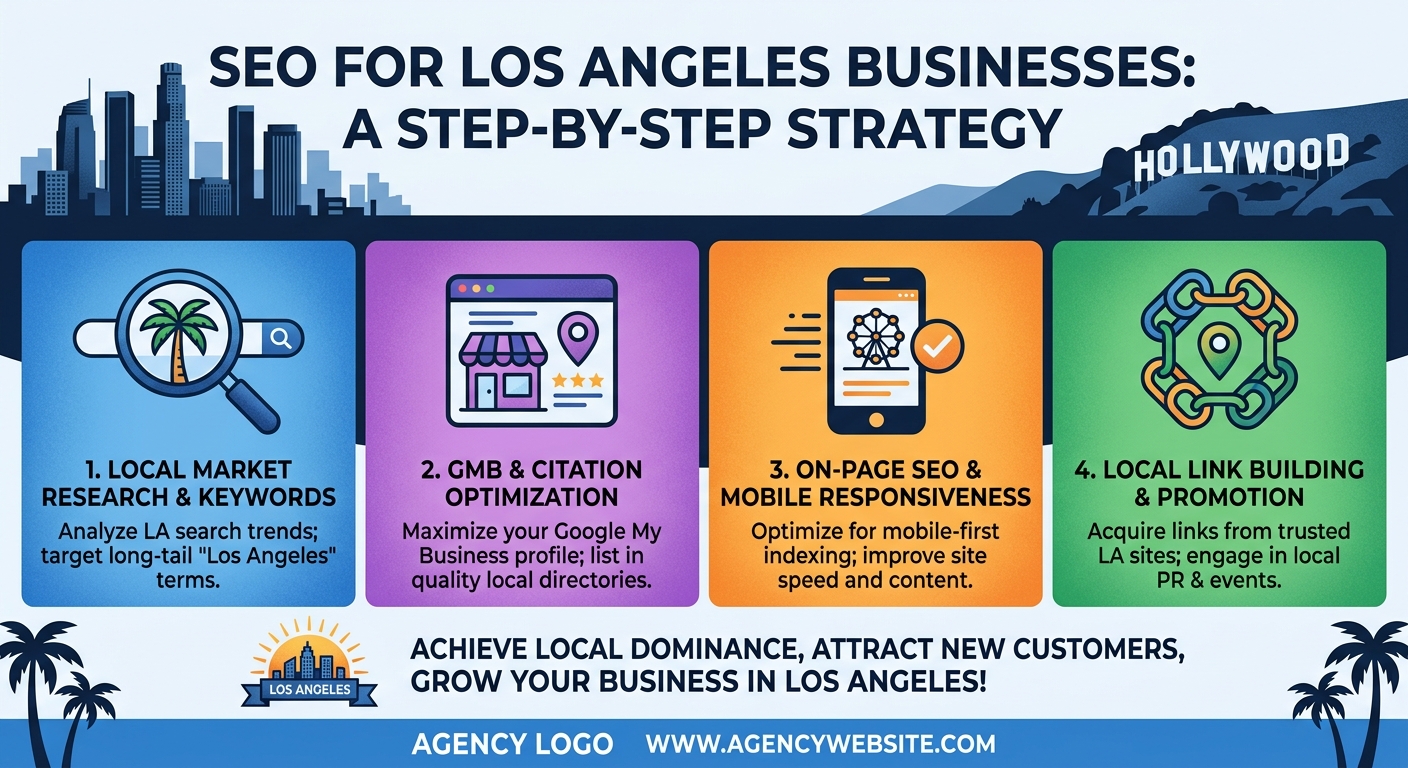
Local SEO Opportunities in Los Angeles
Los Angeles contains a wide range of industries, neighborhoods, and customer markets. Businesses competing in this area may need to distinguish themselves through specific service offerings, useful content, and a strong customer experience. Broad keywords can be highly competitive, so it may be useful to investigate more focused service and neighborhood terms when they reflect actual customer demand.
A local marketing agency might develop content for particular industries it serves, such as restaurants, professional services, or home improvement companies. A repair business could clarify the neighborhoods it serves and explain its availability, service process, and estimate policies. Specific, accurate information can help customers decide whether the business is suitable for their needs.
Businesses should avoid placing a long list of Los Angeles neighborhoods on every page without explaining their actual service coverage. If a company operates throughout the city, it can communicate that coverage naturally and support it with relevant information. Pages for individual areas should be created only when they offer genuine value beyond changing a location name.
Competing in San Diego and San Jose
San Diego and San Jose have different commercial environments, customer groups, and industry opportunities. Companies serving these markets should research the services customers are looking for instead of assuming that one city’s keyword strategy can be copied directly into the other. Local competition, service relevance, and business capability should guide decisions about which keywords and pages deserve priority.
A San Diego business might focus on service categories that align with its actual audience and operating model, while a company in San Jose could target professional or technology-related services if those are central to its offering. These are possible strategic directions rather than assumptions about every business in either city. Keyword research and direct customer feedback should determine the final content plan.
If a business serves both cities, it should develop separate pages only when each location has a legitimate service connection and enough useful information to justify the page. Relevant examples, service details, and customer questions can help distinguish the pages. Accurate coverage information is more important than pretending that the business has offices in both locations.
Reaching Customers in San Francisco and Oakland
Businesses operating in San Francisco and Oakland may serve overlapping audiences while addressing different local requirements. The most effective strategy depends on the type of business, its service area, and the specific needs of the customers it wants to reach. Companies should investigate how customers search for their services and which competitors currently satisfy those needs.
A professional service provider might create useful resources explaining its process, pricing factors, and areas of expertise for businesses in the communities it genuinely serves. A retail business could focus on accurate opening hours, product availability, directions, and clear contact information. These details help customers evaluate the business without requiring excessive repetition of city keywords.
For companies serving the wider Bay Area, geographic messaging should remain clear. Explain whether services are available in person, remotely, or through a combination of both. Customers should understand what to expect before making contact, especially when the service requires travel, an on-site visit, or a scheduled appointment.
Expanding Into Sacramento, Fresno, and Long Beach
Sacramento, Fresno, and Long Beach can represent useful markets for businesses whose services and operations align with these locations. Expansion should begin with research into relevant customer needs, competitors, and realistic service coverage. A company should prioritize a manageable set of opportunities instead of attempting to target every California city at the same time.
A business entering a new market can review the search results for its main services, identify the questions potential customers ask, and determine whether existing website content answers those questions. If there is a legitimate opportunity, it can develop a location page supported by accurate service information and relevant resources. Where the company has no established local presence, it should avoid suggesting that it operates a physical office in that city.
After publishing new location content, monitor relevant search impressions, website visits, enquiries, and customer feedback. These measurements can help determine whether the market is worth further investment. Expansion should be guided by evidence of customer demand and the business’s ability to deliver a reliable service.
Build a Strategy Around Real Service Areas
The ability to rank across multiple cities depends on several factors, including competition, relevance, distance, website quality, and the nature of the business. A company with a physical storefront may have different local search opportunities from a service-area business that travels to customers. A consultant providing remote services may also need to communicate its coverage differently from a business that relies on local walk-in traffic.
Begin by defining your primary market, secondary service areas, and any locations you may consider in the future. Create content for priority locations where you can provide a strong and accurate service, then evaluate performance before expanding further. This approach helps prevent wasted effort on pages that do not reflect actual business opportunities.
Local SEO should ultimately support real customer relationships rather than the appearance of geographic coverage. When a business explains its services honestly, provides helpful local information, and measures meaningful outcomes, it can develop a more sustainable strategy for growing across California.
Local SEO Strategies for Different Industries
Local SEO principles apply across many industries, but the details should reflect how customers discover, evaluate, and purchase each type of service. A restaurant may depend heavily on nearby searches, opening hours, menus, and customer photographs, while a professional consultant may need detailed service pages and evidence of expertise. Understanding these differences helps businesses choose the most relevant optimization activities.
Local SEO for Restaurants and Retail Stores
Restaurants and retail businesses should provide accurate operating hours, location details, contact information, and current product or menu information where available. Photographs can help customers understand the environment, products, or food on offer, while genuine customer reviews provide additional context about the experience. These details should be maintained regularly so that visitors do not encounter outdated information.
Their websites should make important information easy to find, including directions, reservations where available, product categories, and policies that customers commonly ask about. Retailers with ecommerce functionality can also improve product descriptions, category navigation, and local pickup information where applicable. The website and business profile should complement each other rather than contain conflicting information.
Local SEO for Professional Services
Law firms, accountants, consultants, and marketing agencies often need to demonstrate expertise, credibility, and a clear understanding of customer needs. Their websites should explain services, qualifications where relevant, working processes, and the types of clients they help. Useful educational content can address common questions while helping potential customers understand whether a provider is suitable for their situation.
Professional businesses should avoid exaggerated promises or unsupported claims about results. Genuine case studies, accurate credentials, transparent service descriptions, and appropriate testimonials can help establish trust. Local pages should reflect real service coverage and provide a clear route for requesting a consultation or learning more.
Local SEO for Home Service Providers
Plumbers, electricians, roofers, cleaners, and landscaping companies often depend on customers who need assistance within a particular service area. Their websites should clearly explain the services offered, coverage limitations, contact options, and relevant scheduling information. Customers may also want to know whether the company handles urgent requests, provides estimates, or specializes in particular types of projects.
Photographs of genuine completed work, clear service descriptions, and authentic customer feedback can help potential customers evaluate the provider. Businesses should ensure that telephone numbers work, enquiry forms are reliable, and mobile visitors can quickly understand the next step. Accurate service-area information is particularly important for companies that travel to customer locations rather than operate a public storefront.
Local SEO for Multi-Location Businesses
Businesses with several genuine locations need a structured approach to listing management and website organization. Each eligible location should have accurate business details, appropriate contact information, and a useful landing page when that page adds value for customers. Centralized management can help maintain consistency, while local teams can provide relevant information about individual branches.
Avoid copying the same content across every location page or treating a single office as though it were several separate locations. Each page should accurately represent the relevant location, services, and customer experience. Regular audits can help detect outdated information, duplicate listings, and inconsistent branding.
For multi-location companies, performance should be measured at both the individual location level and the overall business level. This makes it easier to identify locations that need additional support and understand which optimization activities are working. A consistent management process helps the business expand while maintaining reliable information for customers.
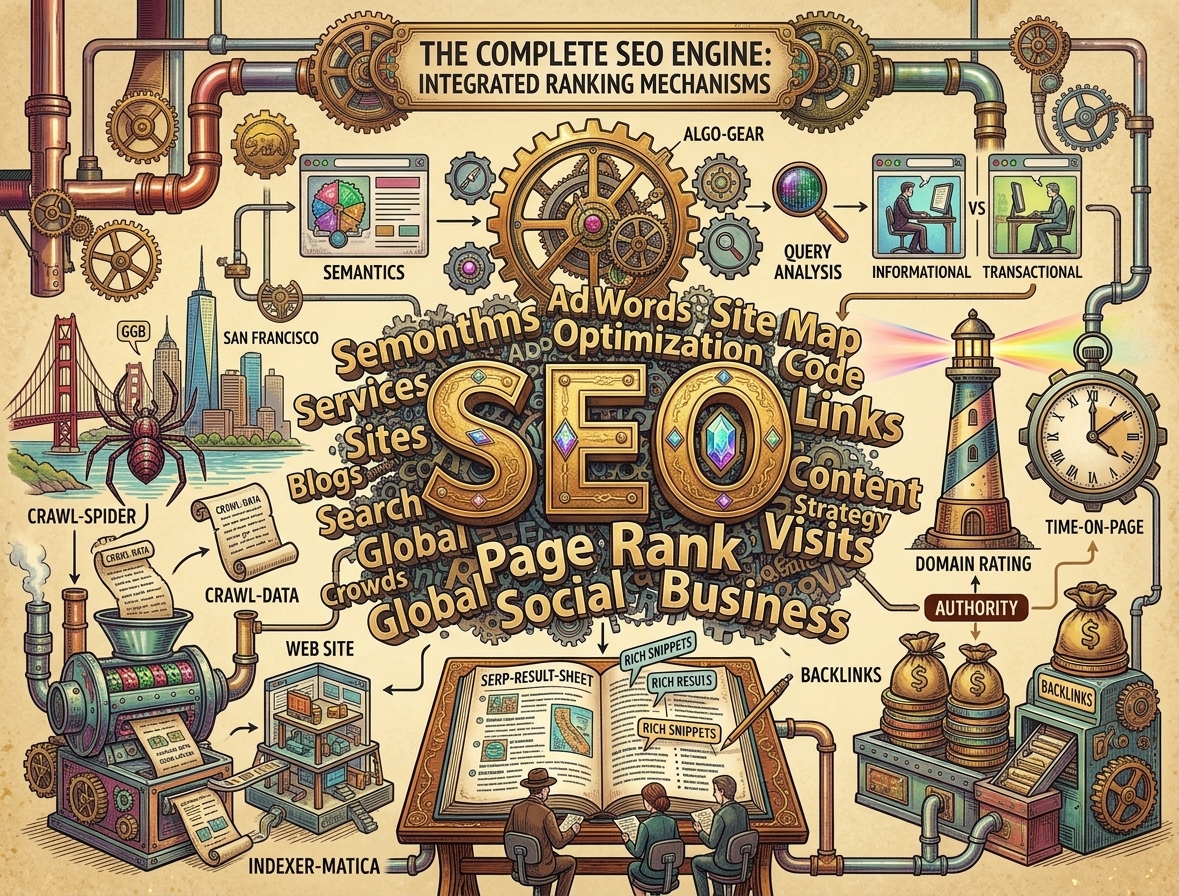
Local SEO in California: How to Rank in Your City and Beyond
Technical SEO for Local Businesses
Technical SEO helps search engines access, understand, and index a website while ensuring that visitors can use it without unnecessary difficulty. For California businesses, a technically sound website supports the content, local landing pages, and business information that form the foundation of a local SEO campaign. Even excellent content can struggle to perform effectively when important pages cannot be crawled, mobile layouts are difficult to use, or website performance creates a frustrating experience.
A technical SEO strategy should begin with the website’s overall structure, loading performance, mobile usability, security, and indexability. Businesses should identify technical problems that prevent important pages from being discovered or used properly before investing heavily in additional content. Regular monitoring helps keep the website reliable as new pages are published and services expand into new locations.
Improve Mobile Performance and Page Speed
Many customers use smartphones to find nearby businesses, check opening hours, compare service providers, and make telephone calls. A website that loads slowly or displays poorly on mobile devices can discourage these visitors from taking the next step. Mobile usability should therefore be a priority for businesses that depend on local enquiries and customer visits.
Start by testing important pages, including the homepage, service pages, and city-specific landing pages. Compress large images, remove unnecessary scripts, use efficient website hosting, and reduce elements that delay the display of important content. If the website runs on WordPress, review the theme, plugins, caching configuration, and image optimization settings to identify potential improvements.
Google’s Core Web Vitals provide useful measurements of loading performance, responsiveness, and visual stability. These measurements include Largest Contentful Paint, Interaction to Next Paint, and Cumulative Layout Shift. Improving them can support a better user experience, although passing the measurements alone does not guarantee higher local rankings.
Implement Local Business Structured Data
Structured data is a standardized format that helps search engines understand information presented on a webpage. Eligible local businesses can use appropriate LocalBusiness structured data to describe details such as their business name, address, telephone number, website, and opening hours where applicable. The information should accurately match the business’s real operations and the visible content on the page.
For example, a restaurant may provide structured information about its location, while a service provider may describe its business details and customer-facing contact information. Businesses should choose the most appropriate schema type for their operations rather than adding unrelated markup simply to include more properties. Where multiple locations exist, the implementation should represent each legitimate location accurately.
Structured data can help search engines interpret business information, but it does not guarantee a rich result or improved rankings. Validate the markup with suitable testing tools, correct errors, and review it whenever important business details change. Avoid marking up information that is false, misleading, or unavailable to users.
Check Indexing, Crawling, and Canonical URLs
Search engines need to discover and index the pages that a business wants to appear in organic results. Problems such as accidental noindex directives, blocked resources, broken internal links, and incorrect canonical tags can prevent important pages from performing as intended. A technical audit should examine these issues before a business creates more location pages.
Google Search Console can help identify indexed pages, indexing problems, search queries, and other website performance information. Review whether your important service pages and location pages are eligible for indexing and whether Google has selected an appropriate canonical URL. A canonical tag should identify the preferred version of substantially similar pages rather than being used as a substitute for creating unique, useful content.
Keep your XML sitemap updated with the important URLs you want search engines to discover. Remove unnecessary or redirected URLs from the sitemap where appropriate, and ensure that internal links point to the correct destination. Technical improvements should be prioritized according to their impact on customers, indexability, and the website’s ability to support its local SEO goals.
Measuring Local SEO Performance
Measuring performance helps business owners understand whether their local SEO activities are producing meaningful results. Rankings and website visits can provide useful information, but they should not be the only measures of success. A local SEO campaign should also be evaluated through qualified enquiries, telephone calls, bookings, sales, and other actions that contribute to business objectives.
California businesses may need different reporting methods depending on their industry and service model. A restaurant may prioritize reservation enquiries and direction requests, while an SEO consultant may focus on qualified leads and consultation bookings. Selecting relevant measurements from the beginning makes it easier to evaluate progress and allocate marketing resources effectively.
Monitor Google Business Profile Performance
Google Business Profile provides performance information for eligible profiles, although the available metrics can vary. Depending on the reporting features available, businesses may be able to review how customers discover the profile and how they interact with it. These insights can help identify changes in customer engagement and areas where profile information may need improvement.
Review profile data alongside practical business outcomes rather than assuming every interaction represents a new customer. A website click may not lead to an enquiry, and a telephone call may involve a question unrelated to purchasing a service. Where possible, combine profile measurements with call tracking, booking records, and customer relationship management data.
Keep a consistent record of important changes, such as updated business categories, new photographs, revised opening hours, and changes to service information. Comparing these activities with performance trends may help you understand how customers respond to improvements. However, avoid attributing every increase or decrease to a single edit because seasonality, competition, and other factors can also affect results.
Track Organic Traffic and Search Visibility
Google Search Console helps website owners examine impressions, clicks, click-through rates, and average search positions for their pages and queries. These measurements can reveal which location pages attract attention and which services may need more relevant content. Filtering reports by page or query can help distinguish broad informational traffic from visits related to high-intent local searches.
Google Analytics can provide additional information about website sessions, user engagement, traffic sources, and conversions when it is configured correctly. Businesses should establish appropriate conversion events for important actions, such as successful form submissions, appointment bookings, or other meaningful enquiries. Make sure that tracking reflects genuine actions and does not count repeated clicks or failed form attempts as completed leads.
Keyword tracking tools may also help monitor visibility for selected local searches. Since rankings can vary by location, device, and search context, treat tracking results as indicators rather than universal positions that every customer will see. Combining keyword data with Search Console, Analytics, and actual lead records provides a more balanced view of campaign performance.
Measure Leads, Conversions, and Return on Investment
Local SEO becomes more valuable when businesses can connect their marketing activities to customer outcomes. Record the number of qualified leads generated, the proportion that become customers, the revenue associated with those customers, and the costs involved in delivering the campaign. These measurements help determine whether the strategy is contributing to sustainable business growth.
For example, an SEO consultancy may attract visitors through a San Diego landing page and receive consultation requests through a contact form. By measuring the number of qualified enquiries and the number of resulting clients, the company can assess whether the page attracts the right audience. If traffic increases without generating enquiries, it may need to improve the page’s relevance, service explanation, or conversion process.
Use a regular reporting schedule and compare performance over meaningful periods. Local search data can fluctuate because of seasonal demand, changes in competition, website updates, and other external factors. A consistent reporting process makes it easier to distinguish temporary changes from longer-term trends and identify where improvements are needed.
Common Local SEO Mistakes to Avoid
Local SEO campaigns can waste time and resources when businesses focus on shortcuts instead of customer needs. Some mistakes may weaken the website’s quality, create inaccurate business information, or damage customer trust. Avoiding these problems helps establish a more reliable foundation for long-term search visibility.
Keyword Stuffing and Unnatural Location Mentions
Keyword stuffing occurs when a webpage repeats keywords excessively in an attempt to manipulate search rankings. For example, a business might repeat the phrase “best SEO expert in Los Angeles” in nearly every paragraph, even when the wording adds no useful information. This makes the content difficult to read and can create an unprofessional impression.
Use location terms when they naturally explain the service, customer audience, or geographic coverage. Focus on answering questions and describing the business clearly rather than forcing every possible keyword into the page. Search optimization should support the reader’s understanding, not interfere with it.
Creating Thin or Duplicate City Pages
Publishing nearly identical pages for dozens of California cities can create a poor experience for visitors. If each page contains the same generic text with only the city name changed, it offers little reason for a customer to choose one page over another. Such practices may also create doorway-page concerns when the pages are primarily designed to capture similar searches and funnel visitors to the same destination.
Before publishing a location page, determine what useful information it can provide that is relevant to customers in that area. Include accurate service coverage, meaningful examples where available, and information that supports the customer’s decision. If you cannot create a useful and distinct page, consider improving an existing regional service page instead.
Using Fake Reviews or Misleading Business Details
Fake reviews, fabricated testimonials, misleading addresses, and inaccurate business information can damage a company’s credibility. These practices may violate platform policies and can result in removed reviews, profile restrictions, or other consequences. They also create unrealistic expectations for customers who rely on online information when choosing a provider.
Represent the business honestly across every platform. Request genuine feedback, correct errors promptly, and follow the official processes for resolving inaccurate listings or reporting reviews that violate applicable policies. Trust is more sustainable when the information customers see reflects the real service experience.
Ignoring Website Experience and Customer Feedback
A website can attract local traffic but still perform poorly if visitors cannot find the information they need. Confusing navigation, broken forms, outdated contact details, slow loading, and unclear service descriptions can prevent potential customers from making enquiries. These issues should be treated as business problems as well as website optimization concerns.
Review the website regularly from a customer’s perspective. Test telephone links, enquiry forms, booking functions, and navigation on both desktop and mobile devices. Customer questions and complaints can also reveal missing information that should be addressed through improved page content or website design.
Expecting Immediate Rankings
Local SEO requires ongoing effort, and the time needed to see meaningful results varies between businesses. A new website in a competitive California market may need more time to establish relevance and authority than an established business with useful content and a strong online presence. No responsible SEO provider can guarantee a specific ranking position for every keyword.
Set realistic goals based on your current website performance, market competition, and available resources. Focus first on accurate business information, important technical issues, relevant pages, and customer experience. Review progress regularly and adjust the strategy as new data becomes available rather than abandoning the campaign because results are not immediate.
Creating a Practical Local SEO Action Plan
A clear action plan turns local SEO recommendations into manageable tasks. Businesses do not need to implement every tactic simultaneously, especially when time, staffing, and budgets are limited. Starting with the most important improvements helps create a solid foundation before expanding into more advanced activities.
The following 30-day plan provides a practical starting point for a California business that wants to improve its local search presence. The schedule is a planning framework, not a promise that rankings or leads will improve within 30 days.
| Period | Main priority | Key actions |
|---|---|---|
| Days 1 to 7 | Audit and research | Review the website, business profile, existing rankings, competitors, and local keywords |
| Days 8 to 14 | Fix essential issues | Correct business information, improve priority pages, check mobile usability, and address major technical errors |
| Days 15 to 21 | Develop local relevance | Improve city pages, create useful content, update relevant listings, and request genuine customer feedback |
| Days 22 to 30 | Measure and refine | Check indexing, review traffic and enquiries, assess content quality, and plan the next round of improvements |
Establish a Local SEO Baseline
Begin by recording the website’s current condition and performance. Identify the most important services, target locations, existing landing pages, business listings, and sources of customer enquiries. This information provides a baseline against which future progress can be measured.
Review your Google Business Profile, check important website pages in Search Console, and inspect mobile usability. List inaccurate business details, broken links, indexing problems, and pages that do not adequately explain the services offered. Prioritize issues that directly affect customer access, website quality, or search engine discovery.
Conduct keyword research for your main services and genuine service areas. Group the keywords according to intent and assign them to suitable pages. This initial preparation reduces duplication and helps ensure that future content supports clear business objectives.
Prioritize Improvements With the Greatest Business Value
Not every SEO task deserves equal attention. A broken enquiry form or an incorrect telephone number may have a more immediate business impact than publishing another blog post. Similarly, improving a key service page may be more valuable than creating several additional city pages without sufficient supporting information.
Create a prioritized list that considers business impact, urgency, effort, and available resources. Address essential technical problems and inaccurate business information first, then improve the pages that serve the most important customer needs. Add new content when it provides a clear benefit and can be maintained properly.
Review the priorities as the campaign develops. If one service page consistently attracts relevant enquiries, consider improving its supporting content and internal links. If another page receives irrelevant traffic, reassess the keyword targeting and content rather than simply trying to increase the number of visits.
Maintain and Expand Your Strategy Over Time
After the first month, continue reviewing business information, updating useful content, monitoring technical performance, and responding to customer feedback. Publish articles that address genuine questions and strengthen the relationship between informational resources and service pages. Continue building relevant local relationships and maintaining accurate citations where they support customer discovery.
For businesses expanding across California, introduce new target locations gradually. Confirm that each area represents a legitimate business opportunity and create useful content that reflects the company’s actual services. Monitor performance before committing substantial resources to additional locations.
Long-term success depends on consistent execution and informed adjustments. By combining relevant content, reliable business information, strong customer service, and meaningful performance measurements, businesses can develop a local SEO strategy that supports sustainable growth.
Why Choose DealMate for Local SEO in California
Choosing an SEO partner is an important decision for businesses that want to improve their local search visibility and attract more relevant customers. DealMate can position its local SEO services around understanding each business’s goals, identifying realistic opportunities, and developing a strategy that reflects its actual service areas. The objective should be to build a useful online presence rather than promise instant rankings or guaranteed results.
Customized Strategies for Your Target Cities
Every business has different customers, services, resources, and geographic priorities. A strategy for a professional service provider in San Francisco may need a different combination of landing pages and educational content from a strategy for a home service company serving Sacramento and nearby communities. DealMate can tailor its approach by examining these differences and prioritizing the locations most relevant to the business.
A customized strategy should begin with research into the website, target keywords, local competition, and customer needs. This assessment helps identify existing strengths and opportunities for improvement. It also creates a clear plan for deciding which pages to optimize, which content to develop, and which technical issues to address first.
A Comprehensive Approach to Local Search
Effective local SEO involves more than optimizing a business profile or adding city names to website content. Businesses need accurate listings, useful service pages, a reliable website experience, relevant local references, and a process for managing customer feedback. DealMate can structure its approach around these connected activities to help businesses build a consistent online presence.
Technical SEO and content optimization should support one another throughout the campaign. A well-structured website makes important information easier to discover, while helpful content answers customer questions and explains the services offered. Maintaining accurate business details and a professional reputation helps ensure that the information customers encounter remains consistent.
Transparent Reporting and Continuous Improvement
Businesses need to understand what their SEO investment is intended to achieve and how progress will be assessed. DealMate can support this process through clear goals, regular performance reviews, and reporting focused on relevant indicators such as organic visibility, website engagement, qualified enquiries, and conversions. Reporting should explain both improvements and areas where further work is needed.
No ethical SEO strategy can guarantee a particular ranking position or a fixed number of leads within a specified period. Results depend on competition, search demand, the starting condition of the website, business relevance, and other factors. A transparent approach helps businesses understand these limitations while making informed decisions about future investment.
For companies that want to rank in their city and expand into other California markets, DealMate can focus on a practical combination of research, optimization, content development, and ongoing measurement. The most important goal is to connect local visibility with real business outcomes while maintaining accurate information and a positive customer experience.
Frequently Asked Questions
What Is Local SEO, and Why Does It Matter in California?
Local SEO is the process of improving a business’s visibility for searches connected to a particular location. It helps customers discover relevant businesses through local search results, Google Maps, and organic website listings. In California, it can help companies connect with customers in competitive cities and surrounding communities. A strong strategy combines accurate business information, useful website content, customer reviews, and technical optimization.
How Long Does Local SEO Take to Show Results?
The time required to see meaningful results depends on the website’s current condition, competition, location, and optimization activities. Some improvements to business information or website usability can be implemented quickly, but stronger organic visibility often requires consistent work over a longer period. Businesses should track progress through relevant impressions, website visits, qualified enquiries, and conversions. No SEO provider can responsibly guarantee a specific ranking position or timeline for every business.
How Much Does Local SEO Cost in California?
Local SEO costs vary according to the business’s goals, target locations, competition, website condition, and the amount of work required. A small business with one location may need a different level of support from a company managing several branches across California. Services may include audits, keyword research, content development, profile optimization, technical improvements, and reporting. Businesses should compare proposals based on deliverables, transparency, expertise, and measurable objectives rather than choosing solely by price.
Can a Small Business Compete With Larger Companies?
Yes, a small business can pursue local search opportunities by focusing on relevant services, accurate business information, and the customers it can genuinely serve. It may benefit from targeting specific service categories and locations rather than competing for every broad keyword across California. Useful content, genuine customer reviews, and a well-maintained website can strengthen its overall online presence. However, rankings depend on several factors, so competing successfully requires research, consistency, and realistic expectations.
How Important Is a Google Business Profile?
A Google Business Profile is an important tool for eligible businesses that want to appear in Google Search and Google Maps. It helps customers access useful information such as business hours, contact details, services, photographs, and reviews. Keeping the profile accurate and complete supports customer discovery and reduces confusion. A profile alone does not guarantee high rankings, so it should be supported by a reliable website and broader local SEO activities.
Do I Need a Separate Page for Every California City?
No, businesses do not need a separate page for every city in California. Individual location pages are useful when they serve genuine customer needs and provide distinct, valuable information about the business’s services in that area. Publishing numerous nearly identical pages with only the city name changed can create a poor user experience and potential doorway-page concerns. Start with the locations that matter most and expand only when you can provide useful, accurate content.
How Do Customer Reviews Affect Local SEO?
Customer reviews help people evaluate a business’s reputation, service quality, and customer experience. Review-related signals can also contribute to local search prominence, although reviews do not guarantee a particular ranking position. Businesses should encourage honest feedback and respond professionally to both positive and negative comments. Buying fake reviews or manipulating customer feedback can damage trust and violate platform policies.
Can a Service-Area Business Rank Without a Storefront?
Eligible service-area businesses can maintain a Google Business Profile without displaying a public storefront when they meet Google’s applicable requirements. Such businesses should configure their profiles according to their actual operations and service coverage. They must not use virtual offices or misleading addresses to suggest that they operate from locations where they are not legitimately based. Website content should also describe the service area accurately and avoid implying that a physical office exists where it does not.
What Tools Help Track Local SEO Performance?
Google Search Console helps businesses review organic search impressions, clicks, queries, and indexing information. Google Analytics can measure website engagement and conversions when tracking is configured correctly, while Google Business Profile provides available performance information about customer interactions. Keyword research and rank-tracking tools can offer additional insights into search visibility and competitors. Combining these tools with actual enquiry and sales records provides a more useful picture of business performance.
Can Local SEO Help a Business Rank in Multiple Cities?
Local SEO can support visibility across multiple cities when the business genuinely serves those areas and provides relevant information for their customers. The strategy may include appropriate location pages, accurate business listings, useful service content, and relevant local relationships. Rankings can vary depending on the searcher’s location, competition, distance, and the type of search being performed. Businesses should expand gradually, measure the results, and avoid claiming physical locations or service coverage that they cannot substantiate.
Conclusion
Local SEO in California is an ongoing process that helps businesses connect with customers searching for relevant products and services in their communities. From Los Angeles and San Diego to San Jose, San Francisco, Sacramento, Fresno, and Long Beach, businesses can improve their online presence by understanding their target audiences and focusing on realistic service areas. The most effective strategy combines accurate business information, a well-optimized Google Business Profile, useful location pages, relevant keywords, and a website that provides a positive customer experience.
Building sustainable local visibility requires more than adding city names to webpages or creating business listings. Companies need to publish helpful content, maintain consistent citations, earn genuine reviews, develop credible local relationships, and resolve technical issues that interfere with website performance. Tracking meaningful outcomes such as qualified enquiries, bookings, and sales helps business owners understand which activities contribute to their goals and where additional improvements are necessary.
Whether you operate a small local business or manage several locations across California, a focused and consistent approach can help you develop a stronger foundation for long-term growth. By prioritizing customer needs, maintaining accurate information, and improving your strategy through reliable performance data, you can work toward better local visibility and more meaningful customer connections. With a practical plan and a commitment to continuous improvement, DealMate can help position your business to pursue relevant local search opportunities and build a more sustainable online presence.