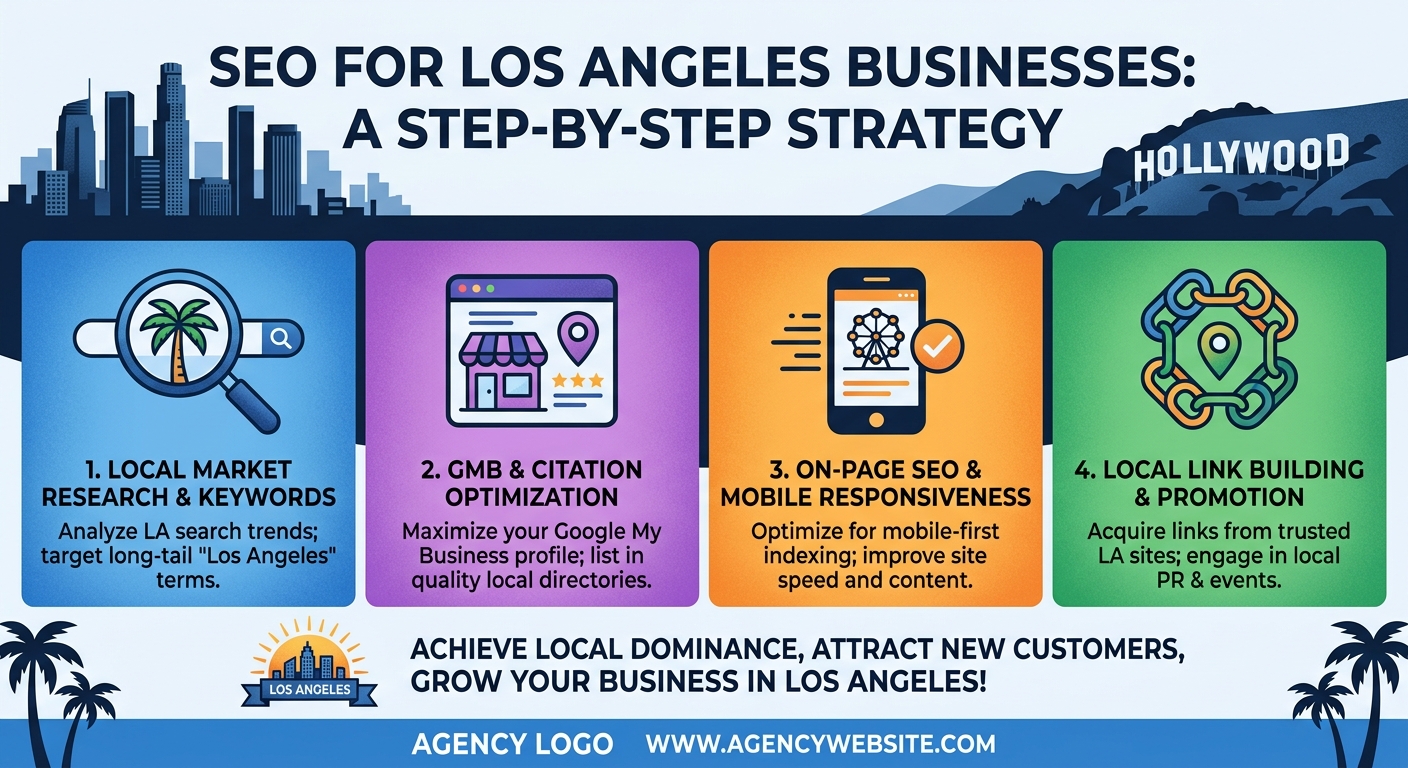
🌟 Introduction
Los Angeles is home to a diverse business community where companies compete to attract customers across numerous industries and neighborhoods. From restaurants and retail stores to professional services and technology startups, businesses need a strong online presence to reach their target audiences. Implementing an effective SEO strategy helps Los Angeles businesses improve search visibility, attract qualified visitors, and create opportunities for sustainable growth.
Search engine optimization involves improving website content, technical performance, and online credibility to help search engines understand and display relevant business information. When potential customers search for products or services in Los Angeles, a well-optimized website has a better opportunity to appear in relevant search results. This visibility can generate valuable enquiries, website visits, and customer relationships without depending entirely on paid advertising.
However, achieving meaningful SEO results requires more than adding keywords to website pages. Businesses must understand local customer behavior, analyze competitors, develop useful content, and continuously improve their digital experience. This step-by-step guide explains how Los Angeles businesses can build an SEO foundation that supports long-term online success.
📍 Understanding the Los Angeles SEO Landscape
Why Los Angeles Is a Competitive Digital Marketplace
Los Angeles has a diverse economy that includes entertainment, healthcare, hospitality, real estate, technology, and professional services. Businesses operating within these industries often compete for similar search terms, making organic visibility an important part of customer acquisition. A carefully developed SEO strategy helps companies communicate their unique value and reach customers searching for specific solutions.
Competition can also vary significantly between neighborhoods, industries, and customer groups throughout Los Angeles. A dental clinic in Beverly Hills may face different search competitors than a plumbing company serving Downtown Los Angeles or a restaurant operating in Silver Lake. Understanding these differences allows businesses to develop targeted strategies instead of relying on generic optimization techniques.
Understanding Local Customer Search Behavior
Customers frequently include locations, service requirements, and purchasing intentions when searching online for nearby businesses. Someone looking for an emergency electrician may use different search terms than a homeowner researching electrical installation services. Recognizing these differences helps businesses create website content that addresses specific customer needs.
Mobile searches are particularly important for businesses serving customers who need convenient access to nearby services. Searchers may compare business information, operating hours, reviews, and service availability before making contact. Providing accurate information and an accessible website experience can improve customer confidence and encourage meaningful interactions.
Local SEO vs Traditional SEO
Traditional SEO focuses on improving website visibility for relevant searches across broader geographic markets. Local SEO concentrates on connecting businesses with customers searching within particular cities, neighborhoods, or service areas. Both approaches can work together to strengthen online visibility and attract appropriate audiences.
For example, a Los Angeles accounting firm might target general informational searches about business tax preparation while also optimizing for location-specific accounting services. This combination helps the company reach customers during different stages of their decision-making process. Businesses should select their approach based on service availability, customer location, and commercial objectives.
🎯 Defining Clear SEO Goals for Your Business
Identifying Your Business Objectives
Every successful SEO strategy begins with clearly defined business goals that connect search visibility with measurable outcomes. Some Los Angeles businesses want to increase appointment bookings, while others prioritize online purchases, telephone enquiries, or service requests. Establishing these objectives helps determine which optimization activities deserve immediate attention.
Businesses should evaluate their existing website performance before setting realistic improvement targets. Reviewing organic traffic, customer enquiries, and important landing pages provides useful information about current opportunities. This initial assessment creates a foundation for measuring progress as SEO improvements are implemented.
Understanding Your Target Audience
Knowing your ideal customers helps create SEO content that matches their interests, expectations, and purchasing behavior. Businesses should consider customer locations, preferred services, common problems, and the information people need before making decisions. These insights support more relevant keyword selection and stronger website messaging.
For example, a family law firm serving Los Angeles may target customers researching legal consultations, while a fitness studio may focus on nearby residents comparing membership options. Each audience requires different content and search terms. Understanding these distinctions helps businesses attract visitors who are more likely to become customers.
Setting Measurable SEO Performance Indicators
SEO performance should be evaluated using meaningful indicators rather than relying exclusively on keyword rankings. Organic traffic, search impressions, qualified leads, engagement, and completed conversions can reveal how effectively a website supports business objectives. Tracking these metrics regularly helps identify successful activities and areas requiring improvement.
Businesses should establish realistic goals based on their existing visibility, resources, and competitive environment. A newer website may initially prioritize indexing and relevant search impressions, while an established business may focus on increasing qualified enquiries. Consistent measurement supports better decisions and prevents unnecessary changes based on short-term fluctuations.
🔎 Conducting Effective Keyword Research for Los Angeles
Finding Relevant Local Keywords
Keyword research identifies the words and phrases potential customers use when searching for products, services, and information. For Los Angeles businesses, combining service-related keywords with appropriate geographic terms can reveal valuable optimization opportunities. The objective is to identify relevant searches that connect directly with business offerings.
A roofing contractor might research phrases such as roof repair Los Angeles, residential roofing services, and emergency roof leak repair. These searches indicate different customer requirements and levels of urgency. Selecting suitable keywords helps businesses create pages that answer customer questions and support service enquiries.
Understanding Search Intent
Search intent describes the purpose behind a person’s online search and influences which content will best satisfy their needs. Understanding intent helps businesses avoid targeting keywords that attract visitors with little interest in their products or services. Effective keyword strategies consider whether customers want information, comparisons, specific businesses, or immediate purchasing opportunities.
Common search intent categories include:
🔍 Informational Intent: Customers researching topics, services, or solutions before making decisions.
📍 Navigational Intent: Searchers looking for a particular company, brand, or business location.
🛒 Commercial Intent: Potential customers comparing providers, pricing, features, or service quality.
💰 Transactional Intent: Customers prepared to book appointments, request quotations, or purchase services.
Businesses should match each keyword category with appropriate website content and conversion opportunities. Informational searches may benefit from educational blog articles, while transactional searches usually require clear service pages and accessible contact options. This approach improves content relevance and supports a more useful customer experience.
Short-Tail and Long-Tail Keywords
Short-tail keywords are broad search phrases that generally describe an industry, product, or service. Although these terms may attract substantial search interest, they can also involve strong competition and unclear customer intentions. Businesses should evaluate their relevance carefully before investing heavily in broad keyword targeting.
Long-tail keywords contain more specific details about customer needs, locations, or service requirements. A phrase such as affordable kitchen remodeling services in Los Angeles communicates a clearer requirement than the general keyword remodeling. Targeting relevant long-tail searches can help businesses reach more focused audiences and develop useful service content.
📊 Los Angeles SEO Keyword Strategy Table
The following table demonstrates how businesses can organize potential keywords according to search intent and recommended content strategies. These examples are illustrative and should be validated through keyword research before implementation.
| Keyword Example | Search Intent | Recommended SEO Strategy |
|---|---|---|
| SEO services Los Angeles | Commercial | Create a comprehensive service landing page |
| Local SEO consultant Los Angeles | Commercial | Highlight expertise and consultation services |
| Emergency plumber Los Angeles | Transactional | Develop an emergency service page |
| Best restaurants in Downtown LA | Commercial | Optimize relevant restaurant information |
| How to improve local SEO | Informational | Publish an educational blog article |
| Los Angeles website design agency | Commercial | Create a detailed agency service page |
| Affordable cleaning services Los Angeles | Transactional | Explain services and quotation options |
| Digital marketing for small businesses | Informational | Develop practical marketing guides |
Businesses should prioritize keywords according to relevance, customer intent, realistic competition, and potential business value. Search volume alone cannot determine whether a keyword will generate profitable enquiries or meaningful customer engagement. A balanced keyword strategy combines relevant commercial opportunities with informational content that builds trust.
🏆 Analyzing Local Competitors and SEO Opportunities
Identifying Your Main Search Competitors
SEO competitors are websites competing for visibility on search terms relevant to your business, even when those organizations are not direct commercial rivals. Identifying these competitors helps businesses understand which websites currently satisfy customer searches. This analysis provides useful direction for improving website structure, content quality, and search relevance.
Los Angeles businesses should examine competitors appearing for their most important services and geographic keywords. Reviewing several relevant search results can reveal common content formats, service descriptions, and customer information. These observations help identify opportunities to create more useful and differentiated website experiences.
Evaluating Competitor Website Content
Competitor content analysis involves examining how competing websites explain services, answer customer questions, and organize information. Businesses can evaluate page headings, service descriptions, frequently asked questions, internal links, and location-specific details. The objective is to identify useful improvements rather than reproduce another company’s content.
For example, a competitor may provide detailed pricing explanations while overlooking common questions about appointment availability or service coverage. Addressing these missing topics can make your website more helpful to prospective customers. Original explanations, accurate business details, and practical expertise help establish stronger content quality.
Discovering Keyword and Content Gaps
A keyword gap exists when relevant search topics receive attention from competing websites but are insufficiently covered by your own website. Identifying these gaps helps businesses discover opportunities to expand useful content and reach additional customers. Keyword research tools and manual competitor reviews can support this process.
Businesses should prioritize missing topics that directly relate to their services and audience needs. Creating unnecessary pages for unrelated keywords can weaken website focus and consume valuable resources. A carefully selected content plan supports stronger topical relevance and a clearer customer journey.
Building a Competitive SEO Improvement Plan
After completing competitor research, businesses should organize their findings into practical optimization priorities. Important improvements may include updating service pages, strengthening internal navigation, creating useful local content, and addressing technical website problems. Each activity should support a specific business objective.
SEO competitor analysis should remain an ongoing process because search results and customer expectations can change. Reviewing performance periodically allows businesses to recognize new opportunities and adjust their strategies appropriately. A consistent approach helps Los Angeles companies build stronger online visibility through relevant, customer-focused improvements.
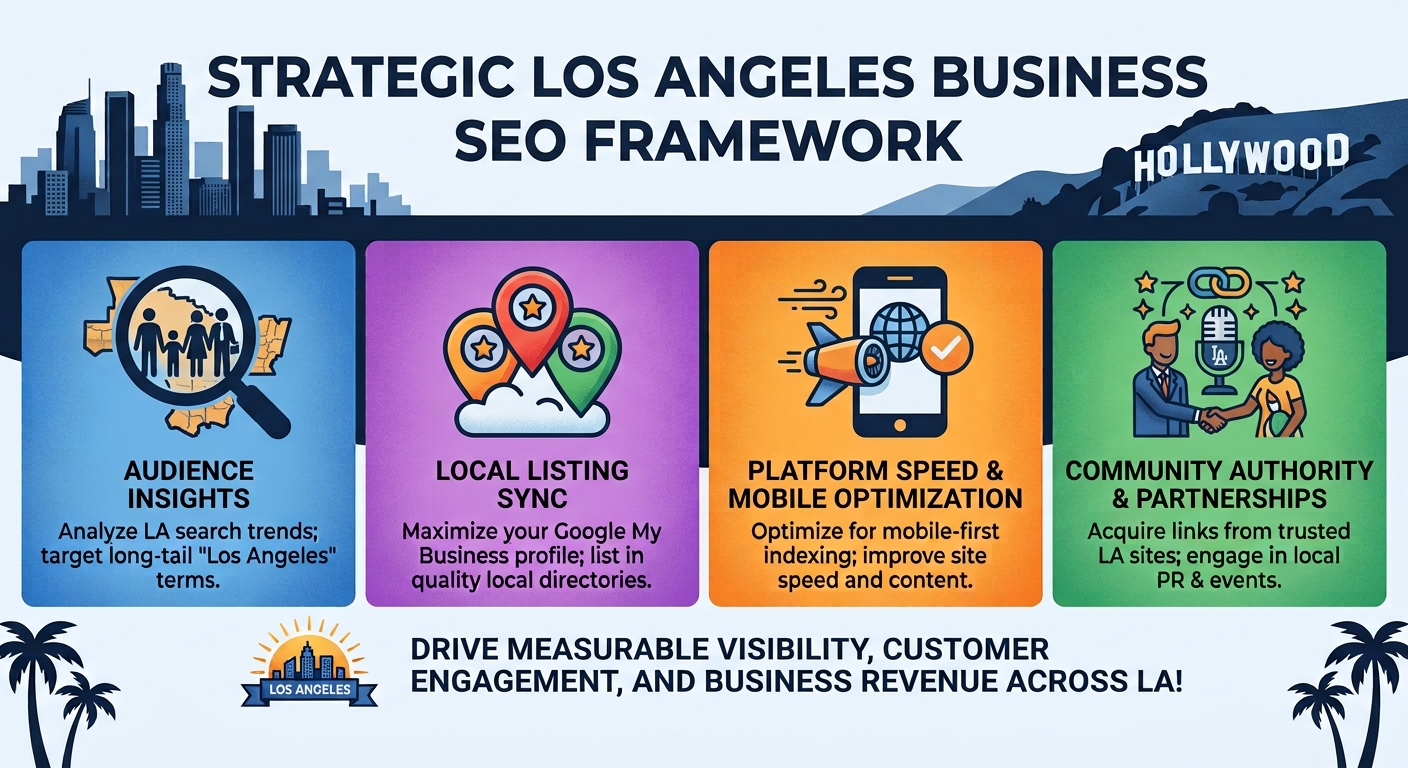
🏢 Optimizing Your Google Business Profile
Creating a Strong Local Business Presence
Google Business Profile is an essential tool for eligible Los Angeles businesses that want to improve their visibility in Google Search and Maps. A complete and accurate business profile helps potential customers discover important information, including services, operating hours, contact details, and business locations. Maintaining this information consistently can improve customer confidence and support local search visibility.
Businesses should verify their profiles and select categories that accurately represent their primary services. Adding relevant descriptions, authentic business photographs, and updated service information creates a more informative customer experience. Companies should also review their profiles regularly to ensure business information remains accurate.
Improving Business Information and Local Relevance
Accurate business information helps customers identify trustworthy service providers throughout Los Angeles. Business names, addresses, telephone numbers, and operating hours should remain consistent wherever the company maintains an official online presence. Service-area businesses should configure their profiles according to Google’s eligibility and address-display requirements.
Businesses can improve their profiles by completing several important activities:
📍 Select the most accurate primary business category.
📞 Maintain current telephone numbers and contact information.
🕒 Update business hours during holidays and special events.
📸 Upload authentic photographs of products, services, and business locations.
⭐ Encourage genuine customer reviews without offering prohibited incentives.
💬 Respond professionally to customer questions and feedback.
These improvements help customers understand what a business offers before visiting its website or contacting its representatives. A well-maintained profile also supports a consistent brand experience across local search results. Businesses should avoid misleading descriptions, unnecessary keyword repetition, and inaccurate location information.
📍 Strengthening Local SEO Across Los Angeles Neighborhoods
Targeting Relevant Neighborhood Searches
Los Angeles contains numerous neighborhoods with distinct customer communities, business environments, and service requirements. Companies serving multiple locations can benefit from developing content that accurately explains their geographic coverage. Neighborhood-specific optimization helps businesses connect their services with customers searching in relevant areas.
For example, a cleaning company might serve Hollywood, Silver Lake, Echo Park, and Downtown Los Angeles. Its website can explain service availability, booking procedures, and relevant customer requirements within these communities. Businesses should create separate neighborhood pages only when they provide genuinely useful and distinctive information.
Creating Effective Location Landing Pages
Location landing pages help customers understand whether a company provides services within their preferred geographic area. Each page should contain accurate service information, relevant local details, and clear opportunities to contact the business. Original content is particularly important when multiple pages target similar services across different neighborhoods.
Businesses should avoid creating numerous nearly identical pages that simply replace one location name with another. Instead, they can include genuine service examples, location-specific information, customer questions, and relevant business details. This approach creates more valuable pages while reducing the risk of thin or repetitive content.
Maintaining Consistent Local Business Information
Consistent business information across websites and relevant directories helps customers identify and contact the correct company. Incorrect telephone numbers, outdated addresses, or conflicting operating hours can create confusion and reduce customer confidence. Regularly reviewing important business listings supports a more reliable online presence.
Companies should prioritize reputable directories and platforms that are relevant to their industries or service locations. Listing information should reflect actual business operations rather than artificial locations created solely for search visibility. Accuracy and relevance are more valuable than maintaining a large number of low-quality directory listings.
💻 Improving On-Page SEO for Higher Search Visibility
Writing Effective SEO Titles and Meta Descriptions
SEO titles help communicate the primary subject of a webpage to search engines and potential visitors. A useful title should accurately describe the page while naturally incorporating an important keyword. Los Angeles businesses can include geographic terms when location is relevant to the service or customer search.
Meta descriptions provide brief summaries that may appear beneath webpage titles in search results. Although they are not a direct Google ranking factor, compelling descriptions can help customers understand why a page matches their needs. Businesses should write unique, informative descriptions that communicate relevant services and encourage appropriate visits.
Creating Clear Heading Structures
Well-organized headings make website content easier to understand for both visitors and search engines. The main page heading should clearly identify the primary topic, while supporting headings divide information into meaningful sections. This structure improves readability and helps customers locate answers without unnecessary searching.
Businesses should use headings naturally rather than inserting keywords into every section title. Service descriptions, customer benefits, pricing information, and frequently asked questions can each receive appropriate headings. Clear organization supports accessibility and creates a more professional website experience.
Optimizing Website URLs and Internal Links
Descriptive website URLs help visitors understand page topics before opening them. Businesses should generally use concise, readable URL structures that reflect the content of individual pages. Unnecessary parameters, confusing words, and excessive keyword repetition can make website navigation more difficult.
Internal linking connects related pages and helps visitors discover additional information about products, services, and business locations. A Los Angeles SEO service page might link to relevant technical SEO, local SEO, and website optimization resources. These connections support navigation while helping search engines discover and understand related content.
Improving Image Optimization and Accessibility
Images can improve website engagement by demonstrating services, products, facilities, and completed projects. However, unnecessarily large image files may slow page loading and negatively affect the browsing experience. Compressing images, selecting appropriate formats, and using responsive dimensions can improve website performance.
Descriptive alternative text helps communicate meaningful image information to people using screen readers. Businesses should describe relevant visual content accurately without forcing keywords into every image description. Decorative images may not require descriptive alternative text when they provide no additional information.
⚡ Enhancing Technical SEO and Website Performance
Improving Website Loading Speed
Website performance influences how comfortably customers interact with online business information. Slow-loading pages may frustrate visitors, particularly when they need immediate access to services or contact details. Improving loading speed creates a smoother browsing experience and supports overall website quality.
Los Angeles businesses can improve performance by optimizing images, reducing unnecessary scripts, and selecting reliable hosting services. Browser caching and efficient website code can also reduce loading delays. Performance improvements should be tested regularly because website updates and additional features may introduce new problems.
Creating a Mobile-Friendly Website Experience
Many customers use smartphones to search for nearby businesses, compare services, and request appointments. A mobile-friendly website should display readable content, accessible navigation, and functional contact options across different screen sizes. Responsive design helps businesses provide a consistent experience without maintaining separate desktop and mobile websites.
Mobile optimization should include appropriately sized buttons, readable text, and forms that are easy to complete. Important information should remain accessible without excessive scrolling or complicated navigation. Testing real customer journeys can reveal usability problems that automated performance tools may overlook.
Understanding Core Web Vitals
Core Web Vitals are performance metrics that evaluate important aspects of the user experience. They help website owners understand loading performance, responsiveness, and visual stability. Improving these measurements can support better usability and contribute to Google’s broader page experience considerations.
The three Core Web Vitals metrics include:
⚡ Largest Contentful Paint: Measures how quickly the largest visible content element loads.
🖱️ Interaction to Next Paint: Evaluates how responsive a page is to user interactions.
📱 Cumulative Layout Shift: Measures unexpected movement of visible page elements.
Businesses should use performance reports to identify problems affecting important website pages. Improvements may involve optimizing images, reducing JavaScript execution, or preventing unexpected layout changes. Technical decisions should prioritize real customer experiences rather than focusing exclusively on achieving perfect tool scores.
Improving Crawlability and Indexability
Search engines must discover and process website content before it can become eligible to appear in organic search results. Crawlability describes how easily search engine crawlers can access website pages, while indexability concerns whether those pages can be included in a search index. Technical configuration problems may prevent valuable content from receiving appropriate visibility.
Businesses should maintain useful XML sitemaps, review important indexing settings, and correct broken internal links. Canonical tags can help communicate preferred URLs when duplicate or substantially similar pages exist. Regular technical audits help identify problems before they affect important business content.
📝 Creating High-Quality Content for Los Angeles Customers
Developing Locally Relevant Blog Content
Content marketing helps businesses answer customer questions while demonstrating knowledge of their industries. Los Angeles companies can publish articles addressing local service requirements, common purchasing concerns, and practical customer challenges. Useful content creates additional opportunities to reach relevant search audiences.
For example, a landscaping company might explain garden maintenance considerations for Southern California’s climate. A real estate agency could publish educational guides about preparing properties for sale in different Los Angeles communities. These topics connect business expertise with information customers may actively seek.
Creating Helpful Service and Product Pages
Service pages should explain what a business offers, who benefits from its services, and how customers can take the next step. Clear descriptions help visitors evaluate whether a company meets their requirements. Important details may include service processes, availability, qualifications, and relevant customer expectations.
Businesses should prioritize accuracy and usefulness instead of producing lengthy content solely to include additional keywords. Original photographs, genuine examples, and straightforward explanations can make pages more informative. Strong service content should help customers make confident decisions without unnecessary confusion.
Building Topical Authority Through Connected Content
Topical authority develops when a website consistently provides useful information across related subjects within its area of expertise. Businesses can organize content around core services and supporting customer questions. This approach creates a connected information structure that improves navigation and strengthens subject relevance.
For example, a digital marketing agency might maintain a central SEO service page supported by articles about keyword research, technical optimization, and local search visibility. Relevant internal links can connect these resources and guide visitors toward suitable services. Content should remain accurate, original, and aligned with genuine customer needs.
🔗 Building Authority Through Local Link Building
Understanding the Value of Relevant Backlinks
Backlinks are links from external websites that direct visitors toward your business website. Relevant links from credible sources can help search engines discover content and evaluate its importance. However, backlink quality, context, and editorial relevance matter more than simply accumulating large quantities of links.
Los Angeles businesses should focus on earning links through useful information, authentic relationships, and meaningful community participation. Publishing original resources or sharing relevant expertise may encourage other websites to reference business content. Sustainable link building requires patience and should avoid manipulative practices.
Developing Local Business Relationships
Partnerships with relevant organizations can create opportunities for genuine online visibility and referral traffic. Businesses may participate in local events, collaborate on community projects, or contribute useful industry knowledge. These activities can strengthen brand recognition while creating legitimate opportunities for editorial mentions.
Companies should evaluate potential partnerships according to business relevance and audience value. Purchasing unrelated links or participating in artificial link exchanges can create unnecessary SEO risks. Authentic relationships generally provide broader benefits than links acquired exclusively to influence rankings.
📱 Connecting SEO With Social Media and Brand Visibility
Supporting Content Discovery Through Social Platforms
Social media platforms can help Los Angeles businesses introduce useful website content to broader audiences. Sharing educational articles, service updates, and customer-focused resources may encourage visitors to explore additional information. Although social engagement is not a direct substitute for search optimization, it can complement broader marketing activities.
Businesses should select platforms that match their customers’ interests and communication preferences. Consistent messaging helps audiences recognize the company across search results, websites, and social channels. Providing helpful information is generally more valuable than repeatedly publishing promotional messages.
Encouraging Customer Engagement and Trust
Customer engagement supports stronger relationships and helps businesses understand audience expectations. Responding to genuine enquiries, addressing feedback, and sharing accurate updates can improve communication. These interactions may also reveal useful topics for future website content.
Businesses should maintain consistent branding while adapting their communication style to each platform. Social media content can highlight useful resources, customer experiences, and relevant business developments. Combining SEO with thoughtful audience engagement creates a more connected digital marketing strategy.
📊 SEO Implementation Priority Table
The following table provides a practical framework for organizing important SEO improvements. Suggested timelines are planning estimates rather than guarantees of ranking improvements.
| SEO Activity | Primary Business Benefit | Priority | Suggested Timeline |
|---|---|---|---|
| Google Business Profile Optimization | Improve local business discovery | High | First 2 weeks |
| Local Keyword Research | Identify relevant customer searches | High | First 2 weeks |
| On-Page SEO Improvements | Strengthen page relevance and clarity | High | Weeks 2 to 4 |
| Technical SEO Audit | Identify indexing and performance issues | High | First month |
| Mobile Website Optimization | Improve smartphone usability | High | First month |
| Local Landing Page Development | Explain geographic service coverage | Medium | Months 2 to 3 |
| Content Marketing Strategy | Build useful search-focused resources | Medium | Ongoing |
| Local Link Building | Develop authority and referral opportunities | Medium | Ongoing |
| Social Media Content Promotion | Support awareness and content discovery | Medium | Ongoing |
| SEO Performance Monitoring | Measure results and guide improvements | High | Monthly |
Los Angeles businesses should adjust implementation priorities according to their website condition, available resources, and commercial objectives. Technical problems that prevent important pages from appearing in search results may require immediate attention before content expansion. A structured approach helps businesses allocate resources effectively while maintaining consistent progress toward long-term SEO goals.

📈 Tracking SEO Performance and Measuring Results
Monitoring Organic Website Traffic
Tracking organic traffic helps Los Angeles businesses understand how effectively their websites attract visitors from unpaid search results. By monitoring traffic patterns, businesses can identify successful pages, discover emerging opportunities, and recognize areas requiring improvement. Regular analysis provides valuable insights into customer behavior and the effectiveness of ongoing optimization activities.
Organic traffic should be evaluated alongside customer engagement and conversion performance rather than treated as an isolated success metric. A website attracting fewer but highly relevant visitors may generate more valuable enquiries than one receiving large amounts of unrelated traffic. Understanding this relationship helps businesses prioritize meaningful growth.
Measuring Keyword Rankings and Search Visibility
Keyword performance monitoring helps businesses evaluate their visibility for relevant services and location-based searches. Tracking search impressions, clicks, and average positions can reveal whether optimization efforts are improving website discoverability. These measurements should be reviewed over time because rankings naturally fluctuate.
Los Angeles businesses should monitor keywords associated with their primary services, important neighborhoods, and customer purchasing intentions. Search performance data can identify pages that receive impressions but attract relatively few clicks. Improving page titles, descriptions, and content relevance may help address these opportunities.
Tracking Leads and Customer Conversions
Conversions represent meaningful customer actions, including appointment bookings, telephone enquiries, completed purchases, and submitted contact forms. Measuring these activities helps businesses connect SEO investments with actual commercial outcomes. Conversion tracking also reveals which landing pages and search channels contribute most effectively to business objectives.
Companies should establish clear conversion events and verify that their tracking systems collect information accurately. Reviewing conversion trends alongside organic traffic provides a more complete understanding of website performance. This approach encourages businesses to prioritize customer value instead of focusing exclusively on search rankings.
🛠️ Using Essential SEO Tools for Better Decisions
Google Search Console for Search Performance
Google Search Console helps website owners understand how their pages perform in Google Search. Businesses can examine search queries, impressions, clicks, indexing information, and selected technical issues. These insights help identify optimization opportunities and monitor important website changes.
Google Analytics for Website Traffic Analysis
Google Analytics provides information about website visitors, traffic sources, engagement, and configured conversion events. Los Angeles businesses can use these insights to understand how organic visitors interact with important pages. Accurate configuration is essential for producing meaningful reports.
Google Keyword Planner for Keyword Research
Google Keyword Planner helps businesses explore relevant keyword ideas and examine estimated search demand. Its information can support keyword discovery and content planning, although advertising-oriented metrics should not be confused with organic ranking difficulty. Combining keyword data with customer research produces more informed decisions.
PageSpeed Insights for Website Performance
PageSpeed Insights evaluates website performance and provides recommendations for improving loading speed and user experience. Businesses can review Core Web Vitals information and identify potential technical improvements. Regular testing is particularly useful after website redesigns or major feature updates.
🚀 Developing a Long-Term SEO Growth Strategy
Maintaining Consistent Website Improvements
SEO requires ongoing maintenance because customer expectations, search competition, and website technology continually evolve. Los Angeles businesses should regularly review important pages, update outdated information, and resolve technical problems. Consistent improvements help maintain website usefulness and support sustainable organic visibility.
Expanding Valuable Website Content
Businesses can strengthen their websites by publishing original resources that address relevant customer questions. New content should complement existing service pages and provide information that visitors genuinely need. Updating useful articles can sometimes offer greater value than continuously publishing unnecessary new pages.
Improving Customer Experience and Conversion Opportunities
An effective SEO strategy should make it easier for customers to find information and contact a business. Clear navigation, accessible forms, transparent service descriptions, and visible contact options can reduce unnecessary obstacles. Improving these elements supports customer satisfaction and may increase qualified enquiries.
⚠️ Common SEO Mistakes Los Angeles Businesses Should Avoid
Targeting Irrelevant Keywords
Selecting keywords based entirely on search volume can attract visitors who have little interest in a company’s services. Businesses should prioritize terms that reflect actual customer requirements and commercial relevance. Search intent should guide keyword selection and content development.
Ignoring Local Search Optimization
Businesses that overlook local search opportunities may struggle to reach customers searching for nearby services. Maintaining accurate business information and developing relevant location content can strengthen local visibility. Google Business Profile optimization should remain an important priority for eligible companies.
Publishing Duplicate or Low-Quality Content
Publishing repetitive content across numerous pages can create a poor browsing experience and weaken the usefulness of a website. Los Angeles businesses should develop original descriptions, practical resources, and informative service pages. Quality and relevance should take priority over unnecessary content volume.
Expecting Immediate SEO Results
Organic search improvements often require time because search engines must discover, evaluate, and process website changes. Competitive industries may require sustained optimization before meaningful improvements become visible. Businesses should establish realistic expectations and measure progress through consistent performance analysis.
📅 Creating a Practical SEO Action Plan
A structured action plan helps Los Angeles businesses organize optimization activities and monitor progress. The following framework provides a practical starting point for improving website visibility and customer engagement. Actual priorities should reflect the condition of each website and its competitive environment.
| Implementation Period | Recommended SEO Activities | Primary Objective |
|---|---|---|
| First Month | Website audit, keyword research, technical fixes | Establish SEO foundations |
| Second Month | On-page optimization and local SEO improvements | Improve relevance and local visibility |
| Third Month | Content development and internal linking | Strengthen useful website resources |
| Fourth Month | Local outreach and content promotion | Build awareness and authority |
| Fifth Month | Conversion improvements and content updates | Improve customer engagement |
| Sixth Month | Performance evaluation and strategy refinement | Identify sustainable growth opportunities |
Businesses should review this action plan regularly and adjust activities according to measurable results. Some improvements may produce early benefits, while competitive keywords can require considerably longer periods of sustained effort. Long-term success depends on useful content, reliable technical performance, and consistent customer-focused optimization.
💼 Why Choose DealMate for SEO Services in Los Angeles?
Customized SEO Strategies for Business Growth
DealMate focuses on developing SEO strategies that align with individual business objectives, target audiences, and competitive environments. Rather than applying identical solutions to every website, a customized approach considers industry requirements and local customer search behavior. This helps businesses prioritize optimization activities that support meaningful commercial opportunities.
Comprehensive Keyword Research and Competitor Analysis
Effective SEO begins with understanding what customers search for and how competing websites address those requirements. DealMate emphasizes relevant keyword selection, competitor evaluation, and content opportunity identification. These activities provide a foundation for developing focused optimization strategies.
Professional On-Page and Technical SEO Optimization
Website structure, content relevance, and technical performance are essential components of effective search optimization. DealMate’s SEO approach prioritizes clear page organization, mobile usability, internal linking, and technical improvements. These elements help businesses create accessible websites that serve both visitors and search engines.
Local SEO Solutions for Los Angeles Businesses
Local search optimization helps businesses connect with customers searching within their geographic service areas. DealMate focuses on relevant location keywords, accurate business information, and useful local content. This approach supports businesses seeking stronger visibility across Los Angeles communities.
Transparent Performance Tracking and Continuous Improvement
SEO strategies should be evaluated through measurable performance indicators and practical business outcomes. DealMate emphasizes monitoring organic visibility, website engagement, and relevant conversion opportunities. Regular analysis supports informed improvements and helps businesses maintain a long-term perspective.
❓ Frequently Asked Questions About SEO for Los Angeles Businesses
What is SEO, and why is it important for Los Angeles businesses?
SEO is the process of improving website visibility in unpaid search engine results. It helps Los Angeles businesses reach potential customers searching for relevant products and services. Effective optimization combines useful content, technical improvements, and local search strategies. These activities can increase qualified website traffic and create opportunities for sustainable business growth.
How long does SEO take to show results in Los Angeles?
SEO results depend on website condition, industry competition, keyword difficulty, and optimization quality. Some technical improvements may produce noticeable changes within weeks. Competitive search terms often require several months or longer to achieve meaningful progress. Consistent optimization and performance monitoring are important for maintaining long-term improvements.
How much does SEO cost for a small business in Los Angeles?
SEO costs vary according to business objectives, website size, competition, and required services. A small local business may need a different investment than a company targeting multiple competitive markets. Common services include keyword research, technical audits, content development, and local optimization. Businesses should evaluate pricing according to service quality, realistic deliverables, and expected commercial value.
What is the difference between local SEO and traditional SEO?
Local SEO focuses on improving visibility for searches connected to specific geographic areas. Traditional SEO can target broader audiences without emphasizing a particular business location. Local optimization commonly includes Google Business Profile management, relevant location pages, and accurate business information. Combining both approaches can help Los Angeles businesses reach nearby customers and broader search audiences.
How can my business rank higher on Google Maps in Los Angeles?
Start by maintaining an accurate and eligible Google Business Profile. Select appropriate categories, provide complete business information, and keep operating hours updated. Encourage genuine customer reviews and respond professionally to feedback. Local rankings also depend on relevance, distance, and prominence, so no optimization strategy can guarantee a particular position.
Which keywords should Los Angeles businesses target?
Businesses should prioritize keywords that accurately describe their services and match customer search intentions. Relevant geographic phrases can help attract customers looking for services in Los Angeles. Long-tail keywords may provide opportunities to reach audiences with more specific requirements. Keyword selection should consider relevance, competition, search demand, and potential business value.
Does my Los Angeles business need a mobile-friendly website for SEO?
A mobile-friendly website is important because customers frequently search for businesses using smartphones. Responsive design helps visitors access information across different screen sizes. Readable content, accessible navigation, and functional contact forms improve the browsing experience. Mobile usability also supports effective website optimization and customer engagement.
How often should businesses update their SEO strategy?
Businesses should monitor important SEO performance indicators regularly and review their strategies periodically. Monthly evaluations can help identify traffic changes, technical problems, and emerging keyword opportunities. Significant website updates or changes in customer behavior may require additional adjustments. A consistent improvement schedule supports better decision-making and long-term search visibility.
Can small businesses compete with larger companies through SEO?
Small businesses can compete by targeting relevant customer needs and specific local search opportunities. Larger companies may have stronger resources, but smaller organizations can develop focused content and personalized customer experiences. Accurate local information and useful service pages can help smaller businesses differentiate themselves. Sustainable results require consistent optimization rather than attempting to compete for every popular keyword.
Why should I hire an SEO professional for my Los Angeles business?
An SEO professional can help identify technical issues, keyword opportunities, and content improvements. Professional guidance may also reduce time spent on ineffective optimization activities. Businesses can benefit from structured strategies, performance analysis, and ongoing website recommendations. Choosing a knowledgeable provider should involve evaluating relevant experience, transparent communication, and realistic expectations.
🎯 Conclusion
SEO for Los Angeles businesses requires a strategic combination of keyword research, local optimization, technical performance, and valuable website content. Companies that understand customer search behavior and maintain accurate online information can create stronger opportunities to reach relevant audiences. A well-organized SEO strategy also supports improved website usability, customer confidence, and long-term digital growth.
Success in competitive Los Angeles markets depends on consistent improvements rather than temporary optimization techniques. Businesses should monitor search performance, update important content, and adapt their strategies as customer needs evolve. Prioritizing useful information and measurable business outcomes helps transform organic visibility into meaningful customer relationships.
DealMate aims to support Los Angeles businesses through practical SEO strategies focused on relevant search visibility and sustainable improvement. Whether a company is developing its first website or improving an established online presence, a structured approach can provide valuable direction. Investing in effective SEO today can help create stronger foundations for future business opportunities.