Introduction
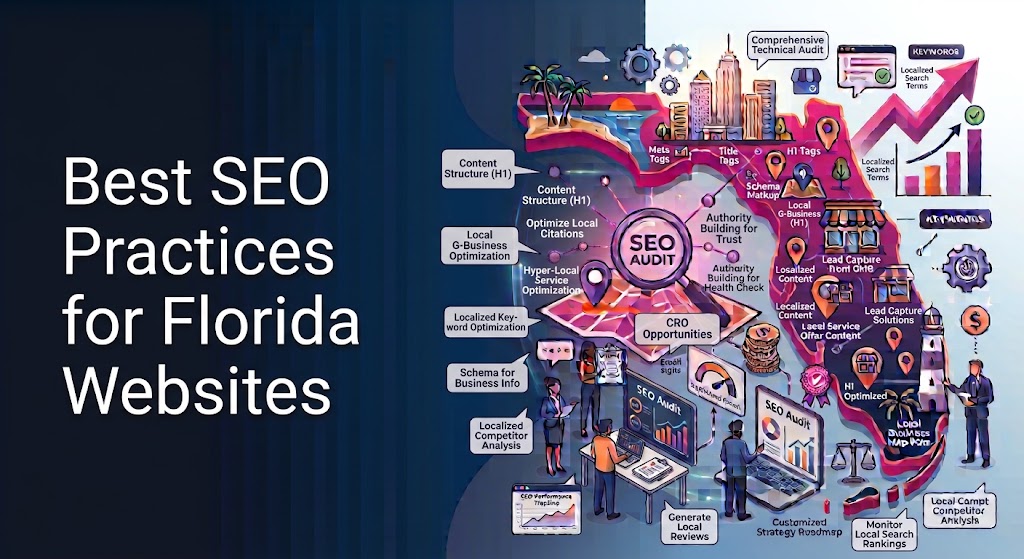
🌴 Florida has a diverse and competitive online marketplace where businesses need a strong digital presence to attract customers and build lasting relationships. From tourism companies in Orlando and real estate agencies in Miami to healthcare providers in Tampa and home service businesses in Jacksonville, organizations across the state rely on their websites to generate inquiries, promote services, and increase sales. Implementing the best SEO practices for Florida websites helps businesses improve search visibility, connect with relevant audiences, and compete more effectively in their industries.
Search engine optimization involves improving a website’s content, technical performance, structure, and reputation so that search engines can understand its pages and present them to relevant users. A successful SEO strategy goes beyond inserting keywords into headings or publishing occasional blog posts. It requires a clear understanding of customer needs, a technically accessible website, useful information, relevant local signals, and continuous performance measurement.
📍 Florida businesses also need to consider how geography and customer behavior influence online searches. Someone looking for a vacation rental in Kissimmee may prioritize amenities and booking availability, while a homeowner searching for roof repair in Fort Lauderdale may need immediate assistance from a nearby contractor. Understanding these differences allows businesses to create relevant pages and content that match the specific needs of their audiences.
Whether you operate a small business, an online store, a professional service company, or a growing organization serving multiple Florida cities, SEO can support your long-term marketing objectives. This guide explores practical SEO practices for improving website quality, attracting relevant organic traffic, strengthening local visibility, and converting website visitors into potential customers. By applying these methods consistently, you can build a more effective website that serves both search engines and the people who use it.
Understanding SEO for Florida Websites
🔎 Search engine optimization helps search engines discover, understand, and evaluate website content so that relevant pages can appear in organic search results. For Florida websites, effective SEO requires balancing broad search visibility with the specific needs of local customers and regional markets. Your strategy should reflect your business goals, the services you provide, the locations you serve, and the questions your customers ask before making decisions.
Google uses numerous signals to determine which pages are appropriate for a particular search. These include the relevance and usefulness of the content, the accessibility of the website, the context of the query, and signals associated with the website’s reputation. No single technique guarantees a particular position, so businesses should focus on improving the overall quality and usefulness of their online presence.
Understanding the Main Types of SEO
SEO includes several connected disciplines, each addressing a different aspect of website performance. Understanding these areas helps business owners identify where improvements are needed and develop a balanced optimization plan. Although the priorities may vary by industry, most Florida websites benefit from attention to on-page content, technical accessibility, local relevance, and credible external recognition.
- On-page SEO: Improves page titles, headings, written content, internal links, image descriptions, and other elements that communicate a page’s subject.
- Technical SEO: Helps search engines crawl and index important pages while improving website performance, security, and accessibility.
- Local SEO: Helps eligible businesses become more visible for geographically relevant searches through accurate business information and local relevance.
- Off-page SEO: Builds credibility through relevant backlinks, genuine business mentions, and legitimate industry relationships.
- Content SEO: Focuses on creating useful pages and resources that answer customer questions and satisfy search intent.
- User experience optimization: Makes it easier for visitors to navigate the website, understand the information, and complete meaningful actions.
These disciplines work best when they support a shared strategy rather than operate independently. For example, publishing an excellent article will not deliver its full potential if the page is inaccessible to search engines or difficult to read on mobile devices. Similarly, a technically sound website may struggle to attract qualified traffic if its content does not match the needs of its intended audience.
Why Florida Websites Need a Targeted SEO Approach
Florida’s business environment includes tourism, hospitality, construction, healthcare, professional services, retail, education, and many other industries. Each sector attracts customers with different search habits and decision-making processes. A targeted strategy allows businesses to focus on the queries, services, and locations most relevant to their customers instead of competing for every possible keyword.
For example, a Miami property management company may need detailed pages explaining its rental management services, while an Orlando attraction may benefit from content about visitor experiences, opening hours, and booking options. A Tampa accounting firm may prioritize service descriptions, professional qualifications, and educational resources for local businesses. These differences demonstrate why an effective SEO campaign should be based on business objectives and customer intent.
Regional conditions can also influence content opportunities. Florida businesses may need to address seasonal tourism, hurricane preparation, high humidity, property maintenance, and other topics relevant to their customers. Such subjects should be included when they genuinely connect with the company’s expertise and services, rather than being used as unrelated keywords to attract traffic.
Understanding Organic Search and Local Search
Organic search results generally display website pages that Google considers relevant to a user’s query. Local search results may also feature a map and business listings, especially when someone searches for a nearby service or includes a location in the query. Businesses that rely on local customers should develop a strategy that supports both website visibility and eligible business profile visibility.
Organic SEO commonly emphasizes content relevance, website structure, technical performance, and credible backlinks. Local SEO also involves factors such as business profile accuracy, relevance to the search, geographic proximity, and business prominence. These approaches overlap, but optimizing one does not automatically guarantee strong performance in the other.
| SEO Area | Main Purpose | Recommended Practice |
|---|---|---|
| On-page SEO | Improve page relevance | Write descriptive titles, headings, and useful content |
| Technical SEO | Support crawling and indexing | Maintain accessible pages, secure connections, and working redirects |
| Local SEO | Improve local discovery | Keep eligible business information accurate and complete |
| Content optimization | Answer customer questions | Publish useful guides, service pages, and relevant articles |
| Link building | Develop website credibility | Earn relevant links through legitimate relationships and valuable resources |
| User experience | Help visitors complete tasks | Improve navigation, readability, mobile usability, and contact options |
Use these areas as a starting framework for evaluating your website. The most effective priorities depend on your current performance, available resources, competitive environment, and the needs of your target audience.
Conducting Keyword Research for Florida Audiences
🔍 Keyword research is the process of identifying the words and phrases people use when searching for products, services, information, and local businesses. It helps you determine which topics deserve dedicated pages and how your website should address customer needs. For Florida businesses, keyword research should account for service relevance, geographic intent, competition, and the purpose behind each search.
A common mistake is choosing keywords solely because they appear popular. High search volume does not necessarily translate into qualified leads or sales if the visitors are looking for something your business does not provide. A more effective approach prioritizes relevant searches that connect your website with people who are likely to benefit from your products, services, or expertise.
Identify Primary and Secondary Keywords
Start by listing your main services, products, customer problems, and areas of specialization. A Florida plumbing business, for example, might offer drain cleaning, leak detection, water heater installation, pipe repairs, and emergency plumbing services. Each offering can attract a different group of searches, making it important to identify the terms that accurately represent the business.
Primary keywords describe the main subject of a page, while secondary keywords cover related terms and supporting questions. A page about drain cleaning in Tampa could naturally discuss clogged drains, professional drain clearing, common blockage causes, and the service process. These related phrases help create comprehensive content without repeatedly forcing the same keyword into every paragraph.
Consider these examples of potential keyword targets for Florida businesses.
| Industry | Primary Keyword Example | Related Keyword Opportunities |
|---|---|---|
| Tourism | Orlando vacation packages | Family attractions, holiday accommodation, visitor activities |
| Real estate | Miami real estate agent | Home buying services, property listings, seller representation |
| Home services | AC repair in Tampa | Air conditioning maintenance, cooling system troubleshooting |
| Healthcare | Dentist in Jacksonville | Dental examinations, preventive care, family dentistry |
| Legal services | Personal injury lawyer in Fort Lauderdale | Accident claims, legal consultations, injury representation |
| Digital marketing | SEO agency in Florida | Local SEO services, technical website audits, content optimization |
These examples are illustrative rather than verified search-volume or ranking estimates. Evaluate the actual search demand, competition, commercial relevance, and customer intent before committing to a keyword strategy. Select phrases that accurately describe your business and lead to content capable of meeting the searcher’s expectations.
Target Location-Based Keywords
Geographic modifiers help businesses identify searches associated with specific Florida cities, regions, and neighborhoods. Relevant locations may include Miami, Orlando, Tampa, Jacksonville, Sarasota, Naples, Fort Myers, Gainesville, and other areas where the business genuinely operates. Including location information where appropriate can help clarify which customers a page is intended to serve.
A phrase such as “landscaping services in Sarasota” expresses a more specific need than the general term “landscaping.” Similarly, “commercial cleaning company in Tampa” communicates both a service type and a geographic preference. These targeted phrases can help businesses attract more relevant visitors, although actual search volume and competition will vary.
Use geographic terms naturally in page titles, headings, service descriptions, and other relevant content. Avoid inserting a long list of city names into every page because this can make the website difficult to read and reduce the usefulness of its information. Each location reference should help customers understand your coverage or the relevance of the content.
Research Search Intent
Search intent refers to the purpose behind a search query, and understanding it helps you choose the correct content format. Someone searching for “how to maintain an air conditioner in Florida” may want practical guidance, while someone searching for “AC repair company near me” may be ready to contact a provider. Pages that align with the searcher’s needs are more likely to provide a satisfying experience.
Common search intents include informational, commercial, transactional, and navigational queries. Informational searches seek answers, commercial searches compare options, transactional searches indicate readiness to take action, and navigational searches aim to find a specific business or website. A well-organized website can address multiple relevant intents through educational articles, service pages, comparison guides, and clear contact information.
Before creating a page, review the types of results that appear for the target query and consider what users expect to find. If the query calls for a detailed guide, a short promotional paragraph may not be sufficient. If the search indicates an immediate service need, a clear service page with contact options may be more appropriate.
Use Keyword Research Tools
Keyword research tools can help you examine search demand, discover related queries, compare keyword difficulty, and identify emerging opportunities. Google Search Console is useful for understanding which searches already generate impressions and clicks for your website. Other keyword platforms and search suggestions can help you expand your research and organize potential topics.
Create a keyword map that assigns each important topic to an appropriate page. Record the primary keyword, supporting terms, search intent, target audience, and intended conversion action. This structure helps prevent unnecessary duplication and makes it easier to identify services or questions that your current website does not adequately cover.
Review your keyword plan periodically as your services, customer behavior, and competitors change. Florida businesses may also need to consider seasonal patterns, especially in tourism, hospitality, outdoor recreation, and weather-related services. Planning relevant content ahead of anticipated demand can help your website provide useful information when customers begin researching their options.
Optimizing On-Page SEO Elements
📝 On-page SEO improves the elements of individual website pages so that search engines and visitors can understand their subjects more easily. These elements include title tags, meta descriptions, headings, written content, images, URLs, and internal links. For Florida websites, effective on-page optimization should communicate what the business offers and why the information is relevant to its intended audience.
Write Descriptive and Unique Title Tags
Title tags help search engines interpret the subject of a page and often provide the clickable headline shown in search results. Each important page should have a distinctive title that accurately reflects its content. When relevant, include the service, topic, or Florida location without repeating keywords unnaturally.
For example, a title such as “Website Design Services in Tampa | Business Websites” is more informative than a generic title such as “Our Services.” A blog article should also have a title that clearly describes its subject and matches the information presented in the article. Google may generate a different search result title when it determines that another heading or page text is more appropriate.
Create Compelling Meta Descriptions
Meta descriptions summarize the content of a page and may appear beneath its title in search results. They are not a direct Google ranking factor, but a clear and relevant description can help searchers decide whether a result meets their needs. Write each description to communicate the page’s main value without making claims the content cannot support.
A Florida home improvement company might describe its services, explain the types of projects it handles, and invite visitors to request an estimate. An informational article could instead summarize the questions it answers and the practical guidance it provides. Avoid repetitive keyword lists, vague promotional statements, and misleading promises that create the wrong expectations.
Structure Headings for Readability
Headings help organize information into meaningful sections and make long pages easier to navigate. Use a clear main heading to identify the page’s central topic, then arrange supporting sections in a logical hierarchy. Descriptive headings allow readers to locate relevant information quickly and help communicate the relationships between different sections.
For example, a page about Florida website optimization might contain sections about keyword research, technical performance, mobile usability, and local SEO. Each section should explain its subject rather than repeat a variation of the same keyword. Maintain a logical heading structure and avoid using headings simply to change the appearance or size of text.
Optimize URLs and Internal Links
Clear URLs help users and search engines understand what a page covers. Use concise, descriptive addresses that reflect the page’s subject and avoid unnecessary strings of parameters where simpler structures are practical. If you change an established URL, implement an appropriate redirect and review internal links so visitors can still reach the correct page.
Internal links connect related pages on your website and help visitors discover additional information. A blog article explaining website speed improvements could link to a relevant technical SEO service page, while a local service page might link to an article answering common customer questions. Use natural anchor text that describes the destination and avoid adding links where they do not help the reader.
Improve Content Relevance and Clarity
On-page optimization should make your content more useful, not merely more keyword-heavy. Explain services accurately, answer important customer questions, and include relevant details that help visitors make informed decisions. Where appropriate, use original examples, practical instructions, comparisons, and clear explanations of the processes involved.
Review each important page to determine whether it fully addresses its intended topic and provides an appropriate next step for the visitor. Remove unnecessary repetition and replace vague claims with specific, supportable information. A page that communicates clearly and satisfies customer needs provides a stronger foundation for long-term SEO performance.
Creating High-Quality and Helpful Website Content
📝 High-quality content is one of the most important foundations of a successful SEO strategy because it helps visitors understand your services, solve problems, and make informed decisions. Florida websites should provide accurate, relevant information that reflects the needs of their target audiences rather than publishing articles simply to increase keyword counts. Useful content can strengthen your website’s credibility, attract relevant organic traffic, and encourage visitors to explore your products or services.
Develop Content Around Customer Needs
Start by identifying the questions customers ask before contacting your business or making a purchase. A Florida roofing company might receive questions about roof inspections, storm damage, replacement materials, and maintenance costs, while a tourism business may need to explain accommodation options, seasonal activities, and booking policies. These questions can become the foundation for service pages, educational articles, comparison guides, and frequently asked questions.
Organize your content according to the customer journey so visitors can find appropriate information at different stages of decision-making. Someone researching a problem may need an educational guide, while someone comparing providers may benefit from a detailed service page that explains your process and qualifications. Visitors who are ready to act should have clear opportunities to request a quote, book an appointment, or contact your team.
Create Original and Informative Articles
Publishing original articles gives your website opportunities to address relevant topics that your main service pages cannot cover in detail. Instead of rewriting the same general advice available across many websites, include practical explanations, firsthand experience, useful examples, and information specific to your industry or customers. Original content should add meaningful value rather than simply rearranging existing sentences.
For example, a Florida landscaping company could publish a detailed guide explaining how to plan outdoor spaces for local weather conditions, while a property management company might discuss common maintenance considerations for rental properties. Include relevant examples and explain the reasoning behind your recommendations so readers can understand how the information applies to their circumstances. Review factual claims carefully, especially when discussing safety, legal requirements, or professional advice.
Demonstrate Experience and Expertise
Visitors want to know whether a business understands its subject and can provide reliable services. You can demonstrate expertise through detailed service descriptions, genuine project examples, accurate staff biographies, relevant qualifications, and explanations of how your company approaches its work. Where appropriate, identify qualified contributors and provide information that helps readers evaluate their experience.
Florida businesses in healthcare, legal services, finance, and other sensitive fields should pay particular attention to accuracy and professional credibility. Avoid unsupported claims, exaggerated guarantees, or advice that overlooks important individual circumstances. Helpful information should clarify what readers can learn from your website and when they may need assistance from a qualified professional.
Keep Existing Content Accurate and Useful
SEO content should be maintained after publication rather than left unchanged indefinitely. Services, pricing, business details, regulations, and customer expectations can change, making previously accurate pages less useful over time. Regular reviews help you correct outdated information, improve explanations, and maintain the credibility of your website.
Use Google Search Console and website analytics to identify pages that receive impressions but attract few clicks, lose relevant traffic, or fail to generate meaningful engagement. Review whether the content satisfies search intent, provides enough detail, and offers a clear next step. Make substantive improvements based on actual needs rather than changing publication dates or rewriting sentences without improving the page.
Implementing Local SEO for Florida Businesses
📍 Local SEO helps eligible businesses become more visible when customers search for relevant services in specific geographic areas. This is especially important for Florida companies that depend on nearby customers, including restaurants, contractors, medical practices, retail stores, and professional service providers. A strong local strategy combines accurate business information, relevant website content, customer reputation, and genuine connections within the communities you serve.
Maintain Consistent Business Information
Your business name, address, phone number, and operating hours should be accurate across your website and important online listings. Inconsistent information can confuse potential customers and make it harder for them to confirm that they have found the correct company. Review your listings periodically and correct outdated details when your business relocates, changes its phone number, or updates its opening hours.
Consistency means representing the same real business accurately, not forcing every directory to use identical punctuation or formatting. Avoid creating duplicate profiles for the same location or using false addresses to appear closer to customers in other cities. Accurate business information supports customer confidence and creates a more reliable foundation for local search visibility.
Build Relevant Local Citations
Local citations are online mentions of your business information, commonly found in directories, professional associations, and industry listings. Accurate citations can help customers discover your company and verify important details about its services and location. Their usefulness depends on the credibility and relevance of the source rather than the total number of listings you create.
Florida businesses can investigate legitimate chambers of commerce, professional organizations, recognized industry directories, and regional business associations. For example, a Jacksonville accounting firm may benefit from a relevant professional listing that helps local business owners discover its services. Avoid mass-submitting business information to low-quality directories that publish unrelated listings primarily to sell links.
Earn Genuine Community Recognition
Participating in legitimate community activities can help your business build relationships and increase awareness among potential customers. Sponsoring a relevant local event, supporting a community initiative, or collaborating with complementary businesses may create opportunities for referrals and editorial mentions. These activities should have genuine community or commercial value rather than being undertaken solely to obtain backlinks.
A Tampa fitness studio could collaborate with a local wellness organization on a community event, while a home improvement company might contribute expertise to a neighborhood maintenance initiative. If a participating organization publishes an event summary or sponsor acknowledgment, your business may receive a relevant mention or link. Focus on authentic relationships and avoid arrangements that rely on misleading claims or manipulative link schemes.
Optimizing Google Business Profile
⭐ Google Business Profile helps eligible businesses manage information that can appear in Google Search and Google Maps. Depending on the business and available features, customers may see its address, phone number, operating hours, photographs, services, and customer reviews. Maintaining an accurate profile makes it easier for people to evaluate your business and decide whether to contact you.
Complete Your Profile Accurately
Claim and verify your profile if your business qualifies, then review every relevant field for completeness and accuracy. Select the primary business category that most closely represents your main activity and add suitable secondary categories only when they accurately describe your operations. Provide an informative business description and maintain current hours, service details, and contact information.
Businesses that travel to customers rather than serving them at a public storefront should configure their profiles according to the applicable service-area business guidelines. Do not use virtual addresses or locations where you are not eligible to represent the business. Accurate setup is more sustainable than attempting to gain visibility through misleading location information.
Add Authentic Photographs and Useful Updates
High-quality photographs can help customers understand your products, premises, staff, and services before contacting you. A Florida restaurant could display genuine photographs of its dining area and menu items, while a contractor might share images of completed projects with appropriate customer permission. Keep images current and representative of what customers can realistically expect.
Use available profile features to communicate meaningful updates, service information, or seasonal announcements when appropriate. A local HVAC company might explain its maintenance services before the summer season, while a retailer could share information about new inventory. Avoid repetitive promotional posts that provide little practical information or create unrealistic expectations.
Encourage and Respond to Customer Reviews
Reviews help prospective customers evaluate a business by providing information about other people’s experiences. Encourage honest feedback after genuine customer interactions and make the process convenient without offering incentives in exchange for positive ratings. Never purchase reviews, pressure customers to leave favorable feedback, or selectively manipulate the review process.
Respond to reviews professionally and acknowledge the customer’s experience. If someone raises a concern, avoid arguing publicly or revealing private information, and offer an appropriate way to continue the conversation. Review feedback can also reveal recurring problems with service quality, scheduling, communication, or customer support that deserve attention.
Improving Website Speed and Core Web Vitals
⚙️ Website speed influences how quickly visitors can access information, navigate pages, and interact with your business. Slow-loading pages can frustrate potential customers, especially those using mobile devices or unreliable connections. Improving website performance supports a better user experience and contributes to a stronger technical SEO foundation.
Optimize Images and Website Resources
Large image files are a common cause of slow page loading, particularly on websites with extensive product galleries or visual portfolios. Resize images to appropriate display dimensions, use efficient formats such as WebP when suitable, and compress files without creating unacceptable visual quality loss. Avoid loading high-resolution images when smaller versions can meet the needs of the page.
Review scripts, plugins, fonts, and other resources that may delay page rendering. Remove unnecessary components, enable appropriate caching, and use a reliable hosting configuration suited to your website’s traffic and functionality. If you use a content management system, test changes carefully because poorly configured optimization plugins can break important features.
Understand Core Web Vitals
Google’s Core Web Vitals evaluate important aspects of the user experience, including loading performance, responsiveness, and visual stability. The main metrics are Largest Contentful Paint, Interaction to Next Paint, and Cumulative Layout Shift. These measurements help website owners identify problems that may make pages slow to load, difficult to interact with, or visually unstable.
Use performance testing tools to investigate slow pages and identify the underlying causes rather than relying on a single overall score. A large hero image, delayed server response, excessive JavaScript, or layout shifts caused by advertisements may require different solutions. Meeting recommended performance thresholds can improve usability, but it does not guarantee a specific search ranking.
Monitor Performance Across Important Pages
A website may have a fast homepage but slower service pages, product categories, or booking forms. Test the pages that matter most to your business and prioritize issues affecting key customer journeys. Repeat performance checks after major website updates to confirm that improvements have been maintained.
Florida businesses should pay particular attention to pages that attract mobile visitors and support important actions such as calling, requesting quotes, and making reservations. Monitor both laboratory test results and real-user performance data where available. A consistent process helps identify performance problems before they significantly disrupt the customer experience.
Making Florida Websites Mobile-Friendly
📱 Mobile usability is essential because customers frequently use smartphones to compare businesses, research services, and make purchasing decisions. A mobile-friendly website should display correctly on different screen sizes, provide readable content, and allow visitors to complete important tasks without unnecessary difficulty. Good mobile usability is particularly valuable for local businesses whose customers may need immediate contact information.
Create a Responsive Website Design
Responsive design allows website layouts to adjust to different screen sizes without requiring separate versions of the same content. Text should remain readable, images should scale appropriately, and navigation should be easy to use on both smartphones and desktop computers. Test important pages across different screen sizes to identify problems with menus, buttons, tables, forms, and images.
Avoid placing important information inside elements that are difficult to access on mobile devices. Large pop-ups, intrusive overlays, and tiny clickable areas can interrupt the browsing experience. A clean layout helps visitors focus on your services and find the information they need.
Make Contact and Booking Options Accessible
Customers should be able to contact your business without searching through several pages. Display phone numbers, contact forms, booking links, and other relevant options where visitors can find them easily. Click-to-call functionality can be particularly useful for service businesses that receive inquiries from mobile users.
Keep forms concise and ask only for information needed to respond effectively. Test form submissions, booking processes, and checkout functionality on actual mobile devices. Clear instructions and straightforward actions reduce unnecessary friction and make it easier for visitors to become customers.
Strengthening Technical SEO
Technical SEO helps search engines access, crawl, interpret, and index the pages that matter to your business. Technical problems can limit organic visibility even when a website contains useful content and relevant keywords. Regular technical maintenance helps protect your website’s accessibility, security, and long-term performance.
Improve Crawling and Indexing
Search engines need to discover and access your pages before they can generally include them in organic search results. Review robots.txt settings, noindex directives, XML sitemaps, canonical tags, and internal links to ensure important pages are not accidentally excluded. Google Search Console can help identify indexing problems and investigate why particular pages are not appearing in search.
Submit an accurate XML sitemap when appropriate and ensure it contains the canonical URLs of pages you want search engines to discover. Check that important pages return the correct HTTP status codes and that redirects lead to the intended destinations. Avoid creating unnecessary URL variations that generate duplicate or low-value pages.
Secure Your Website With HTTPS
HTTPS encrypts information exchanged between a website and its visitors, helping protect data during transmission. It is particularly important when customers submit personal details, make purchases, request estimates, or complete bookings. Maintain a valid security certificate and redirect insecure HTTP versions to the correct HTTPS pages.
Check for mixed-content warnings and outdated internal links that still reference insecure resources. Keep your website platform and extensions updated, use strong account credentials, and maintain reliable backups. These practices support customer confidence and reduce avoidable technical and security problems.
Manage Duplicate Content and Broken Links
Duplicate content can arise when similar pages are accessible through multiple URLs or when businesses publish repeated content across several location pages. Search engines may have difficulty determining which version should be treated as the preferred page, so appropriate canonicalization and site organization are important. Not every similarity between pages creates a problem, but unnecessary duplication should be reviewed.
Broken links and incorrect redirects can prevent visitors from reaching useful information. Check important internal links periodically and repair destinations that return errors or point to outdated pages. When removing or replacing a page, decide whether a relevant redirect is appropriate or whether the page should return an accurate status code.
Developing a Strong Website Architecture
🏗️ Website architecture describes how pages are organized and connected, affecting both navigation and search engine discovery. A clear structure helps visitors understand your offerings and move between related topics without confusion. For Florida websites with multiple services, products, or locations, a logical hierarchy becomes increasingly important as the site grows.
Organize Pages Into Clear Categories
Group related content under meaningful categories that reflect how customers think about your products and services. An online retailer might organize pages by product type, while a professional services company could separate its main services, industries, locations, and educational resources. Avoid overly complicated navigation that forces visitors to click through multiple unnecessary levels.
Make sure your most important pages are accessible through intuitive menus and relevant internal links. Use descriptive labels instead of vague terms that do not explain the destination. A clear structure makes it easier for customers to locate information and helps search engines understand the relationships between pages.
Connect Related Pages With Internal Links
Internal links guide visitors between relevant resources and help search engines discover additional content. A detailed article about technical SEO could link to related pages explaining website speed, mobile optimization, and technical audit services. These connections help visitors continue learning and make it easier to reach relevant commercial pages.
Review your site for important pages that are buried too deeply or receive few internal links. Use natural anchor text and ensure that each link offers a meaningful next step for the reader. Avoid adding excessive links simply to increase their number, because useful context and relevance matter more than volume.
Plan for Website Growth
Your website should be organized in a way that supports future services, locations, products, and educational resources. Before adding new sections, consider how they fit within the existing hierarchy and whether visitors will be able to find them easily. A thoughtful structure reduces the need for disruptive redesigns and helps maintain consistent navigation as your business expands.
Review your architecture whenever you introduce major new services or change your website platform. Update menus, internal links, breadcrumbs where appropriate, and relevant sitemap entries to reflect the revised structure. Careful planning helps your website remain understandable, maintainable, and useful as your Florida business grows.
Best SEO Practices for Florida Websites
Building High-Quality Backlinks
🔗 Backlinks remain an important part of SEO because they help search engines understand how websites are connected and which pages may offer valuable information. A backlink is a link from another website to your website, and links from relevant, trustworthy sources can support your website’s authority and organic visibility.
For Florida businesses, earning links from locally relevant organizations, publications, suppliers, community groups, and industry websites can be particularly useful. A thoughtful link-building strategy focuses on genuine relationships and useful content instead of collecting as many links as possible.
Earn Links Through Valuable Content
Creating useful content gives other websites a reason to reference your business. Florida companies can publish local market guides, industry reports, practical checklists, original research, educational resources, and helpful answers to common customer questions.
For example, a Florida roofing company could create a guide explaining how homeowners can prepare their roofs for hurricane season. Local community websites, property managers, home improvement blogs, and neighborhood organizations may find this information useful enough to share with their audiences.
Build Local Business Relationships
🤝 Local partnerships can create natural opportunities for backlinks and brand mentions. Consider working with complementary businesses, sponsoring legitimate community events, participating in local business associations, or contributing expert advice to relevant publications.
Focus on relationships that make sense for your industry and audience. A link from a relevant Florida business association may be more valuable to your business than dozens of unrelated links from websites with little connection to your services.
Avoid Risky Link-Building Methods
Buying large quantities of backlinks, participating in link schemes, using automated link-building software, or publishing low-quality guest posts solely to manipulate rankings can create SEO risks. Search engines evaluate link patterns and may ignore unnatural links or apply actions when link spam violates their guidelines.
A sustainable approach prioritizes relevance, editorial value, and natural link acquisition. Monitor your backlink profile periodically, investigate suspicious patterns, and avoid assuming that every low-quality link requires removal or disavowal.
Optimizing Images and Multimedia Content
🖼️ Images, videos, diagrams, and other visual assets help visitors understand your products and services, but they can also affect website performance. Effective image optimization balances visual quality, accessibility, page speed, and relevance to the surrounding content.
Florida businesses in tourism, real estate, hospitality, home improvement, and retail often rely heavily on visual content. Properly optimized media can improve the user experience while helping search engines interpret the context of a page.
Use Descriptive Image File Names
Before uploading an image, give it a clear filename that describes its subject. A filename such as miami-beachfront-condo.jpg is more informative than a generic camera-generated filename, especially when the image genuinely depicts a beachfront condominium in Miami.
Avoid stuffing filenames with repeated keywords or adding location names that do not accurately describe the image. Clear, accurate naming practices make media files easier to organize and maintain.
Write Useful Alt Text
Alternative text, commonly called alt text, helps screen readers communicate the purpose of meaningful images to visitors with visual impairments. It can also provide search engines with additional context about an image.
Describe the image naturally and specifically, such as “Modern outdoor patio installed at a Tampa home.” Decorative images that do not convey meaningful information can often use empty alt attributes, while functional images should describe their purpose rather than merely their appearance.
Compress Images and Choose Suitable Formats
Large image files can slow down pages, particularly for mobile visitors using limited or inconsistent connections. Compress images before uploading them and use modern formats such as WebP or AVIF when supported by your website platform and workflow.
Resize images to fit their actual display dimensions instead of uploading unnecessarily large originals. Implement responsive images and lazy loading for suitable below-the-fold media, but avoid lazy-loading the main image that is critical to the initial page display.
Optimize Videos and Other Media
Videos can demonstrate products, introduce staff, showcase properties, or explain complex services. However, large video files can affect loading speed when hosted and delivered inefficiently.
Use a reliable video hosting solution when appropriate, provide descriptive titles and useful supporting text, and include captions where possible. For important video content, consider relevant structured data and a dedicated page that explains the video’s subject rather than relying on the embedded media alone.
Improving User Experience and Conversion Rates
✨ SEO brings potential customers to your website, but a positive user experience helps them find information and take action. If visitors encounter confusing navigation, unclear service descriptions, intrusive pop-ups, or difficult forms, they may leave without contacting your business.
Search visibility and conversion optimization should therefore work together. A page should satisfy the visitor’s search intent while making the next step clear, whether that means requesting a quote, booking an appointment, purchasing a product, or calling a local office.
Make Navigation Simple
Organize your website around the information visitors need most. Use clear navigation labels such as Services, Locations, About Us, Pricing, and Contact instead of vague wording that forces people to guess where information is located.
Important pages should be accessible within a reasonable number of clicks. Internal links, breadcrumbs, and descriptive calls to action help users move between related services, educational resources, and conversion pages.
Use Clear Calls to Action
A call to action tells visitors what they can do next. Examples include “Request a Free Estimate,” “Book an Appointment,” “Explore Available Properties,” and “Call Our Jacksonville Office.”
Place calls to action where they naturally support the visitor’s decision, such as after explaining a service or answering a common concern. Make sure the wording reflects the actual offer, and do not promise free consultations, instant responses, or special discounts unless the business genuinely provides them.
Build Trust With Accurate Information
Visitors are more likely to contact a business when its website communicates credibility. Display accurate business information, relevant qualifications, genuine customer testimonials, transparent policies, and secure payment or contact processes where applicable.
Avoid fabricated reviews, exaggerated guarantees, misleading claims, or unsupported awards. Trust should be established through evidence and consistent communication rather than promotional language alone.
Improve Forms and Mobile Conversions
Long forms can discourage potential customers, especially when they ask for information that is not needed at the initial contact stage. Request only the details necessary to respond effectively, and make error messages easy to understand.
Test your forms, telephone links, booking tools, and checkout process on smartphones as well as desktop computers. Track completed submissions and meaningful business outcomes rather than treating every button click as a successful conversion.
Creating Location-Specific Website Pages
📍 Florida businesses serving multiple cities may benefit from dedicated location pages when they genuinely operate in or provide meaningful services to those areas. These pages help visitors understand where a business works, which services are available locally, and how to contact the appropriate team.
A business serving Miami, Tampa, Orlando, Jacksonville, and Fort Lauderdale should not simply duplicate one generic page five times and replace the city names. Each location page should offer useful, accurate information that reflects the business’s real services and local relevance.
Include Useful Local Details
A strong location page can include the services available in that area, the relevant office address, local contact information, service boundaries, operating hours, and practical information for customers. Where appropriate, include genuine project examples, staff details, neighborhood information, or frequently asked local questions.
For example, a pest control company serving Orlando might explain how its team handles common regional pest concerns, describe its service process, and identify the surrounding communities it genuinely covers. The information should help local customers make an informed decision instead of existing solely to rank for a city keyword.
Avoid Thin or Duplicate Pages
Publishing dozens of nearly identical pages can create a poor user experience and may lead to search engines treating the pages as low-value or doorway-style content. Every location page should have a clear purpose and enough unique information to justify its existence.
If a company does not have a physical office in a particular city, it should not invent an address or suggest that a local branch exists. Businesses that travel to customers can explain their actual service areas without misrepresenting their physical presence.
Maintain Consistent Business Information
Ensure that names, addresses, phone numbers, opening hours, and service details are accurate wherever they appear. If a business relocates or changes its telephone number, update its website and other important business listings.
Consistent information makes it easier for customers to contact the correct business and supports local search accuracy. Review location pages periodically to remove outdated details, broken links, discontinued services, and obsolete offers.
Applying SEO Best Practices for Different Florida Industries
Florida’s economy includes tourism, healthcare, real estate, construction, professional services, restaurants, retail, and many other sectors. Although the foundations of SEO remain similar, each industry has different customer expectations, search patterns, regulations, and conversion goals.
SEO for Tourism and Hospitality
🏖️ Hotels, tour operators, vacation rentals, attractions, and hospitality businesses should create pages around the experiences and services travelers actually seek. Useful topics may include family activities, seasonal travel planning, accessibility information, local attractions, transportation options, and accommodation features.
Use high-quality photographs, accurate availability information, clear booking details, and descriptive page titles. Seasonal content can help businesses reach travelers planning trips, but it should be reviewed regularly so that event dates, prices, opening hours, and travel advice remain accurate.
SEO for Real Estate
🏡 Real estate websites often need property pages, neighborhood guides, community information, buyer resources, seller resources, and mortgage-related educational content. Searchers may use queries related to homes for sale in a specific city, condominium features, school districts, or the cost of living in a particular area.
Property listings should contain accurate details and remain updated as availability changes. Agents can also develop useful neighborhood guides featuring genuine local insights, while avoiding unsupported claims about investment returns, property values, or future market performance.
SEO for Healthcare Providers
🩺 Healthcare websites should prioritize accuracy, clarity, privacy, and trustworthy medical information. Patients may search for a specialist, treatment, clinic location, insurance information, appointment availability, or answers to general health questions.
Explain services in accessible language and include relevant practitioner credentials, contact details, office hours, and appointment instructions. Medical content should be reviewed by appropriately qualified professionals, and websites should handle patient information securely while following applicable privacy and healthcare requirements.
SEO for Home Services and Contractors
🔧 Plumbers, electricians, roofers, landscapers, HVAC providers, and remodeling contractors can create service pages addressing specific customer needs. Examples include air conditioning repair in Tampa, roof inspections in Orlando, emergency plumbing in Miami, and landscaping services in Jacksonville, provided those services are genuinely available.
Include project photographs, service explanations, clear estimates or consultation details, and genuine customer feedback where permitted. Helpful educational content can address maintenance, warning signs, preparation, and questions customers should ask before hiring a contractor.
SEO for Restaurants and Retail Businesses
🍽️ Restaurants should keep menus, opening hours, reservation information, delivery options, and location details accurate. Retail businesses can improve product discoverability through descriptive product titles, unique descriptions, useful specifications, high-quality images, and clear shipping and return policies.
Both industries should optimize the pages that match customer intent. A restaurant may need visibility for cuisine and location searches, while an online store may benefit from well-organized category pages and product information that helps shoppers compare options.
SEO for Professional Services
Law firms, accountants, consultants, marketing agencies, and financial professionals need websites that explain their expertise and services clearly. Potential clients may compare specializations, service areas, experience, fees, qualifications, and consultation options before contacting a provider.
Publish practical resources that address real client questions, and ensure that professional claims comply with applicable rules. For sensitive topics such as law, finance, and taxation, use qualified reviewers and keep content aligned with current requirements.
Measuring SEO Performance and Website Growth
📊 SEO requires regular measurement because rankings alone do not explain whether a website is generating business value. Performance analysis helps businesses identify which pages attract qualified visitors, which searches lead to engagement, and where technical or content improvements may be needed.
Establish a baseline before making significant changes. Compare results across appropriate periods and consider seasonal patterns, promotions, business changes, and market conditions when interpreting performance.
Track Meaningful SEO Metrics
Use a combination of search visibility, website engagement, technical health, and business outcomes to assess progress. Different metrics answer different questions, so no single number should determine whether the entire strategy is successful.
| SEO metric | What it helps measure | How to use it |
|---|---|---|
| Organic clicks | Visitors arriving from unpaid search results | Identify pages and queries bringing search traffic |
| Search impressions | How often pages appear in search results | Find opportunities to improve visibility and relevance |
| Click-through rate | The proportion of impressions that generate clicks | Review titles and descriptions when appropriate |
| Keyword positions | Rankings for selected relevant searches | Monitor trends without relying on a single ranking |
| Organic conversions | Leads, purchases, bookings, or other outcomes | Evaluate business results from organic visitors |
| Core Web Vitals | Important aspects of loading, responsiveness, and visual stability | Identify user experience and performance problems |
| Referring domains | Websites linking to your website | Assess the relevance and quality of link acquisition |
Use Analytics and Search Performance Tools
Search performance tools can show which queries generate impressions and clicks, while analytics platforms can help measure visitor behavior and conversions. Configure tracking carefully so that important actions, such as completed lead forms, purchases, and appointment bookings, are recorded accurately.
Review the landing pages that attract organic traffic and determine whether they meet the expectations of visitors. If a page receives impressions but few clicks, review its search intent and presentation, while a page with traffic but few conversions may need clearer information, stronger trust signals, or a more useful call to action.
Establish a Practical Reporting Schedule
Weekly checks can help identify sudden technical issues, while monthly reviews are often more useful for assessing broader SEO trends. More significant content and ranking changes may require several months of observation, depending on competition, website history, search demand, and the scale of the changes.
A useful report should identify what changed, why it may have changed, and which action should follow. Avoid promising specific ranking positions or guaranteed traffic growth because search performance depends on many factors outside a business’s direct control.
Avoiding Common SEO Mistakes
⚠️ Many websites struggle because they focus on isolated tactics instead of maintaining a consistent, user-focused strategy. Avoiding preventable mistakes can protect existing visibility and help businesses use their resources more effectively.
Keyword Stuffing and Unnatural Writing
Repeating the same phrase excessively does not make a page more useful or guarantee higher rankings. It can make content difficult to read and distract from the questions customers actually want answered.
Use the main topic naturally in relevant page elements, then include related terms when they improve clarity. Write for people first, and make sure every paragraph contributes meaningful information.
Publishing Thin or Repetitive Content
Creating large numbers of short, nearly identical pages can waste resources and leave visitors without useful answers. Search engines aim to surface relevant content that satisfies search intent, so publishing more pages is not automatically better than improving existing ones.
Review older content to identify outdated information, missing details, duplication, and pages that no longer serve a useful purpose. Consolidate overlapping pages when appropriate, redirect retired URLs carefully, and retain valuable pages that continue to meet user needs.
Ignoring Technical Problems
Broken internal links, accidental noindex directives, incorrect canonical tags, redirect chains, and inaccessible pages can interfere with crawling or indexing. A visually attractive website may still struggle in search if important pages cannot be discovered or indexed correctly.
Conduct periodic technical audits and prioritize problems according to their impact. Verify important pages after redesigns, migrations, URL changes, and major platform updates.
Neglecting Local Accuracy
Incorrect business hours, outdated phone numbers, duplicate listings, and misleading location claims can frustrate customers and weaken local visibility. Businesses with multiple locations should assign responsibility for keeping each location’s information current.
Review business profiles and website contact details whenever the business changes its address, service area, hours, or contact information. Accurate information should be maintained across the channels customers commonly use.
Expecting Immediate Results
SEO is a continuing process, and improvements may take time to influence search visibility and conversions. Competitive markets, technical issues, website history, content quality, and search engine changes can all affect the pace of progress.
Set realistic objectives and review progress consistently rather than abandoning a strategy after a few days. Short-term advertising may complement SEO when immediate exposure is necessary, but it serves a different purpose from building sustainable organic visibility.
Building a Sustainable SEO Strategy
🌱 Long-term SEO success comes from combining useful content, sound technical foundations, strong local relevance, positive user experiences, and ongoing measurement. Florida businesses should treat SEO as an investment in how customers discover and evaluate their services rather than as a one-time website task.
Create a Realistic Action Plan
Start by identifying the website’s most important weaknesses and opportunities. A new business may need a technically sound website and clear service pages, while an established business may benefit more from improving existing content, resolving indexing issues, and strengthening conversion tracking.
Prioritize actions according to business value, effort, and urgency. Fix problems that prevent important pages from being accessed or indexed before spending significant resources on minor title adjustments or low-impact content changes.
Maintain and Improve Existing Content
Search behavior, services, products, regulations, and customer expectations change over time. Review important pages to ensure that facts remain accurate, examples are current, links work, and the content still answers the questions visitors are asking.
Updating content should improve its usefulness rather than merely change its publication date. Add new information where it provides genuine value, remove outdated claims, and retain sections that already serve users well.
Adapt to Changing Search Behavior
People increasingly use conversational queries, mobile searches, maps, and AI-assisted search experiences to research products and services. Businesses can prepare by publishing clear, well-structured information that directly answers relevant questions and accurately describes their expertise.
No formatting technique or special keyword guarantees inclusion in AI-generated search answers. Focus on crawlable pages, factual accuracy, useful original insights, clear headings, and a trustworthy business presence across relevant channels.
Review Priorities Regularly
A sustainable strategy includes routine checks of website health, local business information, content quality, conversion tracking, and competitive changes. Use performance data to decide where to invest effort rather than copying competitors without understanding their audiences or business models.
Consistency is more valuable than repeatedly switching tactics in response to minor ranking fluctuations. With realistic goals, careful implementation, and regular improvement, Florida businesses can build a website that supports visibility, credibility, and customer acquisition over time.
Why Choose Dealmate
Choosing an SEO partner can help a business create a clearer strategy, prioritize technical improvements, and develop content that reflects customer needs. Dealmate can be considered by businesses looking for a structured approach to improving website visibility, strengthening their online presence, and building a foundation for long-term digital growth.
A useful SEO partnership should begin with understanding the business, its target customers, its services, and the areas it genuinely serves. Rather than applying the same tactics to every website, an effective approach should account for the company’s goals, competition, website condition, and available resources.
A Strategy Based on Business Goals
SEO activities should support measurable objectives, such as increasing qualified enquiries, generating relevant organic traffic, improving product discovery, or attracting customers in specific Florida markets. A clear plan helps connect keyword research, content development, technical improvements, and local optimization to the outcomes that matter to the business.
Focus on Quality and User Experience
Useful content, accessible navigation, accurate business information, and technically sound pages create a better experience for visitors. These elements also support the broader goal of making it easier for search engines to discover, understand, and evaluate relevant website content.
Transparent Reporting and Continuous Improvement
Businesses should expect clear explanations of completed work, identified issues, progress, and recommended next steps. Meaningful reporting distinguishes between activity, such as publishing pages, and outcomes, such as qualified leads or completed purchases.
A Sustainable Approach to Growth
Lasting SEO performance depends on consistent work and realistic expectations rather than promises of instant rankings. By emphasizing relevant content, responsible optimization, and ongoing evaluation, Dealmate can position its services around the long-term needs of businesses seeking stronger online visibility.
Frequently Asked Questions
What are the best SEO practices for Florida websites?
The most effective practices include researching relevant keywords, creating helpful content, optimizing page titles and headings, improving mobile usability, and maintaining sound technical SEO. Local businesses should also keep their business information accurate and create genuinely useful location pages where appropriate. High-quality backlinks and a positive user experience can further support organic visibility. Regular performance measurement helps businesses identify which improvements produce meaningful results.
How long does SEO take to work for a Florida business?
SEO timelines vary depending on competition, website history, technical condition, content quality, and the resources invested. Some improvements may produce early signs of progress, while meaningful growth in competitive markets can take several months or longer. Businesses should evaluate trends in organic clicks, qualified enquiries, and conversions rather than relying on one ranking. Consistent implementation and realistic expectations provide a stronger foundation for long-term results.
Is local SEO important for Florida businesses?
Local SEO is particularly important for businesses that serve customers in specific cities or geographic areas. Accurate business listings, relevant local content, genuine reviews, and consistent contact details help potential customers discover and evaluate nearby services. Service-area businesses can explain where they operate without pretending to have physical offices in every location. Local optimization should reflect the company’s actual services and operating footprint.
Should I create separate pages for different Florida cities?
Separate city pages can be useful when a business genuinely serves those locations and can provide meaningful information for each audience. Each page should include relevant services, accurate service-area details, and locally useful information rather than simply replacing a city name in duplicated content. Thin or misleading pages may provide little value to visitors. Create only the pages that serve a clear customer need and maintain them as business details change.
How can I improve my website’s Google rankings?
Start by ensuring that important pages are accessible to search engines and satisfy the intent behind their target queries. Improve content quality, page titles, internal links, mobile usability, loading performance, and relevant local information. Earn backlinks through useful resources and genuine relationships rather than manipulative schemes. Track performance regularly and prioritize changes based on evidence instead of expecting every adjustment to produce an immediate ranking increase.
Does website speed affect SEO?
Website speed and responsiveness influence the experience visitors have when opening and using pages. Core Web Vitals measure important aspects of loading performance, interactivity, and visual stability, helping site owners identify areas for improvement. Compressing images, reducing unnecessary scripts, improving caching, and choosing reliable hosting can help address common performance issues. Speed should be evaluated alongside content relevance, technical accessibility, and other factors that contribute to search performance.
How often should I update my website content?
Update content whenever important information changes, including prices, services, business hours, regulations, product availability, or contact details. Review high-value pages periodically to identify outdated information, missing answers, broken links, and opportunities to improve clarity. Not every page needs frequent revisions if its information remains accurate and useful. Make changes to improve value for visitors rather than updating pages solely to create the appearance of freshness.
Are backlinks still important for SEO?
Backlinks can help search engines discover pages and evaluate how websites reference one another. Relevant links earned through useful content, credible partnerships, and legitimate industry relationships are generally more valuable than large quantities of unrelated links. Buying manipulative links or participating in link schemes can create risks and should be avoided. Businesses should focus on relevance, editorial quality, and genuine authority rather than chasing a specific backlink count.
What SEO tools should Florida businesses use?
Search performance tools can reveal organic impressions, clicks, and query trends, while analytics platforms help measure visitor behavior and conversions. Website crawling tools can identify broken links, redirect issues, missing metadata, and other technical problems. Keyword research tools can help discover search demand and related topics, but their estimates should be interpreted carefully. The right combination depends on the website’s size, budget, technical needs, and business objectives.
Can small Florida businesses compete with larger companies in search results?
Small businesses can compete by focusing on specific services, relevant local searches, useful content, and strong customer experiences. A smaller company may be able to address neighborhood needs or specialized questions more precisely than a broad national competitor. Accurate local information, genuine reviews, and clear service pages can help customers understand why the business is relevant to them. Results are not guaranteed, but a focused strategy can help smaller businesses use their resources more effectively.
Conclusion
🚀 Effective SEO for Florida websites requires more than adding keywords to a few pages. Businesses need a coordinated approach that combines helpful content, strong technical foundations, local relevance, quality backlinks, optimized media, mobile usability, and clear conversion paths.
Understanding customer intent should guide every major SEO decision, from choosing keywords to building location pages and measuring results. Florida businesses should also ensure that their website accurately represents their services, communicates trust, and provides useful answers to the people they want to reach.
SEO is an ongoing process that benefits from regular evaluation and thoughtful improvements. By avoiding manipulative tactics, maintaining accurate information, and focusing on real customer needs, businesses can build a stronger online presence and create more opportunities for sustainable organic growth.