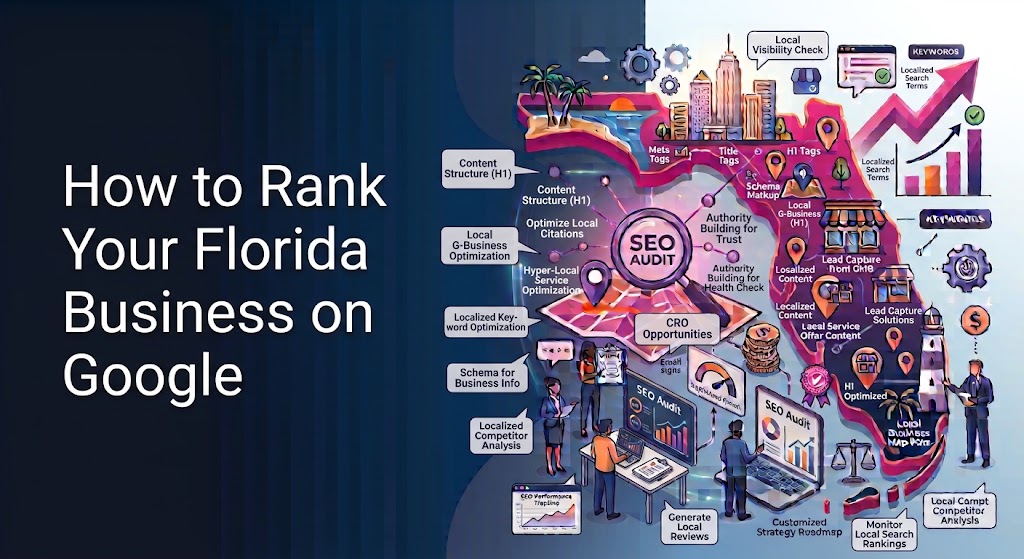
Introduction
🌴 Florida is one of the most competitive markets for businesses that want to attract customers through Google Search. From restaurants and real estate agencies in Miami to roofing contractors in Orlando, law firms in Tampa, and tourism companies in Jacksonville, businesses across the state need a strong online presence to reach potential customers. Ranking your Florida business on Google can help you increase website traffic, attract qualified leads, build customer trust, and generate more sales without relying entirely on paid advertising.
However, achieving higher Google rankings requires more than adding a few keywords to your website. You need a comprehensive search engine optimization strategy that combines local keyword research, Google Business Profile optimization, helpful content, technical website improvements, quality backlinks, and a positive customer experience. When these elements work together, your business has a better opportunity to appear in relevant searches and connect with customers who are actively looking for your products or services.
📍 Florida presents unique opportunities for local SEO because customers frequently search for businesses within specific cities, neighborhoods, and service areas. Someone searching for an emergency plumber in Fort Lauderdale has different needs from someone looking for a vacation rental in Kissimmee or a personal injury lawyer in West Palm Beach. Understanding these differences allows you to develop targeted SEO campaigns that match the search intent of your ideal customers.
Whether you operate a small local company, a professional service firm, an online store, or a growing multi-location business, you can improve your visibility by following proven SEO practices. This guide explains how to rank your Florida business on Google, how to compete in local search results, and how to build a sustainable strategy that supports long-term business growth.
Understanding How Google Rankings Work for Florida Businesses
🔎 Google uses automated systems to discover, crawl, index, and rank web pages according to their relevance and usefulness for individual searches. When someone searches for a service in Florida, Google evaluates numerous signals to determine which websites and local businesses are most appropriate for that query. Although no company can guarantee a particular ranking, businesses can improve their chances of appearing prominently by maintaining accurate information, publishing helpful content, and building a technically sound website.
For Florida businesses, understanding the difference between traditional organic rankings and local search visibility is especially important. Organic results generally display relevant web pages, while local search results may include a map and a selection of nearby businesses. Your SEO strategy should address both opportunities because customers may discover your business through your website, Google Maps, or searches that include a city or neighborhood name.
Understanding the Main Google Ranking Factors
Google considers multiple signals when determining which results to display, and the importance of individual signals can vary depending on the search. For local businesses, relevance, distance, and prominence are particularly important considerations for local search results. Your website quality, content relevance, reputation, and technical performance can also influence your overall search visibility.
Here are several areas Florida business owners should prioritize when developing an SEO strategy.
- Search relevance: Your website and business profile should clearly explain what you offer, which customers you serve, and which services are available.
- Location signals: Accurate business addresses, service areas, and locally relevant website content help Google understand your connection to the areas you serve.
- Business prominence: Genuine customer reviews, credible mentions, relevant backlinks, and an established reputation can support local visibility.
- Website quality: A fast, secure, mobile-friendly website makes it easier for visitors and search engines to access your information.
- Content usefulness: Detailed service pages, practical guides, and answers to common customer questions help demonstrate your expertise.
- Business information accuracy: Consistent names, addresses, phone numbers, operating hours, and service details help customers verify your business.
These elements should work together rather than operate as isolated tasks. For example, a Florida landscaping company may have an attractive website, but it could struggle to attract local customers if its service pages are vague, its contact information is outdated, and its Google Business Profile is incomplete. Improving these areas creates a stronger foundation for sustainable search visibility.
Organic Rankings Versus Google Maps Rankings
📌 Organic search and Google Maps visibility are related, but they are not identical. A business can rank well for a useful website article without appearing in the local map results, while another company may have a strong Google Business Profile that attracts calls even when its website ranks lower organically. A balanced strategy works to improve both channels according to the business’s goals and competitive environment.
Organic SEO focuses on improving individual website pages through relevant keywords, useful content, internal links, technical performance, and authoritative backlinks. Local SEO also emphasizes business profile completeness, proximity to searchers, customer reviews, and accurate local business information. Businesses that depend on nearby customers should generally include both approaches in their marketing plans.
| SEO Area | Primary Objective | Recommended Action |
|---|---|---|
| Organic search | Improve website rankings | Publish useful, optimized service pages and articles |
| Google Maps | Increase local discovery | Maintain an accurate and complete Google Business Profile |
| Local keywords | Reach location-specific customers | Target relevant Florida cities and neighborhoods |
| Technical SEO | Help search engines access the website | Improve speed, indexing, security, and mobile usability |
| Reputation management | Build customer confidence | Request genuine reviews and respond professionally |
| Link building | Strengthen website authority | Earn relevant links from credible websites and organizations |
A successful SEO campaign considers these areas together and prioritizes the activities most likely to benefit the business. Rather than chasing every possible ranking factor, focus first on the weaknesses that prevent customers from finding, understanding, or contacting your company.
Understanding Search Intent in the Florida Market
Search intent describes the reason behind a person’s search query, and identifying it helps you create pages that satisfy customer expectations. Someone searching for “how much does roof replacement cost in Florida” probably wants pricing information, while someone searching for “roof replacement company in Tampa” may be ready to request an estimate. Creating the appropriate page for each search intent makes your content more useful and improves the likelihood of attracting relevant visitors.
Florida businesses should consider informational, commercial, transactional, and navigational searches when planning their SEO campaigns. Informational searches involve learning about a topic, commercial searches involve comparing available options, transactional searches indicate readiness to act, and navigational searches involve finding a specific business or website. Your website should provide suitable content for each relevant stage of the customer journey instead of directing every visitor to the homepage.
For example, a pest control company could publish an educational article about preventing termites in Florida homes, create a dedicated termite inspection service page, and maintain a location page explaining its service coverage in Orlando. These pages serve different needs while helping potential customers move from researching a problem to choosing a service provider. Connecting them through relevant internal links also helps visitors discover additional information and understand the company’s offerings.
Why Google Visibility Matters for Local Businesses in Florida
📈 Google visibility can influence how easily potential customers discover your business when they need a product or service. Many consumers use search engines to compare providers, review business information, check operating hours, and identify companies serving their neighborhoods. Appearing for relevant searches gives your business an opportunity to connect with these customers before they choose a competitor.
Florida’s economy includes tourism, hospitality, construction, healthcare, home services, real estate, retail, and many other competitive industries. Businesses in these sectors often serve customers who search for specific services within a limited geographic area. Local SEO helps companies communicate their relevance to those customers and compete for attention in the markets that matter most.
Attracting Customers Who Are Ready to Buy
One of the most valuable advantages of SEO is its ability to reach people who are already looking for a solution. A customer searching for an emergency electrician in Miami or an air conditioning repair service in Tampa may have an immediate need and be prepared to contact a provider. If your business appears prominently for relevant searches and presents clear contact information, you have a better opportunity to turn that search into a lead.
Ranking for relevant keywords is more valuable than attracting large amounts of unrelated traffic. For instance, a Jacksonville accounting firm may receive thousands of visits from people reading general financial news without generating many inquiries. A smaller number of visits from local businesses searching for accounting services may produce more qualified leads and greater commercial value.
To attract high-intent customers, develop dedicated service pages that explain what you offer, who you serve, and how customers can get started. Include clear calls to action, accurate service details, and answers to common questions about pricing, availability, and the service process. This approach helps visitors make informed decisions while giving search engines meaningful information about your business.
Building Trust and Brand Recognition
Customers are more likely to consider a business when they can find reliable information about its services, reputation, and experience. Strong Google visibility can increase brand recognition because people may encounter your business across search results, map listings, helpful articles, and customer reviews. Consistent information across these touchpoints creates a more professional experience and makes it easier for potential customers to evaluate your company.
Trust is particularly important for Florida industries involving significant purchases or personal services, including real estate, legal assistance, healthcare, and home improvement. Customers often compare several providers before deciding whom to contact, so a complete website and an authentic reputation can influence their decision. Publishing accurate information, demonstrating relevant expertise, and responding professionally to customer feedback helps establish credibility over time.
Avoid making unsupported claims about qualifications, customer results, or years of experience. Your website should accurately represent your services and credentials, especially in regulated industries where misleading statements can create legal or reputational problems. Transparent communication supports customer confidence and provides a stronger foundation for long-term business relationships.
Reducing Dependence on Paid Advertising
Paid advertising can generate visibility quickly, but traffic from an advertising campaign generally depends on continued spending. SEO offers a different approach by helping your website earn visibility in organic search results over time. Although SEO requires investment in content, optimization, and maintenance, successful improvements can continue attracting visitors after the initial work has been completed.
For example, a small roofing company in Orlando might use paid search ads during a busy season while developing useful service pages and local content for organic search. Over time, those pages may begin attracting additional inquiries from people searching for roof inspections, storm damage repairs, or roof replacement services. Organic results are not free to maintain, but they can diversify the company’s lead-generation channels.
Business owners should evaluate SEO and paid advertising according to their budgets, timelines, and growth objectives. SEO typically requires patience because competition, website history, content quality, and technical issues influence how quickly results appear. Combining organic optimization with carefully managed advertising can provide immediate exposure while building a more sustainable source of customer acquisition.
Competing With Established Florida Businesses
A new or small business does not necessarily need to outrank every established competitor to generate meaningful results. A more practical approach is to identify relevant search terms, service categories, and geographic areas where your company can provide a useful and credible alternative. Focusing on a well-defined market allows you to use your resources efficiently instead of competing for broad keywords with limited commercial value.
For instance, a new cleaning company might find it difficult to rank immediately for a broad phrase such as “cleaning services Florida.” Targeting relevant searches such as “move-out cleaning in Sarasota” or “office cleaning company in Clearwater” may provide a more focused starting point if the company genuinely serves those areas. As the business develops a stronger website, reputation, and backlink profile, it can expand its strategy to additional services and locations.
Competitor research can help identify opportunities that established businesses have overlooked. Examine the services they explain in detail, the questions they answer, the locations they serve, and the information customers need before making a decision. Use these insights to create more useful and distinctive resources rather than copying competitor content or publishing multiple pages with nearly identical wording.
Conducting Keyword Research for the Florida Market
🔍 Keyword research is the process of identifying the search terms potential customers use when looking for your products, services, and expertise. It provides the foundation for deciding which pages to create, which existing pages to improve, and which topics deserve attention first. For Florida businesses, effective keyword research should combine service-related phrases, location modifiers, customer questions, and search intent.
The objective is not to include as many keywords as possible on your website. Instead, you need to identify the terms that accurately describe your business and connect them with pages that satisfy the needs behind those searches. This approach helps attract relevant visitors and avoids wasting resources on search terms that have little connection to your commercial goals.
Identifying Primary and Secondary Keywords
Start by listing your core products, services, specialties, and customer problems. A Florida HVAC company might offer air conditioning repair, AC installation, seasonal maintenance, duct cleaning, and emergency cooling services. Each service can generate different search queries, so creating a structured keyword list helps you identify opportunities that a general homepage may not adequately address.
Primary keywords describe the central subject of a page, while secondary keywords cover closely related terms, variations, and supporting topics. A page focused on air conditioning repair in Tampa might naturally include phrases related to AC troubleshooting, cooling system repairs, emergency appointments, and common air conditioning problems. These terms should appear where they genuinely improve the content rather than being inserted repeatedly for ranking purposes.
Consider the following examples of Florida-focused keyword opportunities.
| Business Type | Example Primary Keyword | Supporting Keyword Ideas |
|---|---|---|
| Roofing contractor | Roofing company in Orlando | Roof replacement, roof inspection, storm damage repair |
| Plumbing company | Plumber in Tampa | Emergency plumbing, drain cleaning, water heater repair |
| Real estate agency | Real estate agent in Miami | Homes for sale, property listings, buyer representation |
| Cleaning service | House cleaning in Jacksonville | Deep cleaning, recurring cleaning, move-out cleaning |
| Digital marketing agency | SEO services in Fort Lauderdale | Local SEO, website optimization, Google Business Profile management |
| Landscaping company | Landscaping services in Sarasota | Lawn maintenance, landscape design, garden installation |
These examples are starting points rather than verified rankings or search-volume estimates. Before choosing your target keywords, evaluate their actual search demand, competition, relevance, and commercial intent using available keyword research tools. The best keywords are those that align with the services you genuinely provide and the customers you want to reach.
Targeting City-Specific and Long-Tail Keywords
Florida is geographically diverse, and customer searches often include the names of cities, suburbs, and neighborhoods. Location-specific phrases can help you connect with people searching for businesses within their preferred service area. Relevant modifiers may include Miami, Orlando, Tampa, Jacksonville, Naples, Fort Myers, Boca Raton, Gainesville, or other locations where your company operates.
Long-tail keywords are more specific search phrases that often reveal a clearer customer need. For example, “affordable commercial roof inspection in Tampa” is more specific than “roofing,” while “family dentist accepting new patients in Orlando” communicates a particular service requirement. These searches may have lower individual search volumes, but they can attract visitors whose needs closely match your offerings.
Choose location keywords according to your real business coverage. If your company serves customers throughout a region, explain the areas you cover and create useful location-specific content where appropriate. Do not create dozens of nearly identical pages simply by replacing one city name with another, because these pages may provide little additional value to customers.
Using Keyword Research Tools Effectively
Keyword research tools can help you evaluate search volume, keyword difficulty, related queries, and changes in search interest. Google Search Console can reveal queries that already generate impressions for your website, while keyword planning and third-party SEO platforms can help uncover additional opportunities. Google autocomplete and related search suggestions can also provide useful ideas about how people describe their needs.
Use the information from these tools to create a prioritized keyword plan. A practical starting point is to group keywords by service, location, and search intent, then assign each group to the most appropriate website page. Review the plan periodically because customer behavior, seasonal demand, and competitive conditions can change over time.
Florida businesses should also consider seasonal patterns when selecting content topics. Tourism-related companies may experience changing search interest around holidays and travel periods, while air conditioning services may see increased demand during hotter months. Publishing useful seasonal content before demand peaks can help your website become a relevant resource when customers begin researching their options.
Mapping Keywords to the Right Website Pages
Keyword mapping means assigning a primary search topic to each relevant page so your website has a clear and organized structure. Without a plan, several pages may compete for the same query, or important services may remain hidden within a general page that does not explain them sufficiently. A structured approach makes it easier to maintain content, build internal links, and measure the performance of individual services.
For example, a Miami law firm might use its homepage to introduce the practice, separate service pages to explain specific legal services, and a location page to describe its office and local coverage. Informational articles can answer general legal questions while directing readers toward the relevant service page when they need professional assistance. Sensitive or regulated topics should be reviewed carefully to ensure accuracy and avoid presenting general information as individualized professional advice.
Create a simple keyword map that includes the target page, primary keyword, supporting topics, search intent, and next action for the visitor. This gives your SEO campaign a practical direction and helps prevent unnecessary duplication. As your website grows, review the map to identify missing topics, outdated pages, and opportunities to improve existing content before producing new material.
Optimizing Your Google Business Profile
📍 Your Google Business Profile is an essential tool for improving local search visibility and helping Florida customers discover your company. It can display your business name, address, phone number, operating hours, customer reviews, photographs, and services in Google Search and Google Maps. A complete and accurate profile makes it easier for potential customers to understand what you offer and decide whether to contact you.
Start by claiming and verifying your profile if you are eligible to maintain one. Enter your real business information, select the most accurate primary business category, and add relevant secondary categories when appropriate. Your profile should accurately represent your business rather than attempting to rank for unrelated services or locations.
Complete Every Relevant Business Detail
An incomplete profile may leave customers without important information when they are comparing local providers. Make sure your business name follows your real-world branding, your phone number works, and your operating hours reflect when customers can contact or visit you. If you provide services at customer locations instead of receiving customers at a storefront, configure your profile according to Google’s service-area business guidelines.
Choose your primary category carefully because it communicates your main business activity. For example, an Orlando roofing contractor should select the category that most accurately describes its roofing business rather than choosing unrelated categories simply to appear in more searches. Add services, business descriptions, and other available details that help customers understand your actual offerings.
Add Authentic Photos and Business Updates
📸 High-quality photographs help customers recognize your business and understand what they can expect. A Florida restaurant might upload images of its dining area and dishes, while a landscaping company could show genuine examples of completed projects. Keep images current, relevant, and representative of your actual business.
Where available, use profile features to communicate useful updates, promotions, announcements, and service information. For example, an air conditioning company could explain its maintenance services before the summer season, while a local retailer could share information about new products. Avoid repetitive promotional posts that provide little practical value to customers.
Manage Reviews Professionally
Customer reviews can influence purchasing decisions and contribute to the prominence of your business in local search. Encourage customers to share honest feedback after a genuine interaction, and make the process convenient by providing a review link when appropriate. Never purchase reviews, offer incentives in exchange for positive ratings, or pressure customers to remove legitimate criticism.
Respond to positive reviews with a brief, personal message that acknowledges the customer’s experience. When responding to negative feedback, remain professional, avoid disclosing private information, and explain how the customer can contact you to resolve the issue. A thoughtful response demonstrates that your business takes customer concerns seriously.
Building a Strong Local SEO Strategy
Local SEO helps your business become more visible to customers searching for relevant products and services in your geographic market. For Florida businesses, a strong local strategy combines accurate business information, location-relevant website content, customer reputation, and credible local relationships. The objective is to establish genuine relevance and trust in the areas where you operate.
Maintain Consistent Business Information
Your business name, address, and phone number should be accurate wherever your company is listed online. Differences between your website, business directories, and other trusted listings can confuse customers and create uncertainty about which information is correct. Review important listings periodically and correct outdated details after changes such as a relocation, phone number update, or change in business hours.
Consistency does not mean every directory must use identical formatting in every field, but the underlying business information should accurately identify the same company. Avoid creating additional profiles for the same location or using false addresses to target areas where you have no eligible business presence. Sustainable local SEO depends on trustworthy information rather than artificial attempts to expand geographic reach.
Earn Relevant Local Citations
Local citations are online mentions of your business information, commonly found in business directories, professional associations, and industry listings. Accurate citations can help customers discover your company and reinforce its presence across relevant online platforms. Their value depends on the quality, accuracy, and relevance of the source rather than the number of listings alone.
Florida businesses can investigate legitimate local chambers of commerce, recognized trade associations, regional business directories, and relevant professional organizations. A Tampa contractor, for example, may benefit from being listed in an appropriate industry directory or a local business association that genuinely serves its market. Avoid mass-submitting your details to low-quality directories that exist primarily to sell links or publish large volumes of unrelated listings.
Build Relationships Within Your Community
Local relationships can create opportunities for referrals, publicity, and relevant website mentions. Businesses that participate in community events, sponsor legitimate local activities, or collaborate with complementary service providers may gain greater recognition among potential customers. These relationships can also produce authentic backlinks when participating organizations publish event information or acknowledge sponsors on their websites.
A Jacksonville fitness studio might collaborate with a nearby wellness business on a community event, while a Florida home improvement company could participate in a local housing initiative. The primary objective should be meaningful participation rather than obtaining a link at any cost. Relevant relationships can support brand awareness and business development even when they do not directly produce a measurable ranking improvement.
Improving On-Page SEO for Better Rankings
On-page SEO involves improving individual website pages so search engines and visitors can understand their content more easily. Important elements include page titles, meta descriptions, headings, body content, image descriptions, internal links, and clear page structure. For a Florida business, these elements should communicate both the service being offered and the specific customer need the page addresses.
Write Clear and Relevant Title Tags
The title tag helps search engines understand a page’s topic and often supplies the clickable headline shown in search results. Write a distinctive title for each important page that describes its primary subject naturally. Where it makes sense, include the service and location without repeating the same keyword unnecessarily.
For example, a title such as “Roof Repair in Orlando | Residential Roofing Services” is more descriptive than a generic title such as “Home.” Your homepage, service pages, and educational articles should each have titles that accurately reflect their content. Google may generate a different search result title when it considers another heading or page text more suitable for the query.
Create Useful Meta Descriptions
Meta descriptions summarize the content of a page and may appear below the title in search results. Although they are not a direct Google ranking factor, well-written descriptions can help users understand why a page is relevant to their needs. Keep each description specific, readable, and aligned with the actual services or information available on the page.
A Florida plumbing company could explain its repair services, relevant service area, and available contact options in a concise description. Avoid exaggerated claims, repetitive keyword lists, and promises that the business cannot reliably fulfill. A clear description sets appropriate expectations before someone visits your website.
Organize Content With Heading Tags
Headings create a logical structure that makes website content easier to scan and understand. Use one clear main heading to identify the page’s central topic, then organize supporting sections with descriptive subheadings. A service page for a Miami landscaping company might include sections covering available services, the work process, service coverage, common questions, and how to request an estimate.
Headings should describe the content beneath them rather than serve as containers for repeated keywords. Use a logical heading hierarchy and ensure each section provides information that helps the visitor. A well-organized page makes it easier for readers to locate relevant details without navigating through large blocks of unstructured text.
Improve Internal Linking
Internal links connect related pages within your website and help visitors discover additional information. They also provide search engines with useful context about the relationship between different pages. A blog post about preventing roof leaks in Florida could link naturally to a relevant roof inspection or repair service page.
Use descriptive anchor text that tells readers what they will find after clicking a link. Avoid forcing links into unrelated paragraphs or using the same keyword-rich anchor text excessively across every page. Review your website periodically to identify broken links and important pages that receive too few internal links.
Creating High-Quality Content for Florida Customers
📝 Helpful content gives potential customers a reason to visit your website, learn from your expertise, and consider your services. Instead of publishing articles solely to include target keywords, focus on answering genuine questions and explaining topics relevant to your audience. Florida businesses can create useful content around local conditions, seasonal needs, service comparisons, pricing considerations, and common customer concerns.
Publish Detailed Service Pages
Each major service should have a dedicated page when the service is sufficiently distinct and important to your business. Explain what the service includes, which customers may need it, how the process works, and what factors influence the cost or timeline. Include relevant examples, qualifications, and practical details that help visitors understand the value of your offering.
For example, a pest control company serving South Florida could create a detailed termite inspection page explaining common warning signs, inspection procedures, and appropriate next steps. A separate page for mosquito control could address outdoor treatment options and seasonal prevention. Distinct pages are most useful when they provide genuinely different information instead of repeating nearly identical content.
Write Educational Blog Posts
A well-planned blog can attract visitors who are researching a problem before choosing a provider. Identify recurring customer questions and develop articles that answer them with clear explanations, practical recommendations, and accurate information. Topics should be connected to your business expertise and the needs of customers in your service area.
A Florida roofing company could publish articles about preparing roofs for storm season, recognizing signs of roof damage, comparing repair and replacement options, and understanding inspection reports. These articles can help readers make better decisions while creating relevant pathways to the company’s service pages. Review content regularly to correct outdated details and ensure that recommendations remain accurate.
Demonstrate Firsthand Experience and Expertise
Content becomes more useful when it reflects genuine knowledge rather than generic statements that could apply to any business. Include real examples of completed projects, original photographs, clear explanations of your process, and insights gained from serving customers. Where relevant, identify qualified contributors and provide accurate information about their professional experience.
For industries involving financial, legal, medical, or safety-related decisions, prioritize factual accuracy and appropriate professional review. Explain limitations where necessary and avoid guarantees about outcomes that depend on individual circumstances. Demonstrating expertise helps customers evaluate your business and supports the overall credibility of your website.
Update Existing Content Regularly
Publishing new articles is not always the most effective use of your SEO budget. Existing pages may already receive impressions, backlinks, or visits but fail to meet customer expectations because their information is incomplete or outdated. Reviewing these pages can reveal opportunities to improve their structure, accuracy, usefulness, and conversion potential.
Use Google Search Console and website analytics to identify pages that attract relevant impressions but receive relatively few clicks or generate little engagement. Examine whether the page answers the intended question, provides enough detail, and directs visitors toward an appropriate next step. Make meaningful improvements rather than changing dates or rewriting sentences simply to make the page appear new.
Strengthening Your Website’s Technical SEO
⚙️ Technical SEO focuses on making your website accessible, understandable, and usable for search engines and visitors. Even strong content may struggle to perform if important pages cannot be crawled, website navigation is confusing, or technical problems prevent pages from appearing in Google’s index. Florida businesses should regularly review their website’s technical health as part of their ongoing SEO strategy.
Improve Website Speed and Core Web Vitals
A slow website can frustrate visitors who want to find a service, check pricing, or contact your business quickly. Large images, unnecessary scripts, inefficient hosting, and poorly configured website themes can contribute to slow loading times. Compress images, remove unnecessary plugins, enable appropriate caching, and review hosting performance to identify practical improvements.
Google’s Core Web Vitals measure aspects of loading performance, interactivity, and visual stability. Tools such as PageSpeed Insights can help identify problems and suggest improvements. Good performance supports usability, although meeting particular performance thresholds does not guarantee higher rankings on its own.
Make Your Website Mobile-Friendly
Many customers search for local services using smartphones while travelling, shopping, or dealing with an immediate problem. Your website should display clearly on smaller screens, provide readable text, and allow visitors to contact your business without unnecessary effort. Test important pages on different devices and ensure that navigation menus, forms, images, and buttons work as intended.
Make your phone number easy to find and use a click-to-call link where appropriate. Keep forms reasonably short and avoid intrusive pop-ups that prevent visitors from reading the page. A smooth mobile experience can make it easier for interested users to become customers.
Ensure Important Pages Can Be Indexed
Google must be able to access and index a page before it can normally appear in organic search results. Check that important service pages are not unintentionally blocked by robots.txt rules, noindex directives, login requirements, or other technical barriers. Review your XML sitemap and submit it through Google Search Console when appropriate.
Use Search Console’s URL inspection features to investigate pages that are missing from the index or experiencing crawling issues. Confirm that canonical tags identify the preferred version of each page and that redirects point visitors to the correct destinations. Technical changes should be tested carefully because incorrect settings can prevent valuable pages from appearing in search.
Protect Your Website With HTTPS
A secure website protects information exchanged between visitors and your server through encrypted connections. HTTPS is particularly important when customers submit contact details, request quotes, make bookings, or complete online purchases. Ensure your security certificate is valid and configure redirects so that HTTP versions resolve to the intended HTTPS pages.
Review your website for mixed-content warnings and broken links that still point to insecure versions of pages or resources. Keep your content management system, themes, and plugins updated to reduce avoidable security risks. Security maintenance protects customer confidence and helps prevent technical issues that could interrupt your online business operations.
Building Local Backlinks and Business Citations
🔗 Backlinks are links from other websites that point to your website, and relevant, credible links can contribute to your site’s authority and search visibility. However, the quality and context of a backlink matter more than simply accumulating a large number of links. Florida businesses should focus on earning links through useful resources, legitimate partnerships, community involvement, and genuine industry recognition.
Earn Links From Relevant Local Websites
Start by identifying organizations and publications that have a meaningful connection to your industry or community. These may include local business associations, professional organizations, community initiatives, regional publications, and legitimate industry partners. A relevant mention from a credible local source can introduce your business to potential customers while providing a useful link to your website.
Develop resources that other organizations may genuinely want to reference, such as original research, practical guides, community projects, or detailed explanations of a common local problem. Contact relevant publishers with a clear explanation of why the resource may be useful to their readers. Avoid sending mass emails requesting links without providing a meaningful reason for the recipient to consider your content.
Use Guest Posting Strategically
Guest posting can help your business share expertise with an established audience when the publication is relevant and editorially credible. Choose websites that publish meaningful content for readers in your industry or target market. Contribute original articles that answer useful questions rather than producing generic content solely to obtain a backlink.
Evaluate a publication by reviewing its audience, editorial standards, topic relevance, and overall content quality. Avoid websites that publish unrelated articles in large quantities, sell manipulative links, or exist primarily to influence search rankings. Paid placements and sponsored content should be handled transparently and follow applicable search engine guidelines, including appropriate link qualification.
Avoid Risky Link-Building Practices
Buying large quantities of backlinks, using private blog networks to manipulate rankings, and participating in automated link schemes can expose your website to search engine spam issues. Links from irrelevant or low-quality sources may deliver little value and can create unnecessary risk. A more sustainable strategy emphasizes legitimate editorial recognition and relationships that make sense for your business.
Review your backlink profile periodically using reputable SEO tools and investigate unusual patterns when necessary. Do not assume every unfamiliar link is harmful or that every low-authority website requires removal. If you identify a genuine link scheme or a serious history of manipulative link building, assess the situation carefully and take proportionate corrective action.
Managing Online Reviews and Customer Reputation
⭐ Your online reputation can affect whether potential customers choose to contact your business after discovering it through Google. Reviews provide insight into customer experiences and help people compare available providers. A professional reputation management process encourages honest feedback, addresses recurring concerns, and identifies opportunities to improve the customer experience.
Create a Consistent Review Request Process
Ask customers for honest feedback after a meaningful interaction, such as completing a repair, delivering a product, or finishing a project. Make the request simple and convenient without requiring a positive rating or offering a reward in exchange for a review. Train employees to follow the same process so that review requests are consistent across your business.
For a Florida home services company, a review request could be sent after the customer confirms that the work has been completed. A hotel or restaurant could provide a convenient way for guests to share their experiences after their visit. The aim is to collect genuine feedback from customers rather than selectively asking only those expected to leave positive reviews.
Respond to Feedback and Improve Service Quality
Responding to reviews helps show customers that your business values their experiences. Thank customers for useful feedback and address legitimate concerns without becoming defensive. If a complaint identifies a recurring problem, use it to improve communication, service delivery, scheduling, or staff training.
Track common themes in customer comments rather than focusing exclusively on your average star rating. Repeated complaints about delayed appointments, unclear pricing, or poor communication can reveal operational problems that deserve attention. Improving the underlying customer experience is more valuable than attempting to manage your reputation through responses alone.

Optimizing for Mobile Searches and User Experience
📱 Mobile optimization is essential for Florida businesses because many customers use smartphones to discover nearby services, compare providers, and contact companies while on the move. A website that loads quickly, displays correctly, and provides simple navigation can help visitors find the information they need without frustration. Improving the mobile experience also supports your broader SEO strategy by making your website more accessible and useful.
Simplify Website Navigation
Organize your website so visitors can easily locate your main services, service areas, contact details, and important business information. Use descriptive menu labels and a logical page hierarchy rather than forcing customers to navigate through several unrelated pages. A customer searching for an emergency plumber in Tampa should be able to find the relevant service information and contact number quickly.
Make important calls to action visible without overwhelming visitors with pop-ups or excessive promotional messages. Buttons should be easy to tap, forms should work properly on smaller screens, and contact information should remain accessible throughout the browsing experience. Regular usability testing can reveal obstacles that prevent interested visitors from becoming customers.
Improve Conversion Opportunities
Website traffic becomes commercially valuable when visitors can take meaningful actions, such as calling your business, requesting an estimate, scheduling an appointment, or purchasing a product. Provide clear calls to action that match the purpose of each page. For example, a roofing service page might encourage visitors to request an inspection, while an online store should make product selection and checkout straightforward.
Build confidence by explaining your process, displaying accurate business information, and answering questions about pricing, service coverage, and availability. Avoid misleading countdown timers, unsupported guarantees, and confusing forms that create unnecessary pressure. A transparent website helps customers make informed decisions and supports sustainable business growth.
Using Location Pages to Target Florida Cities
📍 Location pages can help businesses explain where they operate and which services they provide in specific Florida communities. They are particularly useful for companies serving multiple cities or maintaining several legitimate business locations. However, each page must provide meaningful local information rather than simply repeating the same content with a different city name.
Create Valuable City-Specific Pages
A useful location page should explain the services available in that area, describe relevant customer needs, and provide accurate information about service coverage. Where appropriate, include original project examples, local testimonials, location-specific photographs, and practical details about scheduling or availability. These elements help distinguish the page from generic content created solely to target a keyword.
For example, a landscaping company serving Tampa and St. Petersburg could develop separate pages explaining its services in each market. The pages might discuss relevant project examples, local property needs, and the services actually available in each area. Do not claim to have an office in a city unless that location genuinely exists and meets the relevant business profile requirements.
Avoid Duplicate Location Content
Publishing many nearly identical city pages can weaken the overall usefulness of your website. Search engines may have difficulty distinguishing their value when the only difference is a location name inserted into the same paragraphs. Visitors may also find these pages unhelpful if they do not provide meaningful information about the area or service.
Before creating a new location page, ask whether it answers questions that existing pages do not address adequately. If two areas have essentially the same service information and no meaningful local differences, one well-organized regional page may be more appropriate. Prioritize quality and genuine geographic relevance over the number of pages published.
Optimize Pages for Service Areas
Businesses that travel to customers, including electricians, cleaners, contractors, and mobile service providers, should clearly explain their actual service coverage. List the cities and areas where you regularly operate and ensure the information matches your business capabilities. Accurate service-area information helps potential customers understand whether they can hire your company.
Remember that listing a city on your website does not guarantee visibility in Google Maps for searches performed in that location. Local map results are influenced by factors including the searcher’s distance from eligible businesses, relevance, and prominence. Build local relevance through legitimate service information, excellent customer experiences, and appropriate local relationships instead of creating misleading addresses.
Leveraging Local SEO for Different Florida Industries
Florida’s diverse economy creates different SEO opportunities depending on the products and services a business provides. A tourism company may need to attract visitors planning future trips, while a plumber may need to reach nearby customers dealing with an urgent problem. Understanding your industry’s customer journey helps you prioritize the most relevant keywords, website pages, and conversion actions.
SEO for Home Service Businesses
Roofers, plumbers, electricians, HVAC companies, and landscaping providers can benefit from service-specific pages and location-focused content. Explain the services offered, common customer problems, scheduling options, and factors that influence costs. Include genuine examples of completed work and make it easy for potential customers to request an estimate or arrange an appointment.
Florida’s climate also creates opportunities for useful seasonal content related to heavy rain, humidity, heat, storm preparation, and property maintenance. A roofing company could explain how to identify potential storm damage, while an HVAC provider might publish guidance on routine air conditioning maintenance. Ensure that safety-related recommendations are accurate and that any urgent concerns are directed to qualified professionals.
SEO for Restaurants and Hospitality Businesses
Restaurants, hotels, resorts, and tourism companies should prioritize accurate business information, relevant photographs, clear descriptions, and convenient booking options. Customers frequently want to know where a business is located, when it is open, what it offers, and whether reservations are available. Keeping this information current helps people make decisions with confidence.
Create website content that answers relevant visitor questions, such as dining options, accommodation features, accessibility details, and nearby attractions when these topics are genuinely connected to your offering. Make menus, booking information, and essential policies easy to access on mobile devices. Encourage honest customer feedback and address recurring service problems to improve the overall guest experience.
SEO for Real Estate Businesses
Real estate agencies and agents can attract potential clients through useful content about property searches, buying and selling processes, neighborhood considerations, and market terminology. Create accurate pages for the services and geographic areas you genuinely cover. When discussing market trends or property prices, provide current, appropriately dated information and explain its limitations.
Avoid publishing large numbers of automatically generated neighborhood pages that contain little original value. Instead, provide useful local knowledge, clear descriptions of your services, and relevant information for buyers and sellers. Ensure that professional credentials, contact details, property information, and advertising claims comply with applicable requirements.
SEO for Professional Service Providers
Law firms, accountants, consultants, healthcare providers, and digital marketing agencies need to demonstrate expertise and provide accurate information. Build dedicated pages around the services you offer and explain how customers can evaluate whether those services suit their needs. Include appropriate credentials, professional biographies, service descriptions, and clear contact options.
For legal, medical, financial, and other sensitive subjects, review content carefully before publication. Avoid unsupported promises, exaggerated results, and misleading statements about qualifications. Helpful educational content can build trust, but it should not replace individualized advice from a qualified professional when that is necessary.
Tracking Google Rankings and Measuring SEO Performance
📊 SEO requires ongoing measurement to determine which activities are improving visibility and which areas need further attention. Rankings alone do not tell the complete story because a business can attract relevant traffic without generating leads, while a highly specific search term may produce only a small number of valuable inquiries. Combine search visibility data with website engagement and business outcomes to evaluate the effectiveness of your strategy.
Use Google Search Console
Google Search Console helps website owners monitor search performance, including impressions, clicks, click-through rates, and average position for relevant queries and pages. It can also provide information about indexing problems and other technical issues affecting search visibility. Reviewing these reports regularly helps you identify pages that deserve closer investigation.
For example, a Florida cleaning company may discover that its deep-cleaning page receives many impressions for local searches but relatively few clicks. Reviewing the title, description, search intent, and competing results may reveal opportunities to make the page more relevant and appealing. Evaluate changes over time rather than assuming that every improvement will immediately produce higher rankings.
Measure Website Traffic and Lead Generation
Website analytics can help you understand where visitors come from, which pages they explore, and whether they complete important actions. Track relevant conversions such as phone calls, quote requests, appointment bookings, contact form submissions, and purchases. Make sure tracking is configured correctly and respects applicable privacy requirements.
Distinguish between traffic that supports your business goals and visits that provide little commercial value. A large increase in unrelated visitors may not be useful if your objective is to attract customers within a specific Florida service area. Evaluate SEO using metrics that connect search activity to meaningful business results.
Monitor Local Search Performance
Review your Google Business Profile performance data where available to understand how customers discover and interact with your listing. Depending on the available reporting features, you may be able to assess actions such as calls, website visits, and requests for directions. Compare these indicators over time while accounting for seasonal demand and changes in business operations.
Local rankings can vary by search location, device, query, and competition. A single manual search should not be treated as a complete measure of your business’s local visibility. Use consistent tracking methods and focus on broader patterns that help you make informed decisions.
SEO Metrics Worth Tracking
The following table summarizes practical metrics Florida businesses can use to evaluate progress.
| SEO Metric | What It Measures | Why It Matters |
|---|---|---|
| Organic clicks | Visits generated from unpaid search results | Shows whether search visibility is bringing visitors to your website |
| Search impressions | How often your pages appear in search results | Helps identify growing visibility and keyword opportunities |
| Click-through rate | Percentage of impressions resulting in clicks | Indicates how effectively search listings attract attention |
| Keyword positions | Estimated ranking positions for selected queries | Helps monitor changes in visibility for relevant searches |
| Qualified leads | Inquiries from potential customers who fit your target market | Connects SEO activity with business development |
| Conversion rate | Percentage of visitors completing a desired action | Helps evaluate whether website pages turn visitors into leads or customers |
| Profile interactions | Available actions taken through your Google Business Profile | Provides insight into local discovery and customer engagement |
| Referral backlinks | Relevant links earned from other websites | Helps evaluate outreach, partnerships, and authority-building efforts |
Review these metrics at regular intervals and interpret them in context. A decline in traffic may reflect seasonality, a technical problem, changing demand, or stronger competition, so investigate before making major changes. Prioritize actions that address identifiable problems rather than reacting to every short-term fluctuation.
Common SEO Mistakes Florida Businesses Should Avoid
Even businesses that invest in SEO can struggle when their strategy relies on outdated techniques or overlooks customer needs. Understanding common mistakes helps you protect your website, use your budget more effectively, and build a stronger foundation for long-term performance. Focus on sustainable improvements rather than shortcuts that promise instant results.
Keyword Stuffing and Unnatural Content
Repeating a keyword excessively does not make a page more relevant or useful. Sentences such as “best plumber Florida, Florida best plumber, plumber Florida services” create an awkward reading experience and can resemble manipulative SEO practices. Use target keywords naturally and provide enough information to satisfy the visitor’s actual question.
Review your pages for repetition, vague claims, and paragraphs that add little value. Replace unnecessary keyword variations with clear explanations, practical examples, and relevant supporting details. Content should be written primarily for people, with SEO helping search engines understand its subject.
Buying Spammy Backlinks
Cheap backlink packages may promise hundreds or thousands of links within a short period, but link quantity alone does not create a strong backlink profile. Manipulative link schemes can violate Google’s spam policies and may expose a website to ranking problems. Avoid services that rely on automated placements, private blog networks, or irrelevant websites created primarily to sell links.
Choose link-building activities that support real marketing objectives, such as earning editorial mentions, contributing expert knowledge, and building legitimate community relationships. Evaluate potential links based on their relevance, credibility, and likely usefulness to your audience. Sustainable authority comes from trust and relevance rather than artificial volume.
Ignoring Website Technical Problems
Broken pages, incorrect redirects, missing indexable content, and poor mobile usability can prevent your SEO efforts from reaching their potential. Some technical problems remain unnoticed until important pages lose visibility or customers report difficulties using the website. Schedule periodic technical reviews and investigate sudden changes in traffic or indexing.
Keep backups, update website software, and test major changes before deploying them across the site. If you redesign your website or change URLs, create an appropriate redirect plan and monitor the results afterward. Careful technical maintenance reduces avoidable disruption and protects the value of existing content.
Creating Fake Locations or Reviews
Using false addresses, creating duplicate business profiles, or publishing fabricated reviews can undermine customer trust and violate platform policies. These tactics may create short-term appearances of success but introduce substantial risks to your online reputation and local visibility. Represent your business honestly and use only eligible locations and genuine customer feedback.
If your business serves multiple cities, explain your actual coverage and develop useful location-specific content where appropriate. Encourage customers to provide honest reviews without incentives or pressure. Authentic information creates a more reliable foundation for local search performance.
Expecting Immediate Results
SEO usually requires sustained work, and the time needed to observe meaningful improvements varies according to competition, website history, technical condition, and the quality of implementation. A new website competing in a crowded Florida market may need considerable time to establish authority and demonstrate relevance. Promises of guaranteed first-place rankings should therefore be treated with caution.
Set realistic objectives and establish a baseline before making changes. Monitor progress consistently, refine underperforming pages, and continue investing in activities that provide measurable value. Patience combined with regular evaluation is more effective than repeatedly switching strategies in pursuit of instant results.
Developing a Long-Term Google Ranking Strategy
🚀 A long-term SEO plan helps Florida businesses organize their priorities, allocate resources, and maintain progress as search behavior and competition evolve. Rather than attempting every possible optimization at once, begin with the improvements that address the most significant weaknesses in your website and local presence. Build a repeatable process for content development, technical maintenance, reputation management, and performance review.
Start With an SEO Audit
An SEO audit provides a structured assessment of your website’s current performance and identifies issues that may restrict growth. Review indexing, page speed, mobile usability, website structure, keyword targeting, content quality, backlinks, and local business information. The audit should also examine whether your important pages clearly explain your services and guide visitors toward useful actions.
Prioritize problems according to their potential impact and the effort required to resolve them. For example, restoring an important page that has accidentally been excluded from indexing may deserve attention before publishing several new blog posts. A practical audit turns a broad SEO challenge into a manageable list of specific actions.
Build a Realistic Content Calendar
A content calendar helps you publish useful information consistently instead of producing articles without a clear purpose. Identify important service pages, frequently asked customer questions, seasonal topics, and relevant local subjects that align with your business objectives. Assign each planned page a clear audience, search intent, and intended outcome.
For a Florida HVAC company, the calendar might include air conditioning maintenance guidance before summer, advice about selecting an appropriate cooling system, and explanations of common repair concerns. Review existing content before commissioning new articles because updating a valuable page may be more effective than creating another article on the same subject. Measure performance and refine the calendar according to customer needs and search data.
Establish a Monthly SEO Routine
A simple monthly routine can prevent small problems from becoming larger obstacles. Review important search queries, website traffic, conversion data, local profile performance, customer feedback, and technical alerts. Identify a few high-priority improvements for the following month rather than creating an unrealistic list of tasks that cannot be completed.
Business owners with limited budgets can begin by maintaining accurate profiles, improving core service pages, correcting technical errors, and requesting honest reviews. As resources increase, they can invest in broader content development, advanced technical optimization, and strategic outreach. Consistent execution matters more than attempting an overly complicated strategy that cannot be maintained.
Adapt to Changes in Search Behavior
Google’s systems and customer search habits evolve, so SEO strategies should be reviewed rather than treated as permanent formulas. Changes in search features, competitor activity, customer expectations, and website technology may affect how people discover and evaluate businesses. Follow reputable industry guidance and focus on changes that meaningfully improve the usefulness, accessibility, and accuracy of your website.
Avoid making dramatic changes based solely on rumors about ranking factors or isolated fluctuations in search performance. Investigate the available evidence, evaluate the potential impact, and test changes when practical. A strategy built around genuine customer value is better positioned to adapt than one dependent on a single tactic.
Why Choose Dealmate
Choosing the right SEO partner can help you organize your marketing efforts, identify opportunities, and implement improvements without relying on guesswork. Dealmate can be presented as a potential partner for businesses seeking a structured approach to online visibility, local search optimization, and sustainable digital growth. Before choosing any provider, evaluate its actual services, experience, reporting practices, and ability to align its work with your business objectives.
A Strategy Built Around Your Business
Every Florida business has different customers, competitors, services, and geographic priorities. An effective SEO strategy should reflect these differences instead of applying the same keyword list and content template to every company. Dealmate’s suitability should be assessed by whether its proposed approach addresses your market, identifies realistic opportunities, and establishes measurable objectives.
A useful strategy begins with understanding your business model and identifying the customers you want to reach. It should prioritize the pages, local search improvements, and content opportunities most relevant to your goals. Clear priorities make it easier to understand how SEO work contributes to customer acquisition and business growth.
Focus on Local Search Visibility
Local search optimization can help eligible businesses communicate their services and geographic relevance more effectively. This work may involve improving business profile information, refining location pages, strengthening local citations, and developing useful service content. Dealmate can be considered for these tasks if its actual service offering includes the required local SEO capabilities.
The right approach should emphasize accurate information and genuine local relevance rather than artificial location targeting. Businesses should expect clear explanations of the work being performed and why particular activities have been prioritized. Transparent planning makes it easier to evaluate progress and decide where further investment is appropriate.
Content and Website Optimization
Useful website content and strong technical foundations work together to support search visibility and visitor experience. A capable SEO provider should identify pages that need improvement, explain content opportunities, and address technical problems that affect crawling, indexing, or usability. Dealmate should be evaluated on its ability to deliver these services consistently and in accordance with your business requirements.
Content development should focus on genuine customer questions and accurate explanations of the services you provide. Website optimization should also consider mobile usability, page speed, internal linking, and clear conversion paths. Together, these improvements can create a more useful online experience for potential customers.
Transparent Reporting and Long-Term Growth
SEO reporting should explain what work has been completed, what results have changed, and which actions are recommended next. Useful reports connect search visibility with website traffic, qualified leads, conversions, and other business outcomes where reliable tracking is available. Dealmate’s reporting process should be reviewed before engagement to ensure that it provides understandable information and realistic expectations.
No responsible SEO provider can guarantee a specific Google ranking or a fixed number of leads without accounting for market conditions and other variables. A strong partnership instead relies on clear objectives, consistent implementation, honest communication, and evidence-based adjustments. Select Dealmate only after confirming its capabilities, deliverables, pricing, and suitability for your business.
Frequently Asked Questions
How long does it take to rank a Florida business on Google?
SEO results vary according to competition, website history, technical health, content quality, and the resources invested. Some improvements may produce measurable changes within weeks, while meaningful organic growth can take several months or longer. Businesses competing in crowded Florida markets may require additional time to establish authority and local relevance. Consistent optimization and regular performance reviews provide a more reliable path than expecting immediate first-page rankings.
How can I rank my business on Google Maps in Florida?
Start by creating or claiming an eligible Google Business Profile and completing its information accurately. Select relevant categories, maintain current operating details, describe your services clearly, and encourage genuine customer reviews. Build prominence through excellent customer service, relevant local mentions, and a useful website that supports your business profile. Remember that proximity, relevance, and prominence influence local results, so rankings cannot be guaranteed in every Florida city.
Is a Google Business Profile free to use?
Google Business Profile is generally available at no charge to eligible businesses. It allows business owners to manage important information that may appear in Google Search and Google Maps. You can use the profile to provide operating hours, contact details, photographs, services, and other available business information. Although the profile itself is free, maintaining it effectively requires time and consistent attention.
Do Florida businesses need a separate page for every city?
Not every business needs a separate page for every city it serves. Create individual location pages when they provide meaningful, distinct information about your services, local customers, or legitimate business presence. Avoid publishing thin pages that differ only by city name because they provide little value to visitors. A smaller collection of useful, well-maintained pages is often preferable to dozens of repetitive pages.
What are the best keywords for a Florida business?
The best keywords depend on your industry, services, geographic coverage, and customer search intent. Start with phrases describing your main services, then evaluate relevant city-specific terms and longer queries that express clear customer needs. Use keyword research tools to assess search demand, competition, and opportunities to reach qualified prospects. Assign keywords to appropriate pages and prioritize relevance over traffic volume alone.
Can I rank on Google without hiring an SEO agency?
Yes, business owners can perform many essential SEO activities themselves with time, research, and consistent effort. You can improve your business profile, optimize website pages, publish helpful content, monitor Search Console, and request genuine customer reviews. More complex technical issues or highly competitive markets may require specialist expertise. Whether you manage SEO independently or hire a provider, focus on sustainable practices and measurable business outcomes.
Does blogging help Florida businesses rank higher on Google?
Blogging can support SEO when articles answer relevant customer questions and provide information that is genuinely useful. Educational content may attract search traffic, demonstrate expertise, and guide visitors toward related services. Publishing large volumes of repetitive or low-value articles does not guarantee better rankings. Choose topics based on customer needs, maintain accuracy, and measure whether your content attracts relevant visitors.
Are backlinks important for local SEO?
Relevant, credible backlinks can support a website’s authority and improve its ability to compete in organic search results. Local businesses may earn useful links through legitimate community involvement, industry partnerships, professional associations, and editorial coverage. The quality and context of links matter more than the total number acquired. Avoid manipulative link schemes and focus on relationships and resources that provide genuine value.
How much does SEO cost for a Florida business?
SEO costs vary according to competition, website size, service requirements, geographic coverage, and whether work is handled internally or by an external provider. A small local company may need a focused set of improvements, while a multi-location business may require more extensive technical work and content development. Compare providers based on their deliverables, expertise, reporting, and strategic fit rather than price alone. Request a clear proposal and confirm which activities are included before committing to a budget.
How can I measure whether my SEO strategy is working?
Use Google Search Console to monitor impressions, clicks, search queries, and average positions for relevant pages. Website analytics and properly configured conversion tracking can show whether organic visitors submit inquiries, make purchases, or complete other valuable actions. Review Google Business Profile performance data where available to understand local customer interactions. Evaluate trends over time and connect SEO results with qualified leads and business outcomes rather than relying on rankings alone.
Conclusion
🌟 Ranking your Florida business on Google requires a coordinated strategy that combines local SEO, keyword research, helpful content, technical optimization, customer reputation, and ongoing performance measurement. By understanding your customers’ search intent and improving the pages and profiles they encounter, you can make it easier for potential customers to discover your business and evaluate your services. Sustainable results come from providing accurate information, creating genuine value, and maintaining a consistent approach rather than relying on shortcuts.
Start by reviewing your website, Google Business Profile, and most important service pages to identify the improvements that matter most. Build a keyword plan around the services and Florida locations you genuinely serve, strengthen your website’s technical foundations, and publish content that answers real customer questions. Track relevant search visibility, qualified leads, and conversions so you can determine which activities are delivering meaningful results.
As your business grows, continue improving existing pages, earning credible local mentions, responding professionally to reviews, and adapting your strategy to changing customer needs. SEO is an ongoing investment, but a well-planned approach can help your business build online visibility, strengthen its reputation, and attract more relevant customers over time. With realistic expectations and consistent execution, your Florida business can develop a stronger foundation for long-term growth through Google Search and Google Maps.