Introduction to Local SEO for Florida Businesses
📍 Florida’s business environment is highly competitive, with companies across Miami, Orlando, Tampa, Jacksonville, Fort Lauderdale, and other communities competing to attract nearby customers. Whether a business operates a restaurant, dental practice, law firm, home improvement company, retail store, or real estate agency, appearing in relevant local search results can help connect its services with people who are actively looking for them. Local SEO provides a structured way to improve a business’s visibility when potential customers search for products and services in a specific geographic area.
Consumers increasingly use search engines to discover nearby businesses, compare customer reviews, check opening hours, and find contact information before making purchasing decisions. A person searching for an emergency plumber in Tampa, for example, may prioritize nearby providers with strong reviews, accurate business information, and convenient contact options. Businesses that maintain a clear and trustworthy online presence can improve their chances of being considered by these potential customers.
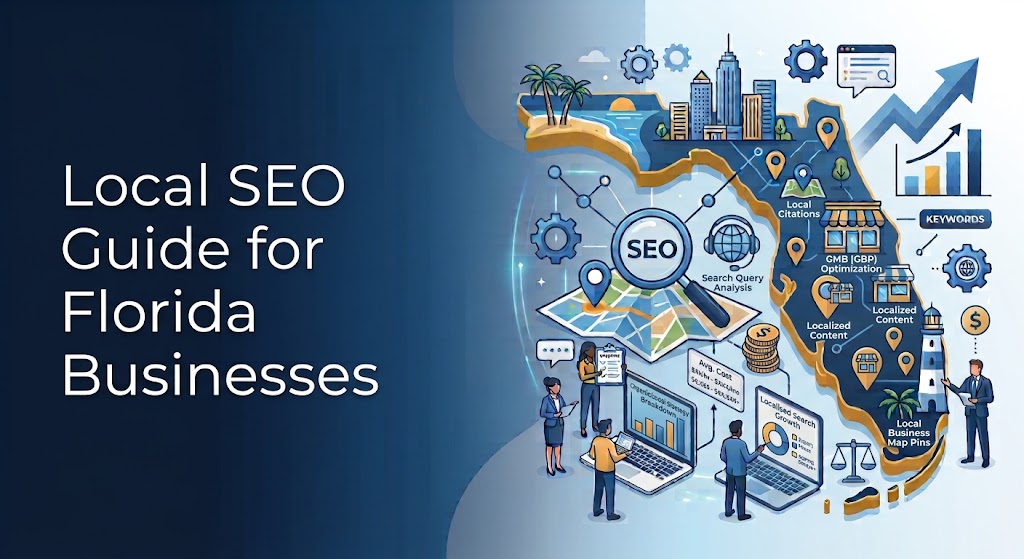
Local SEO involves optimizing a company’s online presence to increase its visibility for geographically relevant searches. It includes Google Business Profile optimization, local keyword research, location-specific website content, customer review management, local citations, technical SEO, and community-focused link building. These activities work together to help search engines understand what a business offers, where it operates, and which customers it serves.
However, local SEO is not simply about adding city names to website pages or creating a business listing. Sustainable results require accurate information, useful content, a positive customer experience, and consistent monitoring of search performance. This guide explores practical local SEO techniques that Florida businesses can use to strengthen their online visibility, attract relevant visitors, and build long-term customer relationships.
What Is Local SEO and How Does It Work?
Local SEO is the process of improving a business’s visibility in search results for searches associated with a specific location. These searches may explicitly mention a city, neighborhood, or service area, such as “roofing contractor in Orlando,” or they may imply local intent through phrases such as “coffee shop near me.” Search engines use several signals to determine which businesses and webpages are relevant to a particular search.
Local SEO combines website optimization with business profile management, local reputation development, and geographically relevant information. A business can improve its local search presence by maintaining accurate contact details, publishing useful service pages, earning genuine customer reviews, and establishing relationships with relevant local organizations.
For example, a Miami fitness studio might optimize its website around personal training services, maintain an accurate Google Business Profile, and publish helpful information about its classes and facilities. When these activities align with what local customers are searching for, the studio can improve its ability to attract relevant attention online.
How Local Search Results Work
Google may display several types of results for a local search, including sponsored listings, a map with local businesses, and traditional organic website results. The exact presentation depends on the search query, device, location, and other factors.
The local results commonly called the local pack often display a small selection of businesses alongside a map. Business profile information, relevance to the search, distance from the searcher, and prominence can influence local ranking outcomes.
Traditional organic results operate alongside these map-based listings. A well-optimized website can attract search traffic through useful service pages, location pages, educational articles, and other content even when a business does not appear prominently in the local pack.
The Main Factors Behind Local SEO
Google describes three broad factors that influence local results: relevance, distance, and prominence.
- 📌 Relevance: How closely a business’s profile and online information match the user’s search.
- 📍 Distance: How far the business is from the location specified in the search or inferred from the user’s location.
- ⭐ Prominence: How well-known or established a business appears to be, based on available information such as reviews, links, and other online signals.
Businesses cannot control every factor, particularly the searcher’s location. However, they can improve the accuracy of their information, strengthen their reputation, and make their services easier for search engines and customers to understand.
Why Local SEO Matters for Florida Businesses
Florida’s economy includes tourism, hospitality, healthcare, construction, real estate, professional services, retail, and numerous other industries that depend on local or regional customers. In these markets, online visibility can influence which businesses consumers discover when they need a service or want to make a purchase.
Local SEO helps companies connect with people who have a specific geographic need rather than relying exclusively on broad advertising campaigns. A homeowner searching for a roof repair company in Jacksonville, for example, is likely looking for a provider who serves that area and can respond to the particular problem.
Reaching Customers With Strong Local Intent
Local searches often indicate that a user is evaluating businesses or preparing to take action. Someone searching for a nearby dentist, restaurant, or appliance repair service may be ready to make a call, request an appointment, or visit a location.
Appearing in relevant search results can help businesses reach these potential customers at an important point in their decision-making process. Accurate business hours, clear service descriptions, useful photographs, and accessible contact information can further encourage people to consider the company.
Local visibility does not automatically produce sales, however. Businesses must also provide competitive services, communicate clearly, respond to inquiries, and deliver a positive customer experience.
Competing With Larger Companies
Small and medium-sized Florida businesses may struggle to compete with national brands that have larger advertising budgets. Local SEO provides an opportunity to build visibility around specific services, neighborhoods, and customer needs rather than competing for every broad industry keyword.
A family-owned landscaping company in Sarasota might focus on the services it genuinely offers within its service area, supported by detailed project pages and authentic customer feedback. This approach can help the company become more relevant to local customers without attempting to match the marketing resources of a nationwide provider.
Supporting Long-Term Marketing Growth
Paid advertising can generate visibility while campaigns are running, but organic search visibility can continue attracting potential customers when supported by consistent optimization and maintenance. Local SEO therefore offers a way to develop a more durable digital marketing asset over time.
Businesses can strengthen this asset by publishing useful content, improving their website, collecting genuine reviews, and maintaining accurate business information. Results vary according to competition, website quality, implementation, and market demand, so local SEO should be treated as an ongoing investment rather than a guaranteed source of leads.
Understanding Florida’s Local Search Landscape
Florida is not a single uniform local market. Search behavior, customer expectations, business competition, and seasonal demand can differ significantly between major cities, coastal communities, suburban neighborhoods, and smaller towns.
A hospitality company in Orlando may need to reach visitors researching attractions and accommodations, while a residential contractor in Tampa may focus primarily on homeowners looking for installation, maintenance, or emergency repairs. Understanding these differences helps businesses select relevant keywords and develop content that reflects real customer needs.
Targeting the Right Florida Cities and Neighborhoods
Businesses should identify the geographic areas they genuinely serve and prioritize them according to customer demand, operational capacity, and business objectives. Companies should not assume that targeting every major Florida city will automatically increase their visibility or generate qualified leads.
A Miami-based cleaning service, for example, may operate throughout several nearby communities but have limited capacity to serve customers in distant parts of the state. Concentrating on realistic service areas allows the business to create more useful location information and attract customers it can actually serve.
Neighborhood-level targeting can also be valuable when people search for services within a particular community. However, neighborhood names should be used naturally and accurately rather than inserted repeatedly into every page.
Understanding Seasonal Search Demand
Florida’s tourism, hospitality, outdoor recreation, and property markets can experience seasonal changes in demand. Some businesses may receive more inquiries during holiday periods, tourist seasons, or particular weather conditions, while others maintain relatively steady demand throughout the year.
Companies should examine their own historical inquiries, bookings, and website traffic to identify meaningful patterns. A vacation rental business, for example, may need to prepare seasonal landing pages and update availability information before peak booking periods.
Seasonal content should be useful and published early enough to help potential customers plan. Businesses should also avoid treating seasonal fluctuations as proof that an SEO campaign has succeeded or failed without considering other market factors.
Evaluating Local Competition
A local competitor analysis should examine which businesses appear for important searches, how they describe their services, which pages they publish, and what customers mention in their reviews. The goal is to identify opportunities to provide clearer information and better customer value rather than copy competitors’ content.
A Florida pest control company might discover that competing websites provide little explanation of treatment options, preparation requirements, or follow-up services. Publishing accurate answers to these questions can help the business differentiate itself and address the concerns of local customers.
Competitor research should also consider geographic relevance. A business located far from a searcher may not compete equally for the same local results, even if its website is technically strong.
Google Business Profile Optimization for Local Visibility
Google Business Profile is one of the most important tools for many businesses seeking local search visibility. It allows eligible businesses to present key information, including their name, category, address or service area, telephone number, opening hours, photographs, and other relevant details.
A complete profile helps potential customers understand what the business offers before visiting its website or contacting the company. It can also support visibility in Google Maps and local search results, although completing a profile does not guarantee a particular ranking.
Choosing the Correct Business Category
The primary business category should accurately represent the company’s main activity. Additional categories can be selected when they genuinely describe other services offered by the business.
For example, a Florida dental clinic should choose an appropriate dental category rather than selecting unrelated categories simply because they appear popular. Incorrect categories can create confusion for users and reduce the accuracy of the business’s online representation.
Businesses should review their categories when their services change, while avoiding frequent unnecessary adjustments based on ranking speculation. Category selection should reflect the real nature of the business and its main customer offering.
Completing Essential Business Information
Every eligible profile should contain accurate and consistent information. Business owners should review their official name, telephone number, website, operating hours, address where applicable, service area, and available services.
Holiday hours and temporary closures deserve special attention because incorrect information can cause customer frustration. A restaurant that appears open in search results but is actually closed may lose a customer and receive negative feedback.
Descriptions should explain the company’s services and relevant strengths in natural language. Repeating keywords excessively or inserting promotional claims into fields where they do not belong can make the profile less useful and may conflict with platform guidelines.
Adding High-Quality Photographs
Relevant photographs help customers understand the business before they visit or request a service. Depending on the industry, useful images may include the storefront, interior, team, products, equipment, completed projects, or service environment.
A Florida restaurant might upload clear photographs of its dining area and menu items, while a home improvement contractor could showcase authentic completed projects. Images should accurately represent the business rather than use misleading stock photographs presented as real company work.
Businesses should maintain a regular process for reviewing photographs and replacing outdated images when necessary. Genuine visual evidence can help customers make informed decisions and develop realistic expectations.
Managing Profile Updates and Customer Questions
Businesses should check their profiles periodically for suggested edits, incorrect information, and customer questions. Keeping information current helps reduce confusion and ensures that customers can reach the business using the available contact details.
Available profile features vary by business type and platform changes, so companies should focus on the functions currently offered to their account. Where messaging, appointment links, service listings, or other features are available, they should be configured accurately and monitored consistently.
Local Keyword Research for Florida Markets
🔎 Local keyword research identifies the phrases people use when searching for products and services within a specific geographic area. It helps businesses understand customer intent and choose the website pages, business profile information, and content topics most relevant to their market.
Effective research goes beyond adding a city name to a general service keyword. Businesses should consider what the searcher needs, whether the query indicates an immediate requirement, and which type of page would provide the most useful answer.
Finding High-Intent Local Keywords
High-intent keywords often indicate that a person is comparing providers, requesting a service, or preparing to make a purchase. Examples include searches for a specific service in a city, emergency assistance, appointment availability, or a nearby provider.
A Florida electrician might research phrases related to electrical repairs, panel upgrades, lighting installation, and emergency electrical services within its actual service area. Each phrase should be evaluated according to its relevance, potential demand, competition, and the company’s ability to fulfill the service.
Keyword tools can provide estimated search volume and related terms, while Search Console can reveal queries that already generate impressions for the website. Customer calls, sales conversations, and frequently asked questions are also useful sources of keyword ideas.
Using City and Neighborhood Modifiers Naturally
Geographic modifiers include city names, neighborhood names, and phrases that indicate proximity. Businesses can incorporate these terms into relevant page titles, headings, service descriptions, and location pages where they help users understand the page’s purpose.
A company serving Orlando might have a dedicated page for its Orlando services and separate pages for nearby areas where it genuinely operates. These pages should provide accurate information about availability and relevant service differences rather than repeat identical text with different city names.
The objective is to make the geographic relevance clear without compromising readability. Keyword stuffing can make content appear unnatural and does not provide a reliable path to better rankings.
Organizing Keywords by Search Intent
Keywords should be grouped according to the information or action the searcher wants. This helps businesses build a website structure in which each important page has a clear purpose.
| Search intent | Example keyword | Suitable content |
|---|---|---|
| Immediate service need | Emergency plumber in Tampa | Emergency plumbing service page |
| Local commercial research | Best family dentist in Miami | Dental service page with useful decision-making information |
| Product discovery | Furniture store in Orlando | Store location or product category page |
| Informational research | How much does roof replacement cost in Florida? | Detailed roofing cost guide |
| Location-specific service | Lawn care in Sarasota | Relevant local service page |
| Booking intent | Book a massage in Jacksonville | Appointment or booking page |
These examples illustrate possible keyword groupings rather than verified search-volume rankings. Businesses should validate their own keyword opportunities using customer research, search data, and the specific services they provide.
Building a Practical Keyword Map
A keyword map assigns primary search themes to appropriate website pages. This reduces unnecessary overlap and helps ensure that important services receive dedicated, useful content.
For instance, a Florida HVAC business might assign its main air conditioning repair keyword to a central service page, while a separate article explains common reasons an air conditioner stops cooling. The article can link to the service page when professional assistance is relevant.
Keyword mapping should remain flexible as customer behavior and business priorities evolve. Regular reviews help identify missing topics, pages competing for similar searches, and opportunities to improve content that already attracts relevant visitors.

Creating Location-Specific Website Content
📍 Location-specific content helps Florida businesses demonstrate their relevance to the communities they serve. Rather than publishing generic pages that mention a city repeatedly, businesses should create useful information that answers local customers’ questions and explains how their services meet local needs.
A well-developed location page can describe available services, service boundaries, local projects, office details, and practical information that helps customers decide whether to contact the business. This approach supports both user experience and local search optimization because the page provides meaningful geographic context.
Developing Useful City Landing Pages
Businesses that genuinely serve multiple Florida cities may benefit from dedicated location pages. These pages should explain which services are available in each area and provide accurate details that distinguish one location from another.
For example, a pest control company operating in Miami and Fort Lauderdale could discuss its available treatment services, appointment process, and coverage for each community. If service availability or response arrangements differ between locations, the content should explain those differences clearly.
Avoid publishing dozens of nearly identical pages that differ only by the city name. Such pages provide limited value and may resemble doorway pages when they exist primarily to manipulate search rankings. A smaller collection of genuinely useful pages is often a better foundation for local SEO.
Publishing Local Guides and Resources
Educational content can help businesses attract people who are researching local issues before choosing a provider. A Florida roofing company, for instance, might publish a guide explaining roof maintenance considerations, storm preparation, or questions homeowners should ask when evaluating roofing estimates.
A real estate agency could publish neighborhood guides covering local amenities, property considerations, and the services it provides to buyers or sellers. The content should be accurate, current, and based on information the business can responsibly support.
Local guides should not simply repeat information already available across the website. They should provide practical insights, answer relevant questions, and connect readers to appropriate services when those services are genuinely relevant.
Using Local Projects and Case Studies
Real project examples can make location pages more useful and demonstrate a business’s practical experience. A Florida landscaping company might describe a completed garden installation, explain the customer’s requirements, and outline the work performed.
Case studies should use accurate details and obtain permission before publishing identifiable customer information or photographs. They should explain the actual project rather than make unsupported claims about rankings, savings, or guaranteed results.
Businesses can also create project galleries organized by service or location. These pages may help prospective customers understand the company’s capabilities while adding authentic content to the website.
On-Page SEO Techniques for Local Rankings
On-page SEO involves optimizing individual website pages so their content, structure, and purpose are clear to visitors and search engines. For local businesses, this includes writing relevant title tags, descriptive headings, useful page copy, and appropriate internal links.
Strong on-page SEO helps a page communicate what the business offers and which customer needs it addresses. However, no single element guarantees local rankings, and optimization should always support the usefulness and accuracy of the page.
Optimizing Title Tags and Meta Descriptions
A title tag provides a concise description of a webpage and may appear as the clickable title in search results. Local businesses can include the main service and geographic area when doing so accurately describes the page.
For example, a title such as “Kitchen Remodeling in Tampa | ABC Renovations” communicates the service and location clearly. A general homepage should have a title that reflects the overall business rather than attempting to target every service and city at once.
Meta descriptions summarize page content and may influence whether users choose to click a result. Search engines can generate different snippets, so descriptions should be accurate and helpful rather than treated as a guaranteed display or direct ranking factor.
Creating Clear Headings and Useful Content
Headings organize information into logical sections and help readers find relevant details quickly. A local service page might explain the available service, common customer problems, the service process, coverage areas, and how to request an estimate.
Businesses should answer important questions directly and use terminology that customers naturally understand. Content should demonstrate genuine knowledge of the service rather than rely on repetitive keyword placement.
A Miami air conditioning company, for example, can explain repair options, maintenance considerations, and the process for arranging an appointment. Clear and specific information helps visitors evaluate the company without having to search through unrelated material.
Strengthening Internal Links
Internal links connect relevant pages and help visitors discover related information. A local landing page may link to individual service pages, helpful guides, project examples, and contact information.
Anchor text should describe the destination naturally. Repeating identical keyword-heavy anchor text across every page is unnecessary and can make navigation less readable.
A planned internal linking structure also helps search engines discover important pages. Businesses should ensure that high-priority service and location pages are accessible through logical navigation rather than isolated deep links.
NAP Consistency and Local Business Citations
NAP stands for name, address, and phone number. Consistent business information helps customers identify the correct company and supports a reliable online presence across directories, business profiles, and the official website.
Local citations are online mentions of business information, often appearing in directories, industry listings, local publications, and association websites. Their usefulness depends on accuracy, relevance, and the credibility of the source rather than the total number of listings alone.
Maintaining Consistent Business Details
Businesses should establish an accurate standard version of their official name, address, and telephone number. This information should be used consistently across the website, Google Business Profile, and relevant directories.
Minor formatting differences do not automatically create an SEO problem, but significant inconsistencies can confuse customers. For example, an outdated telephone number or an old business address may prevent potential customers from contacting the company successfully.
When a business moves, changes its telephone number, or rebrands, the information should be updated across its most important online listings. A record of major changes can help the team identify remaining outdated citations.
Choosing Relevant Local Directories
Florida businesses should prioritize reputable directories and platforms relevant to their industry or community. A professional services company may benefit from an appropriate industry association listing, while a restaurant may need accurate information across major dining and local discovery platforms.
Avoid purchasing large quantities of low-quality listings solely to increase citation counts. Duplicate profiles, inaccurate business details, and irrelevant directories can waste resources without providing meaningful customer value.
Businesses should review listings periodically to correct errors, remove duplicates where possible, and ensure that customers can find the right contact information.
Managing Service-Area Business Information
Not every business serves customers from a public storefront. Some contractors, cleaners, and mobile service providers operate from a residential or administrative address while traveling to customer locations.
These businesses should follow the relevant platform rules for service-area profiles and address visibility. A service area should reflect genuine operations, not a list of distant cities added solely to seek broader search exposure.
Building and Managing Customer Reviews
⭐ Customer reviews help potential buyers evaluate a business’s service quality, reliability, and customer experience. Reviews can also contribute to the prominence signals associated with local search, although their influence depends on the broader context and does not guarantee rankings.
For Florida businesses, an active and responsible review management process can strengthen trust and help identify opportunities to improve customer service. The most sustainable approach is to earn genuine feedback through positive experiences rather than attempting to manipulate ratings.
Encouraging Genuine Customer Feedback
Businesses can invite customers to share honest feedback after a completed service, purchase, or appointment. Requests may be sent through an appropriate follow-up message, included in a receipt, or provided through a convenient review link.
The process should be simple and consistent without pressuring customers to leave positive comments. Businesses should not offer prohibited incentives, fabricate reviews, or selectively solicit only favorable feedback where platform policies prohibit that practice.
For example, a Jacksonville home cleaning company could send a polite follow-up message after completing a booking and invite the customer to describe their experience. This approach gives customers a straightforward opportunity to share their views voluntarily.
Responding to Positive and Negative Reviews
Responses demonstrate that the business pays attention to customer feedback. A thoughtful reply to a positive review can acknowledge the customer’s experience, while a professional response to criticism can show a willingness to address concerns.
Negative reviews should be handled calmly and factually. Businesses should avoid sharing private customer information, making threats, or arguing publicly about sensitive details.
When a review raises a legitimate issue, the company should investigate the situation and offer an appropriate way to resolve it. If a review appears to violate platform policies, the business can use the platform’s reporting process rather than attempting to remove it through improper means.
Using Reviews to Improve Business Operations
Review analysis can reveal recurring customer questions and service problems. If several customers mention difficulty finding a business entrance or understanding appointment arrangements, the company can improve its directions, booking instructions, or customer communications.
Reviews may also reveal what customers value most, such as punctuality, clear explanations, product selection, or professional service. These insights can guide website content and operational improvements without turning customer feedback into exaggerated marketing claims.
Local Link Building Strategies for Florida Businesses
Local link building involves earning relevant links from organizations, publications, community resources, and other websites connected to a business’s industry or geographic area. These links can help people discover the business and may contribute to its broader search visibility.
The strongest approach focuses on genuine relationships and useful contributions rather than collecting links from unrelated websites. Businesses should prioritize opportunities that make sense for their location, audience, and services.
Building Relationships With Local Organizations
Florida businesses can explore partnerships with relevant community groups, professional associations, charities, and local organizations. Depending on the relationship, these partnerships may lead to a directory listing, event mention, project feature, or useful resource link.
A local landscaping company, for example, might participate in a community beautification project organized by a neighborhood association. If the organization publishes a project summary and links to participating businesses, the company can receive relevant exposure as a natural result of its involvement.
Partnerships should be genuine and mutually beneficial. Businesses should not expect every activity to produce a backlink, and they should avoid paying for links designed primarily to manipulate rankings.
Earning Links Through Useful Local Resources
Businesses can create resources that local organizations and publishers have a reason to reference. These may include practical guides, original research, community event information, educational materials, or well-documented project examples.
A Florida home improvement company might publish a homeowner maintenance checklist that a local community organization finds useful. A tourism business could develop an accessible visitor guide with practical information about its own services and relevant nearby attractions.
The resource should offer genuine value rather than exist only as a link-building asset. Accurate information and clear presentation improve the chances that other websites will find the content useful enough to reference.
Working With Local Media and Industry Publications
Local newspapers, community publications, and industry websites may cover noteworthy projects, community initiatives, business developments, or expert commentary. Businesses can build relationships by providing accurate information and contributing relevant expertise.
Press releases should communicate legitimate news rather than manufacture announcements for SEO purposes. Any resulting coverage should be valued for its audience reach and credibility, not just whether it contains a followed backlink.
Over time, a combination of local relationships, helpful resources, and authentic community participation can support brand awareness and online authority.
Technical SEO for Local Search Performance
Technical SEO helps ensure that local service pages, location pages, and business information can be accessed and processed correctly by search engines. Even useful local content may struggle to perform when important URLs are blocked, pages load poorly, or website navigation prevents search engines from discovering relevant information.
A technically sound website should provide reliable access to important pages, consistent preferred URLs, secure connections, and a good experience across devices. These foundations support the broader local SEO strategy rather than replace the need for relevant content and a trustworthy business presence.
Improving Website Speed and Mobile Experience
Many local searches take place on mobile devices, particularly when users need directions, contact information, or an immediate service. A slow or difficult-to-use website may discourage visitors before they have a chance to evaluate the business.
Businesses should optimize images, reduce unnecessary scripts, improve server performance, and test essential pages on smartphones. Contact forms, telephone links, booking features, and directions should work correctly on common mobile devices.
Google’s Core Web Vitals can provide useful measurements of loading performance, responsiveness, and visual stability. Improving these metrics may strengthen user experience, but technical scores alone do not guarantee local ranking improvements.
Maintaining Crawlability and Indexability
Important local pages should be linked through a clear site structure and should not be accidentally blocked from crawling or indexing. Businesses should check their XML sitemap, robots.txt configuration, canonical tags, and indexing directives when investigating pages that do not appear in search results.
Google Search Console can help identify indexing issues and provide information about how Google processes selected URLs. Website crawling tools can supplement this information by identifying broken links, redirect chains, and other technical problems.
If a company creates a new service-area page, it should ensure that the page is linked appropriately and contains useful information. Simply publishing a URL does not guarantee that search engines will discover, index, or rank it.
Using Structured Data Appropriately
Structured data can provide search engines with additional information about eligible business entities, services, products, and other content types. LocalBusiness or a suitable more specific business subtype may be appropriate when the markup accurately describes the business and meets applicable requirements.
Structured data should reflect information that is supported by the actual website content. Businesses should not add fabricated ratings, misleading addresses, or unsupported details in an attempt to obtain enhanced search results.
Markup can be tested with available structured data validation tools, and important templates should be checked after website updates. Correct structured data helps communicate information clearly, but it does not guarantee a rich result or a specific local ranking.
Mobile Optimization and Local Search Intent
Mobile optimization is essential for local businesses because customers often search for nearby services while traveling, shopping, working, or handling everyday responsibilities. They may need a telephone number, opening hours, directions, appointment availability, or a clear explanation of the service before making a decision.
A mobile-friendly website should help users complete these tasks with minimal friction. Businesses should consider the needs behind each search rather than assuming that every visitor wants to read a long article or explore the entire website.
Making Contact Information Easy to Find
Telephone numbers should be easy to locate and, where appropriate, configured as clickable links. Addresses, directions, opening hours, and appointment options should also be presented clearly for businesses that provide these details.
A potential customer searching for an emergency locksmith in Orlando may need to call immediately rather than navigate through several menus. Clear contact options can make the website more useful at the moment the customer needs assistance.
Businesses should test contact forms and booking processes on real mobile devices. A form that requires unnecessary information or fails to display properly can create avoidable barriers between the customer and the company.
Matching Pages to Customer Intent
A user searching for service prices needs different information from someone looking for immediate emergency assistance. Local landing pages should provide the details most relevant to the query, including service availability, typical process, important considerations, and how to contact the business.
For example, a Miami dental clinic might provide appointment information, a clear description of available treatments, and answers to common patient questions. Emergency-related pages should explain the services actually available and avoid promising response times the business cannot consistently meet.
When the website matches the customer’s intent, visitors can evaluate the business more easily. This improves the practical usefulness of local SEO and supports better decision-making without relying on keyword repetition.
Local SEO Strategies for Different Florida Industries
Florida’s business landscape includes many industries with different customer needs, search patterns, and competitive conditions. An effective local SEO strategy should reflect the way people choose a provider in each industry rather than applying the same content and keyword approach to every company.
Local SEO for Restaurants and Hospitality Businesses
Restaurants, cafés, hotels, and hospitality providers depend on accurate business information and an appealing online presentation. Potential customers often compare menus, photographs, opening hours, locations, amenities, and customer reviews before deciding where to eat or stay.
Restaurants should maintain accurate Google Business Profile information, publish current menus where supported, and ensure that website pages explain their offerings clearly. Hotels and accommodation providers should provide useful details about facilities, booking options, policies, and location-related advantages without making misleading claims.
Seasonal content can also support Florida hospitality businesses by helping visitors plan holidays, events, and activities. Businesses should update seasonal information regularly so customers do not encounter outdated menus, unavailable packages, or incorrect operating hours.
Local SEO for Home Service Companies
Roofers, plumbers, electricians, landscapers, HVAC contractors, and cleaning companies often depend on local searches to generate service inquiries. Their websites should explain available services, coverage areas, booking procedures, and relevant qualifications.
A Florida roofing contractor might develop dedicated pages for roof inspections, repairs, replacements, and storm-related services where these offerings are genuinely available. Useful educational articles can answer common homeowner questions and link naturally to the appropriate service pages.
Businesses should also maintain accurate contact details and collect genuine customer reviews. Photographs of completed projects, published with suitable customer permission, can provide additional context about the company’s work.
Local SEO for Healthcare and Professional Services
Healthcare providers, dentists, lawyers, accountants, and other professional businesses need to establish credibility while providing accurate service information. Their websites should explain qualifications, appointment procedures, practice locations, and the scope of their services.
Content should be especially careful when discussing medical, financial, or legal matters. Information should be accurate, responsibly presented, and reviewed by qualified professionals when necessary.
Businesses in these industries should avoid unsupported promises, fabricated testimonials, or exaggerated claims about outcomes. A clear website, trustworthy business information, and professional customer communication can support a stronger local presence.
Local SEO for Retail and E-Commerce Businesses
Retail stores can use local SEO to help customers discover physical locations, check product availability where supported, and understand collection or delivery options. Accurate store hours, addresses, contact details, and product information can make the business easier to evaluate.
A Florida furniture retailer might develop useful category pages, explain delivery coverage, and provide directions to its showroom. If the business also sells online, the website should make the relationship between its physical locations and e-commerce services clear.
Retailers should also monitor product information, customer reviews, and local business listings. Consistent updates help reduce confusion when prices, inventory, store hours, or service arrangements change.
Multi-Location SEO for Florida Businesses
Businesses operating in several Florida cities face additional challenges because each location may have different contact details, operating hours, staff, services, or customer needs. A successful multi-location strategy helps search engines and visitors distinguish the locations without creating unnecessary duplication.
A company with offices in Miami, Orlando, and Tampa should maintain accurate information for each eligible location and provide useful website content about the services available there. The goal is to make each location easy to understand and contact.
Creating Dedicated Location Pages
Each genuine business location should have a dedicated page when that page provides useful information for customers. Depending on the business, the page may include the address, telephone number, opening hours, directions, available services, parking details, and relevant photographs.
A multi-location healthcare practice might explain which services are available at each office and how patients can arrange appointments. These details help customers choose the appropriate location rather than forcing them to contact the company for basic information.
Location pages should not simply duplicate one another with different city names. Businesses should include accurate differences where they exist and avoid inventing offices, staff, or service capabilities to target additional geographic searches.
Managing Multiple Business Profiles
Eligible physical locations should have business profiles that accurately represent the real-world business. Each profile should follow applicable platform guidelines and contain the correct location-specific details.
Businesses should monitor opening hours, telephone numbers, addresses, categories, and customer reviews for every location. A centralized management process can help maintain consistency while allowing individual branches to communicate their actual operating arrangements.
Service-area businesses should follow the relevant eligibility and address-display rules rather than creating artificial locations. Incorrect or ineligible profiles can create customer confusion and risk profile restrictions.
Measuring Performance by Location
Multi-location businesses should evaluate results separately where data permits. Useful indicators include calls, website visits, direction requests, appointment inquiries, organic traffic, and conversions associated with individual locations.
Comparing locations can reveal differences in competition, demand, service availability, and customer experience. However, raw numbers should be interpreted carefully because population, seasonality, operating hours, and local market conditions may differ.
Google Maps Optimization and Local Pack Visibility
🗺️ Google Maps and local pack results help users discover businesses based on their searches and geographic context. Appearing prominently in these results can be valuable for companies that depend on local customers, but placement varies according to relevance, distance, prominence, and other factors.
Businesses can improve the quality of their local presence by maintaining accurate profiles, choosing suitable categories, collecting genuine reviews, and ensuring that their website supports the services described in the profile. These practices improve the information available to customers without guaranteeing a particular position on the map.
Improving Relevance for Local Searches
A business profile should clearly describe the company’s main activity and available services. Accurate categories, service details, opening hours, and website links help customers understand whether the business meets their needs.
The website should reinforce this information through relevant service pages and consistent business details. A profile for a Florida plumbing company, for example, should link to a website that explains its actual plumbing services rather than a generic page unrelated to the customer’s search.
Understanding Distance and Prominence
Distance is an important limitation because businesses generally cannot make themselves physically closer to every searcher. Creating additional fictional locations or using misleading addresses is not an appropriate solution.
Prominence relates to how established or well-known a business appears through information available online and other signals. Genuine customer reviews, relevant website content, reputable links, and accurate business information can contribute to a stronger overall presence.
Businesses should focus on factors they can responsibly improve rather than attempting to manipulate map rankings. Search results can vary across neighborhoods and devices, so checking a single location’s results does not provide a complete picture of performance throughout Florida.
Monitoring Google Maps Visibility
Business owners should periodically review how their profiles appear to customers and verify that the information remains accurate. They can also monitor available profile performance data, customer actions, and feedback to understand whether the listing supports business goals.
Rank tracking tools may help measure local visibility across selected geographic areas, but their results are estimates and can differ from what individual users see. Reporting should distinguish ranking measurements from actual customer actions such as calls, bookings, and purchases.
Local Content Marketing and Community Engagement
Local content marketing helps businesses become useful sources of information within the communities they serve. Instead of publishing articles solely to insert location keywords, companies can create resources that answer common questions, explain local services, and demonstrate relevant expertise.
Community engagement can also create opportunities for brand awareness, relationships, and genuine online mentions. These benefits may support a broader local marketing strategy even when an activity does not directly produce a backlink.
Publishing Community-Focused Content
Businesses can publish guides that address relevant local needs, seasonal activities, service considerations, or community questions. A Florida landscaping company might explain lawn maintenance practices suitable for local conditions, while a property maintenance business could provide a practical seasonal home checklist.
Content should be accurate, relevant, and appropriate to the company’s expertise. Businesses should avoid presenting speculation as fact or making broad technical claims without suitable support.
Useful local content can also help sales and customer service teams answer recurring questions. When customers repeatedly ask about preparation, pricing factors, service availability, or maintenance requirements, these questions may provide ideas for future articles and website resources.
Participating in Local Events
Community events can create opportunities to meet customers, develop partnerships, and increase brand recognition. Depending on the activity, a business might participate in a neighborhood event, sponsor a relevant local initiative, or provide educational information at a community gathering.
Participation should be genuine and aligned with the company’s audience. Businesses should not sponsor unrelated activities solely to seek a backlink or assume that every event will improve search rankings.
After an event, the business can publish a factual summary with suitable photographs and relevant details. If a community organization independently references the business on its website, that mention may provide additional local exposure.
Creating Content From Customer Questions
Customer questions can reveal what information people need before choosing a service. A Florida contractor might find that customers frequently ask about project timelines, preparation, warranties, or the factors that influence estimates.
Publishing clear answers can reduce uncertainty and help potential customers make informed decisions. Businesses can organize these resources into service pages, guides, and frequently asked questions where each format fits the topic.
Content should be reviewed regularly to keep information accurate. Outdated pricing examples, discontinued services, or old operating details can undermine trust and reduce the usefulness of otherwise valuable pages.
Social Media and Local Search Visibility
Social media helps businesses communicate with local audiences, share updates, showcase their work, and maintain relationships with existing customers. Although social engagement should not be treated as a guaranteed direct Google ranking factor, it can support brand awareness and help people discover the business through other channels.
Florida businesses can use suitable social platforms to publish useful updates, introduce team members, highlight completed projects, and announce genuine community activities. The most appropriate platform depends on the business’s audience and the type of content it can maintain consistently.
Sharing Locally Relevant Updates
A restaurant may share seasonal menu updates, while a contractor could post project photographs and explain the work involved. A local retailer might announce store events, new inventory, or changes to collection arrangements.
Posts should provide accurate information and direct customers to relevant pages when further details are available. Businesses should avoid making exaggerated claims or publishing customer images without appropriate permission.
Consistent updates can help customers understand what the company offers and how it operates. However, social activity should complement rather than replace the website, business profile, and other essential local SEO assets.
Encouraging Meaningful Engagement
Businesses should respond professionally to genuine questions and comments. Timely communication can help resolve uncertainty and show potential customers that the company takes inquiries seriously.
Social media can also reveal topics that deserve more detailed treatment on the website. Repeated questions about service areas, product availability, or booking requirements can inform future pages and customer support resources.
Companies should measure social activity according to its actual purpose, such as referral visits, inquiries, event participation, or customer engagement. Likes and follower counts alone do not establish whether a campaign has produced meaningful business results.
Tracking Local SEO Performance and Key Metrics
📊 Local SEO requires ongoing measurement so businesses can understand which activities are improving visibility and which areas need further work. A useful reporting system combines search data, business profile interactions, website analytics, and actual customer outcomes.
Businesses should establish a baseline before implementing major changes. This makes it easier to compare performance over time and account for seasonal demand, advertising activity, and other factors that may influence results.
Monitoring Search Visibility
Google Search Console can help businesses review search impressions, clicks, click-through rates, and queries associated with their website. These metrics provide insight into how pages perform in Google Search, although they do not show every search or every possible ranking variation.
Business profile performance reporting may provide information about customer interactions, depending on the features and data available to the account. Local rank tracking tools can supplement these reports by estimating visibility across selected search terms and geographic locations.
Businesses should avoid relying on a single keyword position as the main measure of success. A page may attract more qualified traffic and leads even when its ranking for one selected term remains unchanged.
Measuring Calls, Leads, and Conversions
Website analytics and suitable call or lead tracking systems can help businesses understand whether local visibility produces meaningful customer actions. Useful outcomes may include telephone inquiries, appointment bookings, quote requests, store visits where measurable, and completed purchases.
Tracking should be configured carefully to avoid counting the same conversion multiple times. Businesses should also consider lead quality because a large number of low-quality inquiries may be less valuable than a smaller number of relevant prospects.
For example, a Florida roofing company might evaluate which service pages generate qualified estimate requests rather than measuring success solely through page views. Connecting marketing metrics to business outcomes provides a more useful basis for deciding where to invest additional effort.
Building a Local SEO Reporting Schedule
A reporting schedule should match the size of the business and the pace of its marketing activity. Some companies may review basic performance monthly, while larger businesses with multiple locations may need more frequent monitoring of critical metrics.
Reports should explain what changed, which actions were implemented, and what the data suggests about the next steps. They should also identify limitations, such as insufficient data or seasonal differences, rather than presenting every increase as proof of success.
Regular reporting helps businesses prioritize improvements and maintain accountability. Over time, a consistent measurement process can reveal which services, locations, and content types contribute most effectively to customer acquisition.
Common Local SEO Mistakes to Avoid
Many businesses struggle with local SEO because they focus on quick tactics instead of maintaining accurate information and providing useful customer experiences. Avoiding common mistakes can protect the business’s reputation and make marketing efforts more sustainable.
Creating Fake Business Locations
A business should not create profiles for offices that do not exist or use misleading addresses to appear closer to potential customers. Such practices can violate platform guidelines and expose the business to profile suspension or other visibility problems.
Businesses should represent their actual operating arrangements accurately. Service-area providers should use the appropriate profile configuration and define the areas they genuinely serve.
Keyword Stuffing Location Pages
Repeating city names and service phrases excessively does not make a page more useful. It can create awkward content that frustrates readers and weakens the quality of the website.
Location pages should explain relevant services, availability, and local details naturally. Every page should have a clear purpose and provide enough distinct value to justify its existence.
Ignoring Customer Reviews
Leaving reviews unanswered for long periods can create a poor impression, especially when customers have raised legitimate concerns. Businesses should establish a reasonable process for monitoring feedback and responding professionally.
They should also avoid fake reviews, purchased ratings, and incentives that violate applicable platform policies. Genuine feedback and consistent customer service provide a more reliable foundation for reputation management.
Neglecting Website Maintenance
Outdated contact information, broken links, slow pages, and inaccessible mobile forms can undermine local SEO efforts. Regular checks help businesses identify problems before they affect a large number of visitors.
Website changes should be tested, especially when they affect service pages, business details, navigation, or indexing settings. Maintaining technical quality helps ensure that customers can access the information local marketing efforts are intended to promote.
Expecting Immediate Guaranteed Results
Local SEO performance depends on competition, relevance, distance, prominence, website quality, and many other conditions. Businesses should be cautious of providers who guarantee specific rankings or promise large numbers of leads within an unrealistic period.
A responsible strategy establishes clear objectives, tracks meaningful indicators, and adjusts activities according to evidence. Consistency and realistic expectations are more useful than chasing short-term ranking fluctuations.
How to Build an Effective Local SEO Strategy
An effective local SEO strategy begins with a clear understanding of the business’s services, geographic coverage, customer needs, and marketing goals. Businesses should identify which locations and services offer the strongest opportunities before investing in large amounts of new content or extensive optimization.
A practical plan should assign responsibilities, establish a baseline, and define how progress will be measured. The exact priorities will vary between a single-location restaurant, a multi-location medical practice, and a statewide home service company.
Start With a Local SEO Audit
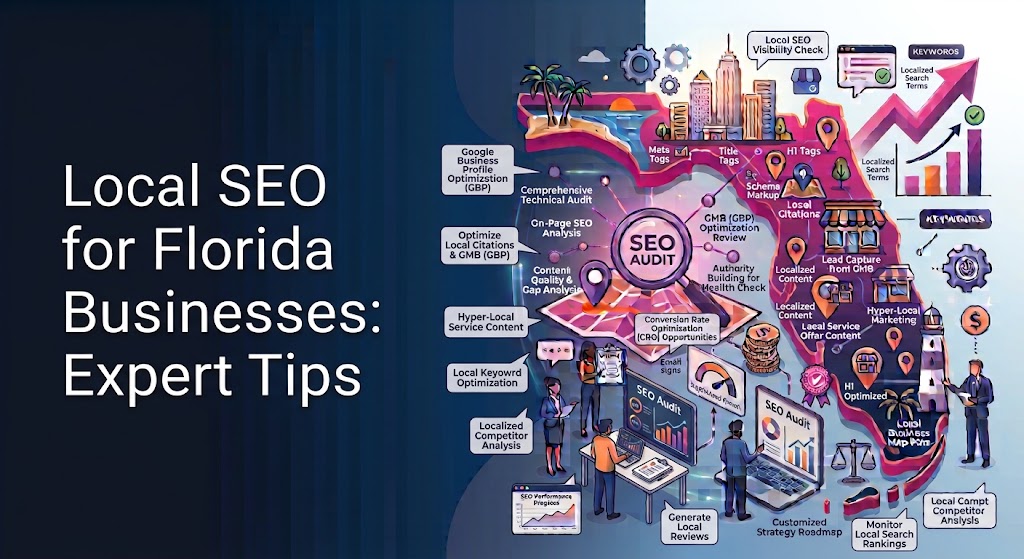
The first step is to assess the current website, Google Business Profile, business listings, reviews, local content, and technical configuration. This audit should identify missing information, inaccurate listings, weak location pages, indexing problems, and opportunities to improve customer experience.
Businesses should also review competitors to understand the local market and identify areas where their own information is incomplete. The purpose is not to copy competing websites but to determine how the business can provide a clearer and more useful experience.
Prioritize High-Impact Improvements
After the audit, businesses should address the problems that most directly affect customers and search accessibility. Correcting inaccurate contact information, fixing broken service pages, improving mobile navigation, and completing essential profile details may take priority over lower-impact refinements.
A simple roadmap can separate urgent technical fixes, content improvements, reputation management, and longer-term link-building activities. Each task should have a clear owner and a practical way to verify completion.
Maintain Consistent Optimization
Local SEO should be incorporated into regular business operations. Companies should review their business information, monitor customer feedback, update important content, and test critical website features as services and circumstances change.
Businesses should also evaluate whether their strategy continues to reflect customer demand and actual service coverage. A regular review process helps prevent wasted effort and keeps the campaign aligned with changing business objectives.
Local SEO Trends and Future Opportunities in Florida
Local search continues to evolve as search engines introduce new interfaces, users adopt different search behaviors, and businesses improve their digital experiences. Florida companies should focus on maintaining accurate information, useful content, and strong customer relationships rather than relying on predictions about a single ranking tactic.
Conversational and Voice Search
Some customers use conversational queries when searching for nearby services, asking questions such as which businesses are open or which providers offer a particular service. Businesses can support these searches by providing clear answers about services, opening hours, locations, and booking procedures.
There is no need to create separate pages for every possible spoken query. Clear content that addresses real customer needs is generally more practical than attempting to target speculative voice-search phrases.
AI-Assisted Search Experiences
Search experiences increasingly incorporate summaries and conversational interfaces that may change how users discover information. Businesses should continue publishing accurate, helpful content and maintaining consistent business information so their services are clearly represented across relevant digital channels.
No specific content format guarantees inclusion in AI-generated answers. Businesses should prioritize factual accuracy, useful explanations, accessible website content, and a trustworthy online presence while monitoring how search traffic and customer behavior evolve.
Stronger Emphasis on Trust and Customer Experience
Customers increasingly evaluate businesses through reviews, photographs, service details, and the clarity of their websites. Businesses that maintain accurate information and respond professionally to feedback can provide a more reliable experience for prospective customers.
Trust should be supported by genuine evidence, including real project examples, accurate qualifications, transparent policies, and consistent service delivery. These practices help build a durable local presence regardless of short-term changes in search interfaces.
Why Choose DealMate for Local SEO Services in Florida?
Selecting a local SEO provider requires careful consideration of the business’s objectives, geographic coverage, competitive conditions, and available resources. DealMate can be considered by Florida businesses seeking local SEO assistance, but prospective clients should verify its current services, relevant experience, and suitability for their needs before entering an engagement.
A dependable provider should explain the work being proposed, identify the issues it intends to address, and establish how progress will be evaluated. Businesses should prioritize transparency and practical expertise rather than relying on unsupported promises about rankings or guaranteed leads.
A Strategy Built Around Local Business Needs
A suitable local SEO engagement should begin with an assessment of the company’s existing online presence. This review may include its Google Business Profile, website structure, location pages, keyword opportunities, citations, reviews, and local competitors.
The resulting strategy should reflect the services the company actually provides and the communities it can genuinely serve. Recommendations should be specific enough to implement and prioritized according to their likely value rather than presented as a generic checklist.
Transparent Communication and Reporting
Businesses should understand which activities are included in the engagement, who is responsible for implementation, and how results will be reported. Clear reporting should distinguish completed work from planned actions and explain how relevant performance metrics are changing.
A provider should also communicate limitations and uncertainties honestly. Local rankings depend on multiple factors, and no legitimate SEO professional can guarantee a specific position in every search or geographic location.
Building Sustainable Local Visibility
Sustainable local SEO combines accurate business information, useful website content, genuine customer feedback, technical maintenance, and ongoing performance analysis. A provider should help establish a process that the business can maintain as its services and locations evolve.
Before choosing DealMate or another provider, request a defined scope of work, examples of relevant projects where available, expected reporting, implementation responsibilities, and clear pricing. This due diligence helps ensure that the proposed service matches the company’s requirements and supports realistic long-term objectives.
Frequently Asked Questions About Local SEO for Florida Businesses
What is local SEO for Florida businesses?
Local SEO improves a business’s online visibility for searches associated with specific geographic areas. It includes optimizing business profiles, location pages, website content, customer reviews, and local citations. These activities help search engines understand the company’s services and where it operates. The goal is to attract relevant local customers and make it easier for them to contact or visit the business.
How long does local SEO take to produce results?
The timeline depends on competition, the website’s existing condition, the quality of implementation, and the local market. Some improvements to business information or website usability can benefit customers immediately, while measurable search visibility changes may take longer. Businesses should monitor impressions, website traffic, customer inquiries, and conversions over a suitable period. No responsible provider can guarantee a specific ranking or exact timeframe for success.
How much do local SEO services cost in Florida?
Local SEO pricing depends on the number of locations, the level of competition, the website’s technical condition, and the services included. A single-location business may require a simpler strategy than a company managing multiple branches across Florida. Businesses should compare proposals based on deliverables, reporting, implementation support, and experience rather than price alone. Requesting a clear scope of work helps prevent misunderstandings about ongoing responsibilities and additional fees.
Is Google Business Profile important for local SEO?
Google Business Profile is an important tool for eligible businesses seeking visibility in Google Search and Maps. It allows businesses to present accurate details such as their category, address or service area, hours, contact information, and photographs. Maintaining a complete profile can help customers evaluate the business and understand its offerings. However, profile completeness alone does not guarantee higher local rankings.
Do customer reviews affect local SEO?
Customer reviews can contribute to a business’s prominence and influence how potential customers evaluate its services. Genuine feedback also helps businesses identify service strengths and areas requiring improvement. Companies should invite honest reviews, respond professionally, and follow the applicable platform policies. Fake reviews, manipulated ratings, and prohibited incentives can damage trust and create platform-related risks.
How can a small business compete with larger companies in Florida?
Small businesses can focus on relevant services, realistic service areas, useful local content, and strong customer relationships. Dedicated service pages, accurate business information, genuine reviews, and helpful website resources can improve their local presence. Businesses should prioritize opportunities that align with their capabilities rather than attempting to target every city or keyword. Consistent optimization and a reliable customer experience can support long-term competitiveness.
What are local citations in SEO?
Local citations are online mentions of a business’s identifying information, often including its name, address, and telephone number. They can appear in directories, industry listings, community websites, and other relevant online resources. Accurate citations help customers find the correct business and support a consistent online presence. Businesses should prioritize reputable and relevant listings rather than accumulating large numbers of low-quality citations.
Do businesses need separate pages for every Florida city?
Separate location pages can be useful when a business genuinely serves multiple areas and each page provides meaningful information. A useful page may explain local service availability, relevant contact details, and genuine differences in the company’s offering. Creating many nearly identical pages that only replace city names can provide little value and may create doorway-page concerns. Businesses should publish location pages according to actual customer needs and operational capabilities.
Can local SEO generate more phone calls and leads?
Local SEO can help potential customers discover a business when they search for relevant services in a particular area. Accurate contact information, useful service pages, strong customer reviews, and convenient mobile navigation can make it easier for those visitors to inquire. Actual results depend on factors such as demand, competition, service quality, and the effectiveness of the website’s conversion process. Businesses should measure qualified calls, inquiries, bookings, and sales rather than relying only on ranking positions.
Should Florida businesses hire a local SEO expert?
A local SEO expert can help businesses assess technical issues, identify relevant keywords, improve business profiles, and develop a practical optimization plan. Professional support may be particularly useful for competitive markets, multiple locations, or websites with significant technical problems. Before hiring a provider, businesses should verify experience, understand the scope of work, and establish clear reporting expectations. The right choice depends on the company’s goals, budget, internal resources, and need for specialized expertise.
Conclusion
Local SEO for Florida businesses is a practical way to improve online visibility, connect with geographically relevant customers, and build a stronger digital presence. By optimizing Google Business Profile, researching local keywords, developing useful location pages, maintaining accurate citations, managing genuine reviews, and improving website performance, businesses can create a more reliable foundation for local search growth.
The most effective strategy focuses on the needs of real customers rather than shortcuts or guaranteed ranking promises. Florida businesses should prioritize accurate information, relevant content, trustworthy customer experiences, and regular performance measurement while adapting their approach to their industry and service areas.
Whether a company operates in Miami, Orlando, Tampa, Jacksonville, Fort Lauderdale, or another Florida community, consistent optimization can help it compete more effectively for relevant local searches. With a clear strategy, responsible implementation, and ongoing monitoring, local SEO can become a valuable component of long-term customer acquisition and business development.