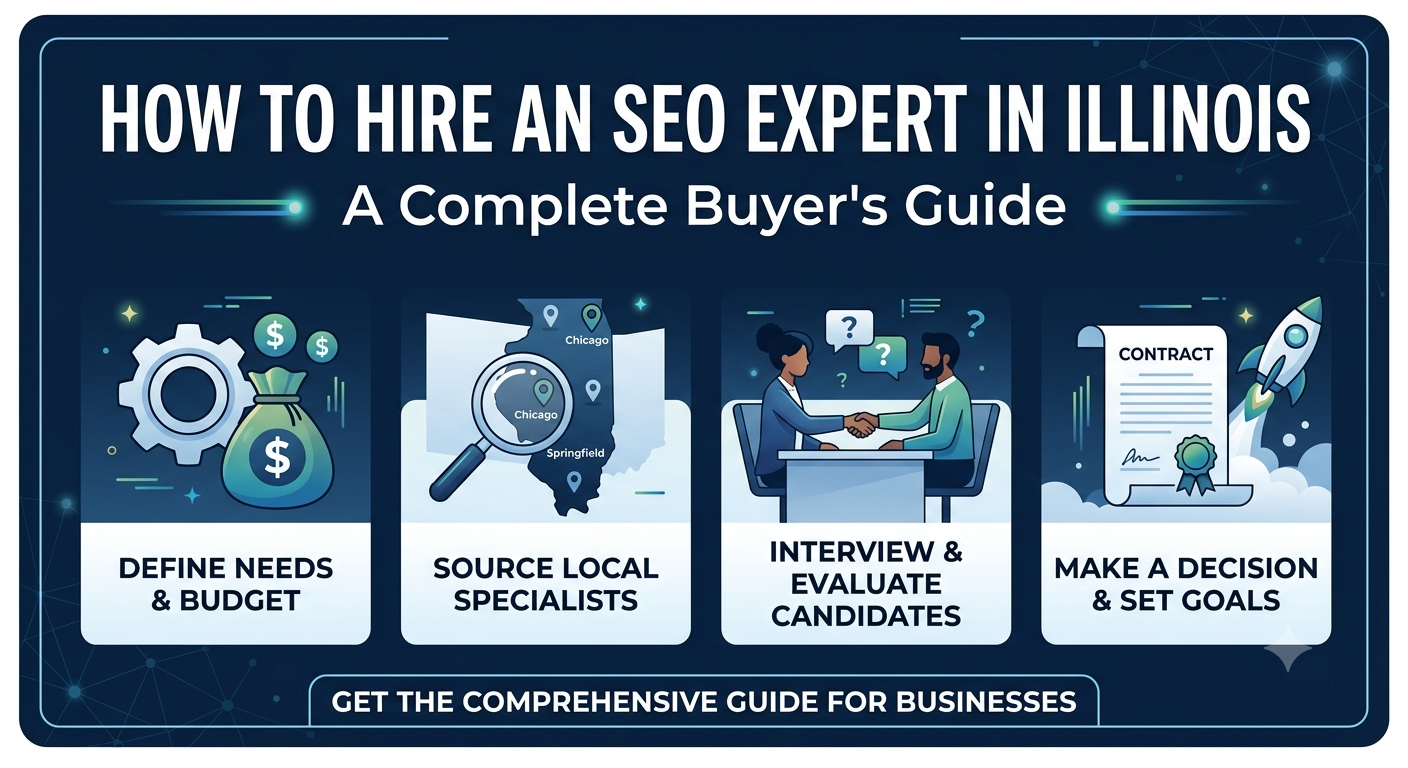
Introduction
🔍 Hiring the right SEO expert in Arizona can make a major difference in how easily customers find your business online. Whether you operate a local service company in Phoenix, a professional practice in Scottsdale, an e-commerce store in Mesa, or a growing company serving customers throughout Arizona, search engine optimization can help you attract people who are actively looking for your products or services.
📈 SEO is more than adding keywords to website pages and waiting for Google rankings to improve. A successful SEO strategy combines technical website improvements, useful content, keyword research, local optimization, authority building, user experience, and continuous measurement. The right SEO expert should understand how these areas work together and create a strategy that supports your actual business goals.
🤝 Choosing an SEO professional is also a business decision rather than simply a marketing purchase. You are trusting someone with an important part of your online presence, so you need to understand their experience, methods, communication process, reporting standards, pricing, and ability to deliver measurable improvements.
🌵 Arizona is a competitive market with businesses ranging from local contractors and healthcare providers to restaurants, law firms, real estate companies, technology businesses, retailers, and professional services. This guide explains what to look for when hiring an SEO expert in Arizona, how to compare different providers, what services you should expect, and which warning signs should make you reconsider a potential SEO partner.
Why SEO Matters for Arizona Businesses
📍 Arizona businesses compete not only with companies located nearby but also with national brands, directories, marketplaces, review platforms, and businesses targeting the same search terms. When potential customers search for a service or product, businesses that appear prominently in relevant results have a greater opportunity to receive website visits, inquiries, calls, bookings, and purchases.
🔎 Search behavior is especially important for local businesses because customers often use location-based searches when they are ready to take action. Searches such as “plumber in Phoenix,” “dentist near Scottsdale,” “SEO company in Mesa,” or “roofing contractor in Tucson” demonstrate strong local intent and can connect businesses with customers who are already looking for a solution.
📱 Modern SEO also needs to account for mobile users. Many people search for businesses while traveling, shopping, comparing services, or looking for immediate assistance, which means a website needs to load properly, display information clearly, and make it easy for visitors to call, submit a form, request directions, or complete a purchase.
💡 A strong SEO strategy can also reduce dependence on paid advertising over time. While paid campaigns can generate immediate visibility, organic search can continue producing traffic after individual optimization projects and content assets have been completed, making SEO an important long-term marketing investment for many businesses.
Understanding What an SEO Expert Does
🧑💻 An SEO expert is responsible for improving a website’s ability to appear prominently in relevant search results and attract qualified visitors. Their work can involve technical analysis, keyword research, website optimization, content planning, local SEO, internal linking, authority development, performance monitoring, and strategic recommendations.
🛠️ A professional SEO expert should begin by understanding the business rather than immediately changing website content. They should learn about your target customers, products or services, geographic market, competitors, existing website performance, conversion goals, and previous marketing activities before developing an optimization strategy.
📊 SEO specialists also use data to identify opportunities and problems. They may examine organic traffic, search queries, landing pages, technical errors, indexing information, conversions, local visibility, backlink profiles, and competitor performance to determine where improvements could have the greatest business impact.
🎯 The best SEO professionals focus on relevant traffic rather than traffic alone. Receiving thousands of visitors who have no interest in your services does not necessarily create business value, while a smaller amount of highly targeted traffic can generate qualified leads and customers.
SEO Services You Should Expect
🔧 SEO is a broad discipline, and different businesses require different combinations of services. Before hiring an SEO expert in Arizona, you should understand the main components of a professional SEO campaign so you can determine whether a provider is offering meaningful work or simply selling a generic monthly package.
Technical SEO
⚙️ Technical SEO focuses on the structure and performance of your website and helps search engines discover, crawl, understand, and index your pages effectively. An SEO expert may review site architecture, page speed, mobile usability, redirects, broken links, canonicalization, XML sitemaps, robots directives, structured data, indexing issues, and other technical factors.
🖥️ Technical problems can prevent otherwise valuable content from performing well in search results. For example, a website may contain excellent service pages but still struggle to gain visibility if important pages cannot be properly crawled or if the site has serious performance and usability problems.
On Page SEO
📝 On page SEO involves optimizing the content and structure of individual website pages. This can include page titles, headings, meta descriptions, URLs, keyword usage, content structure, internal links, image optimization, relevant terminology, and calls to action.
🎯 Good on page SEO should never mean stuffing the same keyword repeatedly into a page. Instead, the goal is to create useful content that clearly addresses the searcher’s needs while helping search engines understand the subject, purpose, and relevance of the page.
Local SEO
📍 Local SEO is particularly important for businesses that serve customers in specific cities, communities, or geographic areas. It involves improving local search visibility through location-focused website optimization, business information consistency, customer reviews, local content, geographic relevance, and optimization of the business’s presence in local search features.
🏙️ An Arizona business serving one city may need a different strategy from a company serving customers across the entire state. A qualified SEO expert should understand this distinction and avoid creating thin location pages that provide little value to users.
Keyword Research
🔎 Keyword research identifies the terms and phrases potential customers use when searching for products, services, answers, and businesses. A professional SEO expert should consider search intent, competition, geographic relevance, commercial value, and the stage of the customer’s buying journey.
💰 Not every high-volume keyword is worth targeting. A lower-volume phrase that closely matches a service and attracts customers who are ready to contact a business may be considerably more valuable than a broad keyword that generates large amounts of irrelevant traffic.
Content Optimization
✍️ Content plays a central role in modern SEO because search engines aim to provide users with helpful and relevant information. An SEO expert may optimize existing pages, identify content gaps, develop new service pages, create educational articles, improve topical coverage, and organize content into logical topic clusters.
📚 Effective content should be created for real users first. It should answer questions clearly, demonstrate relevant expertise, provide useful information, and guide visitors toward the next appropriate action rather than existing solely to increase keyword density.
Link Building
🔗 Link building involves earning relevant links from other websites that can strengthen a website’s authority and discoverability. A responsible SEO expert should focus on quality, relevance, and natural acquisition rather than using large volumes of low-quality links.
🚨 Businesses should be careful when an SEO provider promises hundreds or thousands of backlinks every month. The number of links alone does not indicate quality, and aggressive or manipulative link-building practices can create unnecessary risk for a website.
Google Business Profile Optimization
📌 For local businesses, the business profile that appears in local search and map results can be an important source of visibility. Optimization can involve accurate business information, appropriate categories, service details, photos, customer reviews, business descriptions, and regular updates where appropriate.
⭐ Reviews also influence how potential customers evaluate a business. An SEO professional can help establish a legitimate process for encouraging customers to share genuine experiences without using misleading or manipulative review practices.
SEO Analytics and Reporting
📊 Professional SEO should be measurable. Your SEO provider should establish appropriate performance indicators and regularly explain what was changed, what improved, what needs attention, and how the work connects to business objectives.
📈 Reports can include organic traffic, search visibility, keyword trends, landing-page performance, leads, conversions, local search activity, technical improvements, content progress, and other relevant metrics. The exact metrics should depend on your business model rather than following the same report template for every client.
When Your Arizona Business Should Hire an SEO Expert
🚀 There is no single business size that determines when you should hire an SEO expert. A small business can benefit from professional SEO if search visibility is important for generating customers, while a larger company may require specialists to manage technical SEO, content, local visibility, e-commerce optimization, and large website structures.
🏢 You may want professional SEO assistance if your website receives very little organic traffic despite having useful services or products. It can also be worthwhile if competitors consistently appear above your business for valuable searches, your website has technical problems, or your local visibility is weaker than expected.
📉 Another warning sign is declining organic performance. A sudden drop in traffic or rankings can have several causes, including technical changes, website redesigns, content changes, search algorithm updates, indexing problems, or increased competition, so a qualified professional should investigate the underlying reason instead of immediately recommending more content.
💼 Businesses launching a new website can also benefit from SEO planning before the site is fully developed. Building the correct structure, page hierarchy, URLs, internal linking system, location pages, and content strategy from the beginning can reduce the need for expensive corrections later.
SEO Expert vs SEO Agency vs Freelancer
👤 An SEO freelancer is often an individual specialist who works directly with clients and may provide a personalized service at a lower overhead cost. Freelancers can be a strong choice for small businesses that need focused SEO support, consulting, audits, content optimization, or local SEO.
🏢 An SEO agency typically has multiple specialists or departments covering areas such as technical SEO, content, link building, analytics, development, and account management. Agencies may be better suited to businesses with larger websites, multiple locations, complex campaigns, or broader digital marketing requirements.
🧑💼 An in-house SEO professional becomes part of the company’s internal team and can develop a deep understanding of the business, customers, products, and long-term goals. However, hiring internally can involve greater costs because the company may need to provide salary, benefits, software, training, equipment, and other resources.
📋 The right choice depends on your goals, budget, website complexity, and preferred working relationship. Instead of automatically choosing the cheapest option, compare providers based on expertise, strategy, transparency, communication, previous results, and how closely their approach matches your business needs.
How to Identify the Right SEO Expert in Arizona
🔍 Finding an SEO provider is easy, but finding the right provider requires careful evaluation. Several companies may claim to be experts, yet their experience, strategies, communication standards, and results can vary significantly.
Check Their SEO Experience
📚 Start by examining how long the SEO professional has been working in the field and what types of businesses they have supported. Experience with websites similar to yours can be particularly valuable because different industries have different levels of competition, customer behavior, compliance considerations, and conversion processes.
🎯 Ask whether the provider has experience with local businesses, multi-location businesses, e-commerce websites, service companies, professional practices, or your specific industry. Relevant experience does not guarantee success, but it can shorten the learning curve and improve strategic decision-making.
Review Their Industry Knowledge
🧠 A good SEO expert should be able to discuss your business in practical terms rather than presenting only generic SEO terminology. They should understand what your customers are searching for, what makes your business different, and which products or services generate the greatest commercial value.
💬 During an initial consultation, ask the expert to explain how they would approach your website. Pay attention to whether they ask thoughtful questions about your business or immediately present a standard package without first understanding your objectives.
Examine Their Previous Results
📈 Case studies can provide useful evidence of how an SEO provider approaches real projects. Look for examples that explain the initial situation, the strategy used, the period involved, and the measurable outcomes rather than vague statements about improving rankings.
🔎 When reviewing results, look beyond impressive keyword positions. Consider whether the campaign produced relevant organic traffic, qualified leads, phone calls, sales, bookings, or other meaningful business outcomes.
Evaluate Their Local SEO Expertise
🌵 Arizona has diverse markets and customer bases, so local SEO knowledge can be especially valuable for businesses that depend on customers within specific geographic areas. Ask how the expert approaches local search visibility, location-based content, business information, reviews, and city-specific competition.
📍 A strong local SEO strategy should reflect the actual areas a business serves. Avoid providers who simply promise to create dozens of nearly identical city pages without explaining how those pages will provide genuine value to users.
Ask About Their SEO Process
🧩 Ask what happens during the first month, what information they need from you, how they prioritize recommendations, how technical issues are handled, how content decisions are made, and how progress is measured. A clear process demonstrates that the provider understands SEO as an ongoing strategic activity rather than a collection of random tasks.
🗂️ A typical process may begin with discovery and auditing, followed by keyword research, technical improvements, on page optimization, content planning, local SEO, authority development, monitoring, and continuous refinement. The exact sequence should be adapted to the website rather than blindly following a fixed checklist.
Check Their Communication Style
📞 Communication can determine whether an SEO campaign becomes a productive partnership or a frustrating experience. Before signing a contract, establish how frequently you will receive updates, who will be your primary contact, how questions are handled, and how urgent issues are communicated.
🤝 Your SEO provider should be able to explain complex concepts in language you can understand. You should not need to become an SEO specialist yourself, but you should understand what work is being performed and why it matters to your business.
Questions to Ask Before Hiring an SEO Expert
❓ Asking the right questions can reveal significant differences between SEO providers. A professional should be comfortable explaining their strategy, limitations, expected timelines, reporting methods, pricing structure, and previous experience.
Consider asking the following questions during your evaluation:
What SEO experience do you have with businesses similar to mine?
How would you evaluate my website before creating an SEO strategy?
Which keywords and customer searches would you prioritize?
How will you approach local SEO for my Arizona service area?
What technical SEO issues will you review?
How will you measure SEO success?
What will be included in the monthly service?
How often will you provide reports and strategy updates?
Who will actually perform the SEO work?
How will you communicate recommendations and required website changes?
What happens if SEO performance does not improve as expected?
Which SEO practices do you avoid?
💡 The quality of the answers is often more important than the number of years a provider claims to have worked in SEO. Look for clear, realistic explanations that demonstrate strategic thinking rather than promises that sound too good to be true.
How to Evaluate an SEO Portfolio and Case Studies
📂 A portfolio gives you an opportunity to understand the type of websites an SEO expert has worked on and the problems they have solved. When reviewing examples, look for projects that are comparable to your business in terms of location, industry, website size, competition, and business objectives.
📊 Strong case studies should explain the starting point, challenges, actions taken, and measurable results. A provider does not necessarily need to reveal confidential client information, but they should still be able to demonstrate credible examples of their approach and explain what contributed to the results.
🔍 Be cautious when a portfolio contains only screenshots of rankings without business context. A keyword moving from page five to page one may look impressive, but it does not automatically prove that the campaign generated valuable customers.
💼 Also consider whether previous clients appear to have maintained their visibility over time. Sustainable SEO is generally more valuable than short-lived ranking increases created through aggressive tactics that may not provide long-term benefits.
SEO Expert vs Business Goals
🎯 Before hiring anyone, define what you actually want SEO to accomplish. Your goal could be generating more phone calls, increasing service inquiries, improving local visibility, growing online sales, attracting visitors to a physical location, expanding into new Arizona cities, or building long-term organic traffic.
📌 These objectives influence the strategy. A local plumber may prioritize calls and map visibility, an e-commerce business may focus on product and category searches, while a professional service company may need strong informational content combined with high-intent service pages.
📈 Clear goals also make it easier to evaluate your SEO provider. Instead of asking only whether rankings increased, you can ask whether organic visibility improved for commercially important searches and whether that visibility contributed to measurable business growth.
Choosing an SEO Expert Based on Value
💰 Price should be considered, but it should not be the only deciding factor. The cheapest provider may deliver limited work, while the most expensive provider may offer services your business does not actually need.
⚖️ Compare the expected value of the work against the potential business opportunity. An SEO campaign that generates several qualified customers every month may justify a higher investment than a cheaper campaign that produces reports but little measurable business impact.
🤝 The best SEO relationship is usually based on transparency, realistic expectations, consistent communication, and measurable progress. Your provider should function as a strategic partner who understands that better search visibility ultimately needs to support your business rather than simply produce attractive SEO reports.
Preparing for the Next Stage of Your SEO Strategy
🚀 Hiring an SEO expert should be treated as the beginning of an ongoing process rather than a one-time transaction. Once the right provider is selected, both sides should establish priorities, responsibilities, timelines, communication expectations, and measurable objectives.
📋 The next step is understanding how SEO pricing works and what you should realistically expect to pay for professional services in Arizona. Evaluating pricing models alongside local SEO requirements, technical work, content development, reporting, and expected business outcomes will help you make a more informed hiring decision.
Part 1 is complete. When you say Part 2, I’ll continue with the pricing, Arizona local SEO, keyword research, technical SEO, content, link building, measurement, reporting, and SEO red flags sections.
The challenge is that SEO is a broad and constantly changing field. Many professionals and agencies describe themselves as SEO experts, but their experience, methods, communication style, pricing, and ability to deliver measurable results can vary significantly. A business owner should therefore look beyond impressive promises and focus on strategy, experience, transparency, technical knowledge, and long-term value.
Hiring an SEO expert in Arizona also requires an understanding of the local market. Arizona includes major business communities in Phoenix, Scottsdale, Mesa, Tempe, Chandler, Tucson, Glendale, Gilbert, Peoria, and many other areas, with each market having different customer behavior and competitive conditions. A successful SEO strategy should account for the business location, target audience, service area, search intent, competitors, and industry.
This buyer’s guide explains what to look for when hiring an SEO expert, how to evaluate different providers, which questions to ask before signing an agreement, and how to recognize warning signs that could put your website or marketing investment at risk. 📈 By the end, you should have a clearer framework for selecting an SEO professional who can build sustainable organic visibility rather than simply offering short-term traffic promises.
Understanding SEO Expertise in Arizona
SEO, or search engine optimization, is the process of improving a website and its online presence so that it has a better opportunity to appear prominently in relevant search results. It involves multiple disciplines, including technical optimization, keyword research, content development, local search optimization, website structure, user experience, authority building, and performance analysis.
For an Arizona business, SEO should not be treated as a generic marketing package that can be copied from one company to another. A home remodeling company in Phoenix may need a completely different strategy from a law firm in Scottsdale or a healthcare provider in Tucson. The keywords, customer journey, competition, content requirements, local signals, and conversion opportunities can all be different.
A good SEO expert begins by understanding the business before recommending specific tactics. They should learn about the company’s products or services, ideal customers, geographic coverage, revenue priorities, existing website, competitors, previous marketing efforts, and business goals. This discovery process helps create an SEO strategy that supports actual business outcomes rather than focusing only on rankings.
Local market knowledge can also be valuable when the business depends on customers within a particular geographic area. Someone searching for a service in Phoenix may have different expectations and search behavior from someone searching in Flagstaff or Tucson. An SEO professional should understand how location affects keyword intent, landing pages, local visibility, content, and customer acquisition.
At the same time, being located in Arizona does not automatically make someone an SEO expert. A provider may understand the local market but lack technical SEO knowledge, while another may have excellent technical skills but limited experience with local businesses. The best hiring decision comes from evaluating the complete combination of SEO knowledge, relevant experience, communication, strategy, and measurable performance.
Why Hiring a Local SEO Expert Matters
Local SEO can be especially important for businesses that serve customers within specific cities, neighborhoods, or service areas. When people search for services near them, they often want businesses that can serve their location quickly and conveniently. A strong local search presence can help a business become more visible during these high-intent searches.
An Arizona SEO expert who understands local search can help identify opportunities based on the locations and services that matter most to the business. This may involve improving location-focused website content, optimizing business information, developing relevant service pages, strengthening internal linking, improving local relevance, and ensuring that search engines can clearly understand the company’s service areas.
Local SEO is not simply about adding a city name to every page. Overusing location keywords can make content unnatural and may create a poor experience for visitors. A professional strategy should use geographic information naturally while providing useful information that genuinely helps people make decisions.
For example, a business serving multiple cities should consider whether each location requires a meaningful dedicated page. A strong location page should provide useful information about the services offered, the areas served, customer concerns, relevant questions, and reasons the company is qualified to help. Simply creating dozens of pages with the same content and replacing the city name is unlikely to provide the same value.
Local SEO can also connect search visibility with real-world customer behavior. A person looking for an emergency plumber, dental practice, HVAC company, attorney, restaurant, or home improvement provider may be close to making a purchasing decision. This makes local search optimization particularly valuable for businesses where location and immediate customer needs are important. 📍
What an Arizona SEO Expert Should Offer
Before hiring an SEO professional, it is important to understand what you are actually purchasing. SEO should be viewed as an ongoing process rather than a one-time website modification. Search visibility depends on many factors, and a capable expert should be able to explain which areas require attention and why.
A professional SEO provider should normally begin with an audit or discovery process. The assessment may examine website architecture, indexing, page performance, technical issues, content quality, keyword targeting, internal links, local optimization, competitors, and existing search performance.
The provider should then convert the findings into a practical strategy. Instead of presenting a long list of technical terms, they should explain the priorities in business-friendly language and show how the proposed work can contribute to visibility, qualified traffic, leads, sales, or other meaningful goals.
A comprehensive SEO engagement may include several areas:
🔍 Keyword research based on search intent, competition, location, and business value
🛠️ Technical SEO improvements that help search engines crawl and understand the website
✍️ Content strategy focused on useful and relevant topics
📍 Local SEO optimization for location-based searches
🔗 Internal linking and website structure improvements
📊 Search performance tracking and reporting
🧭 Competitor research and opportunity identification
🖥️ On-page optimization for important website pages
📈 Conversion-focused improvements that connect traffic with business objectives
🔄 Ongoing monitoring and strategy adjustments
Not every business needs every service at the same intensity. A small local company may benefit more from local SEO and service-page optimization, while a large e-commerce website may require extensive technical SEO, category optimization, content strategy, and scalable internal linking.
The important point is that the SEO expert should recommend services based on your specific situation rather than automatically selling a standard package. A good provider should be able to explain why each activity matters and how success will be evaluated.
Services to Look for Before Hiring
SEO Audit
An SEO audit provides a starting point for understanding the current condition of a website. It can reveal technical problems, indexing issues, weak pages, duplicate content, missing optimization opportunities, poor internal linking, slow pages, and other factors that may limit organic visibility.
A useful audit should prioritize issues rather than simply generate hundreds of warnings. Business owners need to know which problems are urgent, which improvements can have the greatest impact, and which recommendations can wait.
Keyword Research
Keyword research helps identify what potential customers search for when looking for a product, service, solution, or business. However, effective keyword research goes beyond finding phrases with large search volumes.
The SEO expert should consider search intent, competition, commercial value, geographic relevance, customer journey, and the likelihood that a particular search can lead to a conversion. A keyword receiving thousands of searches may be less valuable than a smaller keyword used by customers who are ready to contact a business.
On-Page SEO
On-page SEO involves optimizing elements within individual pages so that users and search engines can better understand their purpose. This can include page titles, headings, content structure, internal links, image information, URLs, metadata, and other relevant elements.
The objective should not be to insert keywords repeatedly. Instead, pages should clearly answer the searcher’s question while providing a useful, easy-to-navigate experience.
Technical SEO
Technical SEO focuses on the technical foundation of the website. It may include crawling, indexing, site architecture, redirects, canonicalization, structured data, mobile usability, page performance, broken links, and other technical considerations.
Technical SEO can become particularly important for larger websites where problems may affect hundreds or thousands of pages. An expert should be able to identify technical problems and work with developers or website administrators when implementation requires coding or platform-level changes.
Content Strategy
Content is an important part of SEO because search engines need useful information to understand a website and match it with relevant searches. However, publishing large amounts of low-quality content is not an effective substitute for a thoughtful content strategy.
A strong content plan should identify the questions, concerns, comparisons, and problems that matter to the target audience. The content should demonstrate knowledge, provide useful answers, support the customer journey, and naturally connect readers to relevant products or services.
Local SEO
For businesses serving Arizona customers locally, local SEO deserves particular attention. The strategy should help search engines understand where the business operates and which products or services it provides.
Local optimization may include business information consistency, location-focused website content, service-area pages where appropriate, customer review strategy, local relevance, and other signals that support geographic visibility. The exact approach should depend on whether the company serves one location, multiple locations, or a wider service area.
How to Evaluate SEO Experience
Experience is one of the most important factors to evaluate when choosing an SEO expert, but the number of years someone has worked in SEO should not be the only consideration. Someone with five years of experience working on relevant projects may be a better fit than someone with ten years of experience working in completely different markets.
Start by asking whether the SEO professional has experience with businesses similar to yours. Relevant experience can provide useful insight into your industry’s search behavior, competitive environment, customer journey, and common challenges.
For example, an SEO expert working with local contractors should understand service-area searches, location pages, lead generation, customer reviews, and high-intent service keywords. An e-commerce SEO specialist should understand category pages, product pages, faceted navigation, inventory changes, and large-scale technical considerations.
Ask prospective providers to explain previous projects without requiring confidential client information. You can learn a lot by asking what problem the client faced, what strategy was implemented, what obstacles appeared, how progress was measured, and what lessons the SEO professional learned.
A credible expert should also be comfortable discussing situations where results were slower than expected. SEO does not always produce immediate improvements, and honest professionals understand that competition, website history, technical limitations, content quality, and search demand can influence the timeline.
Experience Evaluation Checklist
When reviewing an SEO professional, consider:
🎯 Experience with businesses similar to yours
📍 Experience with Arizona or other location-based markets
🛠️ Technical SEO knowledge
✍️ Content strategy capabilities
📊 Reporting and analytics experience
🔍 Competitor research skills
📈 Ability to connect SEO activity with business outcomes
🤝 Communication and project management
🔄 Willingness to adapt the strategy based on performance
🧠 Understanding of search intent and customer behavior
A provider who can explain these areas clearly is generally easier to evaluate than someone who relies mainly on complicated terminology or vague promises.
Questions to Ask an SEO Expert
Before signing a contract, have a direct conversation with the SEO professional. The purpose is not to test whether you know SEO terminology. Instead, the goal is to understand how the provider thinks, communicates, prioritizes work, and measures success.
Ask what they would evaluate first on your website. Their answer can reveal whether they take a strategic approach or immediately try to sell a predefined package.
Ask how they select keywords. A strong answer should include factors such as relevance, search intent, competition, customer value, geographic targeting, and conversion potential rather than focusing exclusively on search volume.
Ask how they measure success. Rankings can be useful indicators, but they should not be the only performance measurement. Depending on the business, meaningful indicators may include qualified organic traffic, leads, calls, form submissions, sales, revenue, visibility for important searches, and improvements in relevant landing-page performance.
Ask what happens if the initial strategy does not produce the expected results. SEO involves testing and learning, so a good provider should have a process for reviewing performance and adjusting priorities.
You should also ask about communication frequency, reporting format, responsibilities, contract terms, implementation requirements, and expected timelines. Clear expectations at the beginning can prevent misunderstandings later.
Checking SEO Strategy and Process
A strong SEO process should be structured but flexible. The expert should have a clear plan for understanding the website, identifying opportunities, implementing improvements, measuring results, and refining the strategy.
The first stage is usually discovery and assessment. This is where the provider learns about the business, audience, competitors, current website performance, previous SEO work, and business objectives.
The next stage involves prioritization. Not every SEO issue has the same impact, and a professional should distinguish between high-priority improvements and minor technical recommendations. This helps ensure that the budget and available resources are directed toward activities with meaningful potential value.
Implementation should then follow the strategy. Depending on the arrangement, the SEO expert may make changes directly or provide recommendations for a developer, content team, designer, or internal marketing team.
Measurement is equally important. Regular analysis allows the SEO professional to identify what is improving, what is not progressing, and where new opportunities are emerging. 📊 SEO should become a continuous improvement process rather than a checklist that is completed once and forgotten.
Understanding Local SEO for Arizona Businesses
Arizona businesses can face a wide range of local search conditions depending on their location and industry. A company competing for customers in a large metropolitan market may face a different level of competition from a business serving a smaller community.
A local SEO strategy should therefore begin with the actual service area. Determine whether your business serves a specific city, several nearby communities, an entire metropolitan area, or customers across Arizona. This geographic definition can influence keyword research, landing pages, content strategy, and local targeting.
For businesses with physical locations, the website should clearly communicate where the business is located and what it offers. For service-area businesses, the website should explain which areas are served without creating unnecessary or repetitive pages.
Customer reviews can also contribute to the overall local presence of a business. An SEO expert should help establish a responsible review strategy that encourages genuine customer feedback rather than relying on artificial or misleading methods.
Local content can further strengthen relevance when it provides genuine value. Helpful guides, service information, location-specific questions, community topics, and customer resources can make a website more useful to people in the areas it serves.
The most effective local SEO strategy combines geographic relevance with genuine business value. The goal is not simply to rank for the name of a city but to become a useful and credible result for people searching for the company’s products or services.

Understanding SEO Pricing in Arizona
💰 SEO pricing in Arizona can vary significantly depending on the size of your website, level of competition, number of locations, services required, and experience of the SEO provider. A small local business may need a focused local SEO campaign, while a larger company may require technical optimization, content production, multiple location strategies, link acquisition, analytics, and ongoing consulting.
📊 The most important question is not simply “How much does SEO cost?” but “What am I receiving for the investment?” A professional SEO proposal should explain the work being performed, the priorities behind that work, the expected deliverables, reporting process, and how the strategy connects to your business goals.
Typical SEO Pricing Models
📋 SEO providers generally use several pricing structures, including monthly retainers, project-based pricing, hourly consulting, and occasionally performance-based arrangements. Each model can work well depending on the type of project, but you should understand exactly what is included before agreeing to a contract.
💼 Monthly retainers are common for ongoing SEO because search visibility requires continuous monitoring, optimization, content development, technical improvements, and competitive analysis. Project-based SEO can be more appropriate for website audits, migrations, technical fixes, website launches, or specific optimization projects.
Monthly SEO Retainers
🔄 A monthly SEO retainer provides ongoing support for a predetermined fee. The provider may perform technical SEO, keyword research, content optimization, local SEO, reporting, competitor research, link development, and strategy adjustments during the engagement.
📈 Monthly SEO can be particularly useful for businesses operating in competitive Arizona markets because competitors are continuously publishing content, improving their websites, earning reviews, and targeting valuable searches. Consistent optimization allows your strategy to adapt as your website and competitive environment change.
Project Based SEO
🛠️ Project-based SEO involves paying for a defined piece of work with specific deliverables. Examples include a technical SEO audit, website migration review, SEO-friendly website structure, keyword research project, content strategy, or optimization of an existing website.
🎯 This approach can be useful when you already have an internal marketing team but need specialist expertise for a particular challenge. It can also be a good starting point for businesses that want to understand their SEO situation before committing to a longer engagement.
Hourly SEO Consulting
⏱️ Hourly consulting is generally suited to businesses that need expert guidance rather than full-service execution. An SEO consultant may review problems, answer technical questions, train your team, review recommendations, or provide strategic direction.
💡 This model can work well when you have developers, writers, or marketing staff available internally. Instead of paying an external provider to complete every task, you can use an SEO consultant to guide your team and make sure important decisions are based on sound SEO principles.
Performance Based SEO
📈 Performance-based SEO links some or all of the provider’s compensation to agreed performance indicators. While this may sound attractive, businesses should carefully examine how performance is defined because rankings, traffic, leads, and revenue are very different measurements.
⚠️ A contract based entirely on rankings can create the wrong incentives. A business should focus on valuable visibility and qualified customers rather than accepting strategies designed simply to increase the number of keywords appearing in search results.
Arizona SEO Pricing Comparison Table
| SEO Service Model | Best For | Typical Scope | Main Advantage | Important Consideration |
|---|---|---|---|---|
| Monthly SEO | Ongoing growth | Continuous optimization and reporting | Consistent improvement | Requires ongoing commitment |
| SEO Audit | Businesses needing diagnosis | Technical, content, and visibility review | Identifies major opportunities | Audit alone does not implement fixes |
| Project SEO | Specific SEO objectives | Defined deliverables | Clear scope and timeline | Limited ongoing optimization |
| Hourly Consulting | Internal marketing teams | Advice, reviews, and strategy | Flexible specialist support | Implementation remains with your team |
| Local SEO | Location-based businesses | Local visibility and business profile optimization | Strong geographic targeting | Requires consistent local information |
| Enterprise SEO | Large websites | Technical, content, authority, and analytics | Supports complex websites | Higher investment and coordination |
What Affects the Cost of SEO Services
🏢 Website size is one of the biggest factors affecting SEO costs. A website containing twenty pages requires a very different level of analysis from an e-commerce store containing thousands of product pages or a multi-location company operating across several Arizona cities.
🌵 Competition also matters. Ranking for a highly competitive service in Phoenix can require significantly more work than targeting a specialized service with limited competition in a smaller market. An SEO expert should evaluate your competitive landscape before recommending a budget.
📍 Geographic targeting can also increase complexity. A business targeting Phoenix alone may need a focused local strategy, while a company serving Phoenix, Scottsdale, Mesa, Chandler, Gilbert, Tucson, and other markets needs a broader location strategy with carefully planned content and local optimization.
✍️ Content requirements can influence pricing as well. Businesses that need frequent service pages, educational articles, product descriptions, comparison content, or location-specific resources may require a larger content investment than a website that already has substantial high-quality content.
Local SEO for Arizona Businesses
📍 Local SEO helps businesses become more visible when people search for products and services within a specific geographic area. It is particularly valuable for businesses where customers visit a physical location, call for services, schedule appointments, or expect a provider to operate within a defined service area.
🌵 Arizona presents a diverse local search environment because businesses may target major metropolitan areas, growing suburbs, smaller communities, or statewide audiences. Your SEO strategy should therefore reflect where your customers actually live and how far they are willing to travel for your services.
Phoenix
🏙️ Phoenix is one of the largest and most competitive business markets in Arizona, creating significant opportunities as well as strong competition. Businesses targeting Phoenix should generally focus on clear service pages, strong local relevance, useful content, customer trust signals, and a technically sound website.
🔎 Simply adding “Phoenix” to every page is not a local SEO strategy. A stronger approach is to explain the services offered, the customers served, relevant areas, frequently asked questions, and reasons customers should choose the business.
Scottsdale
🌇 Scottsdale contains a broad range of businesses serving residential, professional, hospitality, health, luxury, and tourism-related customers. Businesses competing in this market should consider the search intent behind different customer groups rather than targeting broad location keywords alone.
📱 Strong mobile usability can be particularly important for local businesses because customers may search while traveling, comparing nearby options, or looking for immediate information. Clear contact information, service details, location information, and conversion paths should therefore be easy to access.
Tempe
🎓 Tempe has a diverse customer base and includes residential, commercial, educational, technology, hospitality, and service-oriented businesses. SEO strategies can benefit from understanding the different audiences searching for local products and services.
📊 An SEO expert should identify commercially valuable searches instead of assuming that the largest keyword is automatically the best opportunity. Search intent, competition, conversion potential, and relevance should all influence keyword selection.
Mesa
🏡 Mesa represents another significant market for businesses targeting residential and commercial customers. Local SEO can help businesses compete for searches where proximity, service availability, reputation, and customer trust influence purchasing decisions.
⭐ Reviews can be particularly valuable as part of a broader local marketing strategy because potential customers often compare several providers before making contact. Businesses should develop legitimate processes for encouraging satisfied customers to provide honest feedback.
Tucson
🌵 Tucson has its own competitive environment and customer behavior, meaning a strategy created for Phoenix should not simply be copied and applied without modification. Businesses should understand the local search demand, competitors, service areas, and customer expectations within the Tucson market.
📍 Location-focused content should provide useful information rather than existing solely for search engines. A well-developed page can explain the service, who it is for, areas served, common questions, and the practical reasons customers may choose the business.
Chandler
💼 Chandler has developed into an important business and residential market, creating opportunities for professional services, technology companies, home services, healthcare providers, restaurants, and other local businesses. A targeted SEO campaign should identify the searches most closely connected with the company’s products and services.
🔍 Businesses can also benefit from reviewing competitor websites to understand which topics, services, and customer questions are receiving search visibility. Competitor research should inspire opportunities rather than encourage direct copying.
Gilbert
🏠 Gilbert has a substantial residential customer base alongside local businesses and professional service providers. Businesses operating in this market can benefit from combining strong service pages with local relevance, trustworthy information, customer reviews, and an easy conversion process.
📞 For service businesses, local SEO should ultimately make it easier for customers to contact the company. A ranking that does not lead to calls, inquiries, appointments, or purchases should not be treated as the only measure of campaign success.
Glendale
🏟️ Glendale businesses may serve customers from the local community as well as visitors and surrounding areas. Depending on the industry, an SEO campaign may need to account for both geographic intent and broader searches related to the products or services offered.
📈 A local SEO expert should continuously evaluate which areas are generating meaningful visibility and leads. This allows the campaign to focus resources on opportunities that provide genuine commercial value.
Why Google Business Profile Optimization Matters
📌 A well-optimized business profile can help potential customers discover important information about a local company. Business name, category, address or service area, phone number, website, hours, photos, services, and customer reviews should accurately represent the real business.
⭐ Reviews can influence customer confidence when people compare local providers. An SEO expert can help establish an ethical review-generation process, but businesses should never rely on fake reviews, purchased reviews, or misleading incentives that compromise the authenticity of customer feedback.
📷 Visual information can also help customers understand a business before contacting it. Depending on the industry, useful photographs may include the storefront, team, completed work, products, facilities, equipment, or other genuine representations of the business.
How Keyword Research Works for Arizona Businesses
🔎 Keyword research begins by identifying what potential customers search for when they need a particular product or service. A professional SEO expert should group keywords according to intent, location, customer needs, and their position within the buying journey.
🛒 Commercial keywords often indicate that a person is researching providers or preparing to purchase. Informational searches may indicate that the customer is still learning, while navigational searches usually involve finding a particular business, website, or resource.
📍 Local modifiers can provide important context, but they should be used naturally. Instead of creating repetitive pages with nearly identical wording, an SEO strategy should identify meaningful differences between markets and create useful information for people in those areas.
🎯 Keyword research should also consider long-tail searches. These phrases may have lower individual search volume but can be highly specific and valuable because they often reflect a clear customer need or question.
Technical SEO Checks Every Expert Should Perform
⚙️ Before investing heavily in content or link building, an SEO expert should examine the technical health of the website. Technical issues can make it harder for search engines to crawl important pages, understand website structure, or provide a good experience to visitors.
🔧 A technical review may examine indexing, crawlability, redirects, broken links, duplicate content, canonical signals, XML sitemaps, robots directives, mobile usability, page performance, structured data, internal linking, and website architecture.
📱 Mobile experience deserves particular attention because a significant amount of online activity occurs on smartphones. Pages should be easy to read and navigate, interactive elements should work properly, and important information should not be hidden behind unnecessary complexity.
🚀 Page experience also matters from a practical business perspective. Slow or difficult websites can frustrate potential customers before they ever reach a contact form, product page, booking system, or checkout process.
Content Strategy for Arizona Search Results
✍️ A strong content strategy should connect search demand with customer needs and business expertise. Instead of publishing articles simply because a keyword has search volume, an SEO expert should determine whether the topic can attract relevant visitors and support the company’s commercial objectives.
📚 Service pages should clearly explain what the business offers, who it serves, what problems it solves, and why customers should consider the company. Supporting articles can answer common questions and help visitors understand products, services, processes, pricing considerations, and other relevant topics.
🌵 Arizona-specific content can also help when it genuinely serves local customers. Useful examples might include service-area information, local buying considerations, climate-related product guidance, maintenance information relevant to the region, or practical answers to questions commonly asked by customers in the market.
🧠 Content should demonstrate genuine knowledge and provide a useful experience. Repetitive AI-generated pages, keyword-stuffed articles, and generic location pages may create a large website without creating meaningful value for visitors.
Link Building and Authority Development
🔗 Search engines use links as one of many signals for understanding relationships and authority across the web. However, effective link development is about quality and relevance rather than collecting the largest possible number of links.
🤝 Legitimate opportunities can include relevant industry publications, professional organizations, local business associations, community resources, partnerships, digital public relations, useful research, original data, and genuinely valuable resources that other websites have a reason to reference.
🚨 Be cautious when an SEO provider promises a fixed number of backlinks every month without explaining where those links will come from. Links from irrelevant, low-quality, automated, or suspicious websites can provide little value and may create unnecessary risks.
Mobile SEO and Page Experience
📱 A website should provide a consistent experience across desktop computers, tablets, and smartphones. Navigation, buttons, forms, images, menus, and important business information should remain easy to use regardless of the device.
👥 User experience is closely connected to SEO because visitors who cannot quickly understand a page may leave without contacting the business. A professional SEO strategy should therefore consider both search-engine visibility and what happens after visitors arrive.
🚀 Page speed should also be evaluated regularly. Large images, excessive scripts, poorly configured plugins, inefficient hosting, and other technical issues can contribute to slow loading times, so an SEO expert should investigate the underlying causes rather than relying on superficial fixes.
Measuring SEO Success
📊 SEO success should be measured using a combination of visibility, traffic, engagement, leads, and business outcomes. No single metric provides a complete picture of whether an SEO campaign is working.
Organic Traffic
📈 Organic traffic measures visitors arriving through unpaid search results. Increasing relevant organic traffic can be a positive sign, but the quality and behavior of those visitors should also be evaluated.
Search Rankings
🔎 Rankings can help demonstrate whether a website is gaining visibility for important searches. However, rankings should be evaluated alongside search intent, location, traffic, and conversions rather than treated as the only measure of success.
Leads and Conversions
📞 Leads, calls, form submissions, bookings, purchases, and other conversions are often more closely connected to business value. Your SEO expert should help identify which actions matter most and establish appropriate tracking.
Local Visibility
📍 Local visibility measures how effectively a business appears for relevant geographic searches. For businesses that depend heavily on nearby customers, local visibility can be a critical part of the overall SEO strategy.
Conversion Rate
🎯 Conversion rate shows how effectively website visitors complete a desired action. If SEO increases traffic but the website fails to convert visitors, the business may need improvements to messaging, trust signals, page design, offers, or conversion paths.
Return on Investment
💰 Ultimately, businesses should evaluate whether SEO is creating sufficient value relative to the investment. ROI can be difficult to calculate precisely in some industries, but tracking leads, customers, revenue, and customer acquisition sources can provide a much clearer picture than rankings alone.
SEO Reporting and Transparency
📋 A professional SEO report should explain what happened during the reporting period and what actions are planned next. It should not simply contain pages of charts and numbers without interpretation.
📊 A useful report may include completed technical work, content published or optimized, keyword visibility, organic traffic trends, conversions, local search performance, notable improvements, outstanding issues, and upcoming priorities. The exact format can vary, but the information should be understandable and relevant to your business.
🤝 Transparency also means communicating setbacks honestly. SEO does not always improve in a straight line, and a trustworthy provider should explain unexpected changes, investigate problems, adjust the strategy when necessary, and avoid hiding poor performance behind complicated terminology.
Red Flags to Watch for When Hiring an SEO Expert
🚨 Not every SEO provider follows responsible practices. Before signing a contract, watch for promises or behaviors that suggest the provider may be focused more on securing the sale than building sustainable search visibility.
Guaranteed Rankings
⚠️ No reputable SEO professional can guarantee a specific Google ranking for every keyword. Search results depend on numerous factors outside the provider’s direct control, including competition, search behavior, website changes, and ongoing search engine developments.
Unclear Pricing
💰 Avoid proposals that provide a price without explaining what work is included. You should know what services you are paying for, how frequently they will be delivered, and whether additional development, content, software, or other expenses may apply.
Black Hat SEO Techniques
🚫 Black hat tactics attempt to manipulate search visibility through methods that violate search engine guidelines or create an artificial appearance of authority. If an SEO provider refuses to explain their methods or describes their techniques as a secret system that competitors must not know about, ask more questions before proceeding.
No Reporting System
📉 If a provider cannot explain how they will demonstrate progress, you may struggle to understand whether your investment is producing value. Regular reporting and strategic communication should be part of a professional SEO relationship.
Poor Communication
📞 Slow responses, unclear explanations, missed meetings, and constantly changing contacts can make an SEO campaign difficult to manage. Communication expectations should be agreed upon before the engagement begins.
Copying Competitors
👀 Competitor research is useful, but copying another company’s content, branding, structure, or strategy without adding original value is not a sustainable approach. Your SEO strategy should identify opportunities while developing a distinct reason for customers to choose your business.
Extremely Cheap SEO Packages
💸 Very low-cost SEO packages may provide little more than automated reports, basic submissions, or generic optimization. Price alone does not determine quality, but businesses should carefully investigate what a provider can realistically deliver at an unusually low price.
Preparing for Part Three
🚀 Once you understand pricing, local SEO, technical optimization, content, link building, measurement, and warning signs, the next step is to determine how to compare providers and select the right partner. Part 3 will focus on SEO timelines, comparing multiple experts, creating a hiring checklist, avoiding common mistakes, maximizing your SEO investment, choosing our company, frequently asked questions, and the final conclusion.

How Long SEO Takes to Produce Results
⏳ SEO is a long-term marketing strategy, so businesses should avoid expecting dramatic results immediately after hiring an expert. The timeline depends on the website’s existing condition, competition, industry, content quality, domain history, technical issues, authority, geographic targeting, and amount of work being implemented.
📈 Some improvements can appear relatively quickly, particularly when an SEO expert fixes technical problems, improves poorly optimized pages, or resolves indexing issues. However, sustainable growth in organic visibility usually requires consistent optimization, useful content, authority development, and ongoing monitoring.
🌱 Businesses should think about SEO as a process of building an increasingly stronger online presence rather than purchasing a one-time ranking. The goal is to create a website that becomes more useful, authoritative, visible, and competitive over time.
📊 A professional SEO provider should establish realistic milestones instead of promising instant results. Early milestones may include completing an SEO audit, resolving technical issues, optimizing priority pages, improving local visibility, publishing strategic content, and establishing reliable tracking.
How to Compare Multiple SEO Experts
🔍 Comparing several SEO providers can help you understand differences in strategy, pricing, communication, and expertise. Instead of choosing the first company that contacts you, consider evaluating at least a few qualified providers using the same criteria.
📋 Request proposals that explain the current situation, recommended priorities, services included, expected deliverables, reporting process, contract terms, and pricing. Comparing proposals using the same requirements makes it easier to identify whether one provider is offering genuine strategic value or simply using impressive marketing language.
🎯 Pay attention to how each expert evaluates your business. A strong provider should ask questions about your customers, services, locations, competitors, website history, previous SEO work, conversion goals, and business priorities before recommending a strategy.
💬 Communication during the sales process can also reveal what the future relationship may look like. If a provider gives vague answers, refuses to explain their methods, pressures you into signing immediately, or makes unrealistic promises, consider those behaviors carefully before making a commitment.
Creating an SEO Hiring Checklist
✅ A simple checklist can make the hiring process more objective. Rather than choosing an SEO expert based on personality, price, or a single impressive case study, evaluate each provider across several important areas.
| Evaluation Area | What to Look For | Why It Matters |
|---|---|---|
| Experience | Relevant SEO and industry experience | Shows practical knowledge |
| Strategy | Customized SEO plan | Prevents generic optimization |
| Local SEO | Geographic targeting experience | Important for Arizona businesses |
| Technical SEO | Website health analysis | Helps resolve technical barriers |
| Content | Useful content strategy | Builds relevance and visibility |
| Reporting | Clear recurring reports | Provides transparency |
| Communication | Reliable contact process | Supports collaboration |
| Pricing | Clear scope and fees | Prevents unexpected costs |
| Ethics | Responsible SEO practices | Supports sustainable growth |
| Measurement | Traffic, leads, conversions, and ROI | Connects SEO to business value |
📌 Before signing an agreement, make sure you understand exactly what you are purchasing. Ask whether content writing, website development, link acquisition, software, local optimization, technical implementation, and other services are included or charged separately.
🤝 You should also establish who owns the website, content, analytics accounts, business profiles, and other digital assets. Maintaining appropriate ownership and access protects your business if you eventually decide to change SEO providers.
Building the Right SEO Strategy for Your Arizona Business
🎯 An effective SEO strategy should start with your business objectives and then work backward toward search visibility. If your primary objective is generating local service calls, the campaign should prioritize high-intent service searches, local visibility, conversion-focused landing pages, reviews, and clear contact options.
🛒 If you operate an online store, your strategy may focus more heavily on category pages, product pages, technical e-commerce SEO, structured content, internal linking, product-related searches, and conversion optimization. A professional should understand these differences instead of applying exactly the same strategy to every website.
🌵 Geographic expansion should also be planned carefully. If your business currently serves Phoenix and wants to expand into Scottsdale, Mesa, Chandler, and other Arizona markets, the SEO strategy should consider whether each location represents a genuine service area and whether there is enough unique value to justify dedicated local content.
📚 Content planning should support the complete customer journey. Educational content can attract people researching a problem, comparison content can help customers evaluate solutions, and highly targeted service or product pages can capture visitors who are ready to take action.
Common SEO Mistakes Arizona Businesses Make
🚫 One common mistake is creating a website and assuming customers will automatically find it. Having a website is only the foundation, and businesses still need to build search visibility through technical optimization, useful content, local relevance, authority, and continuous improvement.
📍 Another mistake is creating large numbers of location pages with almost identical content. Location pages should provide genuinely useful information about the service, customers, area, availability, and business relevance instead of changing only the city name.
🔑 Keyword stuffing is another outdated approach. Repeating a keyword unnaturally can make content difficult to read and does not create the helpful experience customers expect.
📱 Businesses also sometimes overlook mobile users. A website that looks excellent on a desktop computer but has difficult navigation, slow loading, tiny text, or poorly designed forms on mobile devices can lose potential customers.
📊 Focusing exclusively on rankings can create an incomplete picture of SEO performance. A business should also monitor qualified traffic, leads, calls, bookings, sales, conversion rates, and revenue where appropriate.
🔄 Finally, some businesses treat SEO as a one-time project. Search competition changes continuously, websites change, customer behavior evolves, and new opportunities emerge, so ongoing optimization is usually necessary for sustained growth.
How to Get the Most From Your SEO Investment
🤝 SEO works best when the business and SEO provider collaborate effectively. Your expert understands search strategy, while you understand your customers, services, operations, brand, and industry better than anyone outside the company.
📸 Provide your SEO team with accurate business information, service details, customer questions, product information, photographs, testimonials, examples of successful projects, and other material that can help create genuinely useful content. The more accurate information the SEO team has, the easier it becomes to build content that represents your business correctly.
⚙️ Give your SEO provider appropriate access to the tools and website systems they need to perform their work. At the same time, maintain proper security controls and ensure that access is granted according to the responsibilities of the provider.
📅 Be patient and consistent with implementation. Constantly changing the strategy before enough data has been collected can make it difficult to determine which actions are producing results.
💡 You should also be willing to improve areas beyond SEO when necessary. If visitors reach your website but do not convert, the problem may involve pricing, messaging, trust, website design, service availability, forms, calls to action, or the overall customer experience.
When You Should Reconsider Your SEO Provider
🔎 Even after hiring an SEO expert, you should periodically evaluate the relationship. A provider does not need to deliver positive movement every single month, but they should be able to explain what work is being performed, what has changed, what challenges exist, and how the strategy is being adjusted.
🚩 Reconsider the relationship if reports remain vague for several months, communication consistently breaks down, promised work is not completed, recommendations never change despite new data, or the provider cannot explain where your investment is going.
📉 A lack of immediate ranking growth is not automatically a reason to terminate an SEO campaign. SEO can take time, particularly in competitive markets, so evaluate the quality of the work, implementation, strategic progress, business results, and explanations before making a decision.
🤝 A strong SEO relationship should feel collaborative rather than mysterious. You should understand the direction of the campaign and feel confident that the provider is making decisions based on evidence, strategy, and your business objectives.
Why Choose Our Company
🌟 Choosing the right SEO partner means choosing a team that understands that every business has different goals, customers, competitors, and opportunities. Our approach focuses on developing practical SEO strategies that align search visibility with measurable business objectives rather than relying on generic packages or unrealistic ranking promises.
🔍 We begin by understanding your website, services, target audience, geographic market, competitors, and current online performance. This allows us to identify the areas that can create the greatest opportunity and prioritize work based on business value.
📍 For Arizona businesses, local visibility can be a major part of the strategy. We can focus on location relevance, service-area targeting, website optimization, local content, business information, customer trust signals, and other elements that help businesses compete for relevant searches in their target markets.
⚙️ Our approach also considers technical SEO because strong content cannot perform effectively when a website has serious technical problems. We evaluate website structure, indexing, internal linking, mobile usability, page experience, content organization, and other technical areas that can influence organic performance.
✍️ Content is developed around real customer needs rather than keyword repetition. We focus on creating useful service pages, supporting resources, educational content, and location-focused information that can help potential customers understand their options and move toward taking action.
📊 Transparency is an important part of our process. We believe clients should understand what work is being completed, what the data shows, which opportunities have been identified, and what priorities should be addressed next.
🤝 We also understand that SEO should support the broader marketing strategy. Search traffic is valuable when it reaches the right audience and contributes to inquiries, calls, appointments, sales, or other meaningful business outcomes.
🚀 Whether you are launching a new website, trying to improve local visibility, recovering from declining organic performance, expanding into additional Arizona markets, or looking for a more strategic SEO partner, we can help build a structured approach around your business objectives.
Frequently Asked Questions
How much does it cost to hire an SEO expert in Arizona?
💰 The cost of SEO in Arizona depends on the website size, industry competition, geographic targeting, services required, and experience of the provider. Small local businesses may require a focused strategy, while larger websites may need technical SEO, content, local optimization, authority development, and ongoing consulting. Some providers charge monthly retainers, while others use project-based or hourly pricing. The best way to compare prices is to evaluate the scope of work and expected business value rather than choosing the cheapest provider.
How long does SEO take to show results?
⏳ SEO generally requires patience because organic visibility develops through continuous optimization and improvement. Some technical corrections and on-page changes can produce improvements sooner, while competitive keywords and new content may require considerably more time. The timeline depends on factors such as website history, competition, authority, technical health, content quality, and implementation speed. A trustworthy SEO expert should provide realistic milestones instead of promising instant rankings.
Should a small business hire an SEO expert?
🏢 A small business can benefit from SEO when customers use search engines to discover its products or services. Professional SEO can help a business compete with larger companies by focusing on relevant local searches, service-specific keywords, useful content, and strong conversion opportunities. A small business does not necessarily need an expensive enterprise campaign because the strategy can be scaled according to its market and objectives. The key is selecting an SEO provider who understands the business and can prioritize activities that provide meaningful value.
What should an Arizona SEO expert include in a monthly package?
📋 A monthly SEO package may include technical monitoring, keyword research, on-page optimization, content planning, content optimization, local SEO, competitor analysis, authority development, analytics, and reporting. The exact services should depend on the website’s needs rather than being identical for every client. A professional package should clearly explain deliverables and identify which activities are included each month. Businesses should also ask whether website development, content writing, additional software, or other services require separate fees.
How can I tell if an SEO expert is trustworthy?
🔍 A trustworthy SEO expert should communicate clearly, explain their strategy, provide realistic expectations, and be willing to discuss both opportunities and limitations. They should not rely on secret methods, guaranteed rankings, misleading statistics, or pressure tactics to close a sale. Reviewing relevant case studies, asking detailed questions, and understanding the proposed scope can help you evaluate their professionalism. Transparency about work, pricing, reporting, access, and results is one of the strongest indicators of a healthy SEO relationship.
Is local SEO important for Arizona businesses?
📍 Local SEO can be extremely valuable for businesses that depend on customers within specific cities or service areas. It can help businesses become more visible when potential customers search for relevant products and services in their geographic area. A strong local strategy can include website optimization, location relevance, business information, customer reviews, useful local content, and conversion-focused pages. The importance of local SEO depends on the business model, but it should be considered whenever geography influences where customers buy or request services.
Should I hire an SEO freelancer or an SEO agency?
👤 An SEO freelancer may provide direct communication, specialized expertise, and potentially lower overhead, making this option attractive for smaller businesses or focused projects. An agency may provide access to several specialists and can be useful for larger websites, multi-location businesses, or companies requiring several marketing disciplines. Neither option is automatically better because the right choice depends on the complexity of your project, budget, communication preferences, and required expertise. Evaluate the actual people performing the work, their experience, strategy, reporting, and ability to support your goals.
Can an SEO expert guarantee first page Google rankings?
⚠️ A responsible SEO professional should not guarantee specific Google rankings because search results depend on competition, search behavior, website changes, algorithms, and many other variables. An expert can develop a strategy designed to improve relevant visibility and can establish measurable performance objectives. Guarantees often oversimplify a complex process and can encourage providers to use questionable tactics to meet artificial targets. Instead of asking for guaranteed rankings, ask how the provider will measure progress, improve visibility, and connect SEO performance to business results.
What should I expect from an SEO report?
📊 An SEO report should explain the important developments during the reporting period and make the information understandable to the business owner or marketing team. It may include organic traffic, search visibility, important keyword trends, conversions, local performance, completed technical work, content activity, identified problems, and upcoming priorities. The report should explain what the numbers mean rather than simply presenting charts without context. A good report should help you understand whether the strategy is moving in the right direction and what will happen next.
How do I choose the best SEO expert for my business?
🎯 Start by identifying your business goals, target customers, service areas, and most important products or services. Then compare SEO providers based on relevant experience, strategy, technical expertise, local SEO knowledge, communication, reporting, pricing transparency, ethical practices, and measurable results. Ask each provider how they would approach your website and listen carefully to whether their recommendations are customized or simply part of a standard package. The best SEO expert is the one whose expertise, process, communication, and strategy align with your specific business objectives.
Conclusion
🚀 Hiring an SEO expert in Arizona is an important decision because the right strategy can strengthen your online visibility, attract qualified visitors, generate leads, and support long-term business growth. However, successful SEO requires more than selecting a provider based on price or promises of quick rankings.
🔍 Start by understanding your business objectives and identifying the customers you want to reach. Then evaluate SEO experts based on their experience, technical knowledge, local SEO capabilities, content strategy, communication, reporting, pricing transparency, ethical practices, and ability to connect SEO activity with measurable business outcomes.
🌵 Arizona businesses operate in diverse markets, from Phoenix and Scottsdale to Mesa, Tempe, Tucson, Chandler, Gilbert, Glendale, and communities throughout the state. Your SEO strategy should reflect the specific customers, competition, services, and geographic areas that matter to your business rather than relying on a generic approach.
📊 The strongest SEO campaigns are built through research, technical improvements, useful content, local optimization, authority development, measurement, and continuous refinement. When you choose an expert who understands these elements and communicates openly about the process, SEO becomes more than a ranking exercise and can become a valuable part of your long-term marketing strategy.
🤝 Take the time to compare providers, ask detailed questions, review their previous work, understand the proposed scope, and establish clear expectations before signing an agreement. With the right SEO partner and a strategy built around genuine customer needs, your Arizona business can create a stronger search presence and build a more sustainable path to online growth.